
Last updated: January 23, 2026
Key Takeaways
- AI coding tools now generate code 3-5x faster, yet PR review remains a bottleneck with 33% larger PRs and static review capacity.
- Gitar leads as a free healing platform that fixes CI failures, applies review feedback, and keeps builds green instead of only suggesting changes.
- Graphite shines for stacked PRs and complex dependencies but lacks auto-fixes, focuses on GitHub, and costs $15-30 per developer.
- CodeRabbit and Greptile add helpful suggestions and context but still rely on manual implementation without CI healing or full automation.
- Teams gain higher velocity and ROI with Gitar’s free core features and enterprise scale. Install Gitar today to automate fixes and ship faster.
How We Evaluated These AI Development Platforms
Our analysis focuses on six criteria that matter most for modern development teams.
Workflow Management: We compare stacked PR workflows with full healing approaches that cover the entire development lifecycle. Automation Depth: We examine whether tools only suggest fixes or actually implement and validate them against CI. Pricing Structure: We review cost per developer and which features teams receive at each tier. Platform Support: We check integrations across GitHub, GitLab, and major CI systems. Scalability: We look at performance on large codebases and heavy PR volume. ROI Metrics: We factor in impact on PR cycle time, developer productivity, and DORA metrics using real-world case studies.
#1: Gitar – Free CI Healing Engine Beyond Graphite
How Gitar Fits Into Your Development Workflow
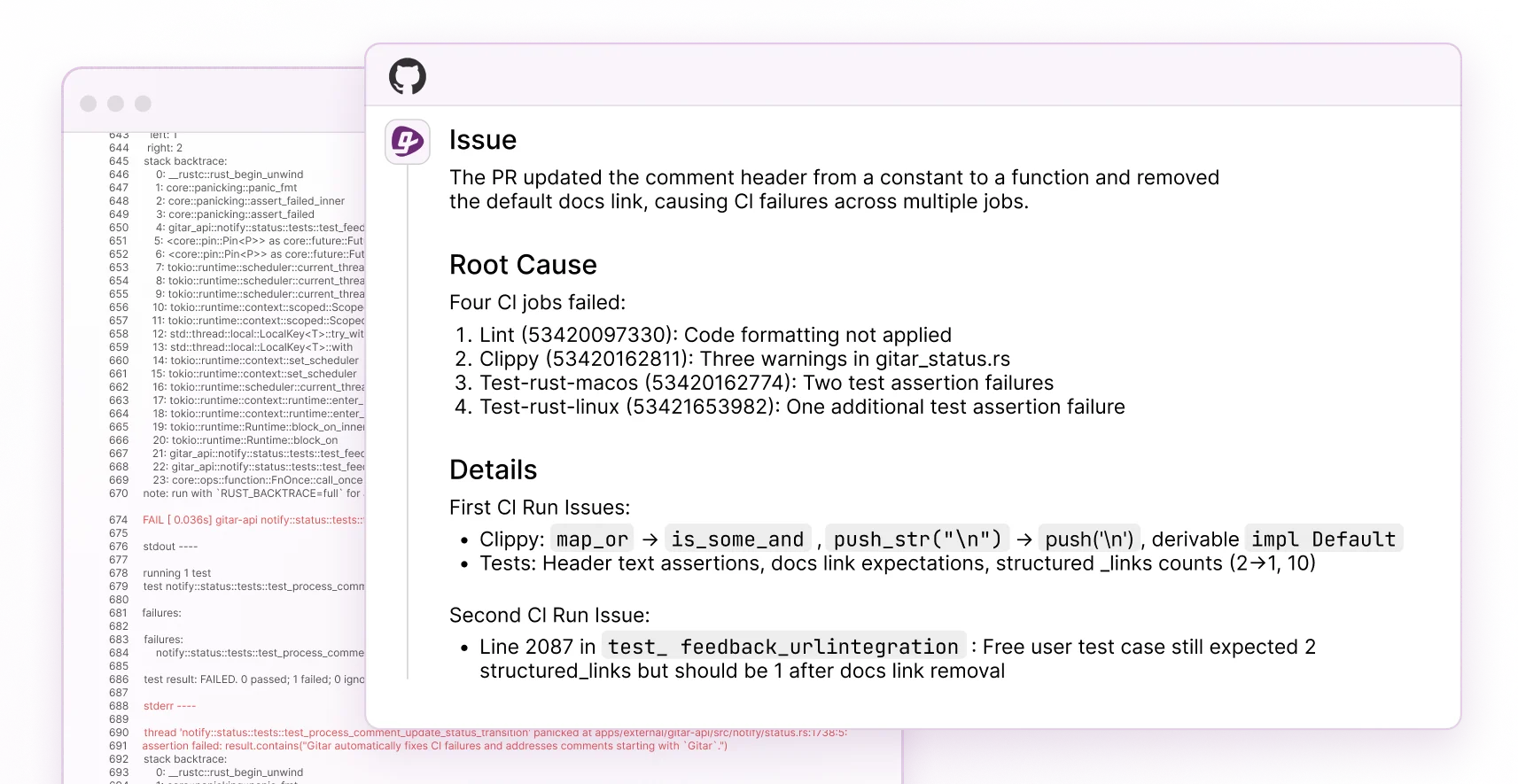
Gitar turns code review from a suggestion engine into a healing platform that fixes real problems. It automatically resolves CI failures, applies review feedback, and keeps builds green. Instead of leaving comments that require manual work, Gitar analyzes failures, generates fixes, validates them in your CI, and commits working changes directly to your PRs.
Gitar Features That Matter for Teams
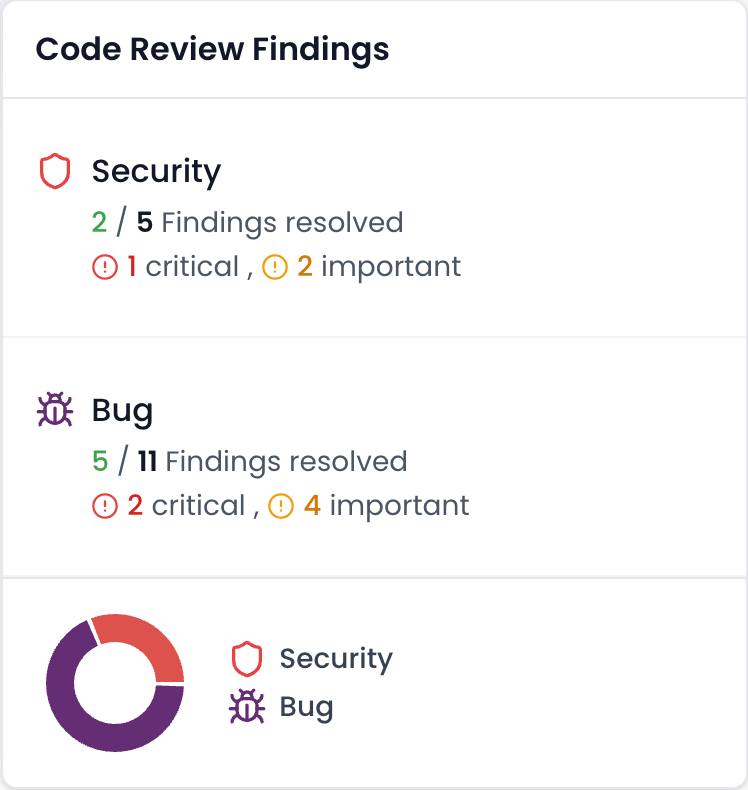
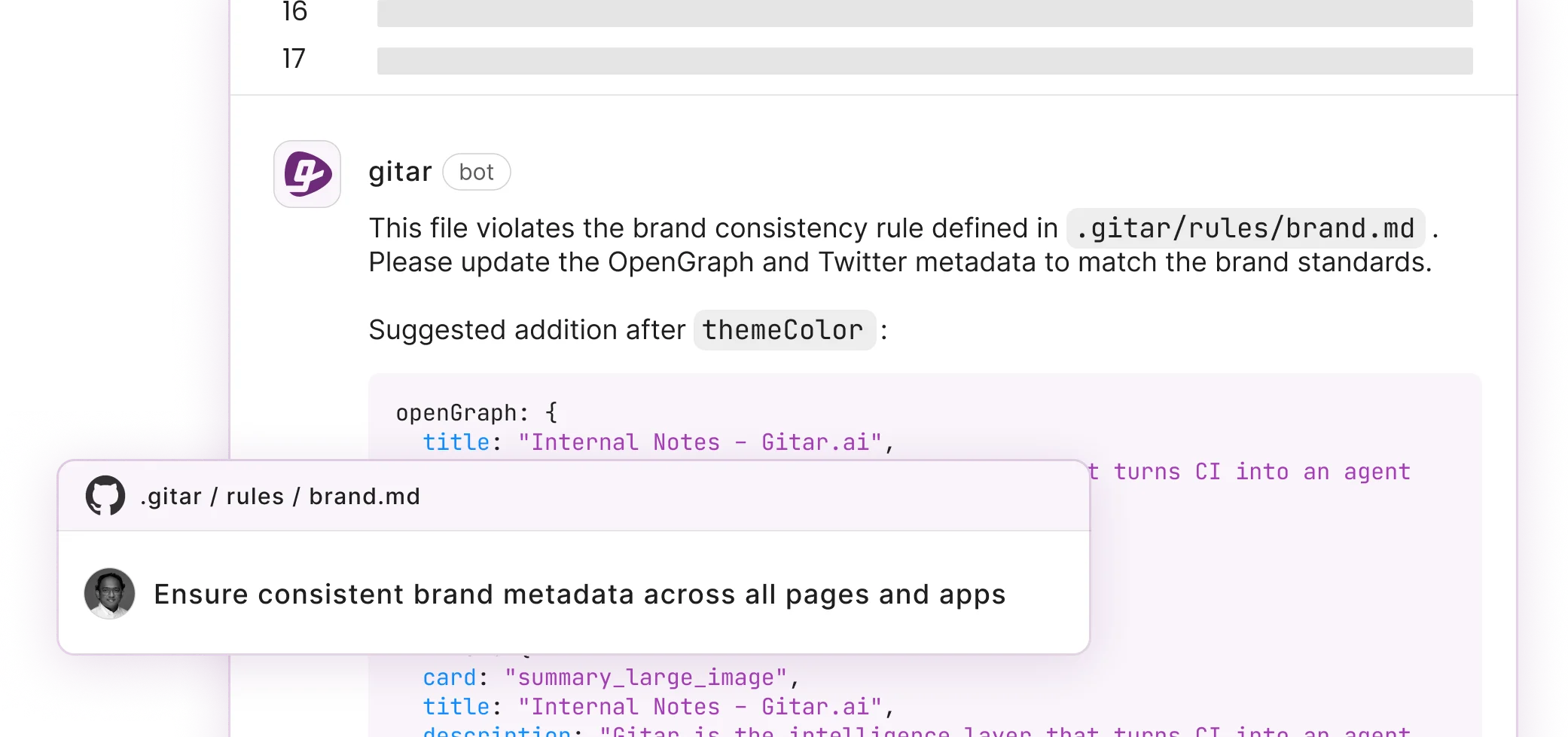
The platform consolidates findings into a single, updating dashboard comment, which reduces notification noise. Core capabilities include automatic CI failure analysis and resolution, natural language workflow rules stored in .gitar/rules/*.md files, and comprehensive security scanning and bug detection. Native integrations with Jira, Slack, and Linear keep context flowing across tools without extra effort.
Setup Experience and Day-One Usage
Installation takes about 30 seconds through the GitHub App or GitLab integration. No separate account or credit card is required. Gitar immediately starts posting clean, consolidated comments on PRs. The system learns your team’s patterns and codebase context through a hierarchical memory system that improves over time.
Gitar Pricing and Plan Options
AI code review features stay completely free with unlimited repositories and users. Auto-fix capabilities include a 14-day free trial. Teams can upgrade to paid plans for advanced workflow automation, with enterprise deployments supporting in-infrastructure agent execution for stricter security needs.
Proof Points, Scale, and Integrations
Gitar guarantees green builds through validated fix application across GitHub, GitLab, CircleCI, and Buildkite. The platform already operates at enterprise scale, processing more than 50 million lines of code and thousands of daily PRs for companies like Pinterest. Install Gitar now, automatically fix broken builds, and start shipping higher quality software faster.
#2: Graphite – Stacked PR Workflow Leader
Where Graphite Works Best
Graphite specializes in stacked pull requests that break large features into smaller, dependent branches for incremental reviews. The platform fits Big Tech style workflows where complex dependencies demand careful coordination and parallel development streams.
Graphite Features for Stacked Development
Core functionality includes automated stacked PR management with dependency tracking and Diamond AI for context-aware code suggestions and PR summaries. Graphite also offers merge queue management for high-velocity teams and automatic rebasing of remaining upstack PRs after partial stack merges.
Graphite Setup and Pricing Details
Teams connect Graphite through a GitHub integration and install a VS Code extension. Pricing ranges from $15 to $30 per developer seat, with enterprise tiers available for larger organizations that need additional controls.
Graphite Strengths and Tradeoffs
Graphite excels at incremental review workflows and helps maintain developer momentum during complex feature work. However, limitations include GitHub-only focus, workflow friction from branch drift that requires rebases, and surface-level AI analysis without automated fixes. The recent Cursor acquisition may also introduce new integration dependencies and pricing shifts.
#3: CodeRabbit – Paid AI Suggestion Engine
How Teams Use CodeRabbit
CodeRabbit delivers AI-powered inline feedback and suggestions on pull requests. It focuses on real-time code analysis and security vulnerability detection during review.
CodeRabbit Features and Focus Areas
CodeRabbit offers one-click fix patches for certain issues, along with security-focused scanning. It integrates with GitHub and provides real-time feedback as developers open or update PRs.
CodeRabbit Setup and Pricing
Teams configure CodeRabbit through a GitHub integration. Pricing runs from $12 to $30 per user per month, depending on features and team size.
CodeRabbit Benefits and Gaps
Real-time feedback and a strong security focus help teams that prioritize immediate code quality insights. The platform still lacks CI healing, requires manual application of most fixes, and can create notification overload through many scattered inline comments.
#4: Greptile – Codebase-Aware Review Suggestions
How Greptile Approaches Code Review
Greptile centers on full repository context using code graph analysis. It bases suggestions on the entire codebase instead of only the PR diff, which improves understanding of cross-file relationships.
Greptile Features and Detection Performance
Key capabilities include click-to-accept suggestions for minor PR fixes and comprehensive codebase context analysis. Benchmarks show 82% bug detection performance across severity levels.
Greptile Setup and Pricing
Greptile offers GitHub integration and API access for custom workflows. Pricing sits at $30 per user per month for unlimited code reviews.
Greptile Strengths and Limitations
Full codebase context gives Greptile an edge over diff-only tools. The platform still lacks automatic validation against CI systems and only partially supports automated fixes. It supports GitHub and GitLab but stops short of full CI healing.
Side-by-Side Comparison Table
|
Feature |
Gitar |
Graphite |
CodeRabbit |
Greptile |
|
PR Stacking |
No |
Yes |
No |
No |
|
AI Review |
Free |
Yes |
Yes |
Yes |
|
Auto-Apply Fixes |
14-day free trial |
No |
Partial |
Partial |
|
CI Failure Resolution |
Yes |
No |
No |
No |
|
Pricing (Core) |
$0 |
Paid |
$12+ |
$30 |
How Different Teams Should Choose
High-velocity teams gain from Graphite’s stacked PR workflows but face rising costs and manual fix work. Budget-conscious startups benefit from Gitar’s free tier, which removes tool spend while delivering deeper automation. DevOps-focused organizations rely on Gitar’s self-healing CI to cut failure rates and rerun costs.
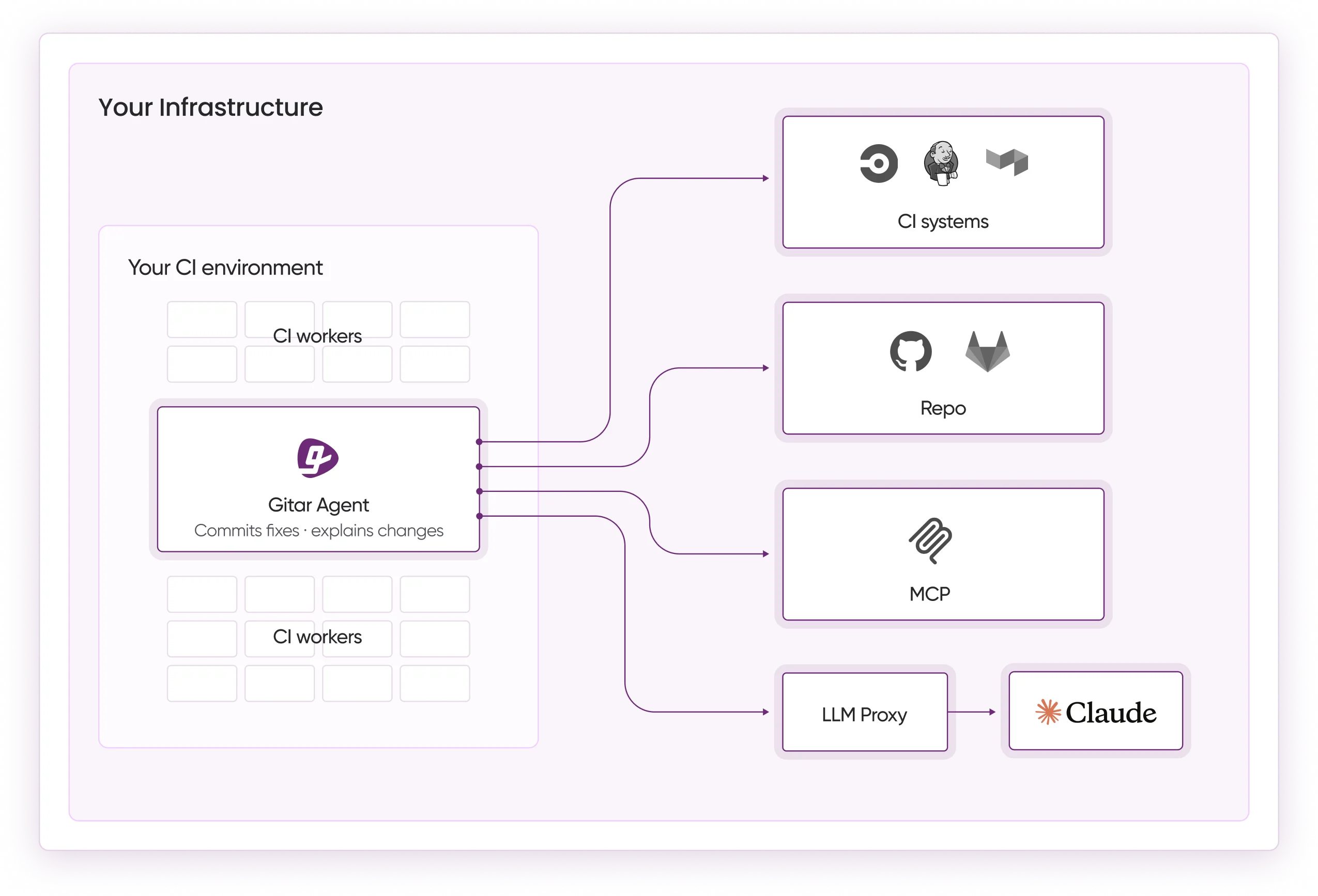
Teams concerned about automated commits can start with suggestion mode and add approval workflows. This approach builds trust before enabling auto-commit for specific failure types. Complex CI environments often favor Gitar, since the platform emulates full environments with specific SDK versions and multi-dependency builds. Install Gitar now, automatically fix broken builds, and start shipping higher quality software faster.
Gitar’s Broader Vision Beyond Graphite
Gitar addresses the entire outer loop of development instead of a single workflow slice. The platform turns CI into an intelligent agent system, adds deep analytics for pattern detection, and supports natural language rule creation without YAML complexity. This approach, validated at Pinterest scale with more than 50 million lines of code, positions Gitar as a foundation for next-generation development intelligence rather than a basic code review tool.
Frequently Asked Questions
What Are Stacked Pull Requests?
Stacked pull requests split large features into smaller, dependent branches that build on each other in sequence. Each branch becomes its own PR, which lets reviewers focus on incremental changes instead of massive diffs. This method demands careful dependency management and can add overhead when feedback on lower branches forces rebasing of all dependent PRs. Graphite automates much of this complexity, while Gitar delivers similar workflow speed through automation and healing instead of stacking.
How AI Speeds Up Code Review
AI speeds review by handling analysis, bug detection, and fix generation. Many tools stop at suggestions, which still require manual work and only modest gains. Platforms like Gitar go further by implementing fixes, validating them in CI, and committing working solutions. This model can cut PR cycle times by 30% or more by removing back-and-forth over manual fixes.
Graphite Alternatives for GitLab Teams
GitLab teams need tools with native GitLab support instead of GitHub-only options. Gitar supports both GitLab and GitHub, along with CI systems such as GitLab CI, CircleCI, and Buildkite. This cross-platform coverage prevents lock-in while preserving full automation and healing.
Best Free AI Code Review Option
Gitar offers the most complete free AI code review platform. Teams receive unlimited repositories, users, PR analysis, security scanning, and bug detection without seat limits or credit cards. Other platforms provide narrow free tiers or short trials, while Gitar keeps core review features free and only charges for advanced auto-fix after a 14-day trial.
Whether Graphite Fixes CI Failures Automatically
Graphite does not automatically fix CI failures. It focuses on stacked PR management and AI suggestions. Diamond AI provides context-aware recommendations, but developers still implement fixes manually and must confirm that issues are resolved. Teams remain in a suggestion loop that requires ongoing manual effort.
Pricing Comparison Between Gitar and Graphite
Gitar includes free AI code review, PR summaries, and unlimited usage, with auto-fix features available through a 14-day free trial before paid tiers. Graphite charges $15 to $30 per developer seat for core functionality. A 20-developer team spends $3,600 to $7,200 annually on Graphite, compared with $0 for Gitar’s core features, which simplifies ROI decisions.
ROI From AI Development Platforms
Teams usually see strong productivity gains from AI development platforms. A 20-developer team that spends 1 hour daily on CI and review issues incurs about $1 million in annual productivity costs. Effective platforms can cut this to 15 minutes per day, saving roughly $750,000 each year. Even at half that impact, the ROI supports adoption, especially when core features are free.
Conclusion: Choose Gitar for 2026 Development Velocity
The development platform market now favors healing engines that fix problems instead of only flagging them. Graphite excels at stacked PR workflows, CodeRabbit delivers real-time suggestions, and Greptile adds deep codebase context. Gitar combines these strengths with free core functionality, automated fix implementation, CI healing, and broad platform support.
Teams that want maximum velocity in 2026 gain most from Gitar. The platform removes tool costs, increases automation, scales to enterprise workloads, and improves ROI through shorter PR cycles and fewer manual fixes. Gitar’s healing model tackles the real bottleneck created by faster AI coding, which is moving code through review and CI efficiently.
Install Gitar now, automatically fix broken builds, and start shipping higher quality software faster. Shift your development workflow from reactive suggestion handling to proactive problem resolution and experience a step-change improvement instead of a small incremental gain.