
Written by: Ali-Reza Adl-Tabatabai, Founder and CEO, Gitar
Key Takeaways
- AI-generated code introduces 1.7x more issues than human code, including 75% more logic errors, 1.5-2x more security vulnerabilities, and 8x more performance inefficiencies.
- Traditional static analysis tools detect issues but do not fix them, while autonomous platforms like Gitar automatically resolve CI failures and apply working fixes.
- Top platforms include Gitar (free healing engine), Qodo (RAG-powered reviews), CodeRabbit (AI suggestions), Aikido (security autofix), and Augment Code (enterprise governance).
- Gitar leads with free unlimited PR analysis, CI-validated auto-commits, no seat limits, and 50M+ LOC scalability across GitHub, GitLab, and major CI tools.
- Teams save $750K+ annually in productivity by installing Gitar to automate fixes and ship higher quality software faster.
How We Evaluated Autonomous Code Quality Platforms
Our evaluation focuses on capabilities that directly address the 2026 AI code crisis. Core criteria include autonomous fix application, CI integration and validation, pricing accessibility, and support for platforms such as GitHub, GitLab, CircleCI, and Buildkite. We also assess contextual analysis using RAG, scalability for enterprise codebases above 50M lines, and measurable ROI through time savings and reduced failure rates.
We based this analysis on vendor documentation, GitHub statistics, industry reports including CodeRabbit’s analysis of 470 open-source PRs, and customer testimonials from production deployments.
Top 5 Autonomous Code Quality Platforms for 2026
The leading autonomous code quality management platforms for 2026 are Gitar, Qodo, CodeRabbit, Aikido, and Augment Code. Gitar offers a free healing engine with auto-commit and CI validation. Qodo delivers agentic review with RAG-powered SDLC integration. CodeRabbit combines AI suggestions with static analysis at $15+ per seat. Aikido focuses on security SAST with autofix PRs. Augment Code targets enterprise governance.
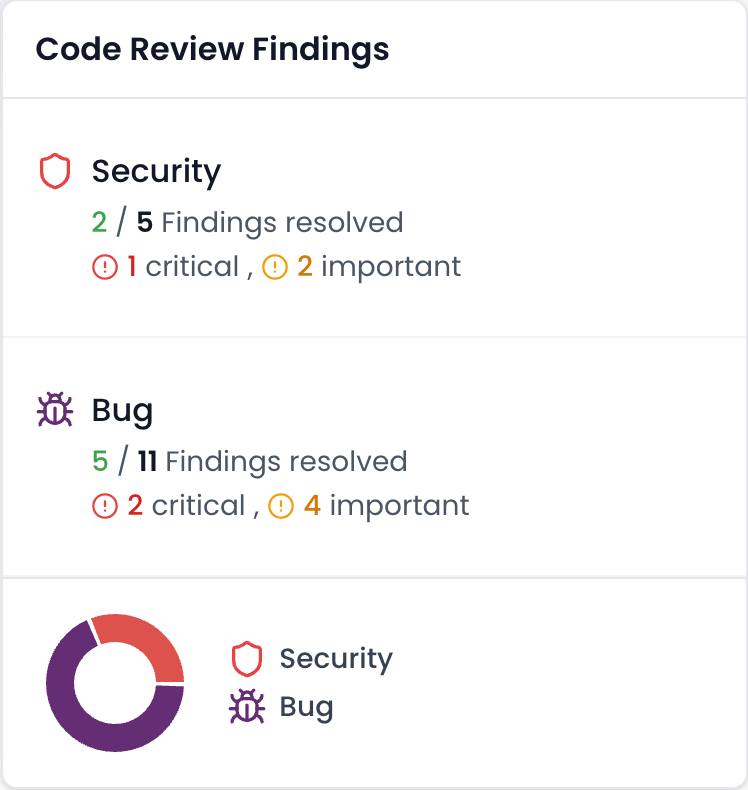
Each platform addresses a different slice of the AI code quality challenge, ranging from basic detection to complete autonomous resolution of failures.
Install Gitar now, automatically fix broken builds, start shipping higher quality software, faster
Gitar: Free Autonomous Healing for CI and PRs
Why Gitar Stands Out
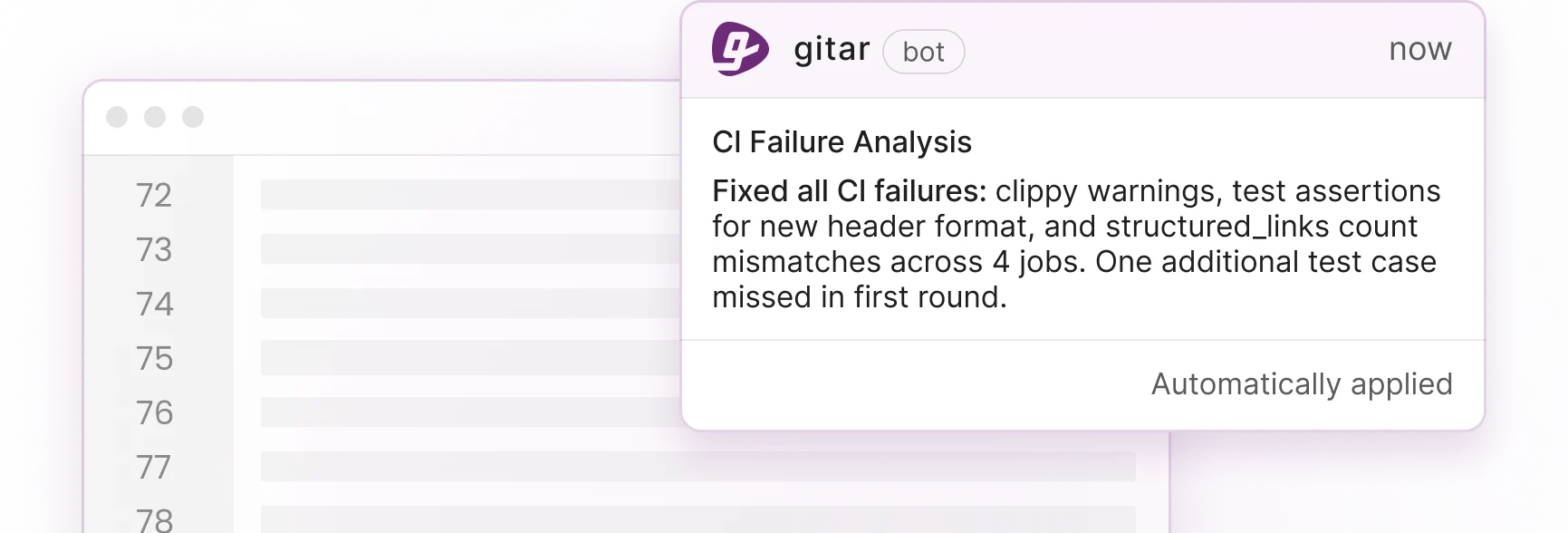
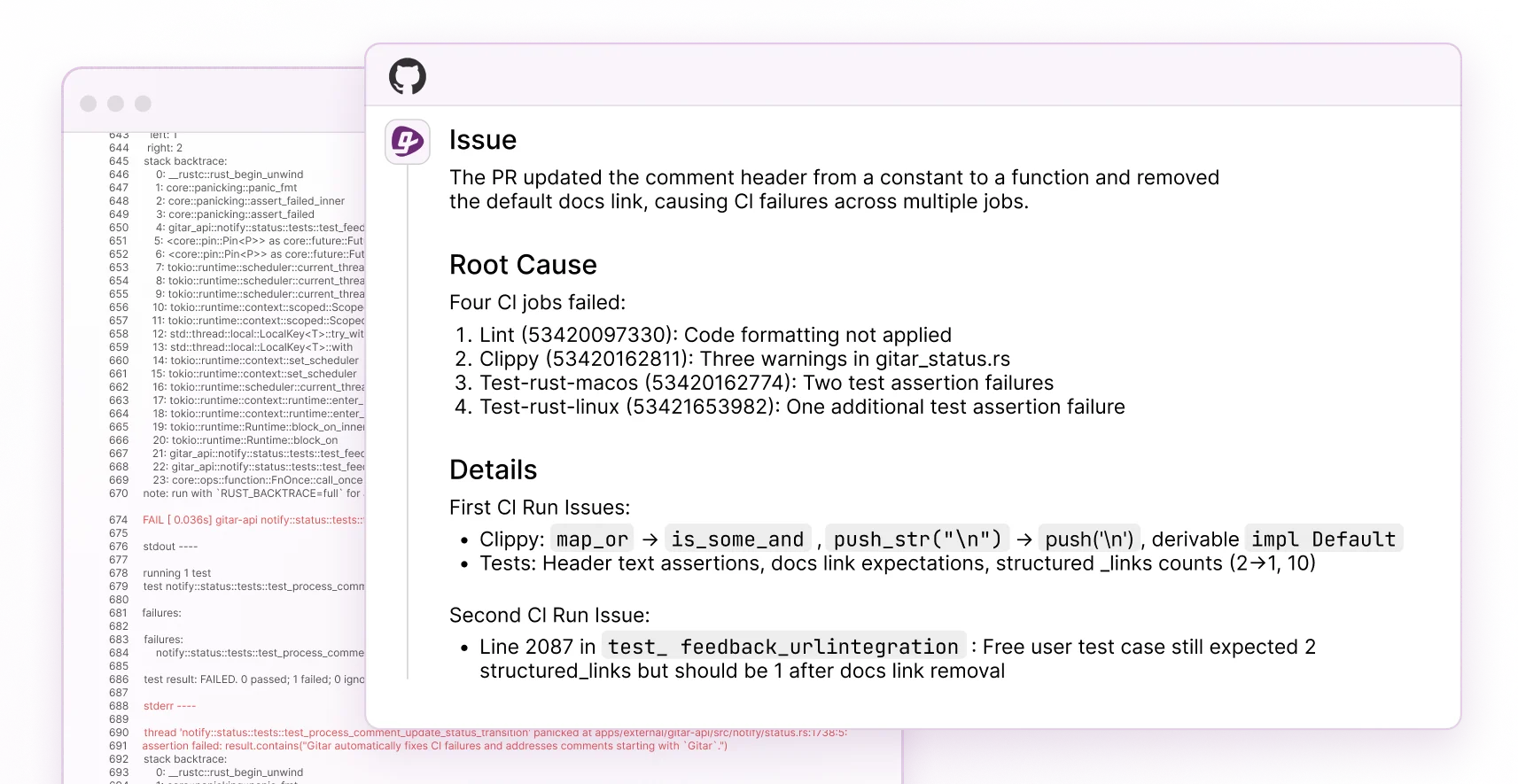
Gitar stands apart as the only platform that provides comprehensive code review completely free while actually fixing code instead of only suggesting changes. When CI fails because of lint errors, test failures, or build breaks, Gitar analyzes failure logs, generates validated fixes, and commits them automatically. The platform supports unlimited repositories with no seat limits, offers a 14-day free trial of autofix features, and consolidates all findings in a single updating comment to prevent notification spam.
Key features include unlimited free PR analysis and security scanning, natural language workflow rules that remove YAML complexity, and integrations with Jira and Slack for smooth team coordination. Installation finishes in about 30 seconds and does not require a credit card, which keeps adoption simple for teams of any size.
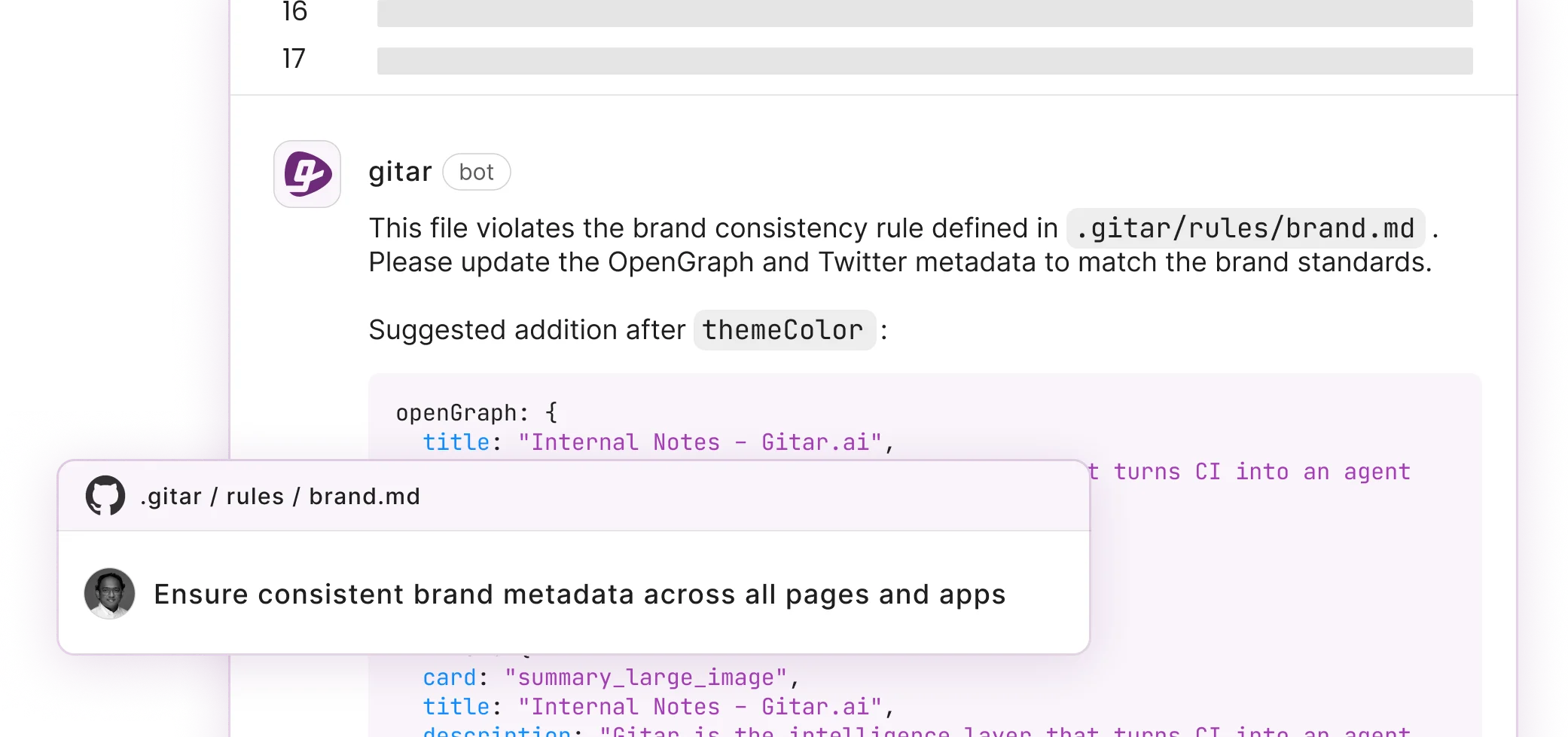
Gitar’s roadmap extends beyond review into deep analytics, automated workflows, and CI-as-an-agent capabilities. This direction positions Gitar as a complete development intelligence solution rather than a narrow code review tool.
Gitar fits velocity-focused teams, DevOps engineers frustrated with YAML maintenance, and engineering leaders who want to reduce the roughly $1M annual productivity loss from CI and review friction.
Qodo: Agentic Reviews with RAG Context
Qodo delivers agentic code review with RAG-powered context indexing that tailors suggestions to entire codebases and team patterns. The platform combines automated test generation with a multi-agent framework that covers code generation, testing, and PR review. Qodo supports multi-repository environments with cross-repository architectural understanding, which suits complex enterprise architectures.
Qodo includes CI feedback analysis and auto-fix capabilities for common issues such as linting and test failures through tools like Qodo Merge and Qodo Gen. Pricing starts at $20+ per seat, with integrations for GitHub and GitLab. Teams gain strong analysis and some automated fixes, although complex resolutions often still require human oversight.
CodeRabbit: AI Suggestions Plus Static Analysis
CodeRabbit combines popular static analyzers with advanced AI reasoning models to deliver context-aware reviews. The platform integrates more than 40 linters and uses codegraph cross-file dependency analysis to understand complex relationships across files. CodeRabbit also learns from PR feedback, which improves suggestion quality over time.
Limitations include manual implementation requirements, pricing that starts at $15+ per seat, and notification overload from many scattered inline comments. CodeRabbit provides thorough analysis but does not validate fixes against CI or guarantee that changes work in production environments.
Aikido: Security-First Autofix for Vulnerabilities
Aikido Security specializes in security-first autonomous code review and integrates SAST into PR workflows and CI/CD pipelines. The platform reduces noise by 95% through smart vulnerability filtering and generates pull requests that automatically fix SAST, IaC, dependency, and container issues.
Aikido strengthens security posture and supports code quality scanning for performance and maintainability. Its security-first focus, however, may not fully address all general logic errors that frequently appear in AI-generated code.
Augment Code: Governance for Enterprise Teams
Augment Code targets enterprise teams that need governance-focused code quality management. The platform provides comprehensive oversight for large-scale development operations with advanced compliance and policy enforcement capabilities.
This enterprise orientation introduces barriers for smaller teams, including limited free tier options and complex scalability requirements. Organizations that want immediate autonomous fixes for AI code quality issues may find Augment Code heavier than necessary.
Install Gitar now, automatically fix broken builds, start shipping higher quality software, faster
Side-by-Side Comparison of Core Capabilities
The table below highlights the most important differences between autonomous code quality management platforms.
|
Feature |
Gitar |
Qodo |
CodeRabbit |
Aikido |
|
PR Summaries |
Yes (Free) |
Yes |
Yes |
Yes |
|
Inline Suggestions |
Yes (Free) |
Yes |
Yes |
Yes |
|
Auto-Apply Fixes |
Yes (14-day trial) |
Yes (for common issues) |
No |
Partial |
|
CI Failure Analysis |
Yes |
Yes |
No |
No |
|
Validate vs CI/Guarantee Green |
Yes |
No |
No |
No |
|
Platforms |
GitHub/GitLab/CircleCI/Buildkite |
GitHub/GitLab |
GitHub |
GitHub/CI |
|
Pricing |
Free code review |
$20+/seat |
$15+/seat |
$10+/seat |
|
Scalability |
50M+ LOC |
Multi-repo |
Scales with codebase |
Multi-domain |
Buyer Considerations for Autonomous Code Quality
Engineering teams must balance notification volume, cost, and real impact on delivery speed. Individual engineers often experience notification fatigue from chatty AI tools. Engineering leaders struggle to justify tools that cost $450-900 monthly yet fail to improve velocity in a measurable way. DevOps engineers also carry the burden of complex YAML configurations and onboarding overhead for new team members.
The suggestion engine trap creates a major productivity sink. Developers spend approximately 9% of their time reviewing and cleaning AI-generated outputs, and teams accept fewer than 44% of AI suggestions. Organizations that pay premium prices for suggestion-only tools still handle manual implementation work and face uncertain fix validation.
Total cost of ownership analysis highlights the impact of autonomous fixes.
|
Metric |
Before Autonomous Fixes |
After Gitar |
|
CI/Review Time per Developer |
1 hour/day |
15 minutes/day |
|
Annual Productivity Cost (20 devs) |
$1M |
$250K |
|
Tool Cost |
$450-900/month |
$0 |
Frequently Asked Questions About Autonomous Code Quality
What are autonomous code quality management platforms?
Autonomous code quality management platforms extend traditional static code analysis by detecting issues and then automatically fixing them. Suggestion engines stop at recommendations and require manual implementation. Autonomous platforms validate fixes against CI environments and deliver working solutions. Gitar leads this category by providing free comprehensive code review with autonomous healing that resolves CI failures and implements review feedback automatically.
How do autonomous platforms differ from static code analysis tools?
Traditional static code analysis tools detect potential issues and generate reports or suggestions. Autonomous platforms such as Gitar act as healing engines that analyze problems, generate validated fixes, and apply them automatically. The key difference lies in the shift from detection to resolution, which removes the manual implementation step that slows AI-accelerated development workflows.
What is the best free AI code review platform for 2026?
Gitar offers the most comprehensive free AI code review platform for 2026. The product includes unlimited PR analysis, security scanning, bug detection, and performance review without seat limits or credit card requirements. A 14-day free trial of autofix features lets teams experience autonomous healing before committing to paid plans, which creates immediate value without upfront costs.
How do Qodo and CodeRabbit compare to autonomous healing platforms?
Qodo and CodeRabbit excel at code analysis. Qodo provides auto-fix capabilities for common issues and tests, and CodeRabbit delivers context-aware suggestions. Teams using these platforms still handle some manual oversight for complex fixes. Gitar’s autonomous approach with CI-validated auto-commits removes more bottlenecks and delivers stronger ROI through real time savings and guaranteed resolutions.
How can teams manage technical debt in AI-assisted codebases?
Teams manage technical debt in AI-assisted codebases by combining continuous monitoring with automated remediation. AI code generation increases output by 25-35% while introducing 1.7x more issues, so teams need platforms that identify architectural drift, enforce quality gates, and automatically resolve problems before they accumulate. Autonomous code quality platforms provide the continuous oversight required to maintain code health at AI-accelerated development speeds.
Conclusion: Gitar as the Clear Choice for Autonomy
The 2026 AI code crisis requires a shift from suggestion engines to autonomous healing platforms. Competitors often charge premium prices for commentary that still demands manual work. Gitar instead delivers free comprehensive code review with real fix automation. Its ability to guarantee green builds through validated CI integration marks a significant step beyond traditional static code analysis.
Engineering teams overwhelmed by AI-generated PR volume and facing roughly $1M in annual productivity losses gain immediate relief with Gitar’s autonomous problem resolution. The free tier removes financial barriers, and the healing engine approach addresses root causes rather than surface symptoms.
Install Gitar now, automatically fix broken builds, start shipping higher quality software, faster