

Last updated: January 23, 2026
Key Takeaways
- AI coding tools speed up code generation 3-5x but increase PR review time by 91%, costing teams $1M annually in lost productivity.
- Suggestion engines like CodeRabbit create more manual work, while healing engines auto-fix issues with CI validation for real efficiency gains.
- Key metrics include Time-to-Green, Automated Resolution Rate (60%+ potential), Rework Reduction ($750K savings), and Defect Leakage.
- Gitar offers free unlimited PR analysis, auto-fixes, and single-comment summaries, while paid competitors flood PRs with noisy comments.
- Install Gitar now to cut CI fix time from 1 hour per day to 15 minutes per developer and remove $750K in productivity loss.
The Problem: AI-Driven Coding Creates New Validation Bottlenecks
With 84% of developers adopting AI coding tools in 2025, the bottleneck has shifted from writing code to validating it. Engineers now write code faster than ever, yet sprint velocities stay flat. The main issue is that developers lose 30% of their time to CI and review friction.
The suggestion engine trap makes this even worse. Tools like CodeRabbit and Greptile charge premium prices for comments that developers must manually implement. AI-generated code produces 1.7× more bugs, so teams spend more time fixing flawed suggestions instead of shipping features. CodeRabbit leaves the highest number of comments per PR, which creates notification spam and breaks developer focus.
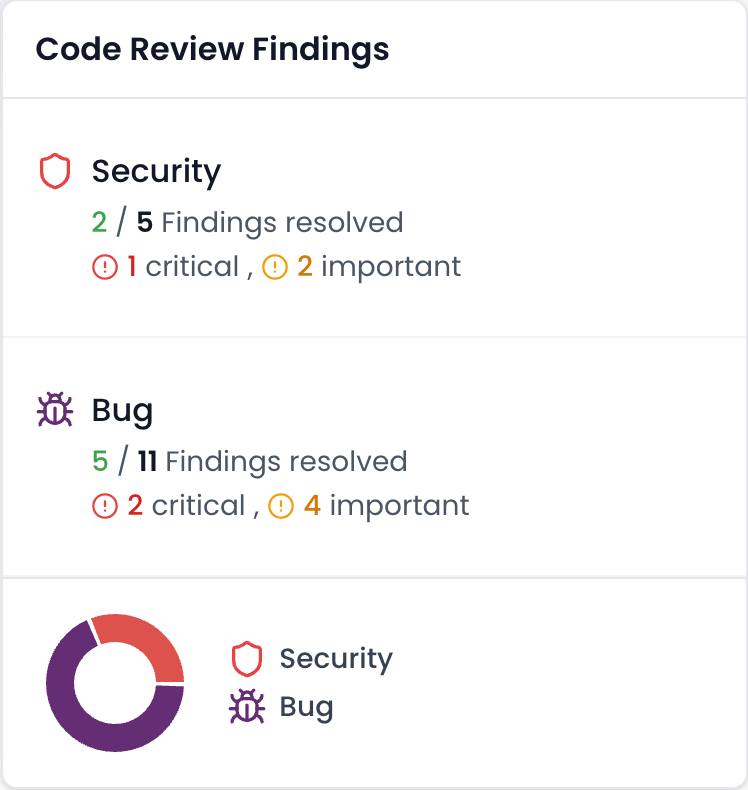
Gitar’s Healing Engine: From Suggestions to Validated Auto-Fixes
Automated reviews and static code analysis only deliver real efficiency when they move from suggestions to actual fixes. Unlike competitors that charge $15-30 per developer for comments, Gitar provides free unlimited PR analysis, security scanning, bug detection, and performance review. The platform includes autofix features on a 14-day free trial that validate fixes against CI before committing.
|
Capability |
CodeRabbit/Greptile |
Gitar |
|
PR Analysis |
Paid ($15-30/dev) |
Free, unlimited repos |
|
Auto-Apply Fixes |
No |
Yes (14-day trial) |
|
CI Auto-Fix |
No |
Yes, validates green |
|
Notification Style |
Inline spam |
Single updating comment |
Teams at Pinterest scale and Tigris report that Gitar’s summaries are “more concise than Greptile/Bugbot” because the platform consolidates all findings into one clean dashboard comment. Install Gitar now to automatically fix broken builds and start shipping higher quality software, faster.
5 Core Metrics That Prove Gitar’s Efficiency and ROI
1. Time-to-Green for PRs After CI Failure
Time-to-Green = CI Fail Time – Auto-Fix Commit Time
This metric tracks how quickly a PR returns to a passing state after a CI failure. DeepSource achieved 75% faster CI builds using AI-driven automated remediation. Gitar improves this metric by validating fixes in your actual CI environment before committing, which keeps builds green with minimal developer effort.
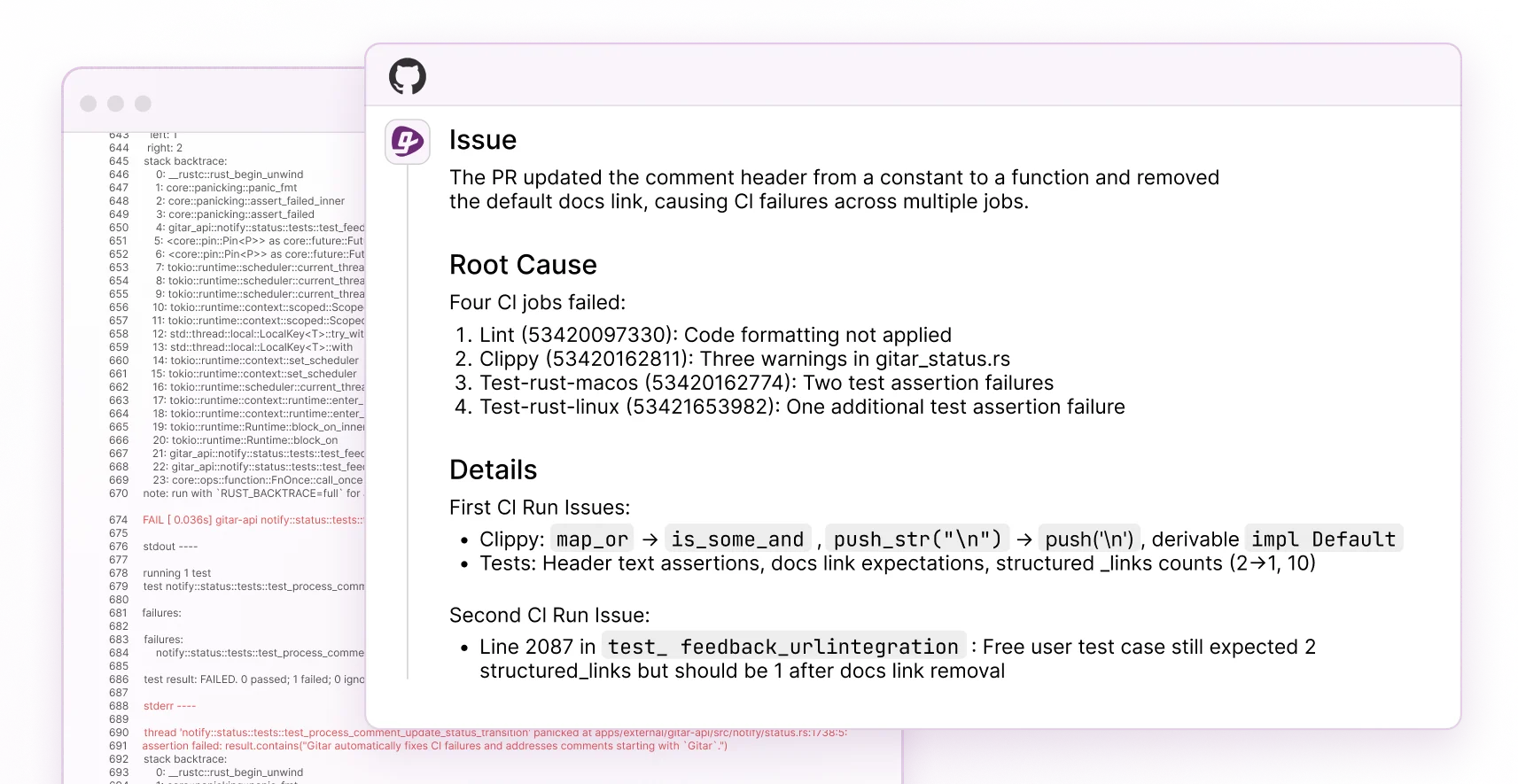
Efficiency Gain % = (Manual Time Before – Automated After) / Before × 100
2. Automated Resolution Rate for Issues
% Issues Fixed Auto = (Auto-Resolved Issues / Total Issues) × 100
Anthropic engineers report Claude AI fixes over 60% of logic bugs automatically, which shows the potential for high automated resolution rates. Gitar builds on this potential by running fixes through CI validation, so automated resolutions work reliably in production environments.
3. Rework Reduction and Dollar Savings
Rework Savings = (Manual Fix Hours Before – After) × Dev Hourly Rate
CircleCI’s autonomous validation ROI calculator shows teams save $750K annually for 20-developer teams by cutting manual debugging and review cycles. The 2025 DORA framework includes Rework Rate as a formal metric, calculated as unplanned deployments divided by total deployments.
4. Cycle Time and Lead Time Improvements
Elite performers achieve lead times under 1 day according to 2025 DORA benchmarks. Gitar helps teams move toward this benchmark by reducing the 91% increase in PR review time. The platform automates the fix, commit, and validate cycle that usually requires several developer interventions.
5. Defect Leakage and Throughput Quality
Leakage Rate = Post-Release Bugs / Total Bugs × 100
Static code analysis reduces defect leakage by catching issues before production. AI coding assistants reduced trivial syntax errors by 76% and logic bugs by over 60%, yet they increased security findings 10x. This pattern highlights the need for comprehensive automated analysis that includes security, which Gitar provides.
6. Notification Efficiency and Developer Focus
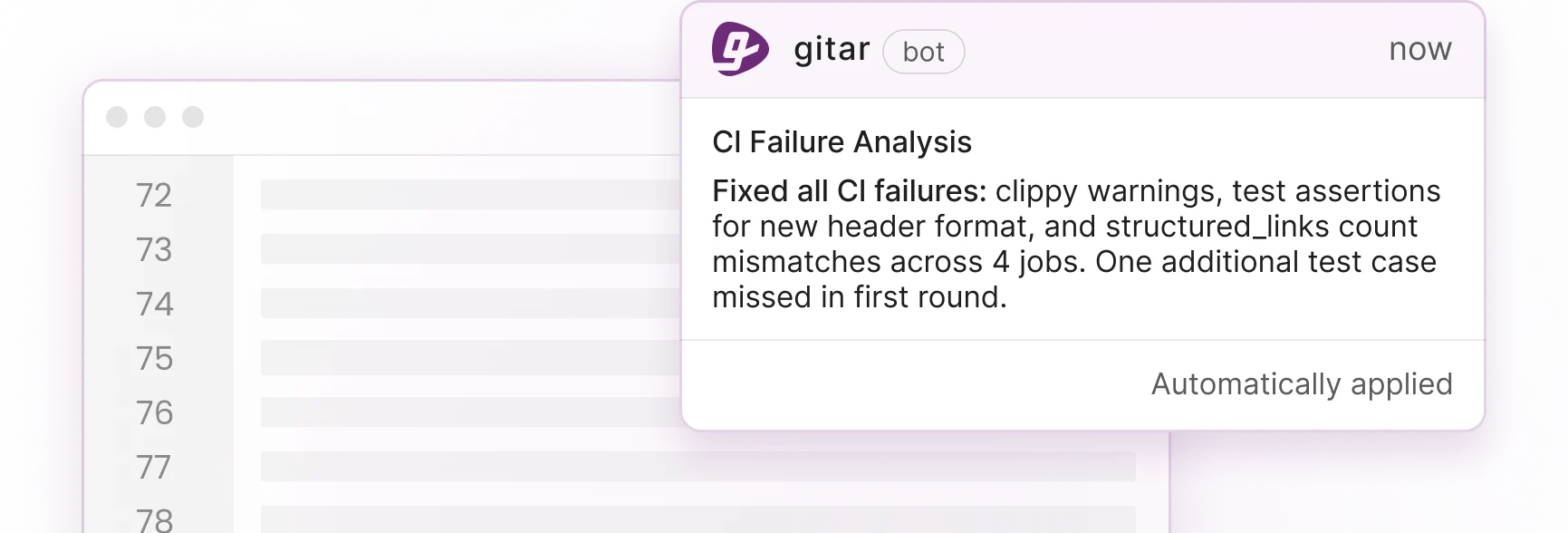
Gitar’s single updating comment approach reduces notification noise compared to inline comment spam from traditional tools. This approach lowers cognitive load and cuts context switching interruptions, so developers stay focused on meaningful work.
|
Metric |
Before |
After Gitar |
|
Annual Cost |
$1M |
$250K |
|
Tool Cost/Month |
$450+ |
$0 |
|
Time on CI Issues |
1 hour/day/dev |
15 min/day/dev |
Install Gitar now to automatically fix broken builds and eliminate the $750K annual productivity loss from manual CI fixes.
Frequently Asked Questions About Gitar and Review Efficiency
How to calculate review efficiency
Review efficiency reflects the time saved through automation. The formula is: Efficiency Gain = (Manual Hours Before – Automated After) / Before × 100. For example, if manual reviews took 2 hours per PR and automated reviews take 30 minutes, the efficiency gain equals 75%. Gitar provides analytics dashboards that baseline your current review times and track improvements over time.
What is the formula for auto-fix efficiency?
Auto-Fix Efficiency % = (Fixed without Human Intervention / Total Fixes) × 100. This metric measures how many issues the system resolves completely without developer input. Gitar’s auto-fix feature (14-day free trial) reaches high auto-fix efficiency by validating fixes against your actual CI environment before committing, which ensures they work.
How Gitar compares to CodeRabbit ROI
CodeRabbit charges $15-30 per developer for suggestions that still require manual implementation. Gitar provides free code review with auto-fix capabilities that save about 75% more time by removing the manual fix, commit, and validate cycle. For a 20-developer team, this shift translates to $450-900 in monthly tool savings plus $750K annually in productivity gains.
What the Time-to-Green metric measures
Time-to-Green measures the duration from CI failure to returning to a passing state. Traditional manual fixes can take hours or days, depending on developer availability and debugging complexity. Gitar cuts Time-to-Green to minutes by automatically analyzing failure logs, generating validated fixes, and committing them directly to your PR.
How to measure rework reduction from automated reviews
Rework reduction comes from comparing time spent on manual fixes before and after automation. Track metrics such as number of commits per PR, time from PR creation to merge, and developer hours spent on CI-related fixes. Automated reviews that actually fix code, instead of only suggesting changes, remove most rework cycles.
Conclusion: Gitar Turns AI Code Into Reliable, Fast Shipping
Measuring efficiency gains from automated reviews requires moving beyond traditional DORA metrics to AI-specific benchmarks like Time-to-Green and Automated Resolution Rate. Suggestion engines trap teams in expensive cycles of manual fixes, while healing engines like Gitar deliver measurable ROI through validated auto-fixes that keep builds green.
The math stays clear. Teams spending $1M annually on CI and review friction can reduce costs to $250K while removing tool expenses entirely. The bottleneck has shifted from code generation to code validation, and Gitar provides a free solution that closes this gap.
Install Gitar now to automatically fix broken builds and start shipping higher quality software, faster. No credit card required.