
Manual CI pipeline intervention costs engineering teams valuable time and resources every day. Developers spend hours debugging failures and addressing code review feedback, draining productivity and inflating operational budgets. Automating these processes with AI solutions like Gitar can cut costs, speed up workflows, and deliver measurable returns by reducing manual effort and accelerating time-to-merge.
Why Manual CI/CD Intervention Hurts Your Bottom Line
Fixing CI pipeline issues by hand slows down teams and racks up hidden expenses. The time lost to repetitive debugging, coupled with delayed releases, impacts both productivity and financial performance. Let’s break down the real cost of this manual approach.
Lost Developer Focus from Constant Interruptions
Modern development workflows pull developers away from new tasks to fix past work. CI failures and code review feedback force constant context switching, costing around an hour of productivity per developer each day.
This interruption goes beyond time spent on fixes. Developers must recall past decisions, decipher error logs, replicate issues locally, apply solutions, and test outcomes. A quick fix can stretch into an hour of lost focus, disrupting deep work and slowing team progress.
Picture a developer submitting a pull request, moving to a new task, then getting derailed by a failing test. They drop their current work, revisit old code, debug the problem, and struggle to refocus afterward. This cycle repeats, piling up mental fatigue and cutting into overall output.
Financial Impact of Failed Builds and Delayed Merges
CI failures trigger a chain of costs beyond developer time. About 60% of companies face delays from slow pipelines, pushing back project timelines and raising expenses.
Direct costs add up fast. Rerunning failed jobs and enduring longer build times burn through cloud computing resources with every retry. These expenses often fly under the radar, especially when failures affect multiple services or demand full rebuilds.
Indirect costs hit even harder. Delayed builds stall feature rollouts, disrupt sprints, and risk missing customer deadlines. For teams under pressure, this can mean lost market share or delayed revenue. In complex release cycles, one failure can halt entire teams and derail product launches.
Senior engineers also get pulled into fixing tough CI issues, diverting their attention from critical strategy work. This misallocation of high-cost talent adds another layer of opportunity cost to manual intervention.
Frequent CI Failure Points That Waste Time
CI failures stem from recurring issues that keep teams stuck in manual fixes. Common problems include:
- Automated testing failures, especially flaky tests that pass inconsistently.
- Build errors from misconfigurations or syntax mistakes.
- Deployment pipeline issues that halt progress.
- Dependency conflicts from outdated or mismatched packages.
- Configuration errors in YAML or JSON files that stop jobs.
- Complex pipelines lacking modularity, making troubleshooting harder.
Flaky tests waste time with random failures that are tough to pin down. Developers chase ghosts, sometimes ignoring real issues as a result. Dependency and configuration problems demand deep knowledge to resolve, while pipeline complexity in enterprise settings only adds to the challenge.
How Gitar Automates CI/CD Fixes for Real Results
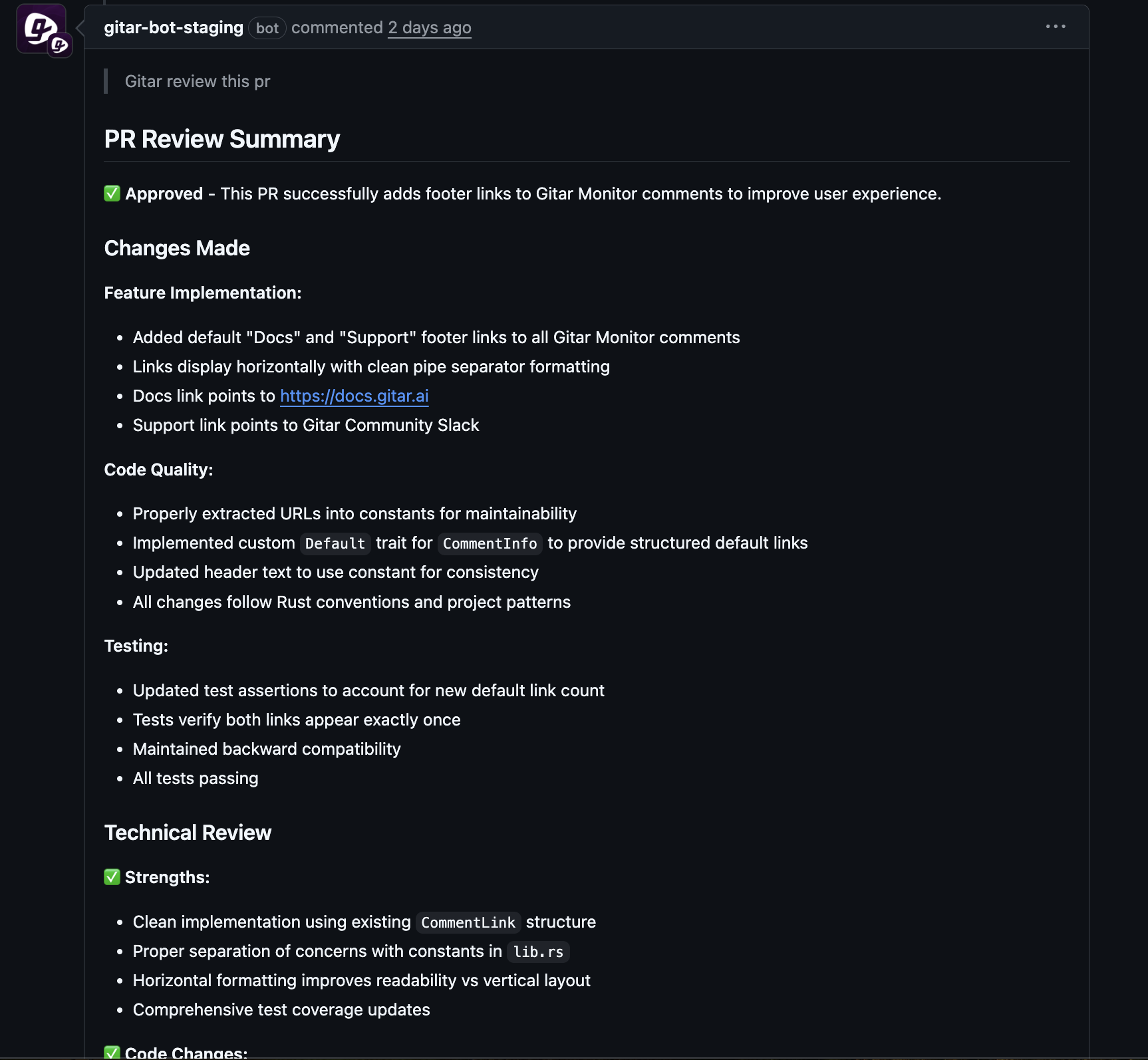
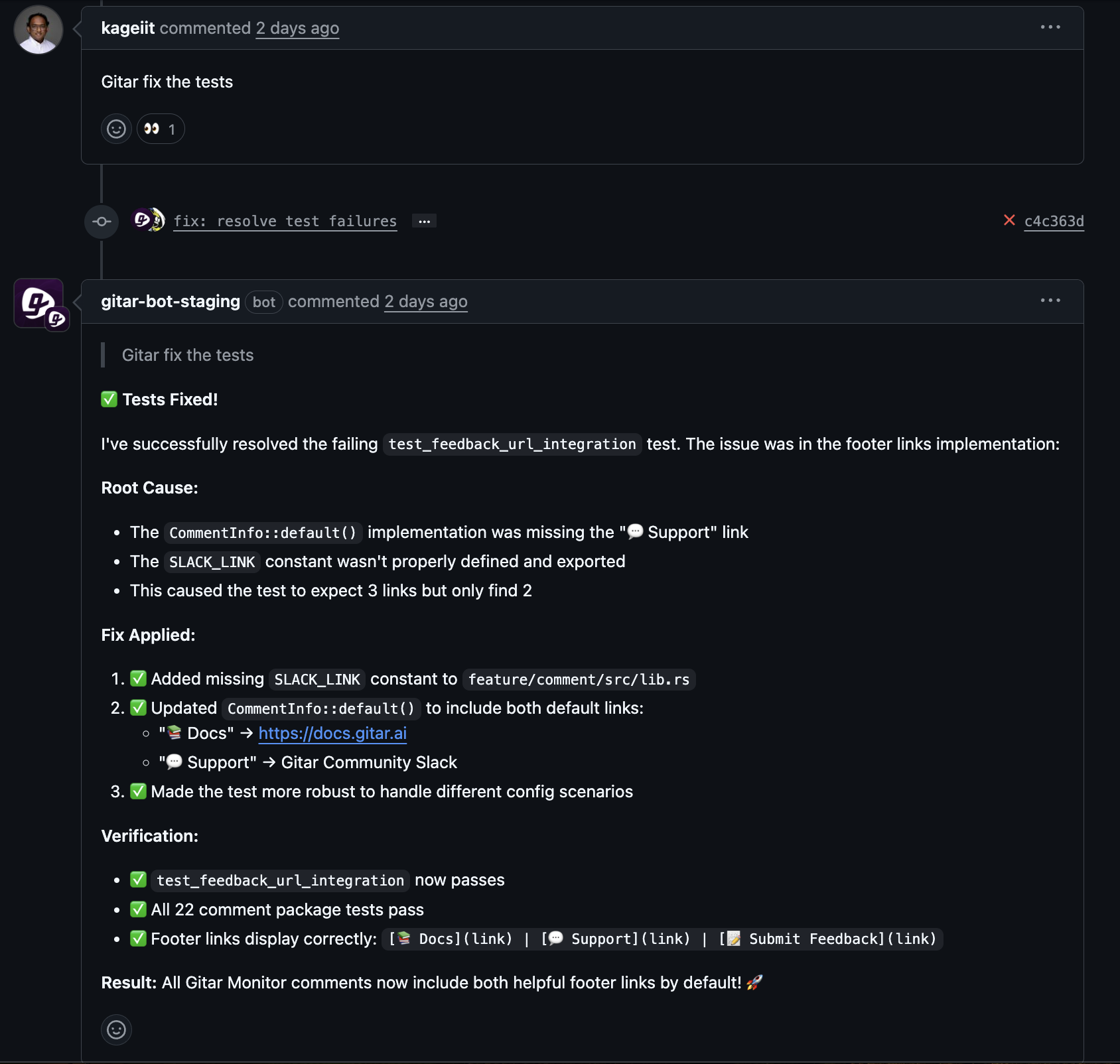
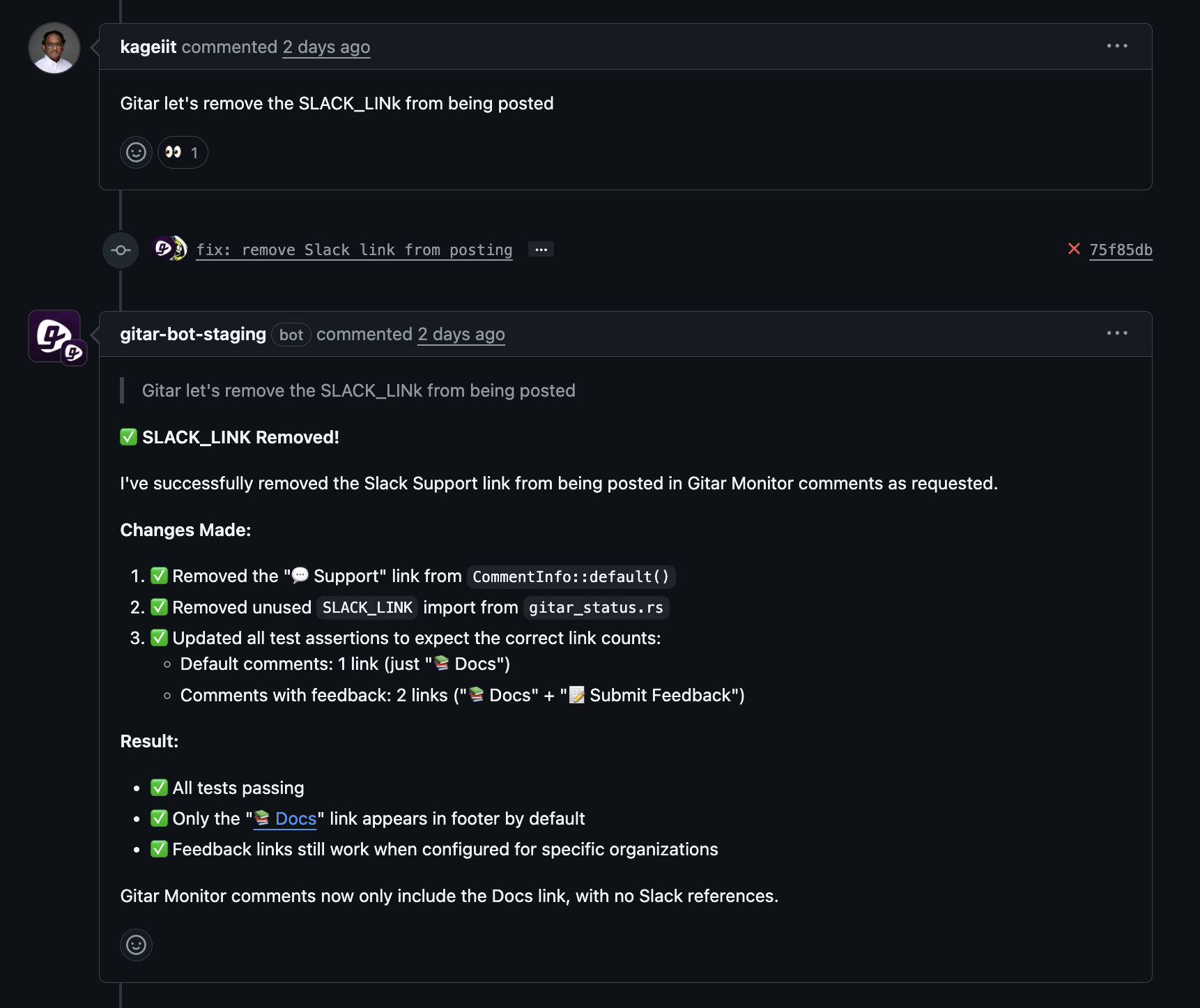
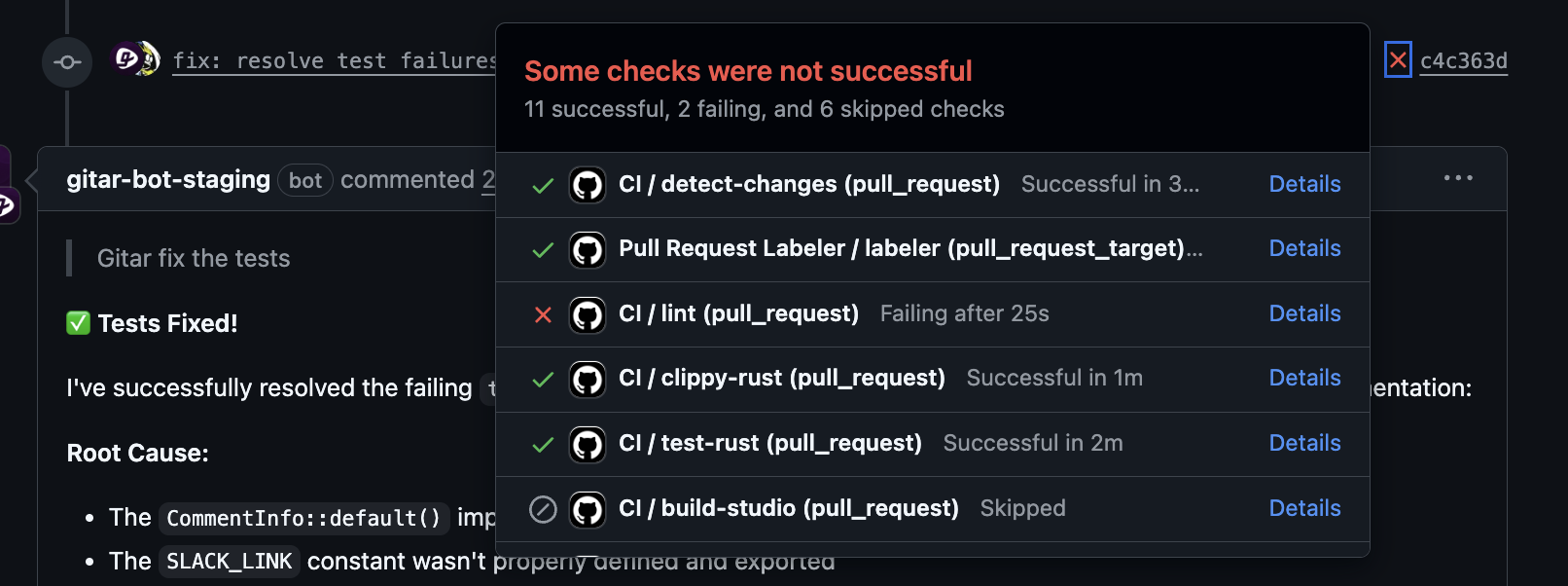
Gitar changes the game by automating CI/CD fixes, moving beyond suggestions to active problem-solving. This AI agent detects issues, diagnoses root causes, and applies fixes without human input, cutting down manual work and driving measurable savings.
Unlike tools that only offer ideas, Gitar handles the full process from identifying failures to confirming solutions. This shift to automation frees developers from routine tasks and streamlines workflows.

Gitar’s key features deliver direct benefits:
- Complete Fix Automation: Applies and validates fixes in the CI pipeline for a passing build, no manual steps needed.
- Environment Matching: Replicates complex setups with specific SDKs, dependencies, and tools like SonarQube or Snyk for accurate fixes.
- Code Review Support: Responds to feedback instantly, cutting delays for distributed teams across time zones.
- Flexible Automation Levels: Offers modes from reviewed suggestions to automatic commits with rollback options to build trust.
- Wide Platform Compatibility: Works with GitHub Actions, GitLab CI, CircleCI, BuildKite, and more for easy integration.
Want to cut manual CI/CD work? Install Gitar now to automate broken builds.
Measuring the ROI of Automated CI Fixes with Gitar
Cutting Down Developer Time Loss
Automating CI fixes saves significant developer time. With an hour lost daily per developer to CI issues, the potential to reclaim productivity is substantial.
For a team of 20 developers, one hour lost daily equals 5,000 hours yearly. At $200 per hour including salary and overhead, that’s $1 million in annual productivity loss. Gitar can recover a large share of this time, letting developers focus on creating value through new features.
Beyond raw hours, fewer interruptions mean longer stretches of focused work. This improves code quality and job satisfaction, boosting team performance over time. Reduced burnout also lowers turnover costs, adding to long-term gains.
Speeding Up Merges and Project Timelines
Automated fixes shrink delays in code integration, directly impacting delivery schedules. Data shows that higher pipeline success rates tie to faster development speed.
Improved reliability, as seen with better first-time pass rates, cuts time from commit to merge. Gitar resolves failures automatically, streamlining the process.
Distributed teams benefit most, as feedback cycles across time zones shorten. A reviewer can request changes, Gitar applies them, and the developer approves the next day, avoiding back-and-forth delays. Faster merges also mean quicker feature releases, giving a competitive edge.
Saving on Operational Costs Beyond Time
Automated CI fixes lower direct expenses alongside productivity gains. Repeated manual retries drive up cloud and labor costs. Gitar cuts these by fixing issues on the first try, reducing resource use.
For large pipelines, failed builds mean costly rebuilds and test reruns. Automation minimizes these redundant cycles. It also reduces reliance on senior engineers for routine fixes, freeing them for high-impact work and cutting escalation expenses.
How to Estimate Your ROI with Gitar
Calculating ROI for automated CI fixes is straightforward. Start by tracking weekly developer hours spent on CI issues. Multiply your team size by daily time lost, then by hourly cost, to find weekly losses.
Extend this to yearly figures and assume a realistic automation rate, accounting for complex issues needing human input. Add savings from lower cloud costs due to fewer retries. Factor in gains from faster delivery and predictability. Even modest estimates show significant returns for a 20-developer team.
Ready to see these savings? Install Gitar now to automate broken builds.
What Sets Gitar Apart as a Self-Fixing Tool
Gitar stands out by fully automating fixes, unlike tools that only suggest changes. This table highlights the difference:
|
Feature / Solution |
Gitar (Autonomous Healing Engine) |
AI Code Reviewers (e.g., CodeRabbit) |
IDE-Based Assistants (e.g., GitHub Copilot) |
|
Primary Action |
Automatically Fixes & Validates |
Suggests Changes & Can Implement Fixes |
Assists Code Writing (Pre-commit) |
|
CI Integration |
Full CI Pipeline Replication |
Partial/Git Provider |
None (Local Dev) |
|
Fix Validation |
Ensures Green Builds |
Requires Manual Validation |
N/A |
|
Context Switching |
Reduces Significantly |
Reduces (Still Requires Action) |
N/A |
|
Operational Impact |
Cost Reduction, Faster TTM |
Indirect Productivity Gains |
Developer Efficiency (Pre-CI) |
Automation with Gitar means less developer involvement compared to suggestion tools. Its ability to mirror full CI environments ensures fixes work in production settings, avoiding failures down the line. Teams start each day with resolved issues, not triage.
Common Questions About Automated CI Fixes
Can Gitar Manage Complex Enterprise CI Setups?
Gitar handles enterprise CI environments by fully replicating production workflows. It accounts for specific SDKs, dependencies, and tools like SonarQube or Snyk, ensuring fixes fit the exact context of your setup and reducing risks of mismatched solutions.
How Safe Is Relying on Automated Fixes?
Gitar builds trust with a flexible approach. Start in Conservative Mode, where fixes appear as pull request comments for approval. Move to Aggressive Mode for automatic commits with rollback options as confidence grows. Detailed logs track every action, and pre-validation against your CI setup lowers error risks.
What Other Costs Does Gitar Reduce?
Beyond developer time, Gitar cuts cloud expenses by reducing failed CI runs. It limits reliance on senior engineers for routine fixes, freeing them for bigger tasks. Faster merges also avoid costly release delays, boosting overall efficiency.
How Does Gitar Minimize Developer Interruptions?
Gitar tackles context switching by autonomously handling CI failures and feedback. It resolves issues in the background, so developers find green builds with fix explanations later. This keeps focus intact, especially for distributed teams working across time zones.
Ready to stop interruptions? Install Gitar now to automate broken builds.
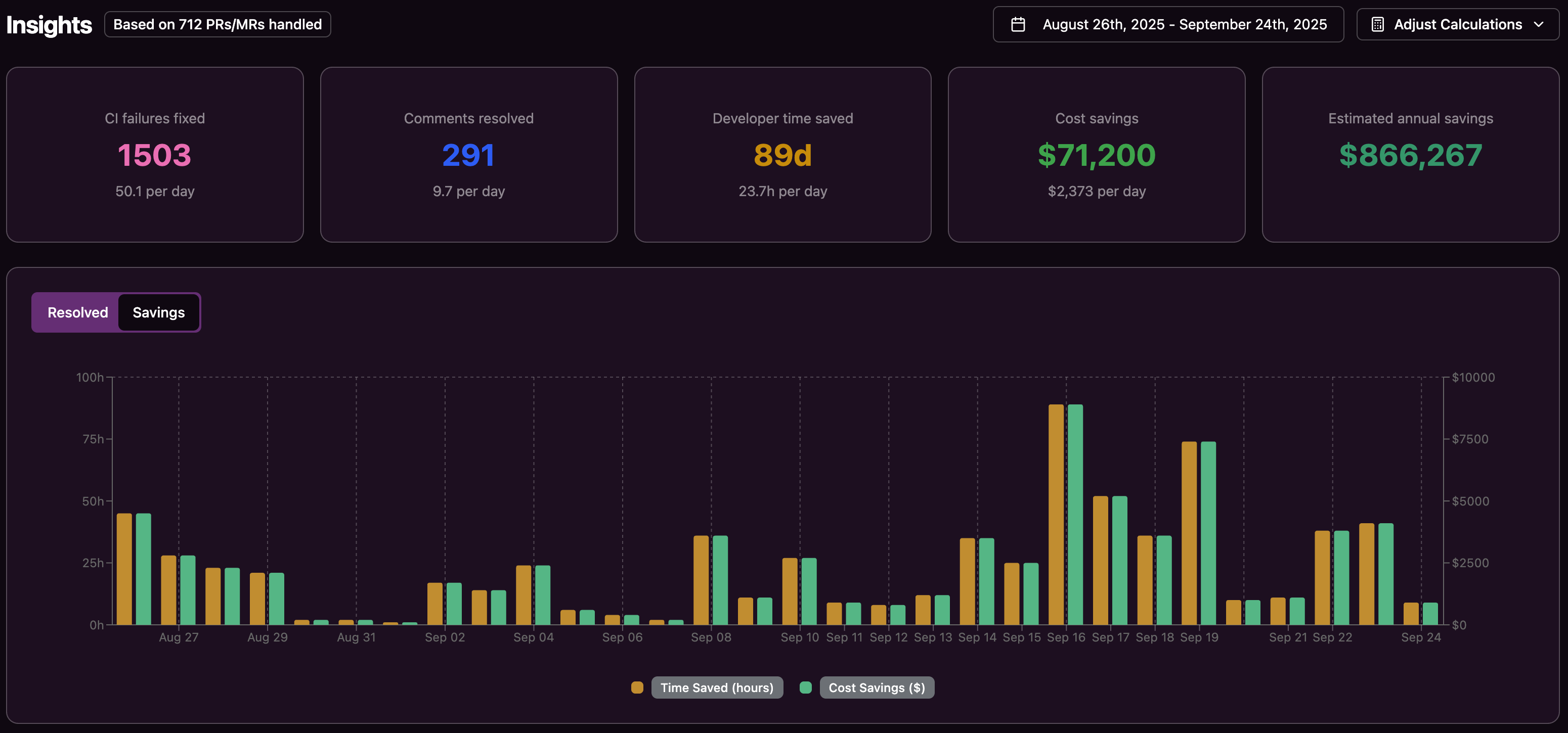
Boost Efficiency and Cut Costs with Gitar
Manual CI/CD fixes drain resources and slow down development. As pipelines grow more complex, the burden of hands-on debugging only increases. Reactive approaches waste time and money that could go toward innovation.
Gitar shifts teams to proactive, self-fixing operations. By automating CI resolutions and review cycles, it reclaims developer hours, speeds up delivery, and lifts team morale. For a 20-developer team, the potential to save on productivity and infrastructure costs is clear and immediate.
Automation also scales with growth. Teams maintain speed regardless of size or pipeline intricacy, freeing talent for strategic work. Choosing automation over manual fixes positions leaders for long-term efficiency gains.
The tools to cut CI/CD toil are here, and the savings are trackable. Take the next step to reduce costs and empower your team. Install Gitar now to automate broken builds.