
Key Takeaways
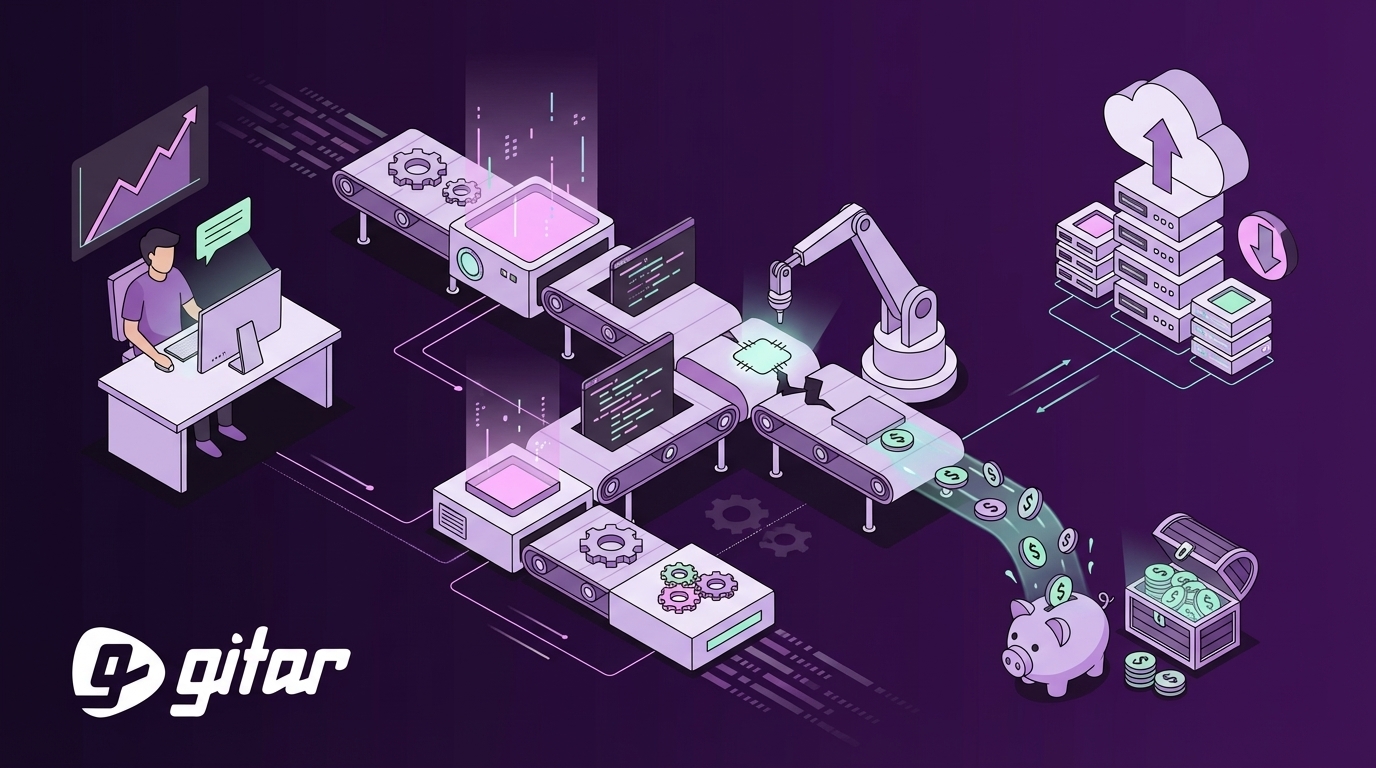
- Many teams lose hundreds of hours each month to failing builds, broken tests, and slow review cycles, which can add up to roughly $1M in annual productivity loss for a 20-developer team.
- High CI failure rates increase cloud and infrastructure spend through repeated builds, idle test environments, and orphaned resources that provide no business value.
- Release delays from CI/CD bottlenecks slow time-to-market, reduce responsiveness to customer needs, and can erode competitive position over time.
- Autonomous CI fixes reduce manual firefighting by detecting, implementing, and validating solutions inside the pipeline, which helps teams focus on feature work instead of CI operations.
- Gitar offers autonomous CI fixes that reduce developer toil and infrastructure waste, with a direct link to install at https://gitar.ai/fix.
The Problem: The Hidden Costs of Inefficient CI/CD Pipelines
Developer Productivity Drain: Human And Financial Impact
Developer time represents the largest hidden cost in inefficient CI/CD pipelines. Engineers lose flow every time they stop feature work to investigate logs, fix lint errors, or rerun flaky tests. Each failure forces a pause for analysis, code changes, another commit, and another pipeline run. This pattern turns quick fixes into recurring interruptions.
These interruptions carry a clear financial impact. When developers spend a meaningful share of each day on CI failures and code review loops, a 20-person team can waste thousands of hours per year, which often maps to about $1M in lost productivity. That estimate does not include the cost of delayed features, slower innovation, or missed opportunities.
Escalating Infrastructure Expenses And Waste
Infrastructure costs increase as teams and pipelines scale. Modern enterprise teams often see steady growth in CI/CD infrastructure spend as projects expand and pipelines become more complex. High failure rates magnify this trend because every failed build still consumes compute, storage, and network resources.
Extra cost also appears in idle test environments, orphaned resources from failed builds, and oversized staging setups that never shut down. Limited visibility into these patterns makes optimization difficult and allows waste to persist.
Delayed Time-To-Market And Business Risk
CI/CD friction slows releases. Teams that wait on red builds, extended review cycles, or repeated retries ship features more slowly, which reduces responsiveness to customers and market changes. Large software projects already face frequent cost overruns and schedule pressure, and CI/CD delays often contribute to that overrun.
Unreliable pipelines also affect long-term confidence in delivery. Product leaders hesitate to commit to timelines when every release depends on unstable tests or fragile environments. That hesitation can reduce revenue growth in competitive markets where release frequency and reliability influence customer decisions.
Impact On Developer Morale And Retention
Repeated firefighting erodes morale. Engineers prefer building solutions and solving complex problems, not spending hours each week on minor build failures or repeated review edits. Persistent friction in CI/CD can contribute to burnout, disengagement, and higher turnover, which adds recruiting and onboarding costs on top of lost productivity.
Solution Category: Autonomous CI Fixes For Real Efficiency
Autonomous CI fixes shift CI/CD from reactive troubleshooting to proactive self-healing. Instead of only alerting developers or suggesting potential changes, these systems detect failures, make code or configuration updates, and validate outcomes inside the pipeline.
The core idea centers on automating the entire fix-validate-merge loop. After a CI check fails, an autonomous system applies a candidate fix, runs the necessary tests, and verifies a green pipeline before presenting the result to the team. This process reduces context switching, cuts down on repeated failed builds, and shortens time-to-merge.
This category aims directly at the largest cost drivers. Less manual intervention means fewer interruptions for engineers. Fewer failed builds reduce wasted compute. Faster, more reliable pipelines support shorter delivery cycles and more predictable releases.
Gitar: Autonomous CI Fixes Focused On Cost Efficiency
Gitar provides autonomous CI fixes that integrate into existing pipelines and workflows. The platform applies and validates changes inside real CI environments so teams see working results instead of raw suggestions.
Key Capabilities That Reduce CI/CD Costs
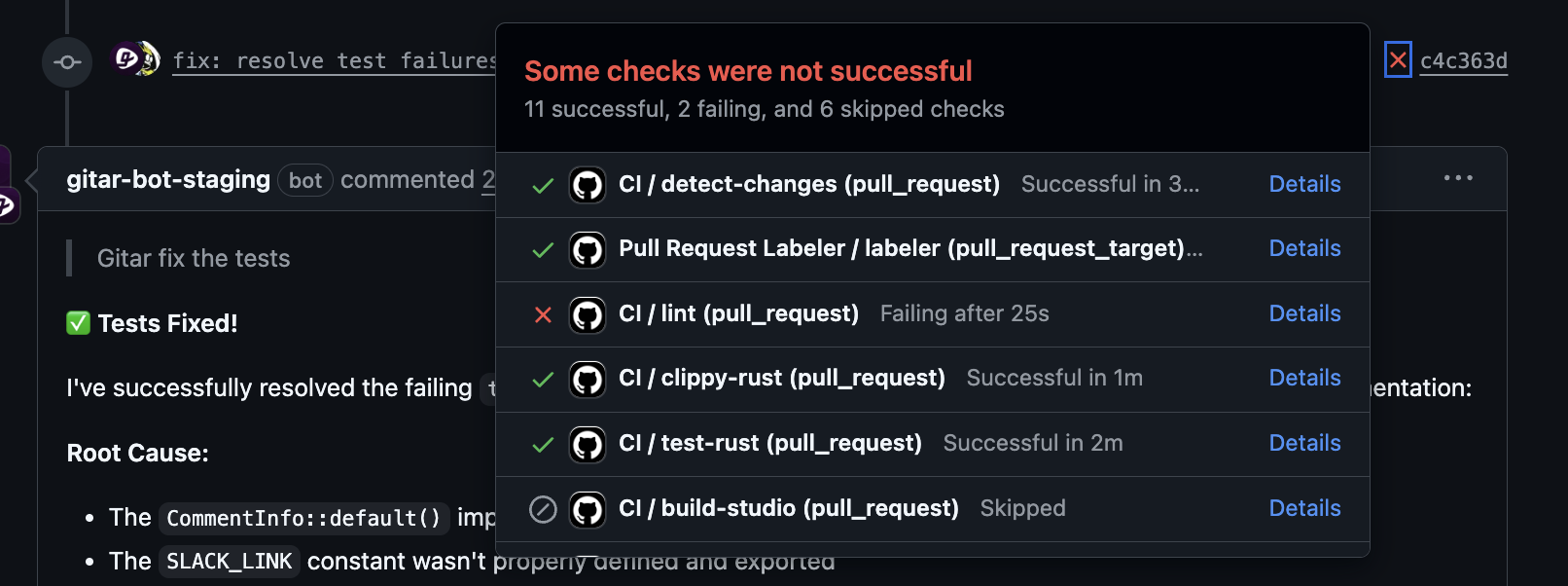
End-to-end autonomous fixing allows Gitar to analyze failures, generate code changes, apply them, and validate the result in the full pipeline. This workflow removes much of the manual debugging and re-running that usually follows every red build. When a lint error or simple test failure appears, Gitar can often commit a fix before the original author returns to the branch.
Full environment replication helps Gitar work reliably inside complex enterprise pipelines. Many teams depend on specific SDK or JDK versions, language toolchains, and internal services. Gitar recreates those conditions so fixes match the actual environment, which reduces repeated failures caused by subtle configuration differences.
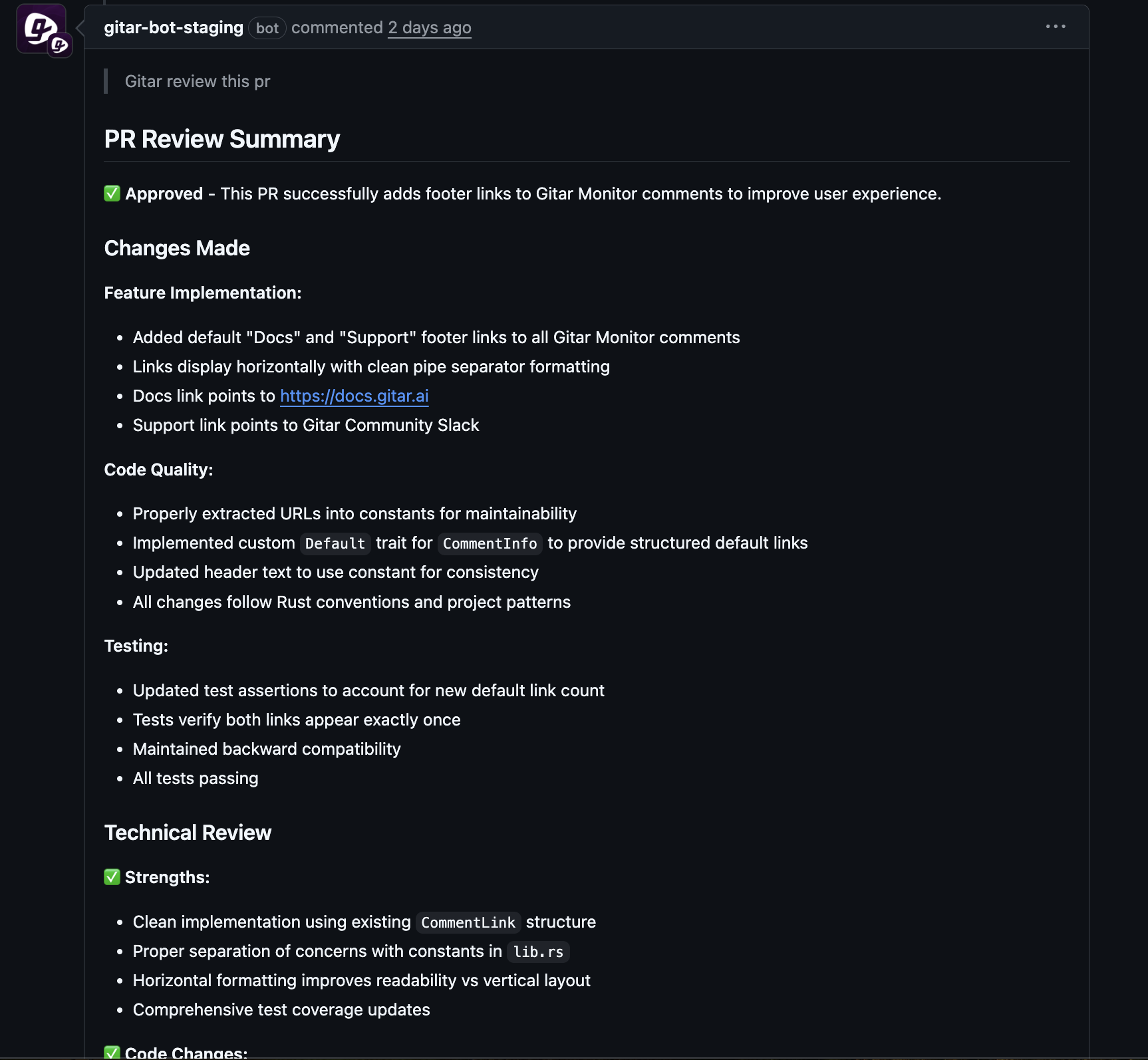
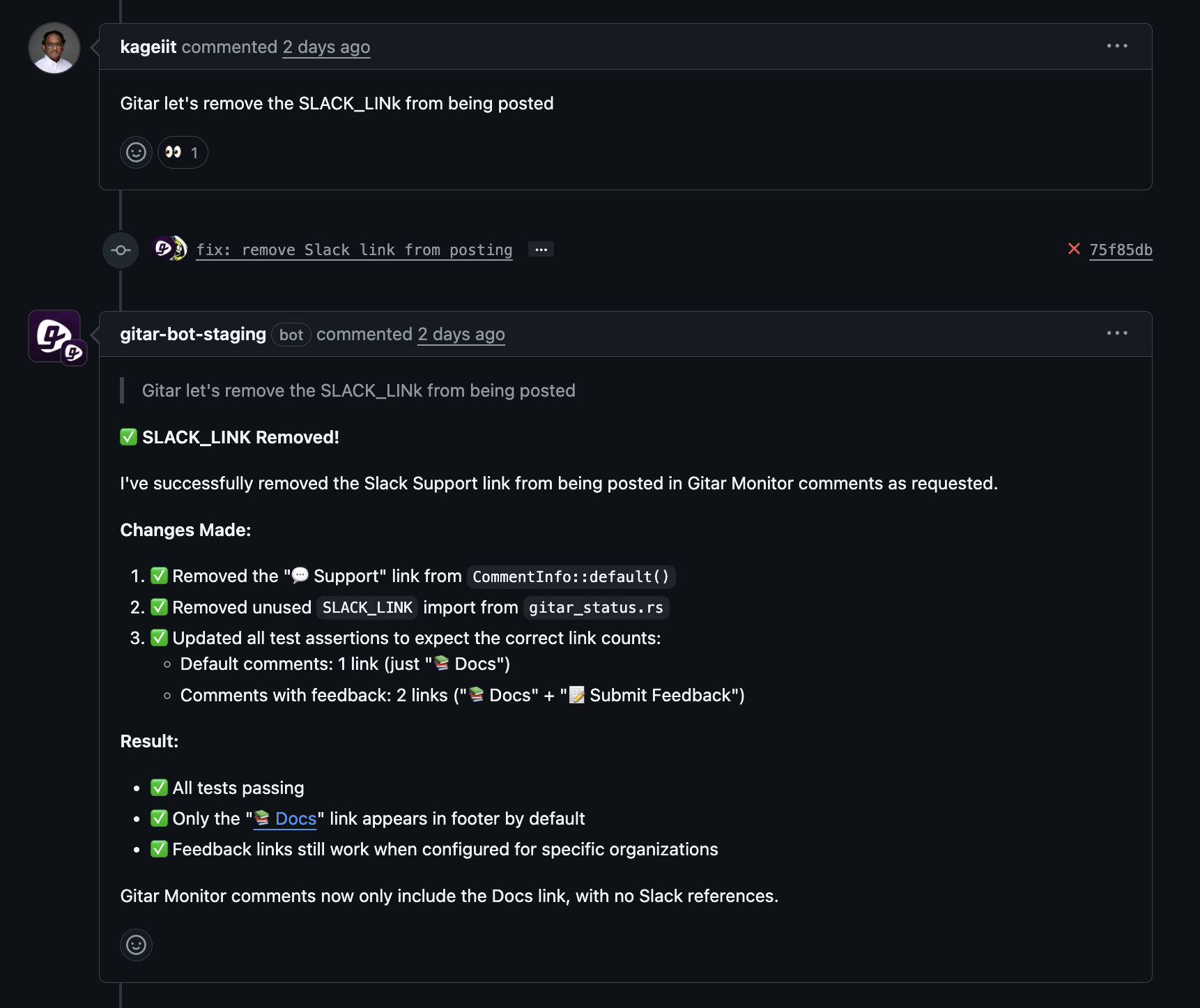
Intelligent code review automation extends this approach into pull request workflows. Reviewers can leave instructions in comments, and Gitar applies code edits, updates tests, and pushes commits that address the feedback. This behavior reduces delays from time zone gaps and shortens review cycles.
Install Gitar to add autonomous fixes into your existing CI/CD pipeline.
Quantifying The Savings: Gitar’s Impact On Engineering Budgets
Developer Time And Productivity
Autonomous CI fixes return time to developers. When Gitar handles routine CI failures and common code review edits, engineers avoid many of the short interruptions that break focus. A 20-developer team that currently spends about one hour per day on CI issues can reclaim thousands of hours per year, which often aligns with roughly $1M of recovered productivity when accounting for fully loaded compensation.
Larger groups see compounding effects because every saved hour scales with headcount and project complexity. Those hours can shift from operational work to roadmap features, quality improvements, or technical debt reduction.
Infrastructure Waste And Cloud Spend
Autonomous fixing also affects infrastructure cost. Teams with higher CI failure rates consume more compute per merged change because they rerun the same pipelines many times. Gitar reduces that waste by targeting first-pass success more often.
The platform also helps prevent orphaned resources and long-lived test environments that continue to incur charges after a build finishes. Better fix quality and faster resolution reduce the number of partial or abandoned runs that leave hidden infrastructure behind.
Faster Releases And Revenue Impact
More predictable pipelines support faster releases. When CI failures resolve quickly and reviews move faster, teams can ship smaller, more frequent changes with less risk. That pattern supports quicker responses to customer feedback, faster experimentation, and steadier revenue growth for product-driven organizations.
Gitar vs. Traditional Methods And Suggestion Engines
Limits Of Manual And Suggestion-Based Approaches
Manual debugging keeps developers in the loop for every failure. Even with strong observability, engineers still need to read logs, edit code, push commits, and wait for reruns. Suggestion-based AI tools reduce some effort but usually stop at recommendations. Developers still perform the edits and validation, which preserves much of the context switching and pipeline waste.
|
Feature |
Manual Workflow |
AI Code Reviewers |
Gitar (Autonomous CI Fixer) |
|
Primary Action |
Developer debugs and fixes issues |
Suggests code changes |
Applies and validates fixes in CI |
|
CI Pipeline Integration |
Limited or ad hoc scripts |
Focus on pull request review |
Deep integration with full environment replication |
|
Cost Impact |
High developer toil and repeated builds |
Partial time savings |
Reduced developer time and lower failed-build waste |
|
Build Outcomes |
No built-in validation beyond tests |
Suggestions may still fail CI |
Fixes validated inside the actual pipeline |
Install Gitar to reduce manual debugging and failed build retries.
Conclusion: Using Autonomous CI Fixes To Maximize Engineering Budgets
Inefficient CI/CD pipelines carry tangible costs in 2026. Many development teams still spend a large share of their time on failed builds and extended review cycles, and traditional tooling often focuses on visibility rather than resolution.
Gitar addresses those costs by autonomously fixing CI failures, applying review feedback, and validating outcomes inside the pipeline. This approach reduces developer interruptions, lowers wasted compute from repeated runs, and supports faster, more reliable releases.
Engineering leaders who aim to control CI/CD costs and improve delivery speed can treat autonomous fixes as a practical part of their strategy. Install Gitar to start reducing CI waste and reclaiming developer time.
Frequently Asked Questions (FAQ) About CI/CD Cost Efficiency
How much time do developers spend on CI/CD issues, and what is the financial impact?
Many teams report that developers spend up to 30 percent of their time on CI failures and code review changes. For a 20-person engineering group, that pattern can translate to roughly $1M per year in lost productivity once fully loaded compensation and overhead enter the calculation. Larger organizations often see proportionally higher total losses.
How can Gitar help reduce growing CI/CD infrastructure costs?
Gitar lowers pipeline failure rates by applying and validating fixes automatically. Fewer failed builds mean fewer reruns and less wasted compute. The platform also reduces the number of abandoned or partial runs that create orphaned resources or long-lived test environments, which helps control cloud and CI spending.
How is Gitar different from AI code review tools for CI/CD cost efficiency?
Most AI code review tools act as suggestion engines. They propose edits, but developers still implement and validate the changes. Gitar functions as an autonomous fixer. The system applies edits, runs the pipeline, and returns validated results, which reduces context switching and the number of failed build cycles.
How does Gitar handle complex enterprise CI environments?
Gitar replicates relevant parts of the target environment, including specific JDK versions, SDK combinations, and other dependencies. This replication helps the system generate fixes that match real-world conditions, which reduces the need for manual debugging after automated changes land.
What is the typical ROI timeline for autonomous CI fixes?
Teams often see qualitative improvements in a short period as developers spend less time on routine CI tasks. Quantitative savings in both time and infrastructure costs usually become clear over the first several months, especially as organizations increase their use of fully autonomous fixing modes.