
Key Takeaways
- Shorter pull request (PR) cycle time improves time-to-market, code quality, and developer satisfaction.
- Common PR bottlenecks include slow test suites, flaky tests, and delayed reviews, especially for distributed teams.
- Autonomous AI testing and self-healing CI reduce context switching by automatically fixing failures and implementing review feedback.
- Careful rollout, clear metrics, and firm quality gates help leaders adopt autonomous AI safely and build trust.
- Gitar provides an autonomous AI agent that fixes CI issues and reviews feedback directly in pull requests, which you can try by installing Gitar.
How Faster Pull Request Cycle Time Supports Business Outcomes
Short PR cycle time supports faster delivery, more reliable releases, and better morale. Long cycles create delays, increase rework, and weaken your competitive position.
Efficient PR workflows increase release frequency and keep quality high. Agile teams implement automated tests on every pull request so regressions surface within minutes of code changes. Developers fix issues while the context is fresh, which shortens delivery time and reduces defects that slip into production.
Inefficient PR cycles carry a high cost. For a 20-person engineering team, time spent chasing CI failures and waiting for reviews can exceed one million dollars per year in lost productivity. Delayed launches, missed market windows, and burnout amplify this impact.
Move From Manual Debugging to Autonomous Resolution in CI/CD
Modern teams often face slow, fragile CI pipelines. Long-running test suites, repeated dependency installation, cold environments, and non-parallel execution slow feedback so much that developers batch large changes and push fewer PRs.
The context switching tax is equally costly. Pull requests frequently reveal merge conflicts, inconsistent styles, incomplete or failing tests, and unclear code. Each issue interrupts a developer’s flow and extends the cycle.
Distributed teams feel this even more. Pull requests can sit idle for days while reviewers are busy or in different time zones. A change that should merge in an hour can stretch across several days.
The growth of AI-assisted coding has increased code volume and created pressure on validation. Autonomous AI systems that identify and fix issues without manual work now play a key role in keeping PRs moving.
Use Gitar to Create Self-Healing CI
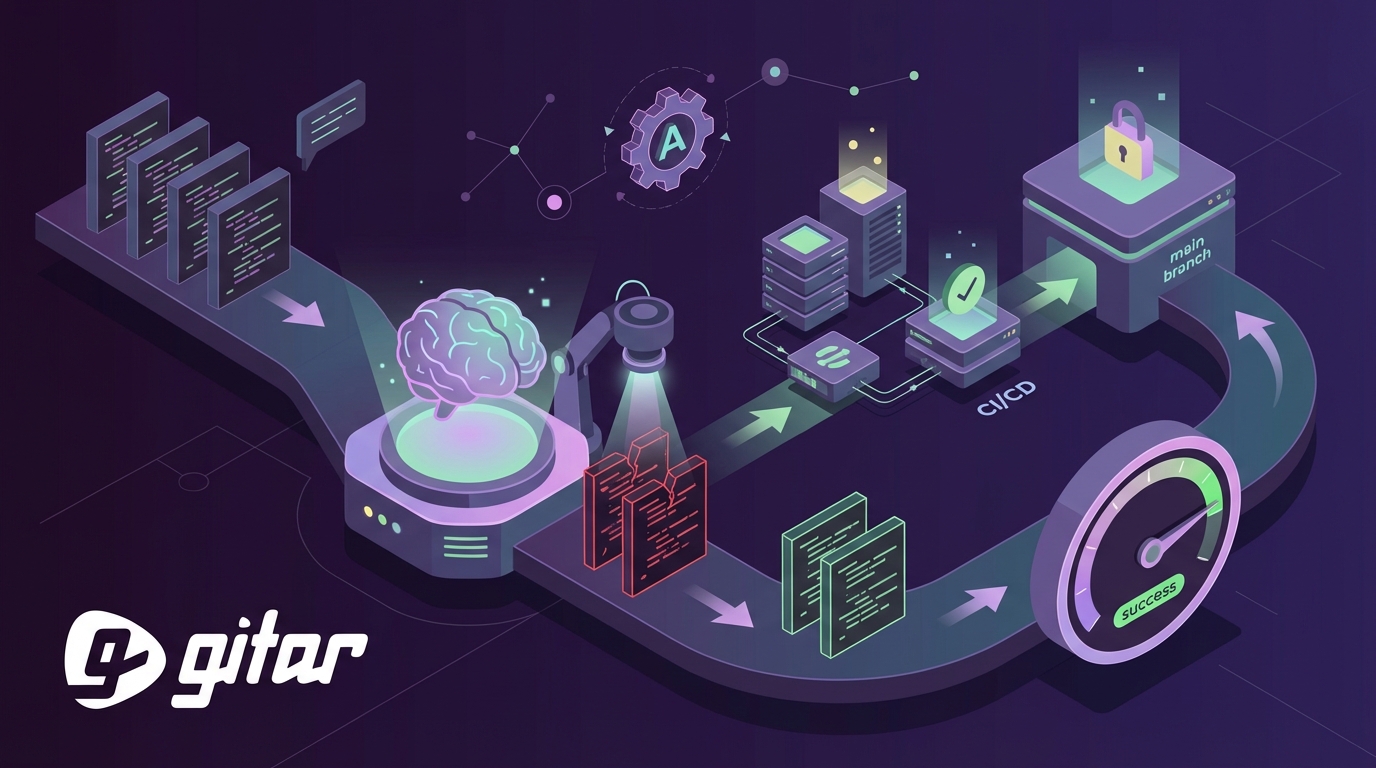
Gitar acts as an autonomous AI agent for your CI pipeline. When a pull request fails CI or receives review feedback, Gitar analyzes the problem, generates a fix, and updates the PR. The result is a self-healing CI workflow that reduces manual toil and review latency.
Core Capabilities That Reduce PR Cycle Time
Gitar focuses on direct, high-impact actions that keep PRs moving:
- Autonomous CI fixes. Gitar generates and applies code changes for lint errors, test failures, and build issues. It can resolve style violations, dependency problems, and other CI blockers without waiting on a developer.
- Actionable code review assistance. Gitar turns review comments into code changes. When a reviewer requests edits in a PR comment, Gitar interprets the feedback and implements the update in the codebase.
- Full CI environment replication. Gitar emulates complex enterprise CI environments, including specific SDK versions, multi-language dependencies, and tools such as SonarQube and Snyk. This replication helps ensure that fixes pass in the same conditions as your production pipeline.
- Configurable trust and automation levels. Teams can begin with suggestion-only mode, where Gitar posts proposed fixes for review. As confidence grows, they can move to auto-commit modes, with rollback options available.
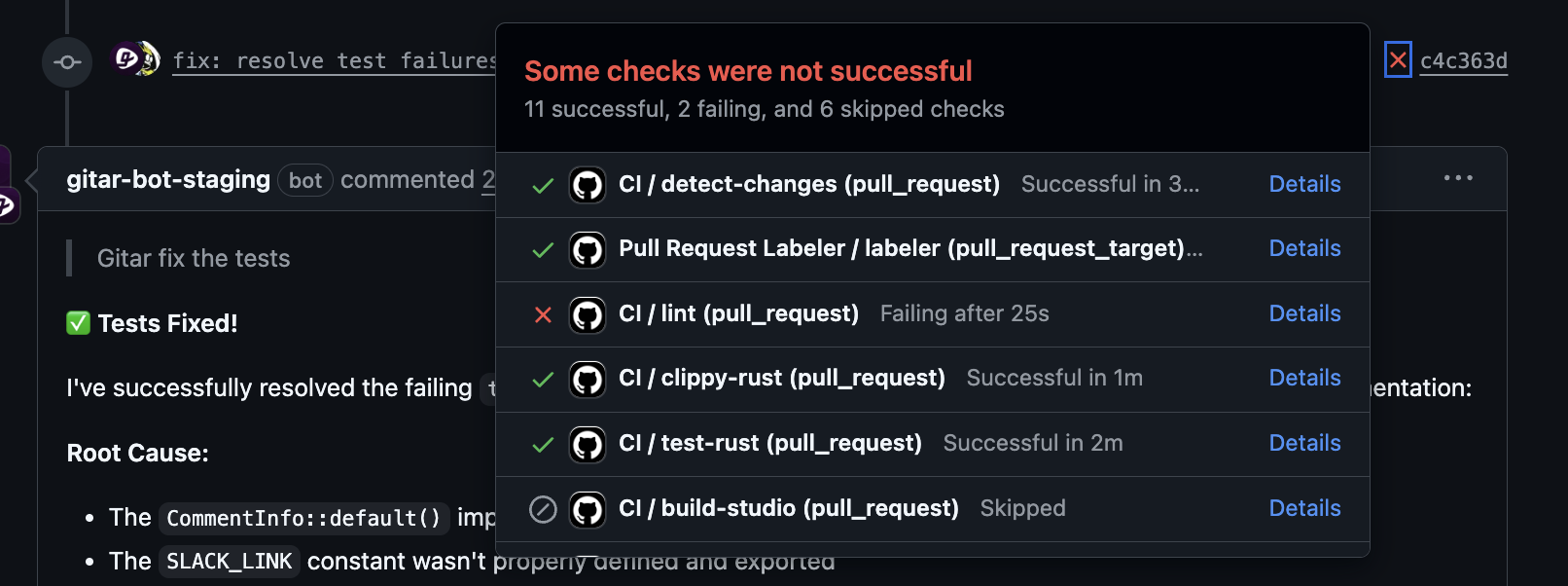
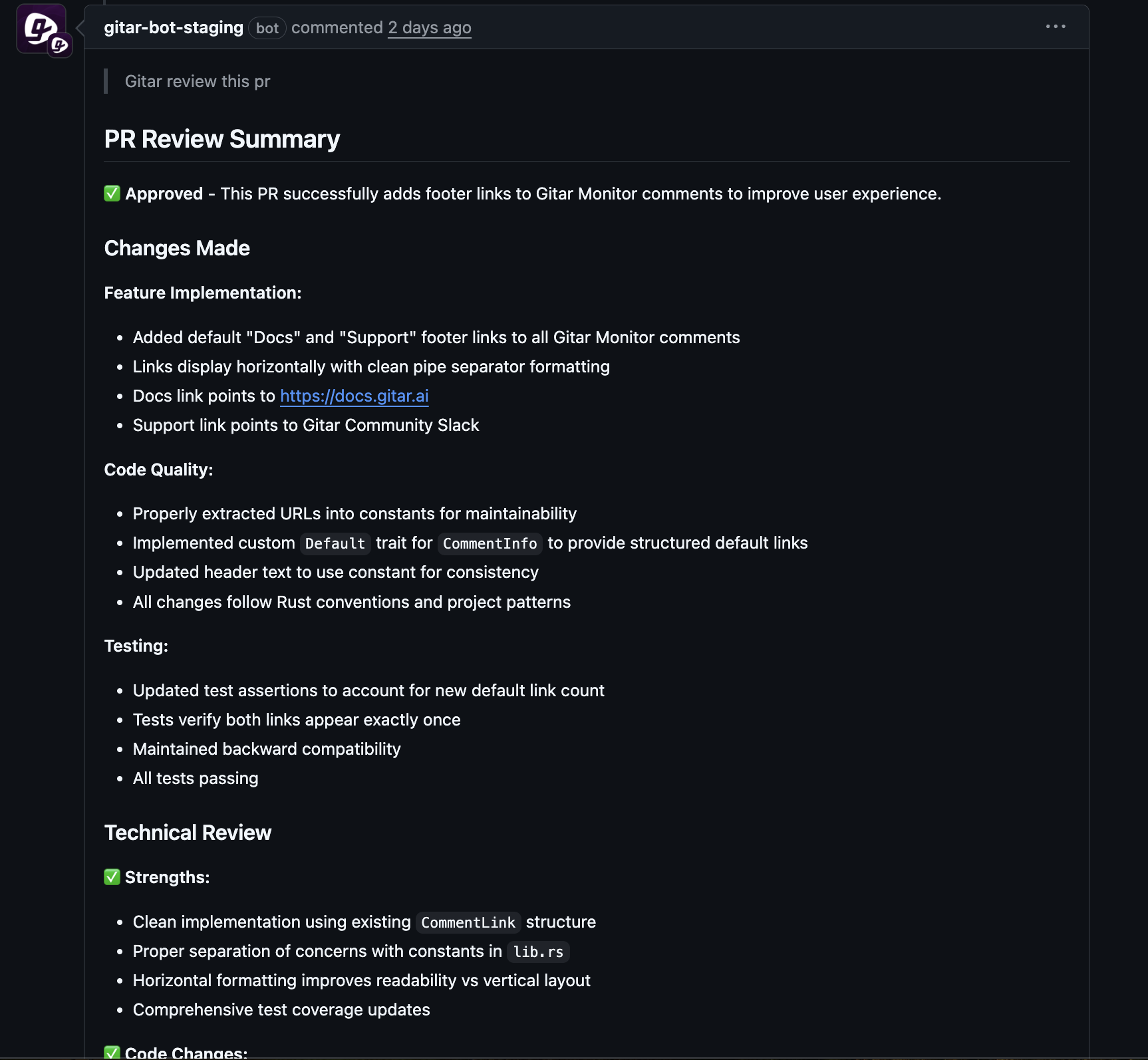
Teams that adopt Gitar reduce time spent on repetitive CI fixes and shorten the gap between feedback and merge.
Plan Autonomous AI Testing to Shorten Pull Request Cycle Time
A clear strategy improves the impact of autonomous AI. Engineering leaders should assess CI maturity, test coverage, and cultural readiness for automation before rollout.
The build versus buy decision matters. In-house AI for CI must handle complex environments, wide toolchains, and constant change. Gitar addresses this with its environment replication approach, which suits enterprise-scale setups better than general AI tools.
Developer trust is essential. Flaky tests generate false failures that slow merges and erode confidence in CI. Gitar supports gradual adoption with adjustable automation levels, so teams can inspect fixes first and increase autonomy as they gain confidence.
Leadership should track:
- Average test and feedback duration per PR
- Test pass rate stability
- Merged PR throughput per developer
These metrics describe the real developer experience and highlight where to invest in tests and infrastructure. Gitar improves each metric by reducing CI rework and review delays.
How Gitar Delivers Reliable Green Builds
Healing Engine Instead of Suggestion Engine
Most AI tools suggest edits and leave final action to the developer. Gitar focuses on execution. It applies fixes directly, runs them through your CI pipeline, and iterates until the build is green or the issue requires human input.

Support for Complex Enterprise CI Environments
Enterprise CI systems often include multiple SDKs, custom build tools, security scanners, and organization-specific workflows. Gitar’s custom agent architecture replicates this environment, so fixes are validated under the same constraints that production code sees.
Reduced Human Latency in Code Review
Analysis of roughly one million pull requests shows that review wait time is often the dominant bottleneck, with PRs waiting more than four days before review starts. Gitar reduces this delay by acting on review feedback as soon as it appears. Distributed teams benefit in particular, since reviewers can leave comments at the end of their day and Gitar can apply changes before the next shift begins.
Avoid Common CI/CD Automation Pitfalls
Address Flaky Tests Early
Unstable tests generate noise, consume triage time, and reduce trust in CI results. Teams that ignore flaky tests train developers to disregard failures. Gitar focuses on deterministic fixes and can help teams surface and isolate fragile tests.
Account for Context Switching Costs
The main cost of CI failures is often not the fix itself, but the mental disruption. Each failed build forces developers to stop current work, recall old context, and then regain focus. Gitar reduces these interruptions by handling many failures autonomously.
Enforce Consistent Quality Gates
Automated gating on test status, approvals, and compliance rules shortens decision time and ensures consistent policies. With Gitar, CI gates stay strict while the burden of achieving green builds decreases.
Frequently Asked Questions
How does Gitar Differ From AI Code Review Tools or IDE Assistants?
Gitar operates after the code is committed. It responds to failed builds and review comments by applying and validating fixes in your CI environment. IDE tools and review assistants focus on writing or inspecting code, while Gitar focuses on turning failing PRs into green ones with minimal human effort.
Can Gitar Handle Complex CI Setups?
Gitar is designed for customized enterprise CI pipelines. Its environment replication and agent architecture allow it to work with specific SDK versions, multiple language stacks, and tools such as SonarQube and Snyk. Fixes are validated under the same conditions used in your existing workflows.
How to Build Trust in Automated Fixes?
Gitar supports a gradual path to automation. Teams often begin with suggestion mode, where Gitar posts changes for review. After seeing consistent, accurate fixes, they move to auto-commit for low-risk changes, keeping manual review for critical paths. Rollback options remain available.
What can ROI Engineering Leaders Expect?
For a 20 developer team, even one hour per person per day spent on CI failures and slow reviews can exceed one million dollars per year in loaded costs. Gitar reduces this time by removing repetitive fixes and shortening review cycles. The result is lower cost per feature and more capacity for strategic work.
How does Gitar fit Security and Compliance Requirements?
Gitar works within existing permissions, branch protections, and approval rules. Its commits follow the same controls as human changes. For organizations with strict data requirements, Gitar also supports deployment models that keep code inside controlled environments.
Conclusion: Use Autonomous AI to Reduce Pull Request Cycle Time
Reducing PR cycle time is now a core engineering and business objective. Manual CI debugging and slow review loops cannot keep pace with modern delivery expectations.
Autonomous tools such as Gitar turn CI from a blocking step into a system that actively helps developers move work forward. By cutting repetitive fixes and feedback delays, teams release more often, with less frustration, and with higher confidence.
Engineering leaders who adopt self-healing CI build a stronger foundation for future AI-driven workflows and more resilient software delivery.
To see these benefits in your own pipeline, install Gitar and start reducing pull request cycle time with autonomous CI fixes.