
CI/CD pipelines are meant to speed up development, but they often turn into obstacles that frustrate developers and slow progress. This article explores how combining strong support with smart, independent tools like Gitar can improve efficiency and help engineering teams regain lost productivity.
Why Traditional CI/CD Support Falls Short
Modern development teams face a growing problem: systems built to speed up delivery can drag down productivity. Manual troubleshooting and reactive fixes don’t keep up with today’s fast-paced environment. Engineering leaders see not just delays, but also a drop in developer morale as a result.
Developer Time Lost to Debugging
CI failures and code review feedback steal significant time from developers. Many spend at least an hour each day on tasks that could be automated, like decoding error messages or switching between projects to apply fixes manually.
This time loss adds up quickly. When a senior engineer spends 30 minutes on a minor issue, it’s not just that half-hour. The real cost includes disrupted focus, delayed features, and reduced team speed. For a 20-person team, this can mean over $1 million in lost productivity each year.
Constant interruptions hurt the most. Developers push a pull request, move to another task, then get pulled back by a failure alert. Rebuilding focus after each disruption turns a quick fix into a much larger drain on time and energy.
Recurring CI/CD Challenges
CI/CD failures often follow familiar patterns that overwhelm manual support systems. Common issues include:
- Complex pipelines causing multiple failures and frustration.
- Slow pipelines, taking over 10 minutes, which reduce deployment frequency and confidence in the system.
- Configuration errors and flaky tests due to inconsistent setups.
- Unclear logs and ownership issues that delay problem-solving.
These challenges create a cycle of inefficiency. Poor tools increase the need for support, which strains resources and extends resolution times, leaving developers more frustrated.
Time Zone Delays for Distributed Teams
Global teams face extra hurdles with traditional support. A developer in San Francisco waiting for feedback from Bangalore can see review cycles stretch from hours to days due to a 12-hour time difference.
Platform issues across regions make this worse. Distributed teams relying on manual support become especially vulnerable to delays. Even AI tools that suggest fixes still need human action, keeping the same slow cycle of dependency in place.
More Code, More Bottlenecks
AI coding tools like Cursor speed up code creation, but validation and merging haven’t kept pace. This shift creates a bottleneck where CI/CD pipelines and reviews limit overall progress.
Generating more code means more pull requests and tests, increasing the chance of failures. Manual fixes can’t handle this volume. Teams may write code quickly with AI but merge it slowly due to human limitations, reducing overall speed.
Ready to eliminate CI/CD obstacles and support your engineering team? Install Gitar now to fix broken builds automatically and ship quality software faster.
How Gitar Delivers Independent CI/CD Support
Gitar changes CI/CD support by moving from reactive fixes to automatic problem-solving. It turns pipelines into systems that correct themselves, tackling the root causes of productivity loss and setting a new standard for efficiency.
Gitar: A Tool That Fixes Issues for You
Gitar acts as an independent fixer, not just a suggestion tool. It identifies problems, applies solutions, and confirms builds pass without needing human input. This goes beyond older support methods that depend on manual effort.

Complete Problem Resolution
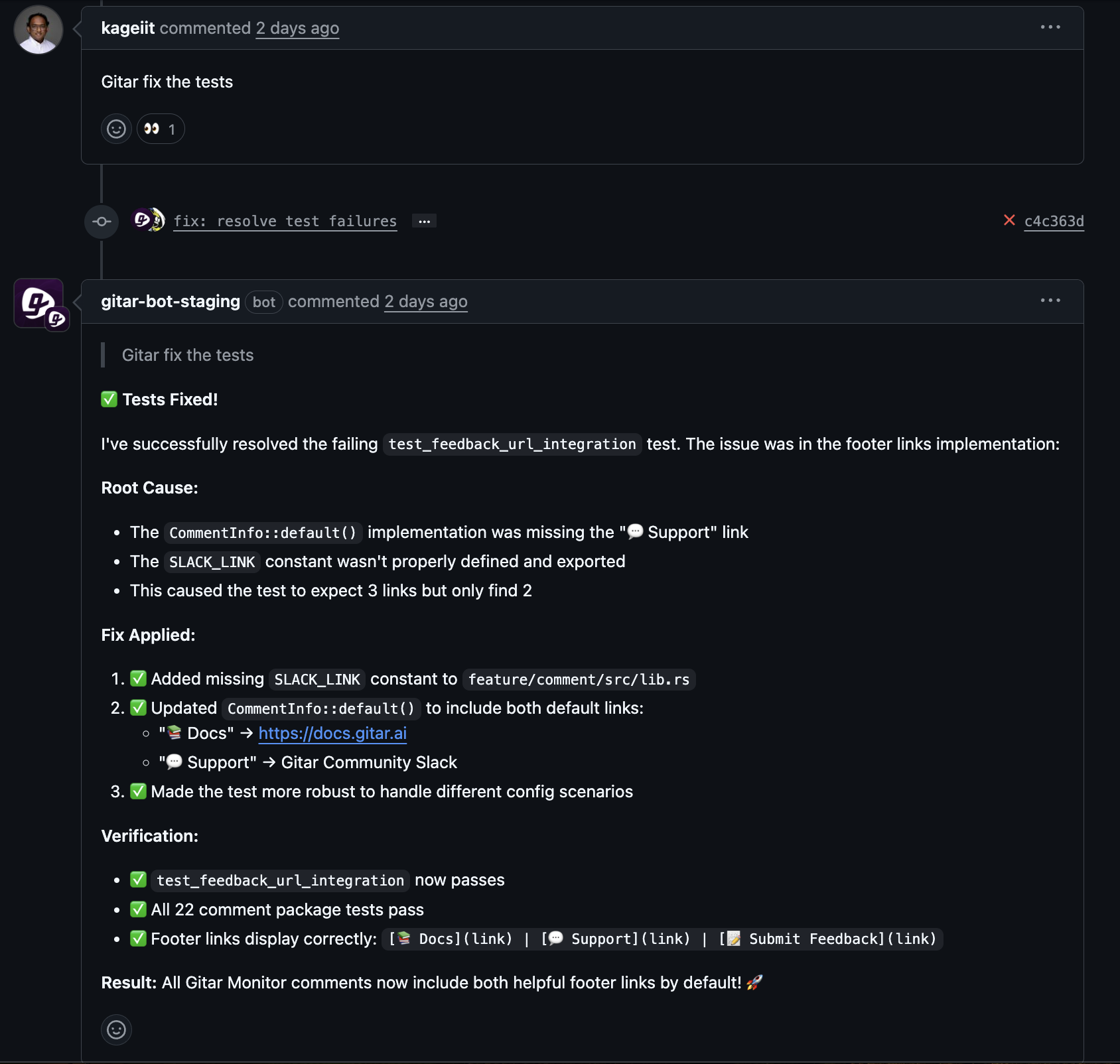
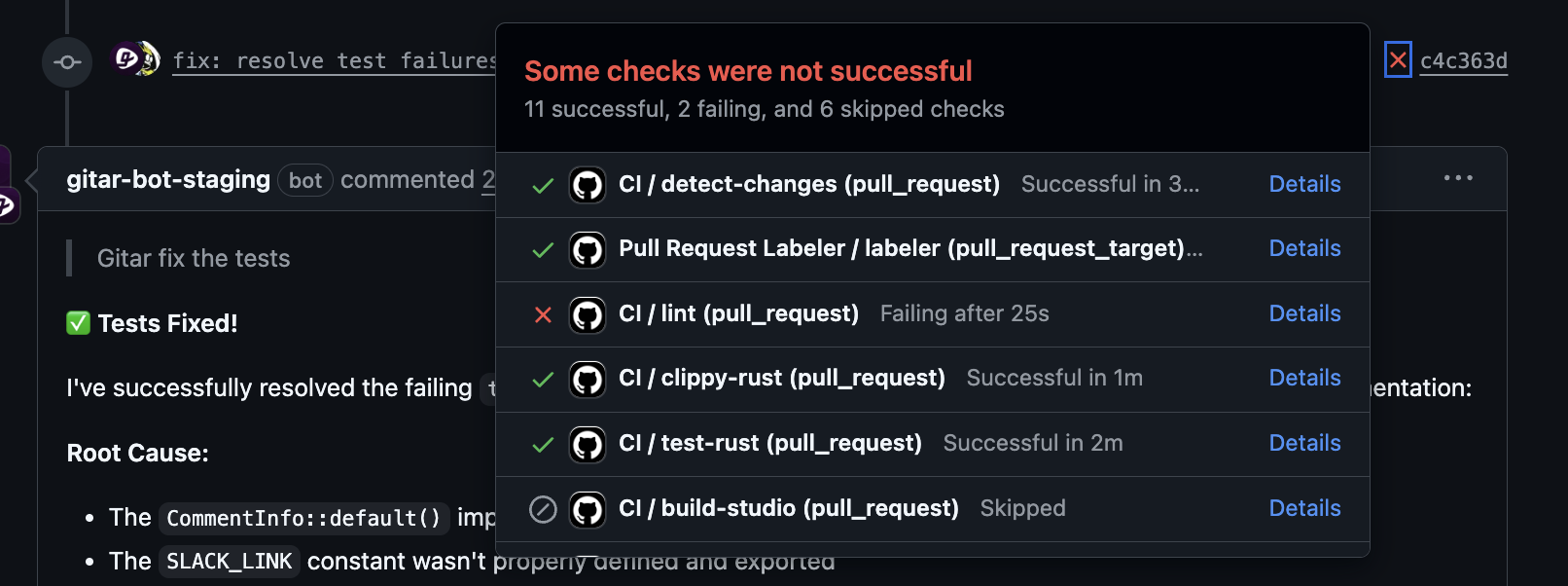
Gitar handles the full process from issue to fix. If a CI pipeline fails due to linting, test errors, or build issues, it reads the logs, creates a solution, applies it to the pull request, and checks if the build passes. This removes the need for developers to test suggested fixes manually.
It addresses many common failures, such as fixing code style issues, updating test snapshots, and resolving dependency conflicts. Each solution is tested to ensure the pull request meets all CI requirements.
Matching Your Environment
Gitar mirrors enterprise setups, including specific software versions, integrations, and custom configurations. This accuracy means fixes work in your real environment, not just in theory.
This is vital for complex systems where dependency issues often cause failures. Gitar considers these details, creating solutions that fit your organization’s specific needs and standards.
Smart Code Review Help
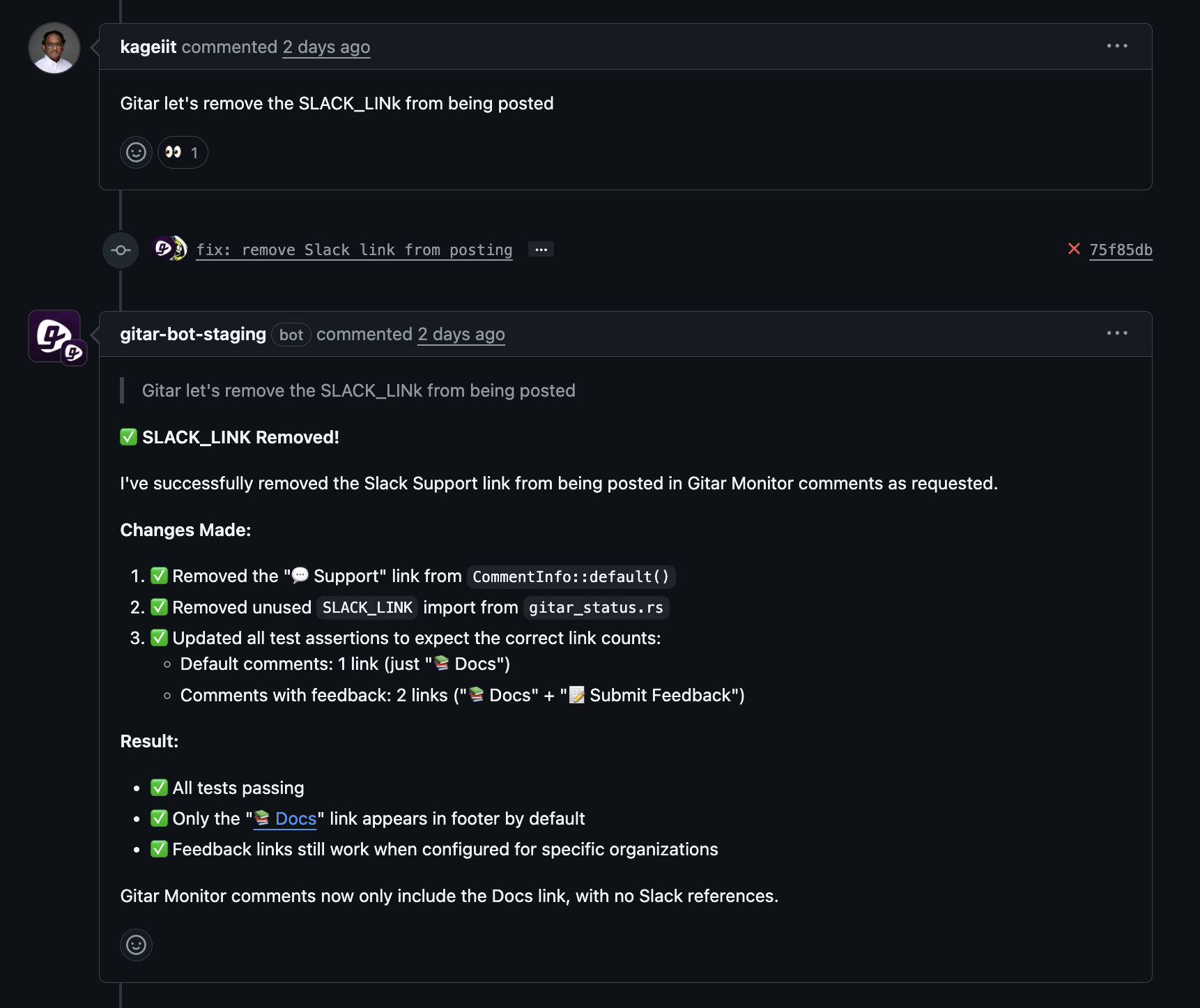
Gitar also supports code reviews. Reviewers can ask it to make changes by mentioning it in comments, like requesting to remove a feature. Gitar then applies the change, commits it, and explains what was done.
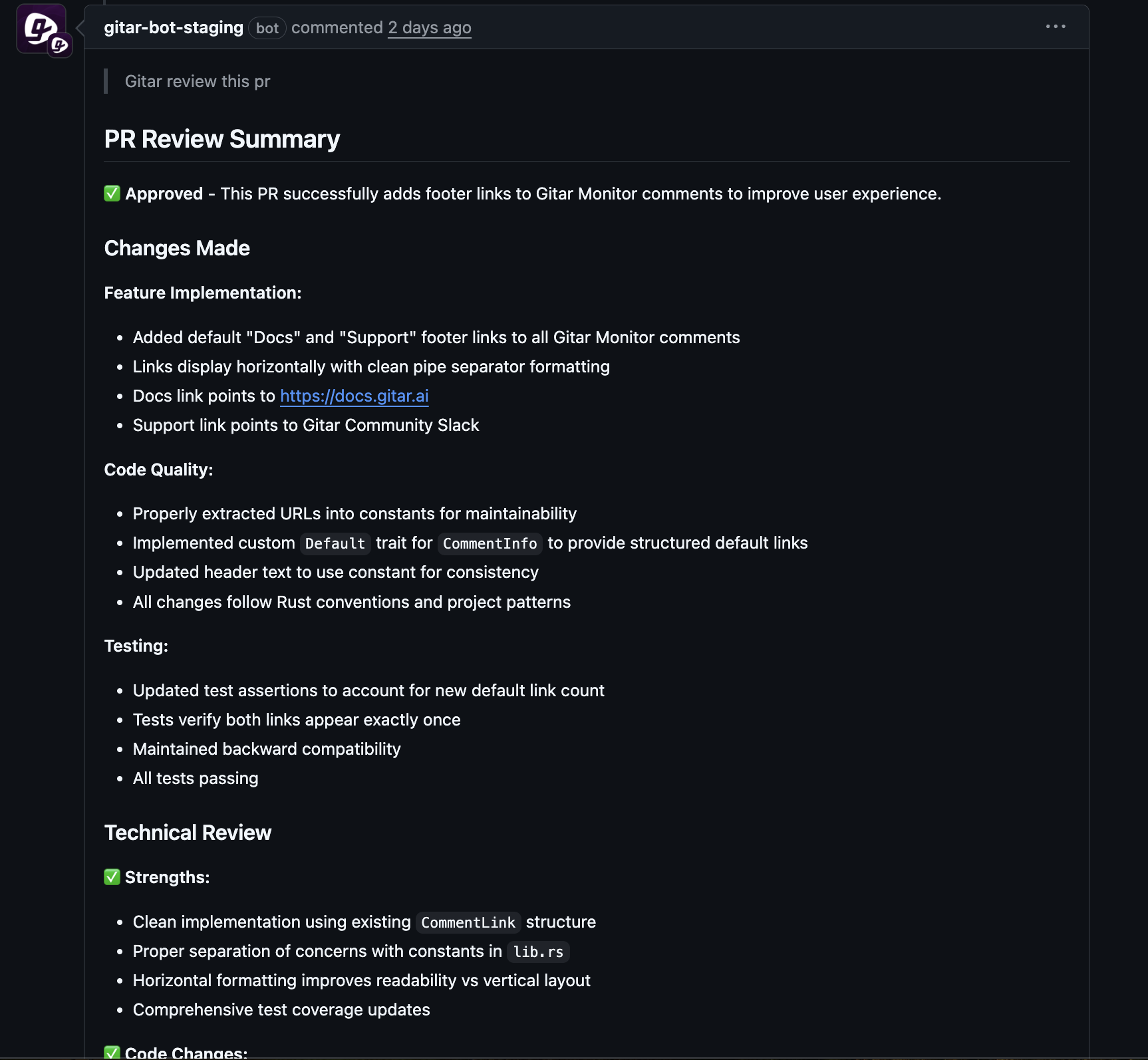
This turns reviews into actionable steps. Instead of waiting for manual updates, reviewers can rely on Gitar to handle tasks and confirm they pass CI checks.
Customizable Control Options
Gitar offers adjustable settings to build trust. Teams can start with a mode where it suggests fixes for approval, then move to automatic commits with rollback options. This lets teams control automation while gaining confidence in the tool.
These options help leaders balance oversight with efficiency. Customization ensures Gitar fits your team’s comfort level and risk tolerance as automation grows.
Key Gains from Independent CI/CD Support
Switching to automatic CI/CD support offers clear advantages beyond saving time. Teams see better developer experiences, faster progress, and measurable business results that grow over time.
Less Disruption, Better Focus
Automatic fixes reduce interruptions from CI issues. Developers stay focused on important tasks instead of routine debugging. Keeping this focus is one of the biggest wins for productivity.
Deep concentration matters for complex work. Constant shifts between strategic tasks and minor fixes create stress. Gitar prevents these breaks, letting developers stick to high-value projects.
This trust in automatic fixes also boosts confidence. When developers know issues will be handled, they work with less worry. This change can improve team dynamics and spark new ideas.
Faster Merges and Lower Costs
Automatic support shortens pull request cycles from hours or days to minutes. This speeds up releases and gets features to users sooner, directly affecting business timelines.
Slow pipelines cut deployment frequency and cause delays. Gitar resolves issues quickly, ensuring steady progress and consistent delivery speed.
Cost savings are significant. For a 20-developer team spending an hour daily on CI tasks, Gitar can save up to $500,000 yearly. These savings grow with team size and system complexity.
Stronger, Forward-Looking Systems
With automatic support, teams shift from fixing emergencies to improving systems proactively. Gitar helps build pipelines that self-correct instead of failing completely.
This approach also aids reliability. When issues are fixed instantly, teams can spot patterns and root causes without urgency. This leads to lasting fixes that prevent future problems.
For fast-moving teams, reliable CI/CD is critical. Automatic support provides a safety net, letting teams push forward confidently, knowing issues will be caught and fixed.
Supporting Global Teams Effectively
Distributed teams benefit greatly from automatic support. Time zone gaps that delay reviews become irrelevant when fixes happen in minutes. Feedback left in India can be applied by Gitar before a California developer starts their day.
This changes how global teams operate. Instead of slower cycles, they match the speed of local teams while accessing worldwide talent. Gitar enables true efficiency in distributed setups.
Beyond speed, this improves collaboration. Freed from CI delays, global teams focus on strategy and complex challenges, raising their contribution to the organization.
How Gitar Stands Out from Other Tools
Gitar differs from typical AI tools that only suggest fixes. It resolves issues end-to-end, while others still need manual steps. This table shows the contrast clearly.
|
Feature |
Gitar (Healing Engine) |
Traditional AI (Suggestion Engine) |
Manual Troubleshooting (Status Quo) |
|
Action & Validation |
Automatic fixes, full CI validation, confirmed passing builds |
Suggestions only, requires manual steps to apply and test |
Manual research, coding, and repeated checks |
|
Environmental Awareness |
Matches full enterprise setup (SDKs, tools, dependencies) |
Limited understanding of specific code changes |
Relies on human knowledge and local setup |
|
Trigger Point |
CI failure, code review feedback |
Pull/Merge Request creation |
Failed build, manual issue detection |
|
Distributed Team Optimization |
Handles feedback across time zones instantly |
Doesn’t address time zone delays directly |
Very prone to time zone delays |
This shows why Gitar offers a major shift. Tools that suggest fixes keep the same bottlenecks, but Gitar removes them with full automation.
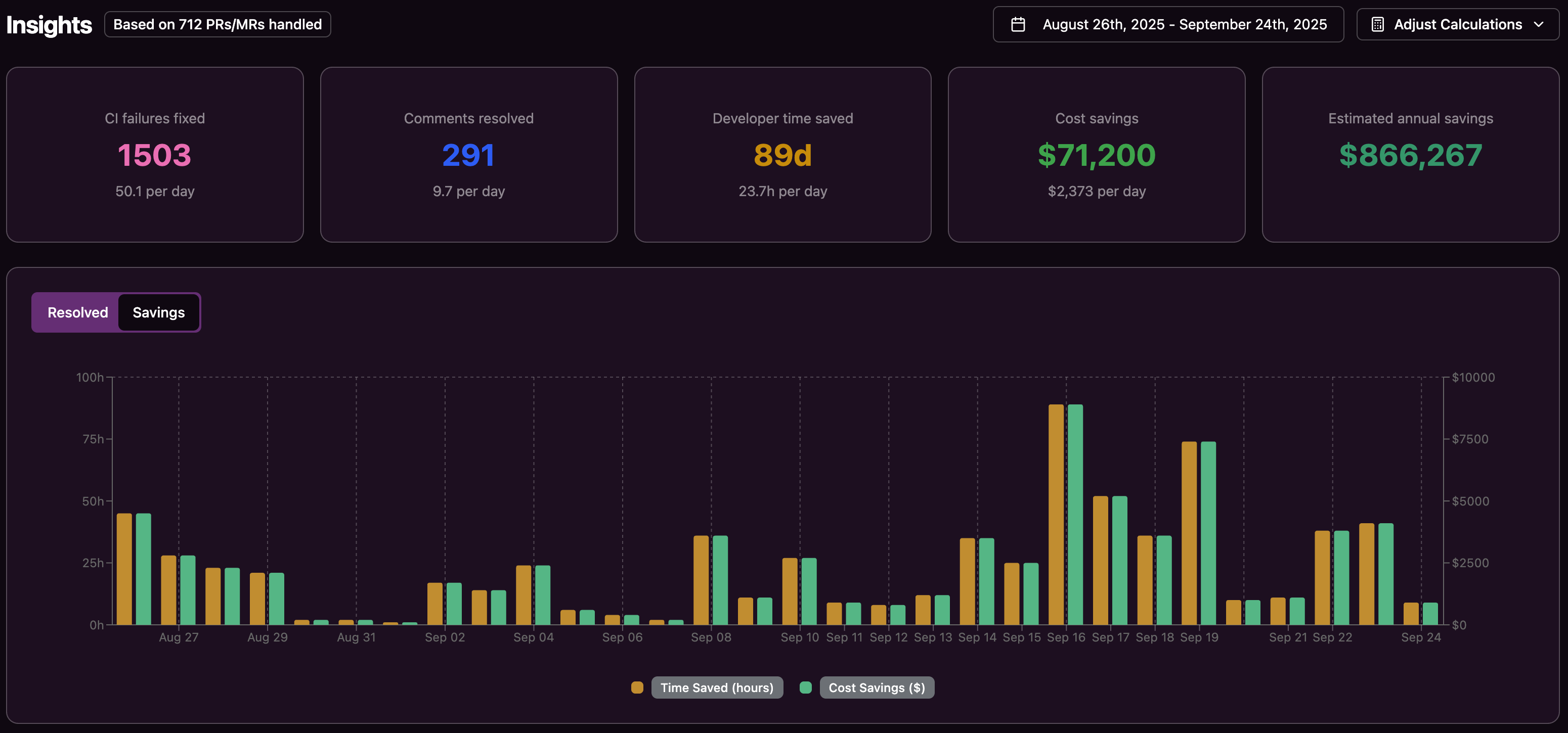
Install Gitar now to fix broken builds automatically and ship quality software faster.
Common Questions About Gitar
How Does Gitar Work with Team Knowledge Sharing?
Gitar supports internal communities by handling repetitive fixes, freeing teams to focus on complex challenges and deeper collaboration. This encourages a shift from urgent problem-solving to strategic planning.
With routine CI issues managed automatically, engineering discussions can center on architecture and innovation. This improves the quality of team interactions and supports professional growth.
Can Gitar Handle Complex Enterprise Pipelines?
Gitar manages complex systems effectively by mirroring enterprise environments, including specific software versions and integrations. This ensures fixes fit your unique setup and pass validation.
It adapts to enterprise needs through detailed modeling of dependencies and rules. Fixes are tested against your full pipeline, maintaining reliability even in intricate workflows.
How Do You Track the Value of Gitar?
Measure Gitar’s impact by tracking time saved on CI fixes, faster merge cycles, and more frequent deployments. A 20-developer team could save hundreds of thousands yearly by cutting daily debugging time.
Other benefits include happier developers and quicker feature releases. These add up over time, often bringing as much value as direct cost savings.
What About Security with Automatic Code Changes?
Gitar ensures security with adjustable settings. For sensitive projects, it can suggest changes for approval. It also logs all actions for clear tracking and accountability.
It aligns with your security processes and scans, applying fixes within your policies. Extra reviews can be set for critical code areas to meet compliance needs.
How Does Gitar Handle Unique CI Issues?
Gitar excels with common issues but recognizes when a problem is beyond its scope. It escalates complex challenges to human experts while managing routine tasks, balancing automation with expertise.
This frees up skilled engineers for tougher problems, ensuring novel issues get the focus they need while routine fixes happen automatically.
Why Automatic CI/CD Support Is the Future
Manual troubleshooting can’t keep up with today’s development speed and complexity. As AI speeds up coding, validation and merging become the focus, where tools like Gitar add the most value. Adopting this approach boosts productivity, speeds up delivery, and lifts team morale.
Gitar moves CI/CD support from reactive fixes to proactive healing. It lets developers focus on meaningful work, turning frustration into focus. The benefits go beyond efficiency, improving the entire developer experience.
Teams using automatic support often see quick gains in lower costs, faster releases, and better retention. Early adopters build a foundation for stronger development speed and efficiency.
For engineering leaders, the choice is clear. Leading with automatic CI/CD tools now positions your team for future success and innovation.