
CI/CD pipelines and manual code reviews often slow down developers, eating up valuable time and delaying merges. This article explores the hidden costs of context switching and the limitations of traditional solutions. It also highlights how autonomous AI-driven CI, like Gitar, can streamline these processes, making them more efficient and boosting developer productivity.
Why Broken CI/CD and Code Reviews Hurt Productivity
Most developers have faced this frustration: you submit a pull request, only to see a flood of errors. A small linting issue, a flaky test, or a missing dependency turns a quick task into a time-consuming ordeal, breaking your focus and slowing down progress.
The numbers show how widespread CI/CD challenges are. Only 24% of organizations with CI/CD can deploy to production on demand. This gap between having tools and achieving real efficiency costs engineering teams millions in lost time.
Context switching adds a heavy burden. When a CI pipeline fails, developers must stop their current work, dig through error logs, fix the issue, commit changes, and wait for the pipeline to rerun. This cycle, often lasting hours, disrupts focus and delays meaningful tasks.
Distributed teams face even bigger hurdles. A simple review between teammates in different time zones, like San Francisco and Bangalore, can stretch from hours to days. Traditional AI tools often add more steps by offering suggestions that still need manual effort, extending delays instead of solving them.
AI coding tools like GitHub Copilot speed up code writing, but the increased output can strain validation processes. About 47% of new records have errors, meaning nearly half of CI runs risk failing due to quality issues.
The financial toll is significant. For a team of 20 developers spending just one hour daily on CI failures and reviews, the yearly cost in lost productivity nears $1 million. This doesn’t include delayed releases, developer fatigue, or missed opportunities for new features.
Pre-merge checks fail more often than post-merge checks, showing that catching issues early creates bottlenecks instead of safeguards. Add in the complexity of enterprise setups with multiple SDKs and dependencies, and the problem grows even larger.
Ready to tackle CI/CD slowdowns? Install Gitar now to fix broken builds automatically.
How Autonomous AI-Driven CI Improves Development
Traditional CI/CD tools and suggestion-based AI reviewers often fall short. They spot issues but frequently leave the fixing to developers, creating extra steps that lead to context switching and delays.
Some AI tools detect code problems and suggest fixes, with varying levels of automation depending on the platform. While newer versions offer more independent actions, certain tasks might still need developer input.
Autonomous AI-driven CI takes a different approach by moving from suggestions to direct action. These systems apply fixes, test them in the full CI environment, and confirm everything works before involving developers. This shifts the focus from reacting to issues to resolving them proactively.
What sets this apart is environmental awareness. Unlike tools that analyze code alone, autonomous systems mimic the entire build setup, including dependencies and custom configurations. Fixes aren’t just theoretical, they’re proven to work in your specific context.
This approach benefits everyone in engineering. Developers avoid the frustration of constant debugging. Managers see faster team output and happier staff. DevOps gains more stable pipelines and lower costs from fewer failed runs.
For distributed teams, autonomous CI solves timing issues. If a reviewer in one time zone flags a problem, the system can fix it right away, so the original developer sees a resolved PR when they log in. This cuts down on back-and-forth delays.
As AI coding tools help developers write more code quickly, autonomous CI keeps validation on pace. More code doesn’t mean more bottlenecks, it means faster, dependable delivery.
Meet Gitar: Your Solution for Autonomous CI Fixes
Gitar is an AI agent that automatically resolves failing CI pipelines and handles code review feedback. Unlike tools that only suggest changes, Gitar detects issues, applies fixes, and validates them, saving developers hours each day on routine checks.

Here’s what makes Gitar effective for CI challenges:
- Complete Fix Process: Gitar doesn’t just suggest changes, it applies and validates them across full CI workflows, handling linting errors, test failures, and build issues.
- Environment Matching: It mirrors your exact setup, from JDK versions to third-party tools like SonarQube, ensuring fixes work in your context.
- Smart Review Handling: Reviewers leave comments, and Gitar acts on them, cutting down on manual back-and-forth during reviews.
- Flexible Trust Options: Teams can start with suggestion-only mode and move to full automation as they build confidence in the system.
- Wide Platform Support: Gitar works with GitHub Actions, GitLab CI, CircleCI, BuildKite, and other systems, fitting into your current tools.
Ready to try autonomous CI? Learn more about Gitar today.
How Gitar Boosts Your Workflow Efficiency
Cutting Context Switching with Self-Fixing Pipelines
The biggest cost of CI failures isn’t just fixing them, it’s the focus lost when developers switch tasks. Stopping creative work to debug an issue disrupts momentum and deep thinking.
Gitar changes this by building self-fixing CI pipelines. When issues like linting errors or test failures crop up, Gitar analyzes logs, creates a fix, and applies it automatically. Developers stay focused on coding while fixes happen in the background.
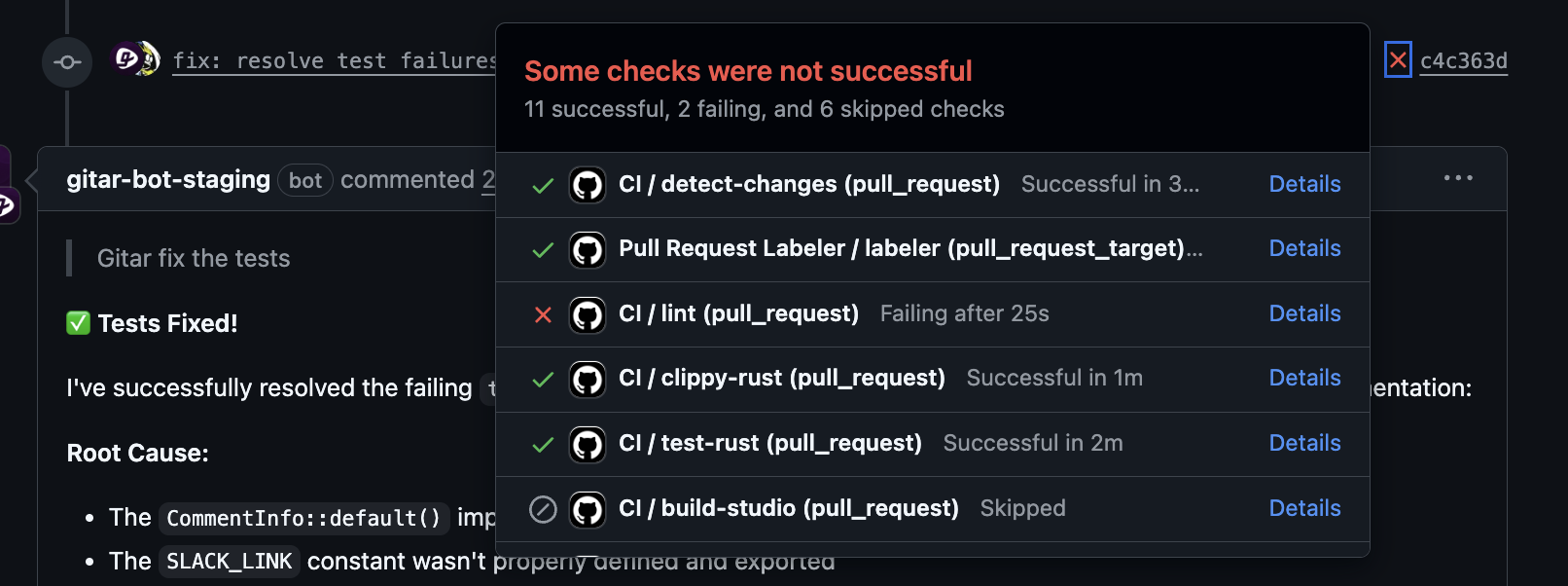
The volume of jobs in pre-merge checks affects pipeline speed. Gitar reduces manual effort across these jobs, resolving common failures without developer input.
This helps developers stay in their flow state longer, leading to more productive coding sessions.
Speeding Up Merges with Automated Code Reviews
Code reviews, while critical for quality, often delay merges due to multiple feedback rounds and manual updates. This slows things down, especially for distributed teams across time zones.
Gitar’s review automation tackles this. Reviewers can leave instructions, and Gitar makes the changes, commits them, and updates the PR. The original developer doesn’t need to stop their work to handle minor fixes.
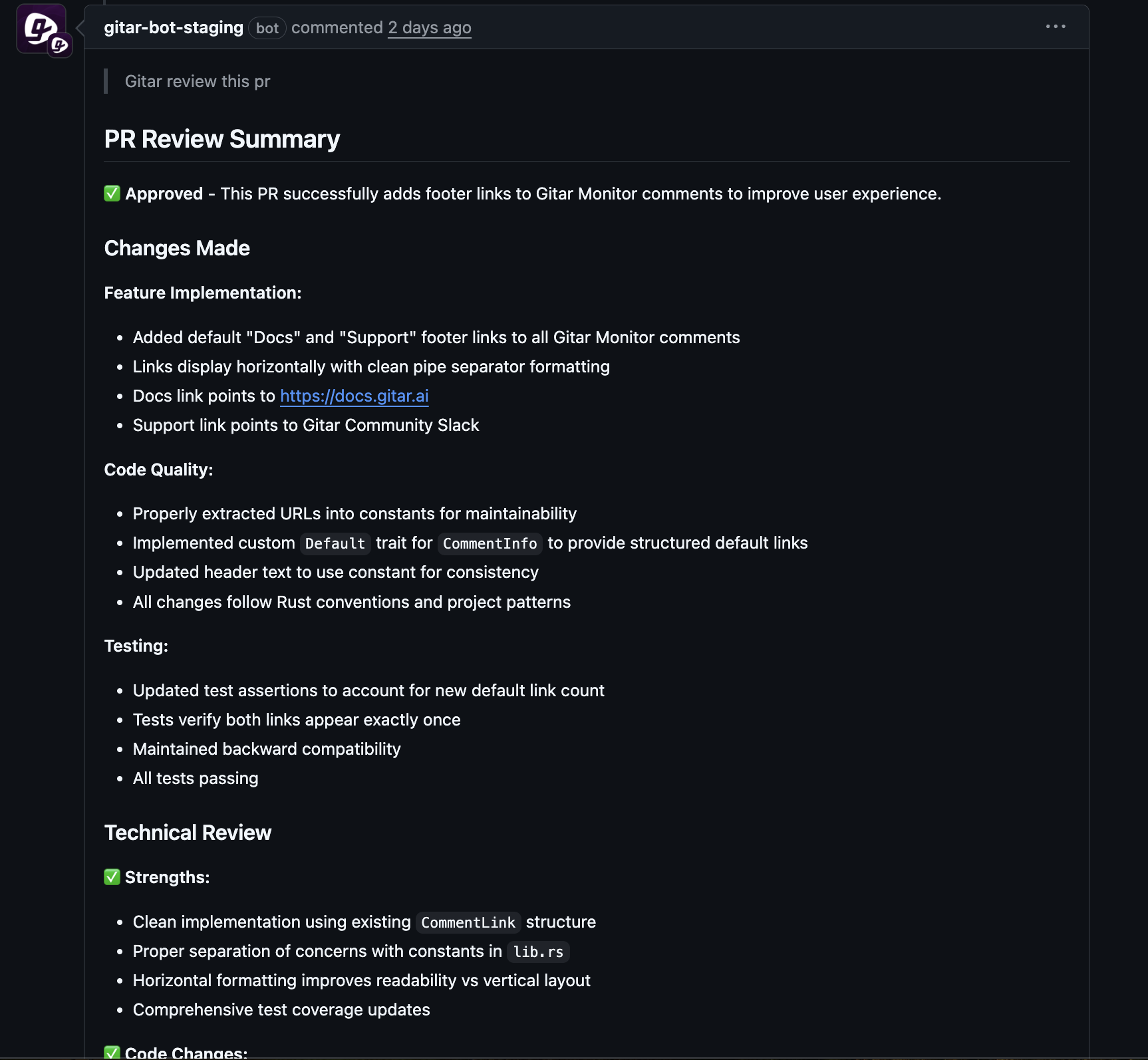
For distributed teams, this means a reviewer in one time zone can comment, and Gitar applies the fix. The PR is ready for approval when the developer logs in, cutting delays from time differences.
By reducing manual steps, Gitar shortens merge times significantly.
Handling Complex Enterprise CI with Reliability
Enterprise CI setups come with unique challenges, like intricate dependencies and custom tools, which general AI solutions often can’t address without deep context.
Gitar replicates your full CI environment to validate fixes. It tests changes against your specific setup, including third-party integrations and custom configurations, ensuring reliability.
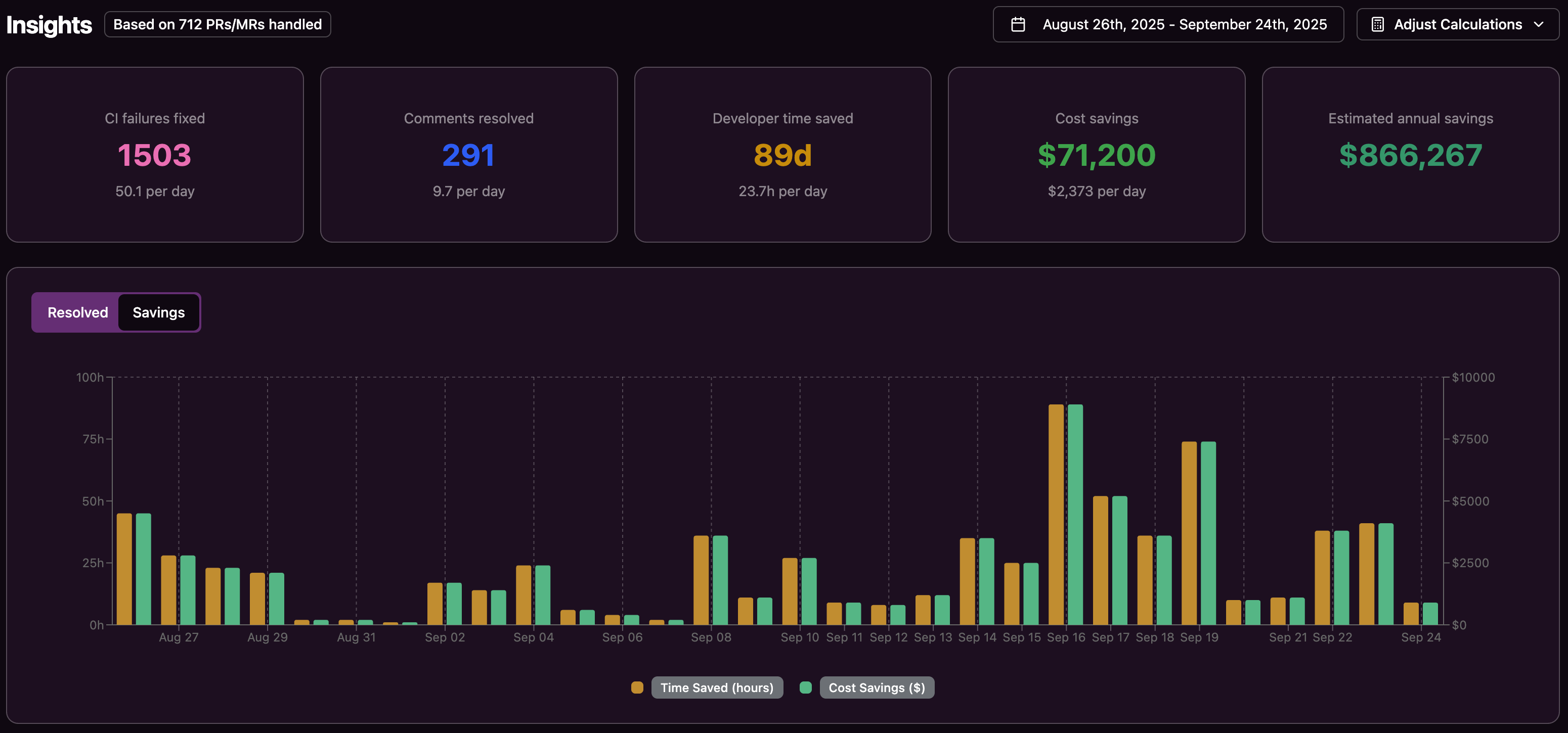
CI pipelines often slow down as complexity grows. Gitar helps by applying tested fixes. It also cuts costs from failed runs by reducing retries and offers insights to refine CI processes. Data observability helps pinpoint pipeline issues.
Comparing Gitar to Suggestion Tools and Manual Fixes
|
Feature / Benefit |
Gitar (Autonomous Fixes) |
Suggestion Engines (e.g., CodeRabbit) |
Manual Fixing (Status Quo) |
|
Root Cause Analysis |
Automatic, context-aware |
Detailed issue detection |
Developer investigation |
|
Fix Implementation |
Autonomous, validated commits |
Varies, sometimes manual |
Fully manual coding |
|
CI Pipeline Validation |
Tested in full CI setup |
Often includes PR validation |
Manual CI reruns |
|
Context Switching |
Greatly reduced |
Lower with some automation |
Frequent switching |
|
Time-to-Merge Impact |
Faster merges |
Improved with integration |
Significant delays |
|
Enterprise Environment Support |
Full setup replication |
Some enterprise features |
Local developer setup |
Ready to improve your CI/CD flow? Install Gitar now to fix broken builds automatically.
Key Questions About Autonomous AI in CI/CD
How Does Gitar Differ from Other AI Reviewers?
Many AI reviewers, like CodeRabbit or Claude, analyze code and suggest fixes, with automation levels varying by platform. Some still require manual effort for certain steps, depending on setup.
Gitar goes further by taking full action. It fixes CI failures or review feedback, validates changes in your CI environment, and delivers a working build, minimizing manual work.
It also mirrors your complete setup, including enterprise tools and dependencies, ensuring fixes fit your specific needs.
How Can We Trust Automated Fixes?
Gitar builds trust with flexibility. Start in a mode where fixes are suggestions needing approval. Review and accept changes easily with one click.
As confidence grows, shift to more automated options for specific tasks or projects. Even in full automation, Gitar explains changes and offers rollback if needed. Audit trails give leaders visibility to manage automation levels.
Can Gitar Work with Our Complex CI Setup?
Gitar handles intricate enterprise systems by replicating your build environment, covering JDK versions, security scans, and tools like SonarQube. It supports platforms like GitHub Actions, GitLab CI, and CircleCI, adapting to your infrastructure for context-specific fixes.
How Does Gitar Improve Team Productivity?
CI failures and reviews drain productivity through manual work and context switching. Gitar automates these in the background, freeing developers for core tasks.
For a 20-developer team, this can reclaim significant hours yearly. It also helps distributed teams by fixing issues across time zones, reducing delays. Faster reviews and reliable pipelines boost overall development speed.
What if Gitar Makes an Error?
Gitar validates fixes in your full CI environment to catch issues early. It logs all changes for transparency. If a problem arises, rollbacks are simple, as fixes are standard Git commits. Teams can set approval steps for critical changes, balancing automation with oversight.
Conclusion: Speed Up Merges with Autonomous CI
CI/CD pipelines and manual reviews create major delays in software development, costing teams time and money. Manual fixes and context switching can’t keep up with today’s need for speed.
While suggestion-based AI tools identify issues, their automation varies, sometimes leaving developers to handle fixes. This can still interrupt workflows in certain cases.
Gitar provides a fully autonomous option, resolving issues without manual input. With complete fixing, environment matching, smart review handling, and adjustable trust settings, it tackles CI/CD challenges head-on.
Teams gain faster merges, happier developers, and dependable pipelines. Distributed groups benefit from async fixes across time zones. Enterprises get the context needed for complex systems.
Autonomous CI is the next step in development, cutting out repetitive tasks so teams can focus on what matters. That future starts now.
Want to save time for your engineering team? Learn more about Gitar today.