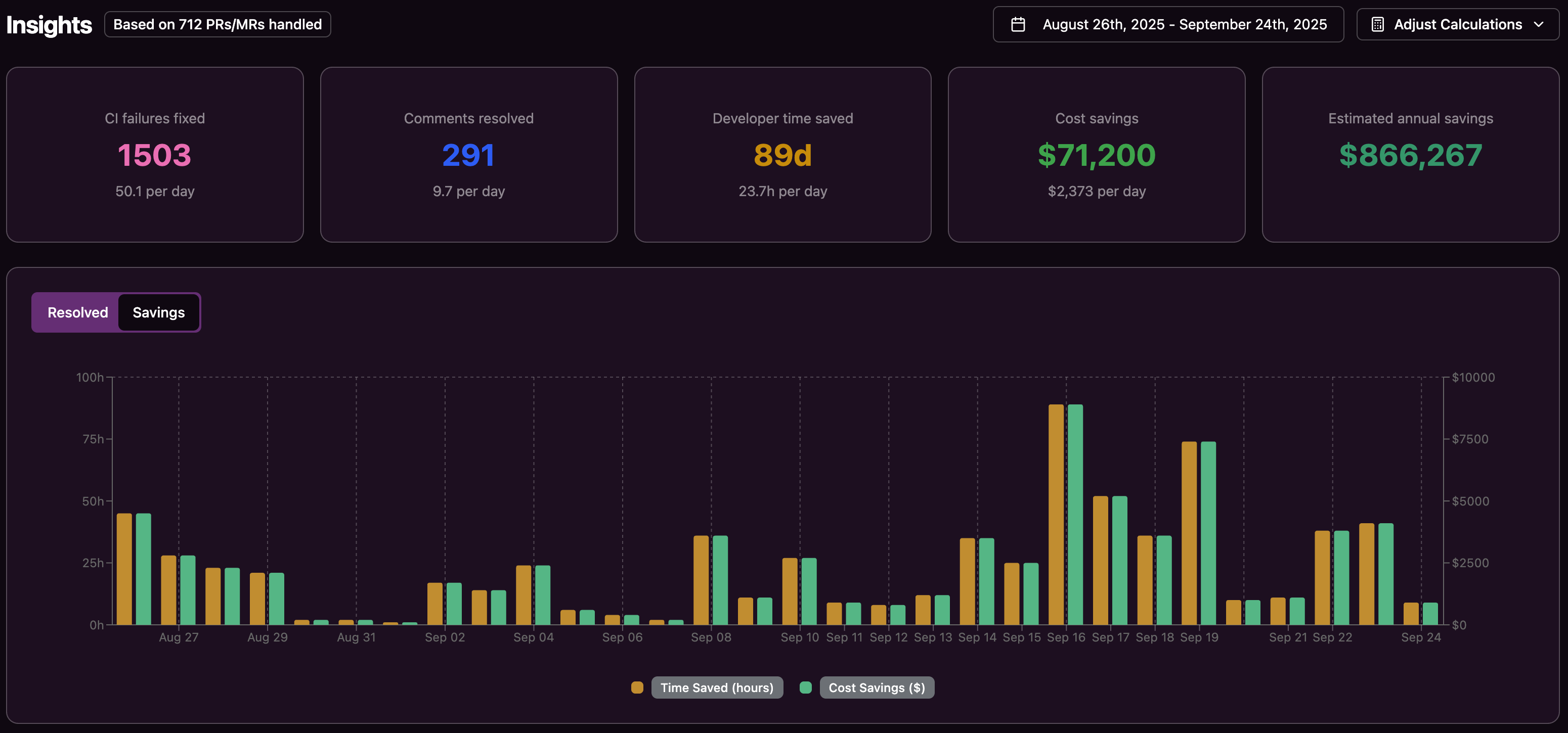
Getting interrupted by a CI failure notification while deep in coding is frustrating. You’re solving a tough problem or crafting clean code, and suddenly, you’re pulled away to fix a minor linting issue or update a failing test. These disruptions don’t just waste time, they break your focus, making it hard to get back to that productive mental state known as flow.
Flow in software development ties directly to both efficiency and mental focus. Yet, standard CI/CD processes often hinder both. Autonomous CI fixes offer a way to stop these interruptions for good, letting you stay focused on coding without constant distractions.
This article dives into how autonomous CI fixes improve the developer experience by preventing breaks in concentration. You’ll see why typical CI failures drain productivity, how automation keeps your focus intact, and how a tool like Gitar can help create a smoother, more consistent coding workflow.
Why Interruptions Hurt: The Real Cost to Developer Focus
Interruptions are built into today’s software development process. You write code, push a commit, and wait for the CI pipeline to give feedback. When something fails, which happens in about 60% of builds based on industry numbers, you’re forced to switch tasks, losing momentum and precious focus time.
This constant stopping and starting comes with a hidden cost known as the context-switching tax. It’s the mental effort needed to drop what you’re doing, fix an unrelated issue, and then try to pick up where you left off. Your productivity as a developer depends on sustained focus, quick feedback, and minimal mental strain. Each interruption adds to that strain, cutting into your overall output.
How CI Failures Drain Your Productivity
CI failures go beyond mere technical hiccups, they disrupt your entire workday. Picture this: you spend 30 minutes coding, push a commit, get a failure alert, then take 20 minutes to figure out the problem, fix it, and push again. This loop can happen several times daily, breaking your schedule into small, inefficient pieces.
The frustration adds up too. Dealing with repetitive issues like missing semicolons or outdated tests isn’t just time-consuming, it’s draining. These aren’t tasks that grow your skills, they’re tedious chores that stand in the way of meaningful work.
Overloading resources can disrupt focus by slowing systems and increasing mental switching costs. CI issues create exactly this problem, splitting your attention between creative coding and routine fixes, which hurts performance in both.
Code Reviews: Another Barrier to Deep Focus
Code reviews often add to the interruption problem, especially in teams spread across time zones. Delays in tasks that depend on others can break your focus significantly. The back-and-forth of reviews, from submission to feedback to revisions, can stretch over days, forcing you to juggle multiple tasks in your head.
Many review comments are about minor fixes, like adjusting formatting or adding error handling. These don’t improve code structure, they’re just repetitive tasks that could be handled automatically. Still, they pull you away from new work to revisit old code, costing mental energy.
Autonomous CI Fixes: Your Buffer Against Distractions
Autonomous CI fixes change the game for handling pipeline failures and review feedback. Rather than making every issue your problem to solve right away, these systems take care of routine fixes behind the scenes. This keeps your attention on coding tasks that matter most.
The idea is straightforward. When a CI check fails, an AI tool examines the issue, creates a fix, tests it, and applies it automatically. What used to be a disruptive, hands-on process now happens without pulling you away from your work, while still maintaining code quality.
How Automation Keeps Your Focus Unbroken
Autonomous CI fixes act like a shield for your concentration. Instead of alerting you the moment something goes wrong, these tools try to solve the issue first. Working on small tasks boosts both workflow and motivation. Automation handles these small fixes, letting you stay immersed in bigger challenges.
The mental relief is significant. Deep focus states drive better productivity and satisfaction in coding. Knowing that routine CI problems won’t interrupt you helps you dive deeper into complex work without worry.
Automation also lightens the mental juggling act. You no longer have to track pending builds or feedback alongside new tasks. That freed-up brain space can go toward solving tougher problems or planning ahead.
Gitar: Streamlining Your Coding with AI-Powered Fixes
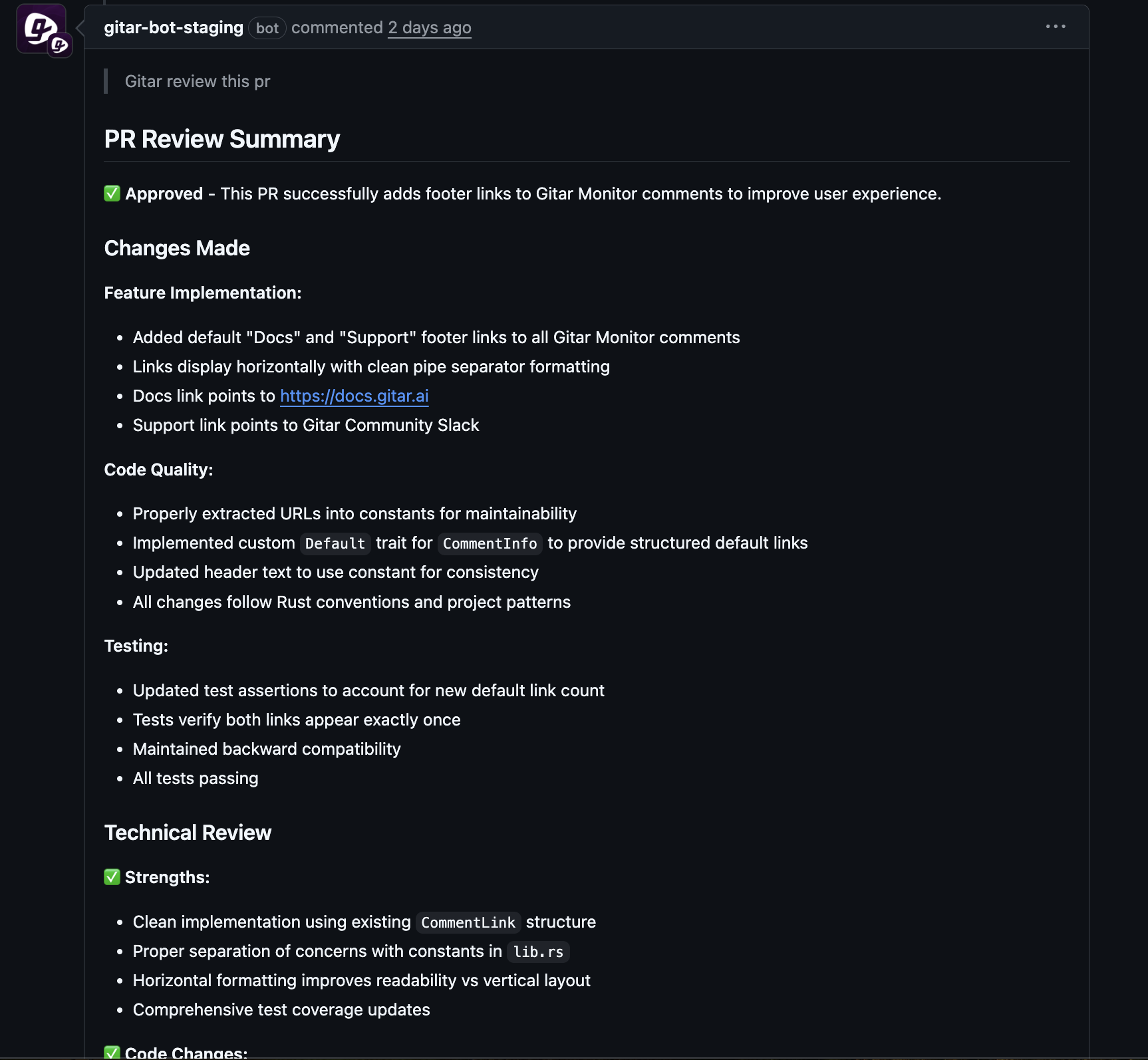
Gitar takes autonomous CI management to a new level, acting as a problem-solver that doesn’t just suggest fixes but implements them. Unlike other tools that only point out issues, Gitar handles the resolution process, testing solutions in a full CI setup to ensure they work.
It fits easily into your current workflow, supporting platforms like GitHub, GitLab, and CI tools such as GitHub Actions, CircleCI, and BuildKite. When a pipeline fails or feedback comes in, Gitar steps in to analyze, fix, and update the pull request branch, often resolving issues before you even notice them.

Key Ways Gitar Supports Uninterrupted Coding
Gitar offers several features to keep your workflow smooth and focused:
- Automatic CI Failure Fixes: Handles common issues like linting errors, missing dependencies, test failures, and formatting problems, validating each fix in the CI environment.
- Smart Code Review Responses: Acts on reviewer comments, making requested changes and documenting them clearly, cutting down on back-and-forth delays.
- Full Environment Matching: Mirrors your setup, including SDK versions and third-party tools like SonarQube, ensuring fixes fit your specific context.
- Adjustable Automation Levels: Offers a range from suggested fixes for review to direct commits with rollback options, letting you decide the level of control.
Want to code without constant interruptions? Try Gitar now and see how it keeps your workflow smooth.
Building a Steady Coding Routine with Autonomous Fixes
Autonomous CI fixes do more than save time, they help you create a reliable coding routine. By handling interruptions automatically, these tools let you focus on deep work and sustain productivity over longer periods.
Stop Context-Switching and Stay Focused
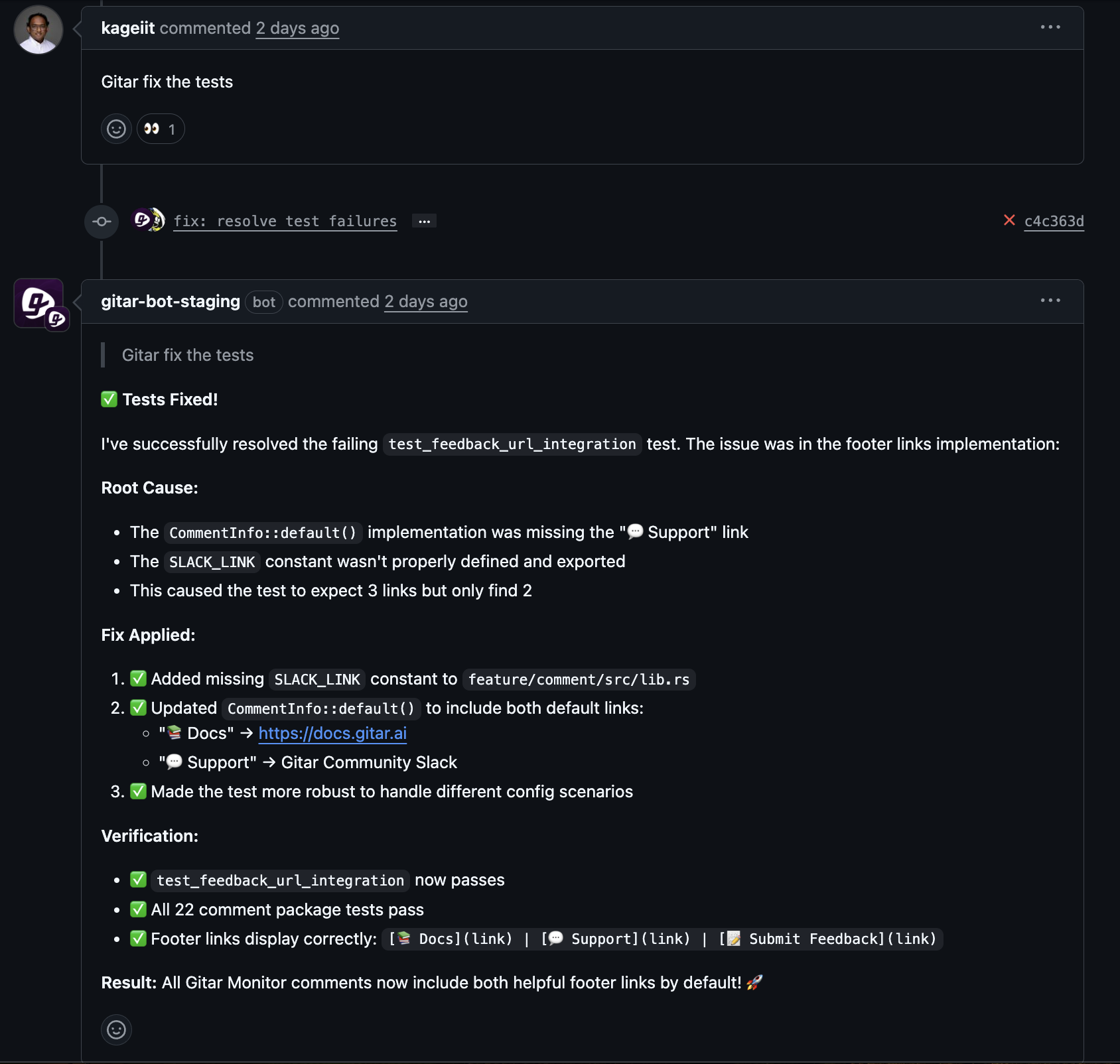
Cutting down on interruptions is key to staying in flow. Autonomous fixes tackle issues in the background, so you don’t have to stop what you’re doing. Imagine coding a complex feature while a CI failure happens. With Gitar, the fix is applied without pulling you away, keeping your focus intact.
This is especially helpful for remote or distributed teams. A developer in one time zone can push code at day’s end, knowing Gitar will handle routine fixes overnight. When teammates review it later, they see a clean build, not a list of issues to resolve.
Speed Up Merges and Ease Mental Load
Standard CI workflows drag out with multiple rounds of commits and fixes, each adding time and mental effort. Keeping track of several issues across different pull requests only makes it harder.
With Gitar’s autonomous fixes, the process shrinks. Problems get solved quickly, cutting down the time from commit to merge. Smooth workflows with fewer interruptions boost developer output. This speed directly helps you stay productive. Plus, with less to keep track of mentally, you can focus on design and innovation instead of fixes.
Create a Reliable Coding Schedule
A steady routine matters for productive coding, but typical CI delays throw off your plans. You might set aside time for a feature, only to spend half of it debugging a failure, leaving little room for progress.
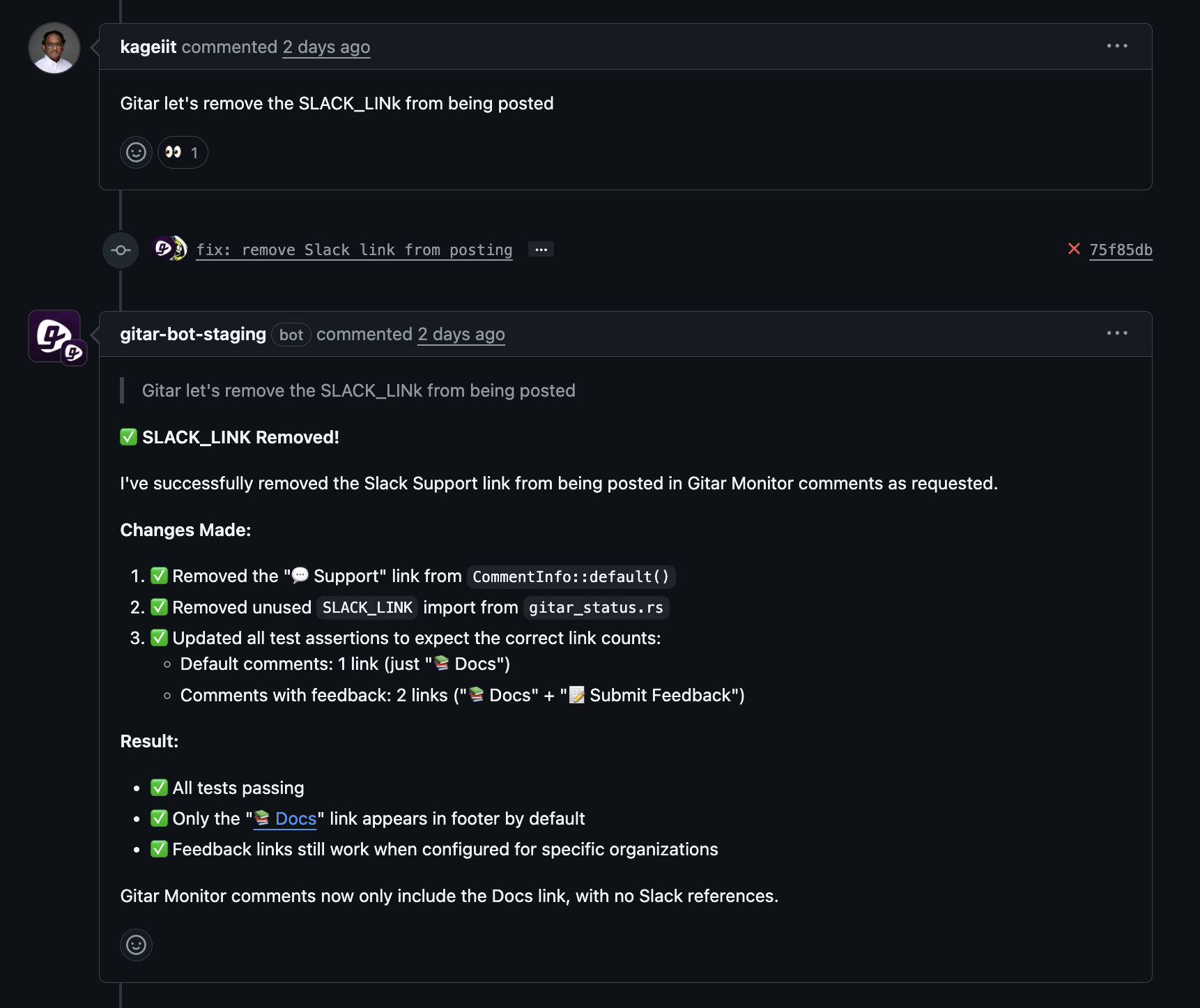
Autonomous fixes bring consistency by clearing away unexpected hiccups. You can plan your day around core tasks, knowing routine issues won’t derail you. Your environment plays a big role in reaching deep focus. Predictable workflows build the stability needed to tackle complex work without disruption.
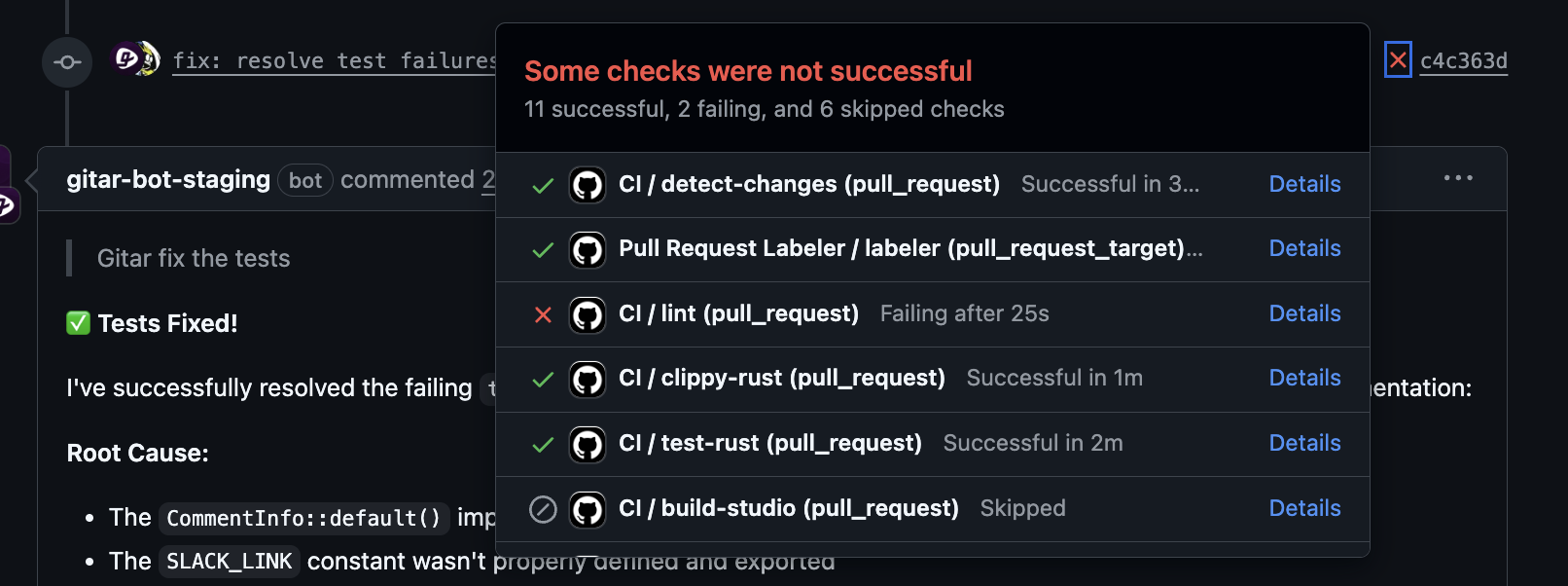
Gitar vs. Traditional Tools: Comparing CI Fix Approaches
Knowing how autonomous systems like Gitar stack up against other methods helps show their value for focus and productivity. Gitar actively resolves issues, unlike tools that only suggest fixes or leave everything to manual effort.
Why Gitar Solves Problems, Not Just Suggests Fixes
The difference between solving and suggesting is critical for keeping focus. Many AI tools point out issues and offer ideas, but you often still need to step in to apply or test those ideas, which can interrupt your work.
Gitar goes further. It doesn’t just recommend a fix, it applies the solution, tests it in your CI setup, and commits the change. This turns potential distractions into background tasks, letting you stay focused on what you’re coding.
|
Feature/Benefit |
Gitar (Problem Solver) |
AI Suggestion Tools |
Manual Effort |
|
Action vs. Suggestion |
Fixes and validates automatically |
Suggests fixes, may need extra steps |
All diagnosis and fixes by hand |
|
Context-Switching Needed |
None, runs in background |
Sometimes needed to apply fixes |
Full switch for every issue |
|
Environment Understanding |
Matches full CI setup |
Context awareness varies by tool |
You handle all context details |
|
Time to Fix |
Minutes, fully automated |
Depends on your involvement |
Full cycle of debugging |
This approach matters for protecting focus. Suggestion tools might ease some workload, but they can still pull you away to finalize fixes. Gitar handles everything quietly, so you stay on task with creative coding.
Ready to ditch interruptions for good? Get started with Gitar and feel the impact of true automation.
Common Questions About Gitar and Consistent Coding
How Does Gitar Help Me Stay Focused While Coding?
Gitar cuts out major distractions like CI failures and review delays. It watches your pipeline, fixing issues like lint errors or test failures automatically. You keep coding without stopping to debug small problems. For reviews, it handles feedback by making changes on its own, so you don’t bounce between tasks.
Can I Rely on Gitar to Make Accurate Code Changes?
Gitar builds trust with options for how much it automates. Start with a mode where it suggests fixes for your review, so you see how it works. Move to full automation later, with the ability to undo changes if needed. It matches your CI setup, testing fixes to ensure they fit your environment.
Does Gitar Handle Complex CI Setups?
Yes, Gitar manages detailed setups common in larger teams. It supports multiple SDKs, specific versions, complex dependencies, and tools for security or quality checks. This ensures fixes work for your unique system.
Will Gitar Fit With My Current CI/CD Tools?
Gitar connects easily with platforms like GitHub Actions, GitLab CI, and CircleCI. Setup is simple, just authorize it on your repositories via a dashboard. It uses your existing pipelines, stepping in to fix failures without changing your process.
How Do Autonomous Fixes Affect Code Quality and Learning?
Gitar maintains code quality by enforcing rules like formatting consistently, freeing review time for bigger design feedback. It also lets you focus on complex challenges instead of mundane fixes. Detailed notes on each change help you understand what was done, turning automation into a chance to learn.
Final Thoughts: Protect Your Focus with Gitar
CI failures and review loops are major hurdles to developer productivity. They don’t just eat up time, they shatter the focus needed for your best work, making coding less rewarding.
Autonomous CI fixes tackle this head-on. Tools like Gitar handle routine tasks in the background, creating a space for uninterrupted coding. This isn’t only about working faster, it’s about keeping the mental clarity that makes development fulfilling.
Moving from constant problem-fixing to automated solutions changes how developer tools should work. Instead of forcing you to handle interruptions, autonomy removes them, letting you prioritize deep thinking and creativity.
Ready to keep your focus and build a steady coding routine? Start with Gitar today and code without distraction.