
Slow code merges and CI failures disrupt developer focus and cost teams millions in lost productivity. This article explores the real impact of these delays and introduces Gitar, an autonomous AI tool that fixes issues, ensures successful builds, and gets your code merged faster.
Why Slow Merges and Broken Builds Hurt Your Team
Disrupted Focus: How CI Failures Break Developer Flow
CI failures kill the momentum of coding. You submit a pull request, confident in your work, only to see a failed build from a missing dependency, a flaky test, or a formatting error. Then comes the grind: decoding logs, switching back to your local setup, fixing the issue, committing, pushing, and waiting for the pipeline to rerun.
These interruptions do more than waste time. They shatter your focus, turning a quick fix into a major productivity loss. On average, developers spend an hour daily debugging CI issues and addressing review feedback, which can eat up 30% of their work time. The mental cost of constant task-switching only adds to the burden, often doubling the time lost to regain focus.
Instead of moving on after submitting a pull request, you’re pulled back by failures or comments. A 30-minute fix can easily cost an hour of deep work. Gitar offers a way to reclaim that time. Install Gitar now to automatically fix broken builds and ship quality software faster.
Leadership Challenges: Delays That Cost Time and Money
For engineering leaders, slow merges and CI failures delay projects and hurt business results. About 60% of companies face project delays due to CI pipeline issues, slowing down the journey from commit to merge. This impacts more than just engineering, leading to delayed market releases, lost revenue, and competitive setbacks.
The financial toll is clear. For a 20-developer team losing one hour daily to CI and review issues, the annual cost hits 5,000 hours. At $200 per hour, that’s $1 million in lost productivity each year, a low-end estimate for many teams.
Manual debugging and constant interruptions also lead to developer burnout and inconsistent releases, eroding customer trust. Engineering managers struggle to balance code quality with delivery speed, facing pressure on both fronts.
More Code, More Issues: The Downstream Bottleneck
AI coding tools help write code faster, but they create a new problem downstream. More code means more pull requests, more tests, and higher chances of CI failures. The challenge shifts from creating code to integrating it efficiently.
This downstream bottleneck slows teams down. While code generation speeds up, validation and merging take longer, making CI/CD optimization essential to keep development moving.
Why Traditional Tools Don’t Solve the Core Issue
Many tools act as suggestion systems, pointing out issues and offering fixes but leaving the work to developers. AI code reviewers analyze pull requests, and some AI fixers help when prompted, but they don’t address the root problem.
These tools often suggest fixes without confirming they pass CI checks. Developers must apply the changes manually and hope for a green build. Lacking autonomy and full context, these solutions still require context-switching, just at a different stage.
Gitar: Your Solution for Autonomous CI Fixes
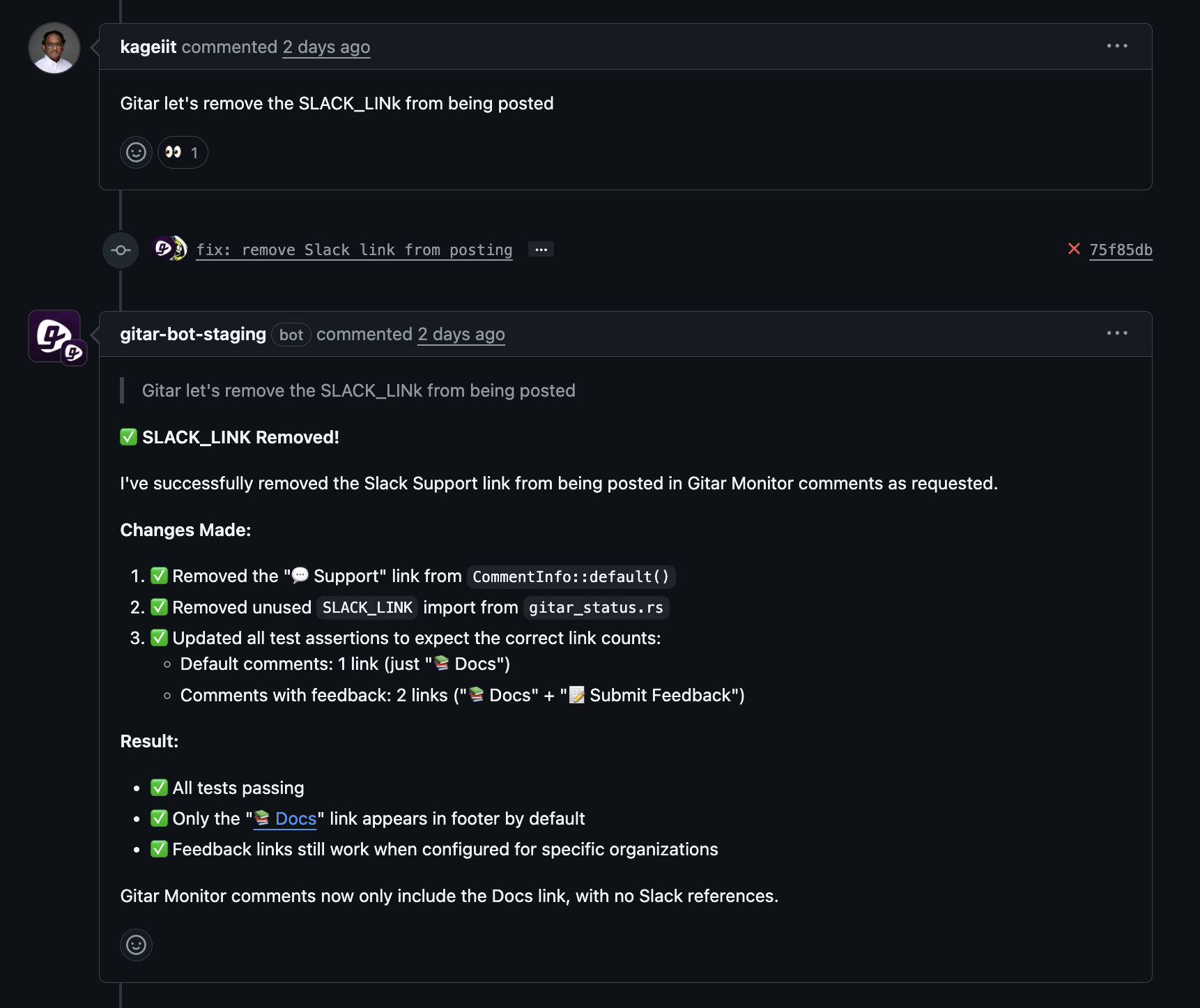
Gitar shifts the game from suggestions to actual fixes. Unlike tools that only recommend changes, Gitar autonomously resolves CI failures and review feedback, turning hours of manual work into a hands-off process.
Here’s what makes Gitar different:
- Complete Fixes for Quicker Merges: Gitar doesn’t just suggest changes, it applies them and validates against full CI workflows to ensure builds pass.
- Environment Accuracy: It replicates complex setups, including specific dependencies and tools like SonarQube or Snyk, for reliable fixes.
- Flexible Trust Settings: Choose between suggestion-only mode or full automation with rollback options to match your workflow.
- Smart Review Support: Gitar summarizes pull requests and acts on feedback, turning comments into code changes, ideal for distributed teams.
- Wide CI Compatibility: Works with GitHub Actions, GitLab CI, CircleCI, BuildKite, and other platforms.
Ready to automate CI fixes and speed up merges? Book a demo with Gitar today.

How Gitar Boosts Developer Focus and Delivery Speed
Restoring Focus for Better Coding
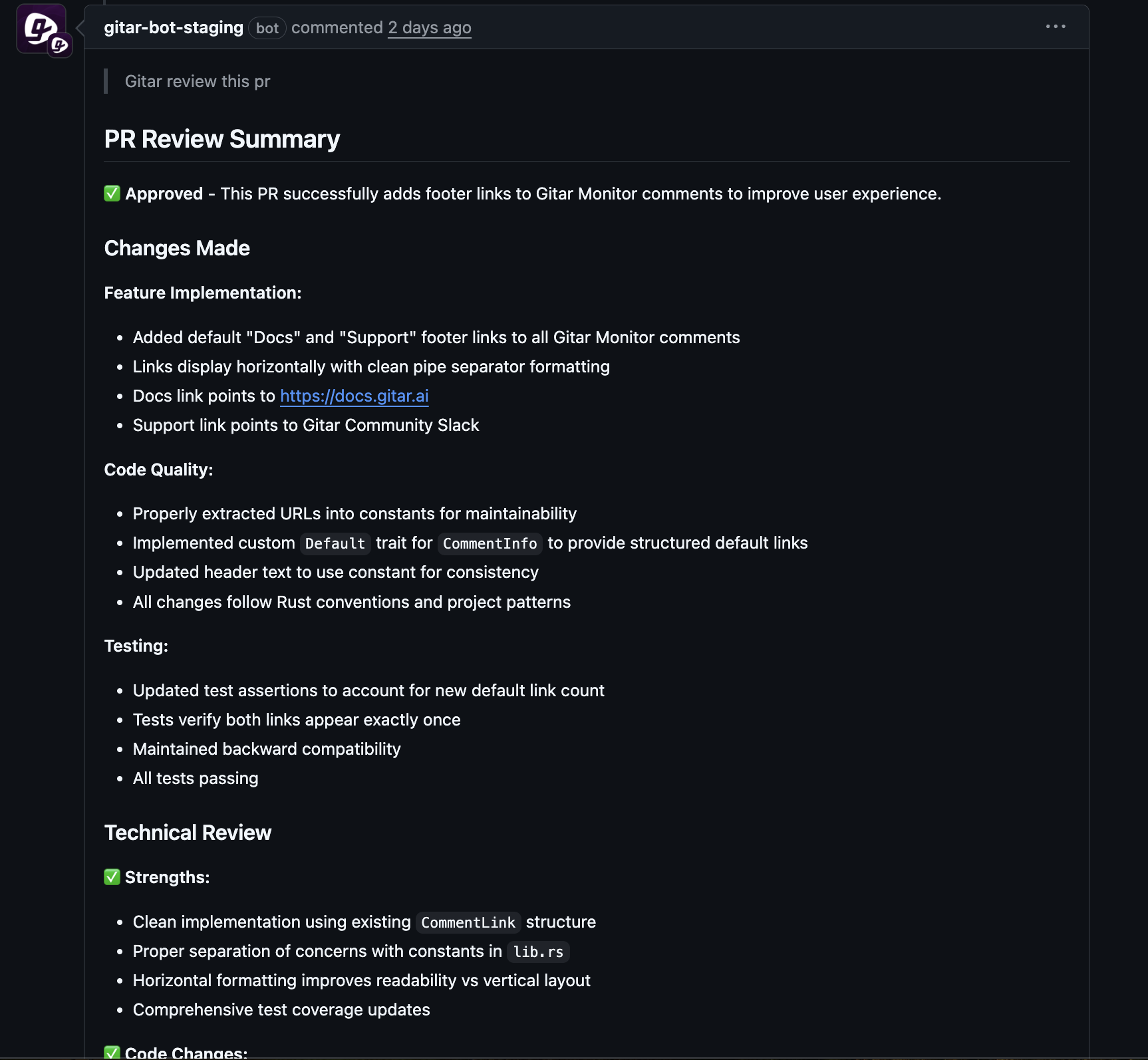
Gitar’s automatic fixes cut out interruptions, letting developers stay focused on creative tasks. Imagine a linting error in your pull request getting resolved with a new commit before you even notice the failure. Gitar handles it, complete with clear explanations.
When a pull request faces CI issues or review comments, Gitar’s AI steps in. It analyzes the problem, applies the fix, and updates the request, turning a time-consuming task into a background process. This keeps developers focused on building features, not fixing builds.
Cutting Down Time from Commit to Merge
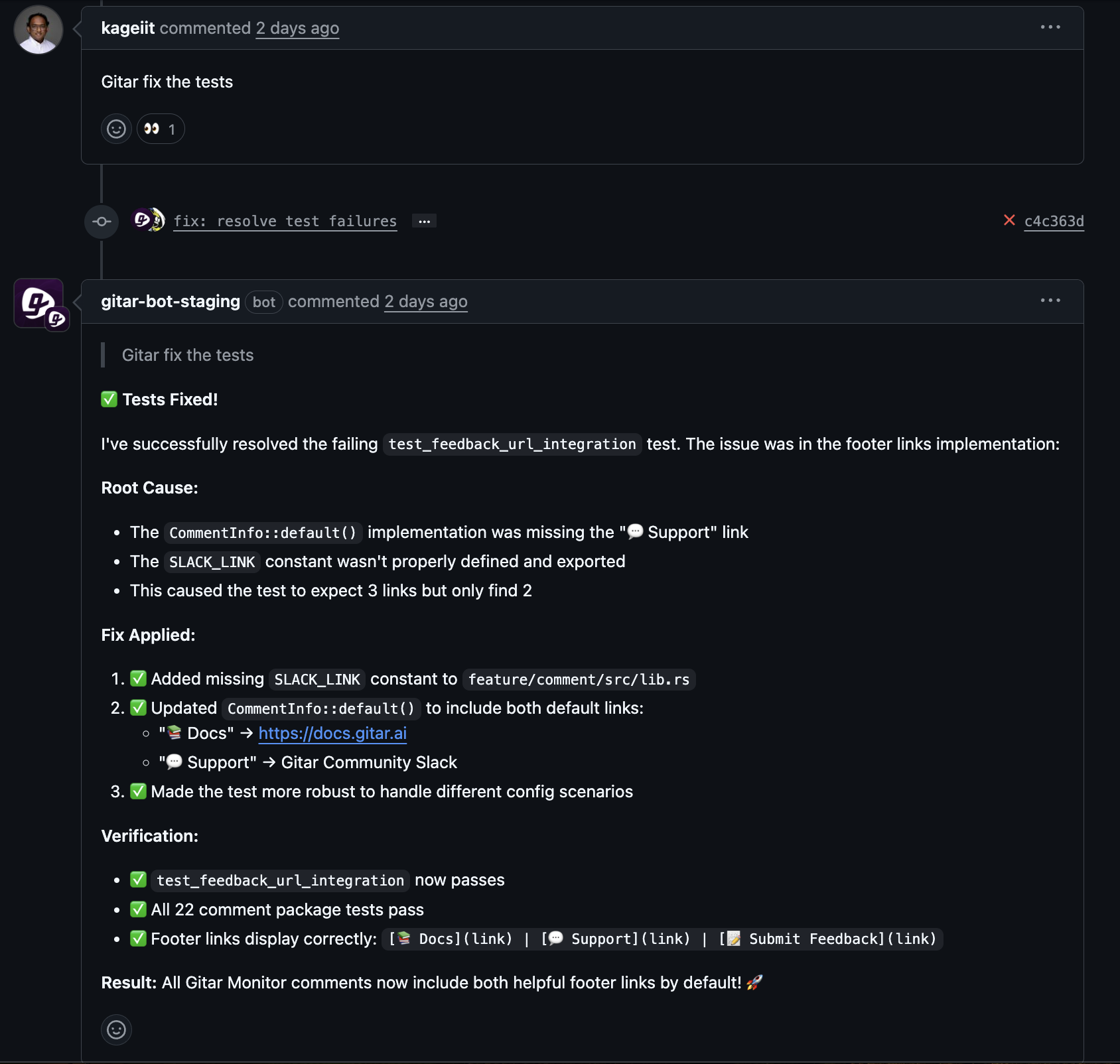
Gitar speeds up the process by delivering pre-validated, passing builds. If a CI check fails, like a linting error or test issue, Gitar examines the logs, identifies the cause, applies a fix, and commits it to the branch.
It handles common issues automatically, from formatting errors to test failures and dependency problems. This slashes the time between initial commit and merge-ready status. For distributed teams, Gitar overcomes time zone delays, applying fixes overnight so they’re ready for approval the next day.
Improving Productivity with Measurable Savings
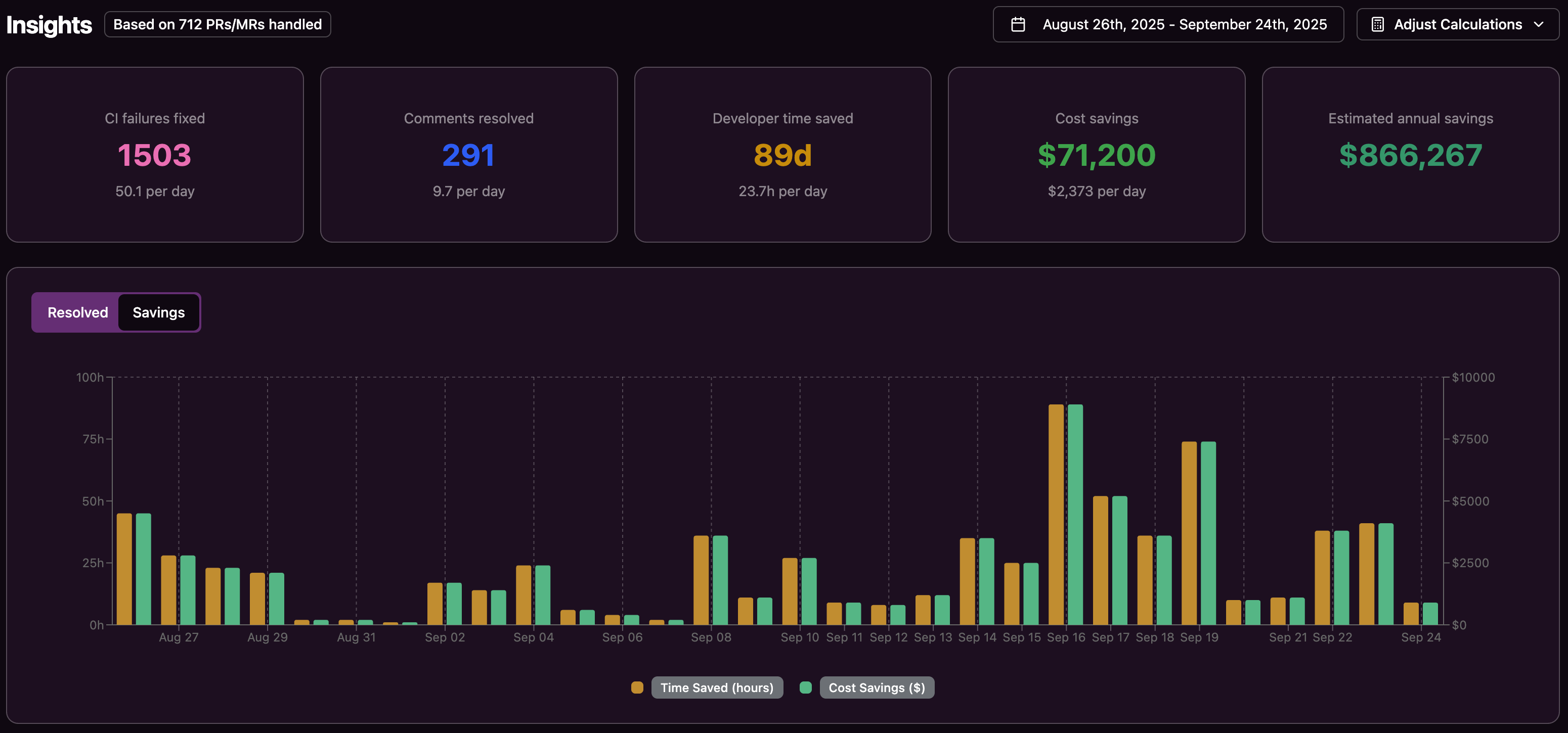
Gitar cuts costs by reducing manual work and freeing up time for impactful tasks. Even at half effectiveness, it could save a 20-developer team $500,000 yearly while boosting satisfaction and speed. The value is clear: lower the $1 million annual productivity loss while accelerating delivery.
Beyond savings, Gitar helps teams release features quicker to meet market needs. Engineering leaders gain data on productivity gains, showing clear value from their investment.
Strengthening DevOps with Reliable CI
For DevOps teams, Gitar ensures consistent builds at scale. It manages complex enterprise setups, including multi-SDK builds and compliance needs, delivering fixes tailored to specific workflows.
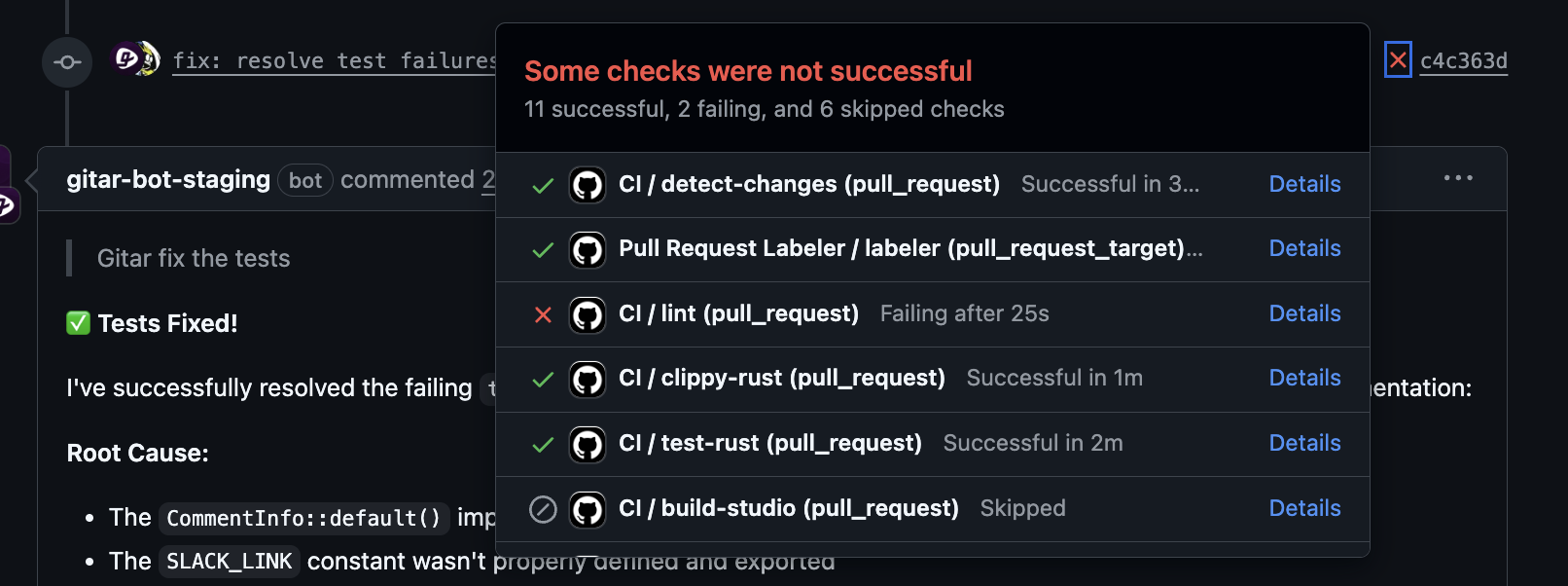
Gitar also lowers CI costs by reducing failed runs and retries. Successful builds after fixes mean less compute waste and infrastructure strain. New engineers onboard faster, reaching productivity despite setup challenges.
Install Gitar now to fix builds automatically and turn your CI/CD pipeline into a strength.
Comparing Gitar to Manual Work and Suggestion Tools
|
Feature / Tool |
Manual Fixes (Current Approach) |
AI Code Reviewers (General) |
Gitar (Autonomous CI Fixes) |
|
Issue Resolution |
Manual effort |
Suggestions only |
Automatic fixes |
|
CI Validation |
Developer’s responsibility |
Not included |
Full validation, passing builds |
|
Context Switching |
Frequent |
Moderate |
Eliminated |
|
Focus Preservation |
Minimal |
Partial |
High |
Common Questions About Gitar
How Does Gitar Work with Complex Enterprise CI Setups?
Gitar adapts to enterprise needs by mirroring specific workflows, including SDK versions, multi-dependencies, and tools like SonarQube and Snyk. It supports languages like Python, Go, JavaScript, TypeScript, Java, Rust, Docker, Terraform, and more, ensuring fixes fit your unique environment.
Why Add Gitar If We Already Use AI Review Tools?
AI review tools offer insights but often stop at suggestions without confirming fixes pass CI checks. Gitar goes further by applying solutions, validating them across your pipeline, and delivering merge-ready builds. It removes the manual step, saving time over suggestion-only tools.
What If My Team Is Hesitant About Automated Fixes?
Gitar offers adjustable settings to build trust. Start with a conservative mode where fixes are suggestions for easy approval. As confidence grows, switch to full automation with rollback options, giving your team control over the process.
Does Gitar Support CI Platforms Beyond GitHub?
Gitar integrates with multiple CI systems, including GitHub Actions, GitLab CI, CircleCI, and BuildKite. This flexibility ensures it fits into your existing setup without requiring platform changes or extra integration work.
What CI Issues Can Gitar Fix Automatically?
Gitar tackles many common CI problems, such as formatting errors, test issues like broken assertions or outdated snapshots, and build failures from dependencies or scripts. It reviews logs, identifies causes, applies changes, and confirms fixes pass CI checks.
Conclusion: Boost Productivity with Gitar’s Automation
CI failures and review delays stand as major hurdles to development speed in today’s software industry. While AI tools help write code faster, validating and merging remain slow, manual tasks that drain resources and time.
Gitar changes this by automating fixes for CI issues and feedback, moving from assisted to autonomous development operations. It eliminates interruptions, ensuring developers stay focused on impactful work.
You can keep losing $1 million yearly to manual CI debugging and delays, or adopt Gitar to secure passing builds, speed up merges, and redirect engineering effort to priority tasks.
Request a demo with Gitar today to accelerate code merging and recover valuable team time.