
Accurate project forecasting is vital for engineering teams, yet CI/CD pipeline failures and manual code review delays often disrupt timelines. These issues drain productivity and make reliable estimates challenging. This article explores how such problems impact your team and how Gitar, an autonomous AI agent, can improve pipeline reliability to support better forecasting.
How CI/CD Failures Undermine Project Forecasting
Lost Developer Productivity from Unstable Pipelines
CI/CD issues quietly sap developer efficiency, often more than leaders realize. Developers may spend up to 30% of their time addressing CI and code review problems. This turns planned development cycles into chaotic troubleshooting.
Picture a typical scenario. A developer submits a pull request, only to face multiple errors. Common failures include test errors, build issues, deployment hiccups, dependency conflicts, and pipeline misconfigurations. Each error demands a shift in focus, from reading logs to applying fixes and waiting for new pipeline results.
This process doesn’t just take time. It disrupts focus, stretching a quick fix into a lengthy distraction. Flaky tests, often due to timing or external dependencies, add further delays. For a team of 20 developers, these interruptions add up to significant daily losses, making project timelines hard to predict.
Delays and Financial Impact from Pipeline Instability
Unreliable pipelines create a chain reaction beyond individual frustration. About 60% of companies cite CI failures as a key reason for delayed projects. This directly affects forecasting accuracy.
The cost is substantial. Delays allow competitors to gain ground, while internal resources are wasted. Complex pipelines can cause cascading issues, discouraging regular commits and worsening integration delays. For a 20-developer team, this could mean around $1 million yearly in lost productivity, funds that could drive innovation instead.
Team Morale and Burnout from Constant Issues
Unstable CI/CD takes a toll on team spirit. Developers grow frustrated when their energy shifts from creative work to repetitive debugging. Constant errors, log analysis, and slow pull request merges foster a reactive culture instead of a productive one.
This environment also impacts talent retention. Experienced developers want to tackle complex challenges, not fight flaky tests. Burnout sets in, slowing work, increasing errors, and raising turnover, all of which add uncertainty to forecasting.
Install Gitar to fix broken builds and ship quality software faster.
Boosting Forecasting with Reliable CI/CD Pipelines
Eliminating Delays with Autonomous Fixes
Improving project forecasting starts with reducing unpredictability in workflows. Traditional tools suggest fixes or improve monitoring, but they still require manual effort. Autonomous CI agents like Gitar take a different approach by resolving issues without human input.
This shift moves teams from reactive troubleshooting to consistent progress. Pipeline Success Rate reflects CI/CD stability, and automated fixes enhance this metric by maintaining successful builds. By addressing errors like linting issues or test failures, teams gain steady development speed, a foundation for accurate forecasting.
Gitar: Automating CI/CD Stability
Gitar moves beyond AI-assisted tools to fully autonomous CI/CD solutions. It doesn’t just suggest fixes, it applies them, ensuring builds pass CI checks without developer involvement.

Here’s how Gitar supports your team:
- Complete Fixes: Applies and validates solutions across full CI workflows for successful pull requests.
- Environment Matching: Mirrors complex setups with specific JDK versions and integrations like SonarQube.
- Code Review Help: Acts on reviewer feedback, easing delays in distributed teams.
- Flexible Options: Offers suggestion-only or auto-commit modes with rollback availability.
- Broad Compatibility: Supports GitHub Actions, GitLab CI, CircleCI, and more.
Install Gitar to stabilize pipelines and improve forecasting.
Gitar’s Role in Consistent Project Timelines
Creating Predictable Development Speed
Forecasting improves when development speed is consistent. Gitar reduces variability by automating fixes for CI issues that cause delays. Developers stay focused, producing steady output.
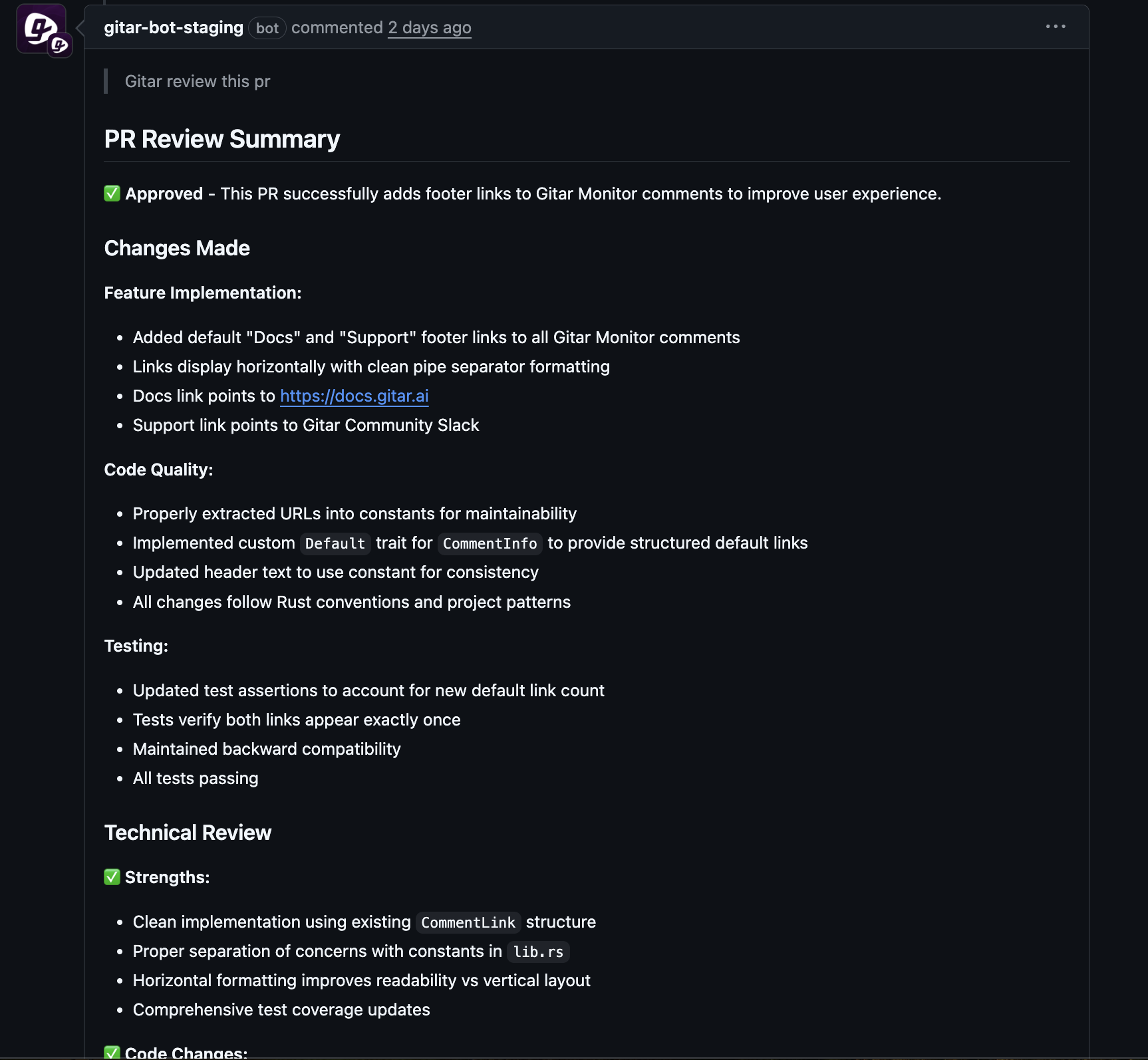
By cutting time from commit to merge, Gitar lets leaders base timelines on feature complexity, not infrastructure guesses. Higher success rates in pipelines lead to faster delivery and reliable estimates.
Maximizing Resources and Cost Savings
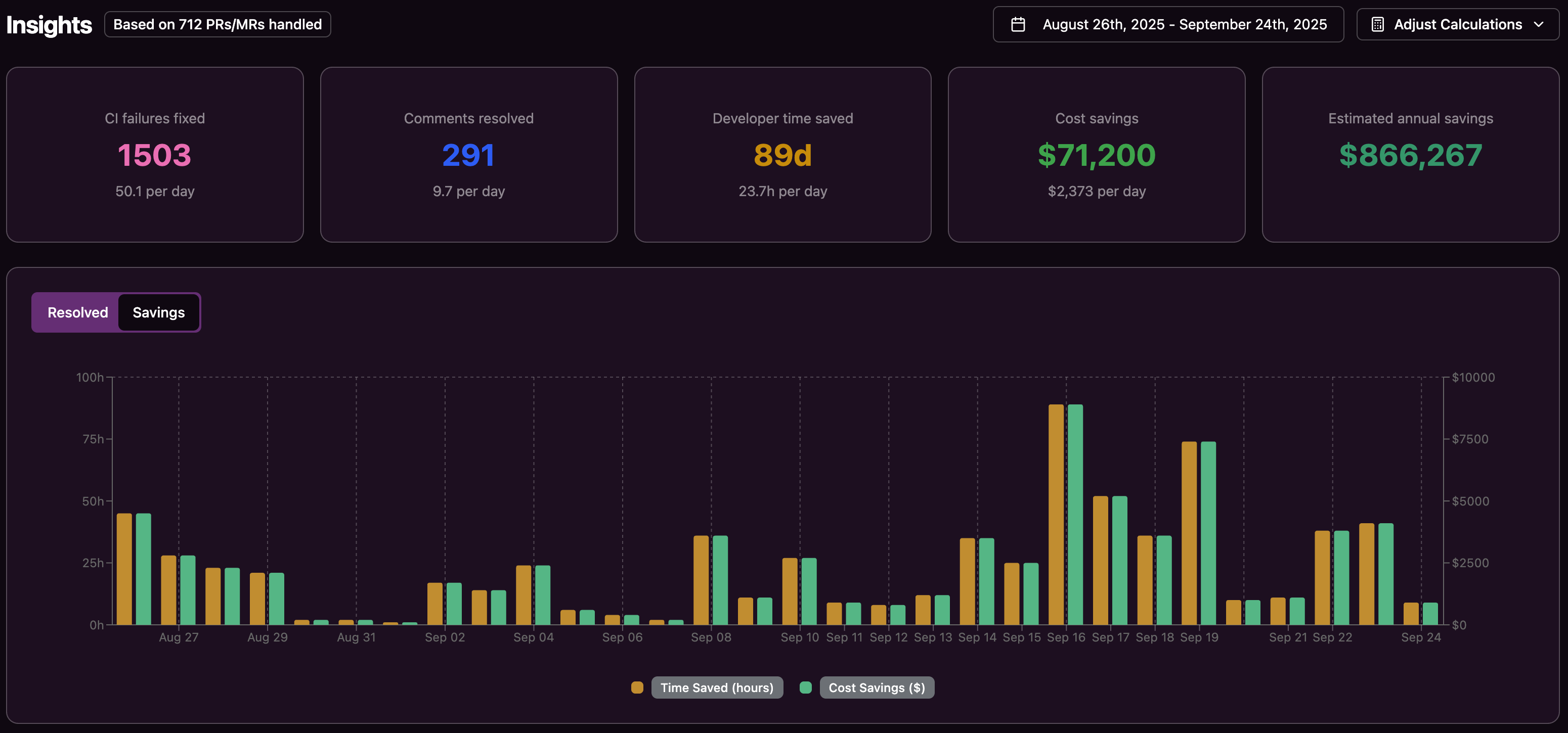
Stable pipelines free up developer time for core work. For a 20-developer team losing one hour daily to CI issues, consider this:
- Annual Time Lost: 20 developers x 1 hour x 250 days = 5,000 hours.
- Financial Impact: 5,000 hours x $200/hour = $1 million yearly loss.
- Potential Savings: A 50% reduction with Gitar could save $500,000 annually.
Redirecting this time to innovation boosts forecasting confidence, as teams face fewer unexpected setbacks.
Enhancing Code Quality for Long-Term Gains
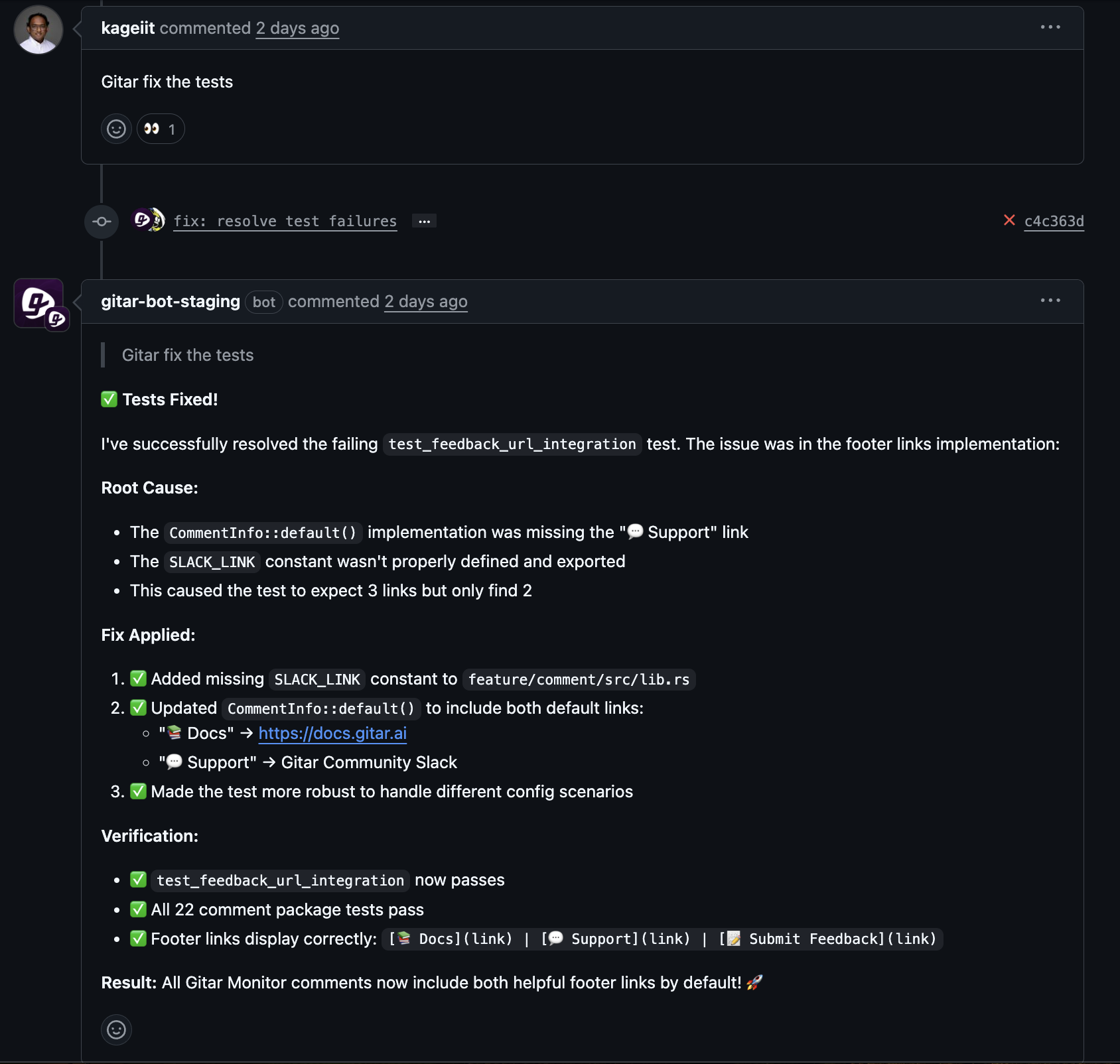
Gitar maintains successful builds and boosts code quality by adding test coverage and upholding standards. This reduces technical debt, preventing slowdowns in future projects.
Teams with reliable builds gain trust in their pipelines, enabling frequent deployments and quicker feedback. Consistent quality checks become a support, not a hurdle, aiding smoother project progress.
Comparing Gitar to Traditional and Suggestion-Based Tools
|
Feature |
Manual CI Fixes |
AI Suggestion Tools |
Gitar (Autonomous Fixes) |
|
Resolution Method |
Manual effort |
Suggestions only |
Automatic application |
|
Impact on Focus |
Frequent disruptions |
Disruption to apply fixes |
Minimal interruption |
|
CI Awareness |
Relies on human skill |
Limited context |
Full environment emulation |
|
Build Success |
Not guaranteed |
Not guaranteed |
Ensured |
Adopting Gitar for Immediate and Lasting Benefits
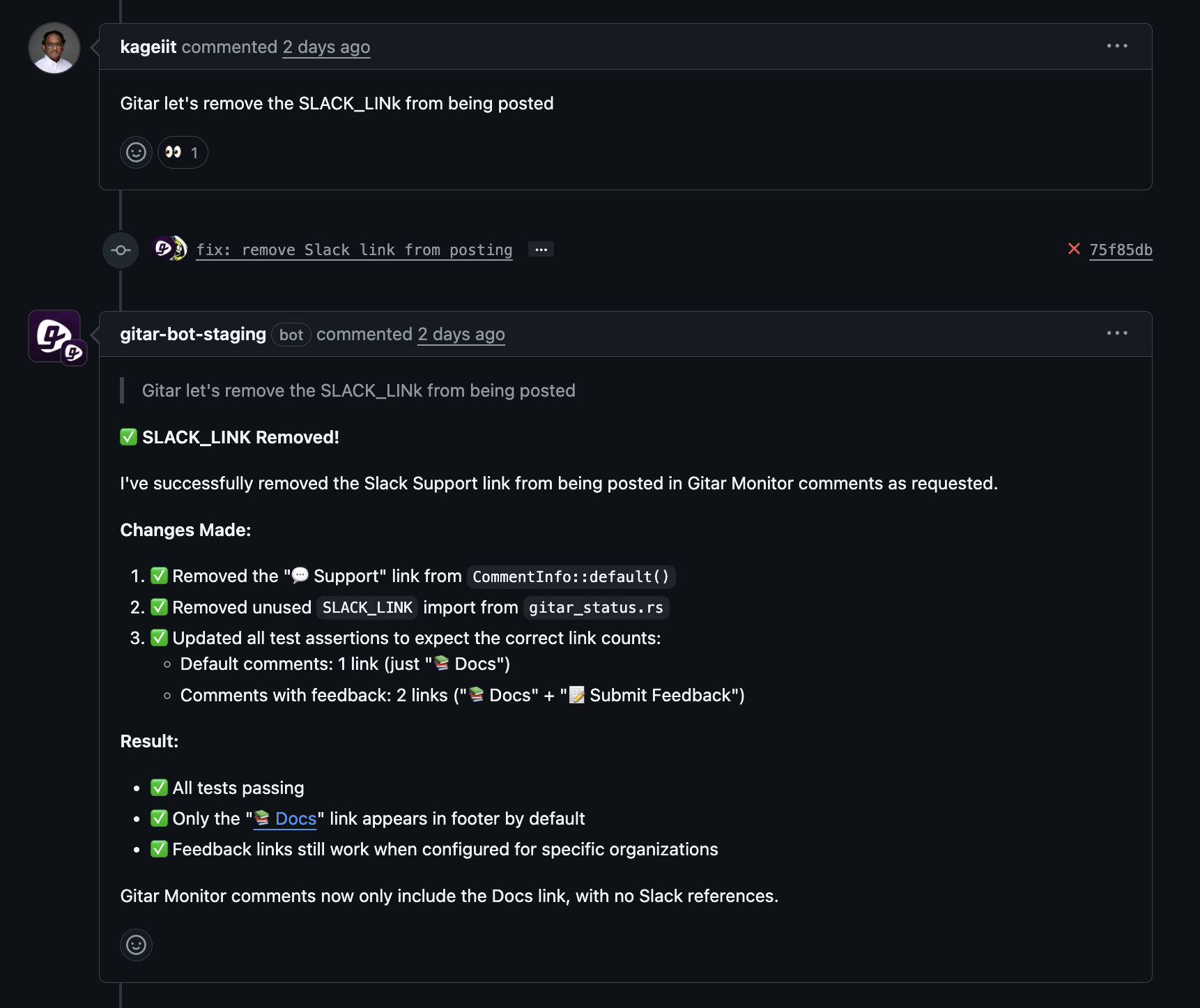
Implementing autonomous CI fixes works best with a gradual approach, building team trust while showing quick results. Gitar’s flexible settings support this transition.
Phase 1, Setup: Install Gitar as a GitHub App on chosen repositories and link to your CI system. Start with suggestion mode for reviewable fixes.
Phase 2, Early Wins: Witness Gitar fix issues like linting errors automatically. This builds confidence in its reliability.
Phase 3, Full Automation: Move to auto-commit mode for select projects, using features to handle distributed team delays and feedback.
Common Questions About Gitar
Can Gitar Handle Complex CI Setups?
Gitar is built for intricate enterprise environments, matching specific JDK versions, multi-SDK dependencies, and tools like SonarQube. This reduces errors from misconfigurations, supporting more predictable timelines.
How Does Gitar Measure Cost Benefits?
For a 20-developer team, saving 5,000 hours yearly could mean $1 million in regained productivity. Gitar cuts context switching and speeds up merges, redirecting effort to valuable work.
What if My Team Hesitates on Full Automation?
Gitar offers adjustable automation levels. Begin with suggestion mode, where fixes are reviewed before approval. As trust grows, shift to auto-commit mode, with rollback options for control.
How Does Gitar Improve Forecasting Accuracy?
CI failures create delays that skew estimates. Gitar resolves these issues automatically, letting teams focus on feature work. This allows forecasting based on true project scope, not random setbacks.
Does Gitar Fit with Existing Tools?
Gitar connects easily with GitHub, GitLab, and platforms like CircleCI. It supports languages like Python, Java, and Rust, integrating with your current review and deployment processes without changes.
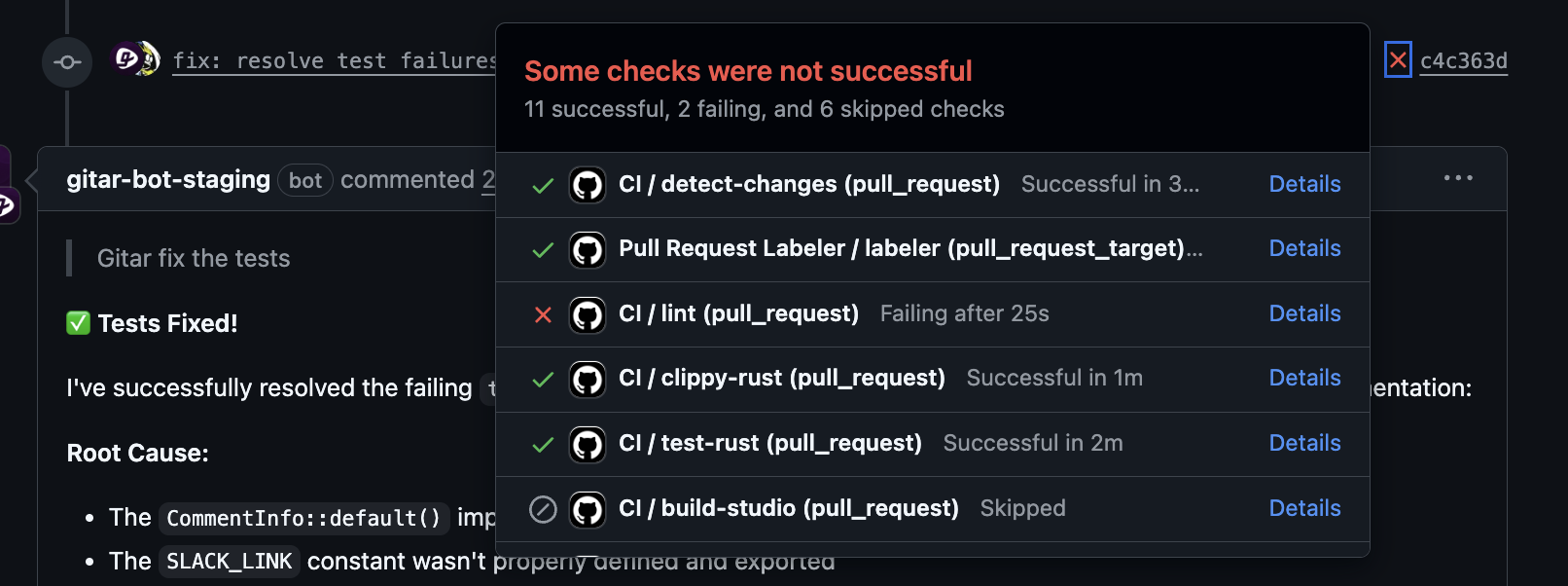
Deliver Predictably with Gitar
CI/CD failures and review delays erode forecasting accuracy, costing teams time and focus. Autonomous fixes shift this burden, enabling consistent progress.
Gitar turns pipeline challenges into strengths, potentially saving significant costs while boosting team morale. Leaders can plan with greater certainty, unhindered by infrastructure issues.
Don’t let broken builds slow you down. Install Gitar to automate fixes, deliver quality software faster, and strengthen project forecasting.