
Software development moves fast, but developers often feel stuck due to constant interruptions. While AI tools like GitHub Copilot speed up coding, CI failures and code review feedback create a cycle that disrupts focus. Context switching can cut productivity by 20% to 80%. Autonomous AI offers a way to stop these disruptions, letting developers stay in a focused, productive state to ship features without distractions.
Why Context Switching Hurts Software Development
CI Failures and Feedback Disrupt Focus
CI failures break momentum in a big way. You submit a pull request, only to see errors pop up. Then comes the grind of reading logs, switching back to your local setup, fixing issues, committing changes, and waiting for the pipeline to rerun. A quick fix can drag into an hour, draining energy and time.
The mental toll adds up. Regaining focus after an interruption takes over 23 minutes on average. If you’re solving a tough problem or designing a feature, a failure notification doesn’t just delay you, it breaks your entire thought process.
Code reviews also create delays. A developer in California might wait days for feedback from a teammate in India due to time zone differences. Each round of comments forces you to revisit old code, rebuild your mental context, make changes, and hope for approval.
Install Gitar now to fix broken builds automatically and ship quality software faster.
Measuring the Damage: Productivity, Errors, and Stress
Context switching has a real cost. Tasks with interruptions take twice as long and have twice the errors compared to focused work. This cycle slows you down now and creates bugs that cause more disruptions later.
For teams, the financial hit is significant. Managing four tasks at once can reduce productivity by up to 60%, costing $60,000 yearly per $100,000-salaried engineer. A 20-person team could lose $1 million annually, funds that could go to new features or better tools.
The personal impact is just as serious. Frequent interruptions increase stress, fatigue, and burnout risk. Developers start to dread work, knowing a notification can shatter their focus at any time.
Teams feel the effects too. Interruptions can add hours of lost time per sprint, leading to missed deadlines, delayed releases, and rushed fixes that build technical debt.
How Autonomous AI Stops Interruptions for Better Flow
Autonomous AI tackles context switching by handling disruptions before they reach developers. Unlike traditional AI tools that suggest fixes for manual implementation, these solutions act independently. They identify issues, apply fixes, validate them against CI workflows, and ensure everything passes without developer input.
This shift moves from AI suggestions to fully automated resolutions. Developers no longer need to review and test fixes. The process becomes invisible, letting you focus on complex tasks without constant breaks.
Meet Gitar: Your AI Agent for Uninterrupted Coding
Gitar is an autonomous AI agent designed to cut context switching from CI failures and code reviews. It acts as a self-fixing system, turning long debugging sessions into automated resolutions without manual effort.

Here’s what makes Gitar effective:
- Complete Fix Automation: Applies and tests fixes against CI workflows to keep builds passing.
- Environment Matching: Mirrors complex setups, including specific SDKs, dependencies, and tools like SonarQube.
- Feedback Handling: Interprets reviewer comments and applies changes independently.
- Adjustable Autonomy: Starts with suggestions for cautious users, scaling to automatic commits with trust.
- Platform Compatibility: Integrates with GitHub Actions, GitLab CI, CircleCI, BuildKite, and more.
Request a demo to see Gitar in action.
How Gitar Supports Focused Coding and Team Output
Fixing CI Failures Before You Notice
When a CI pipeline fails due to linting, tests, or build errors, Gitar steps in. It analyzes logs, finds the root cause, applies a fix, and commits it to the PR branch. Often, this happens before you even see a failure alert.
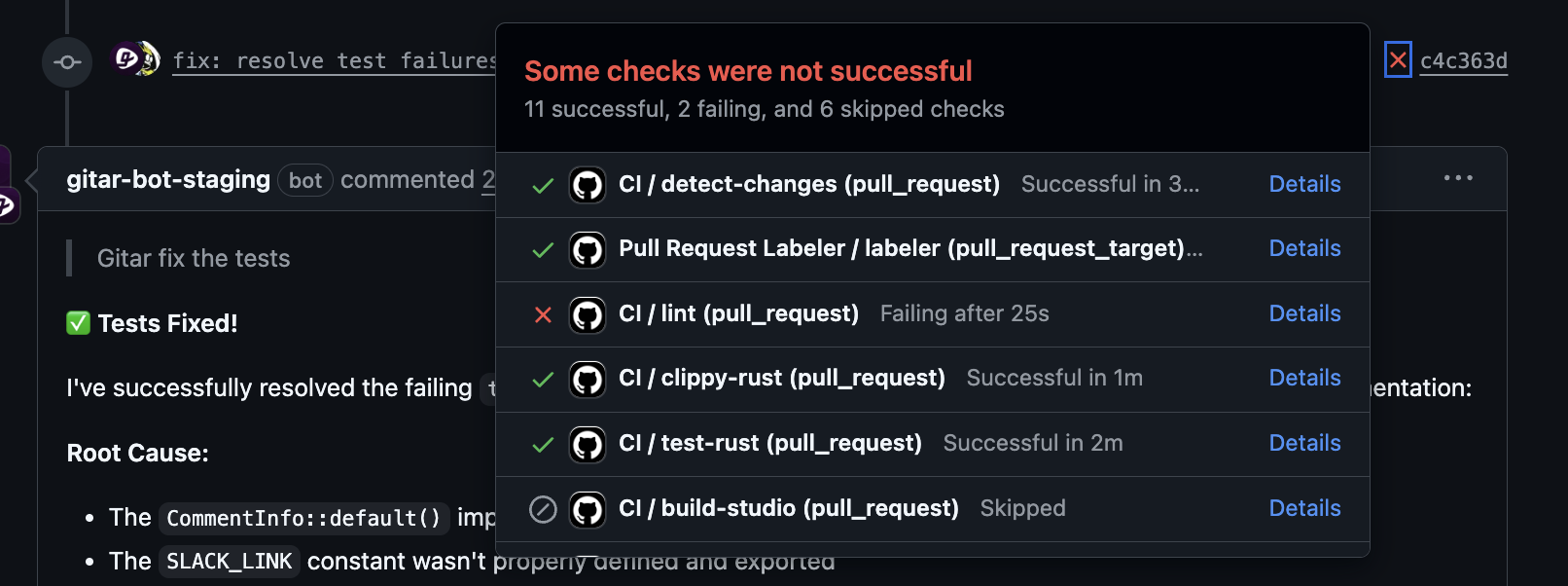
Developers often realize the value during their first use. You push a PR, move to another task, and later find the build is already fixed with a clear commit message explaining the update. Routine issues like formatting errors or missing imports disappear, freeing you to focus on meaningful work.
Simplifying Code Reviews and Cutting Delays
Gitar also handles code review feedback. When a reviewer leaves a comment, Gitar interprets it and makes the requested changes directly. For example, if asked to remove a feature from a PR, Gitar identifies the code, removes it, and commits the update with an explanation.
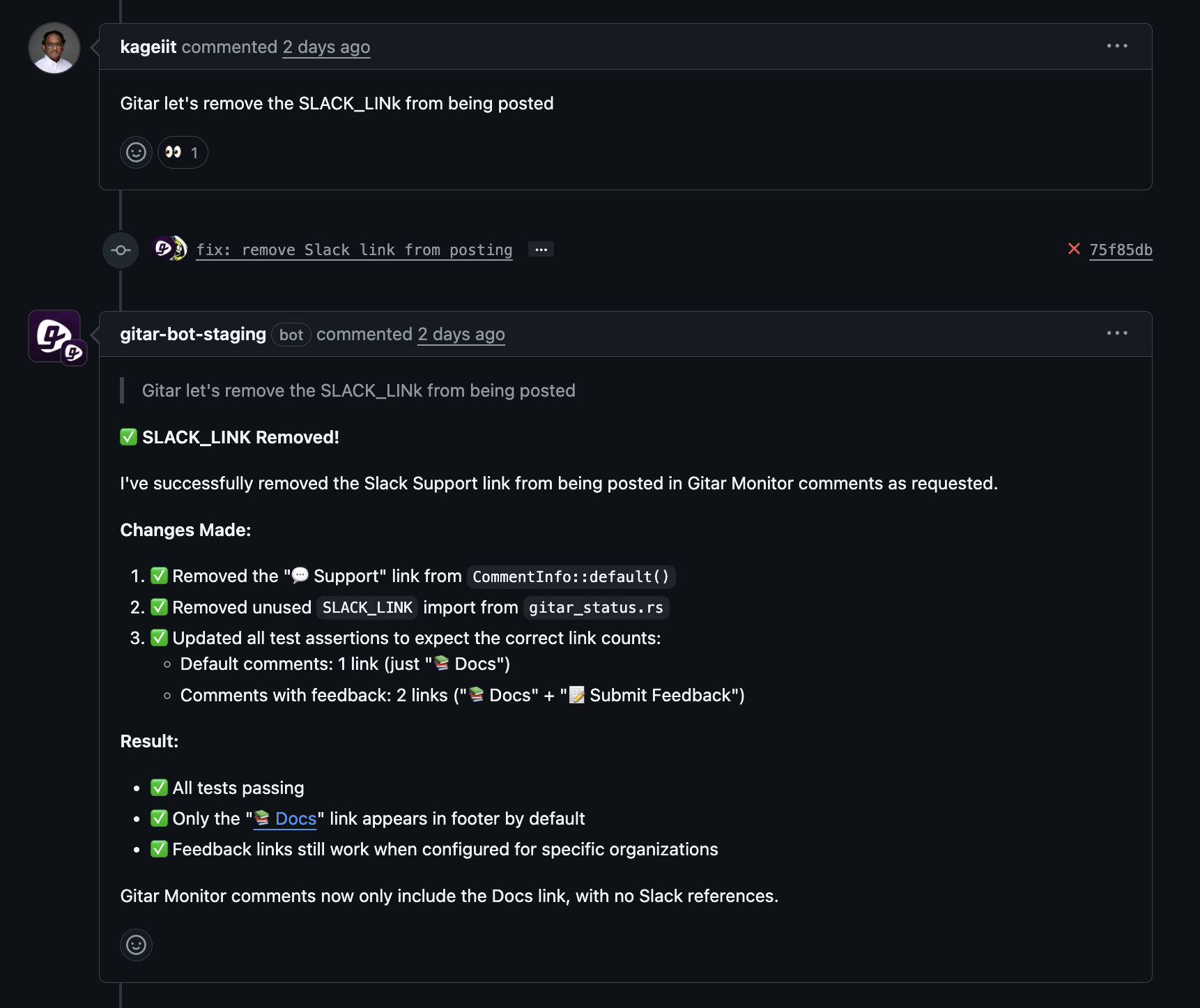
For distributed teams, this saves significant time. A reviewer in one time zone can leave feedback, and by the time the developer in another zone logs in, the changes are done. Review cycles that once took days now resolve quickly.
Protecting Focus and Reducing Stress
Knowing that CI failures and feedback won’t interrupt your work lets you dive deeper into complex tasks. The worry of sudden disruptions fades when you trust Gitar to handle routine issues. This cuts stress and helps prevent burnout, letting you enjoy the creative side of coding.
Gitar Compared to Other Tools: Automated Fixes vs. Suggestions
Most AI coding tools offer suggestions, leaving implementation and validation to developers. Gitar takes a different approach by owning the entire fix process. Here’s how it stands out:
|
Feature Category |
Gitar (Automated Fixes) |
AI Review Tools (e.g., CodeRabbit) |
Manual Process (Traditional) |
|
CI Failure Handling |
Fixes and validates automatically |
Suggests fixes for manual application |
Developer debugs and fixes manually |
|
Code Review Feedback |
Applies feedback independently |
Offers suggestions for manual action |
Developer applies feedback manually |
|
Context Switching |
Minimizes disruptions significantly |
Reduces some, but interruptions remain |
High with frequent focus loss |
|
Fix Validation |
Tests against full CI automatically |
Limited automation, may need input |
Manual testing by developer |
The key difference is responsibility. Suggestion tools can still require context switching for action and checks. Gitar handles both, reducing interruptions.
Install Gitar now to fix builds automatically and ship quality software faster.
Common Questions About Reducing Interruptions with AI
How Does Gitar Differ from AI Review Tools Like CodeRabbit?
Tools like CodeRabbit suggest fixes and provide insights, but often developers must still apply and test changes. This helps with workload but doesn’t always prevent context switching. Gitar takes full responsibility, applying fixes and confirming they work against your CI setup, minimizing disruptions.
Can We Trust Automated Fixes in Complex Systems?
Building trust is key for automation. Gitar offers adjustable settings, starting with suggestion mode for review and approval. As confidence grows, teams can enable automatic commits for routine issues while keeping oversight on complex changes. Gitar also matches enterprise setups to ensure fixes fit your specific environment.
Will Gitar Increase CI Costs or Complicate Our Setup?
Gitar integrates smoothly with platforms like GitHub Actions, GitLab CI, and CircleCI, requiring little setup. It adapts to existing workflows as a GitHub or GitLab app. For unique systems, Gitar handles custom scripts and dependencies, ensuring compatibility even in complex environments.
Conclusion: Regain Focus and Speed Up Delivery with Gitar
Context switching drains productivity in software development, costing teams millions yearly while impacting morale. Interruptions in CI/CD workflows reduce output and contribute to developer fatigue. Traditional fixes around interruptions don’t solve the core issue of constant disruptions from failures and feedback.
Autonomous AI like Gitar addresses this directly by managing fixes and feedback without breaking focus. It moves beyond suggestions to actionable resolutions, supporting uninterrupted coding. This helps developers stay engaged in their work.
Ready to cut distractions for your team? Request a demo with Gitar today and improve your workflow.