
Human errors in CI/CD pipelines slow down developers and hurt system reliability, from simple misconfigurations to lengthy code reviews. These mistakes cost time, money, and frustration. This article explains the impact of such errors and introduces an AI-powered solution with Gitar that automates fixes, speeds up workflows, and improves outcomes for engineering teams.
Uncovering the Real Cost of Human Errors in CI/CD Pipelines
Why Human Mistakes Drain Developer Productivity
Human errors in CI/CD pipelines create major setbacks for engineering teams. Common issues include flaky tests, misconfigured build scripts, missing environment variables, and syntax errors in configuration files. These errors often arise from timing issues, lack of proper mocking, and outdated tools.
Such mistakes might seem small, but they add up. A single oversight can halt a build, forcing developers to spend hours debugging through logs and fixing issues manually. This interruption breaks focus and slows down the entire project timeline, turning minor problems into major productivity losses.
How CI/CD Anti-Patterns Worsen Mistakes
Systemic design flaws in CI/CD pipelines can make human errors even more disruptive. Monolithic builds and hardcoded credentials are prime examples of setups that amplify small mistakes into team-wide delays. A single failing test in a monolithic pipeline can block every downstream process.
These flaws not only delay releases but also impact team morale. Developers lose trust in systems that fail often due to preventable issues, leading to larger, riskier commits and more complex debugging. Slow feedback loops further discourage frequent updates and delay time-to-market.
Calculating the Financial and Operational Impact
Human errors in CI/CD come with a high price tag. For a team of 20 developers, spending just one hour daily on debugging and reviews can lead to $1 million in annual productivity losses. This estimate is cautious, as many teams spend even more time on such tasks.
Organizational challenges add to the cost. Limited testing environments and unclear ownership make it hard to pinpoint and fix issues quickly. Poor training and flawed automation often lead to recurring pipeline failures.
In larger enterprises, complex setups worsen the problem. Time spent on configuration and environment issues often overshadows actual coding work, pulling focus away from delivering value. Most debugging time goes to fixing misconfigurations rather than code logic.
Want to cut these losses? Try Gitar to fix CI issues automatically and improve reliability.
How Gitar’s AI Solves CI/CD Errors for Smoother Workflows
Gitar offers a practical way to address human errors in CI/CD by automating fixes and reducing manual work. Instead of reacting to issues, it proactively identifies and resolves problems, letting developers stay focused on building software.

Key Ways Gitar Handles Errors Efficiently
Gitar uses AI to tackle common CI/CD challenges with minimal developer input. Here’s how it works:
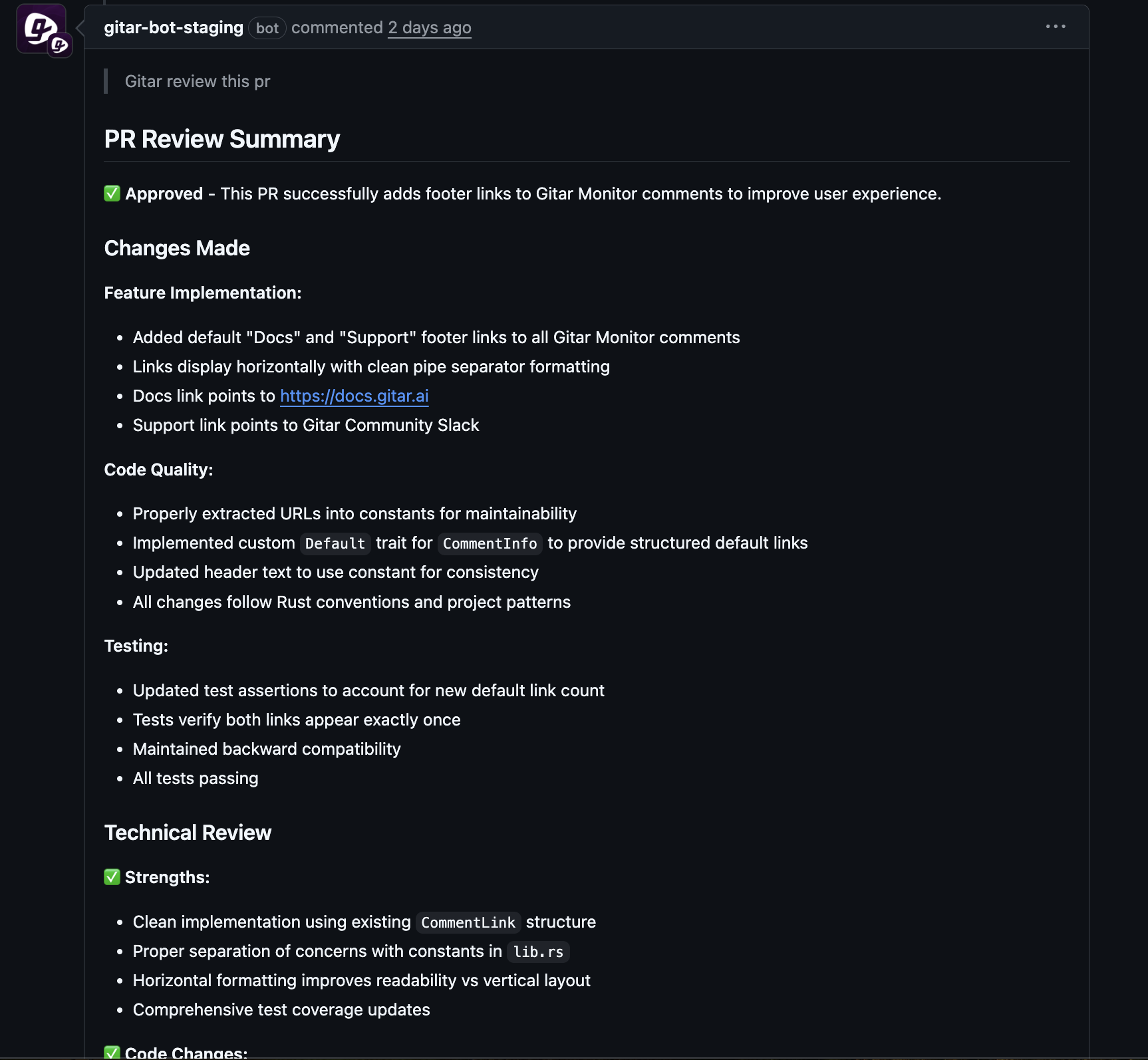
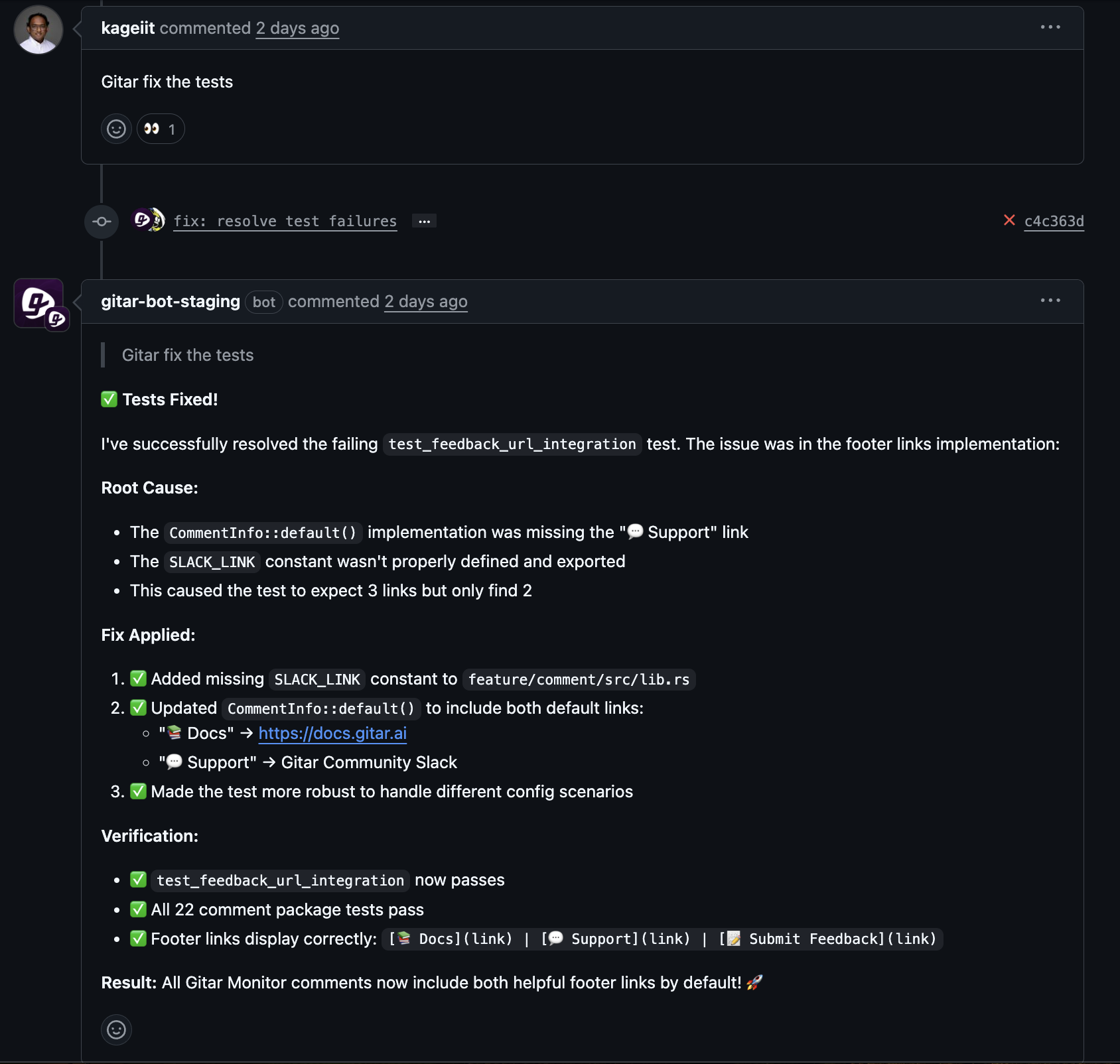
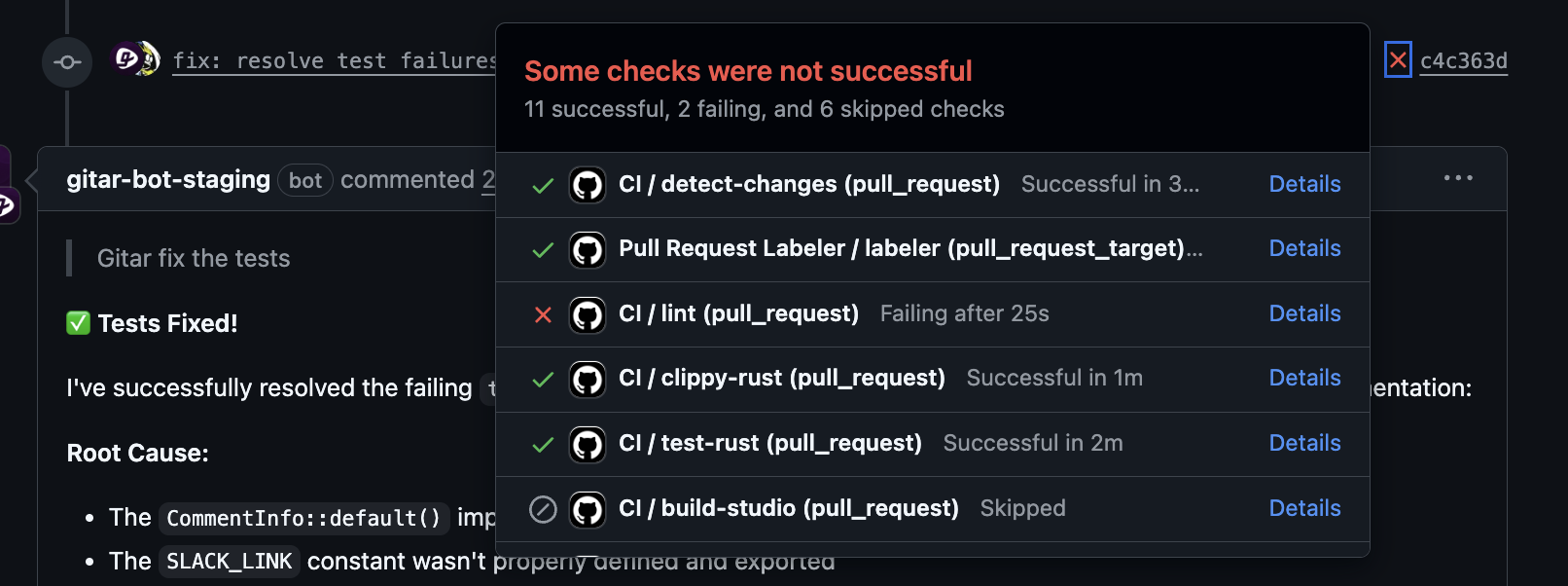
- Automatic CI Fixes: Gitar detects build failures, creates fixes for issues like lint errors or test problems, and applies them directly to the pull request branch.
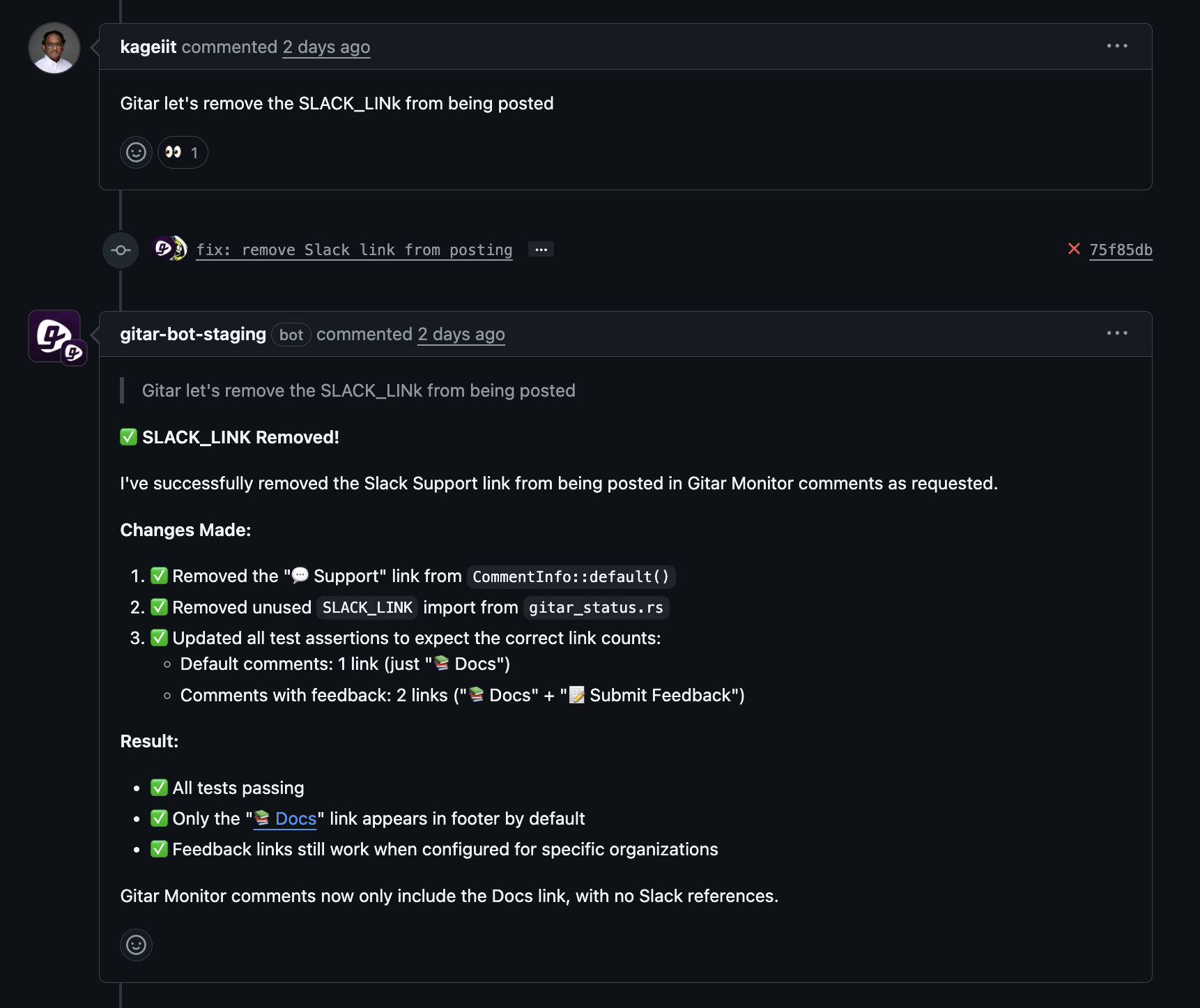
- Smart Code Review Support: It follows reviewer instructions to make changes, cutting delays in distributed teams across time zones.
- Accurate Environment Matching: Gitar mirrors complex setups, including specific SDK versions, to ensure fixes work in your unique context.
- Customizable Control Options: Teams can choose between reviewing suggestions or enabling full automation with rollback safety, building trust over time.
- Action-Driven Results: Gitar doesn’t just suggest fixes; it implements and validates them against your CI workflow to confirm builds pass.
Ready to automate your CI fixes? Install Gitar now to streamline builds and boost reliability.
Gain Better Reliability and Speed with Gitar’s Automation
Cut Down on Manual Fixes and Distractions
Gitar reduces the biggest productivity killer in CI/CD: constant interruptions from debugging. By handling failures automatically, it keeps developers in their creative flow, focusing on important tasks instead of repetitive fixes. This shift also lifts team morale as frustration from broken builds fades away.
Improve System Stability and Deliver Faster
With Gitar, CI failures get resolved in minutes, not hours. This speed ensures code is validated quickly, shortening the time from pull request to merge. Faster feedback loops mean more frequent, reliable releases. Tools that check configurations early help prevent common errors, and Gitar takes it further by fixing them directly.
Save Time and Money with Measurable Returns
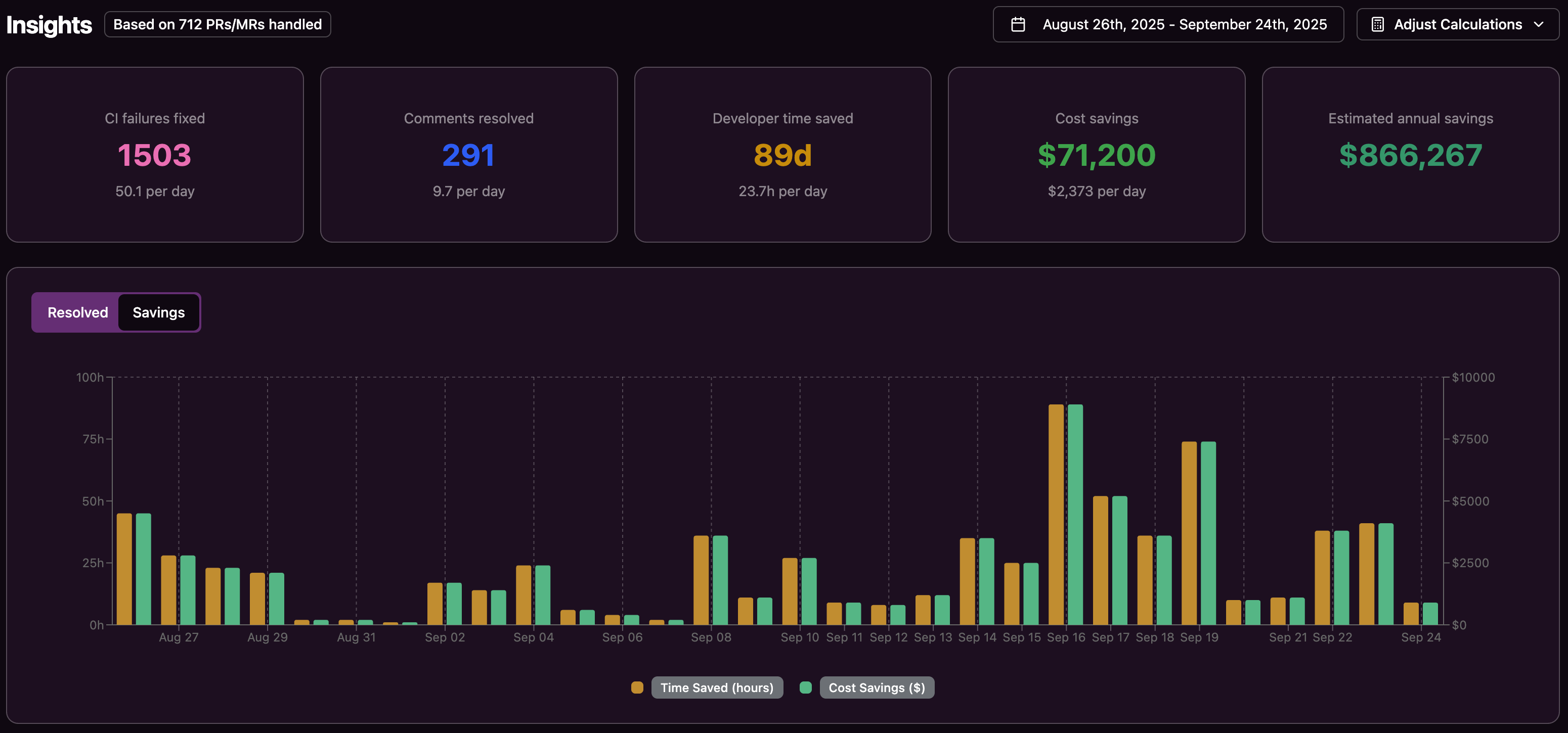
Gitar delivers clear financial benefits. For a 20-developer team losing $1 million yearly to CI and review delays, automating fixes at a 50% success rate can save around $500,000. Metrics like reduced build failures and quicker repair times show the impact. Tracking failed builds and repair times helps measure efficiency gains.
Navigate Complex Enterprise CI/CD Challenges
Gitar fits well in enterprise settings with intricate CI/CD systems. It understands specific SDKs and dependency chains, ensuring fixes align with company standards. For repetitive tasks like test reruns, it saves significant effort. Automation excels at handling routine pipeline errors. Its control options also let teams oversee changes while benefiting from efficiency.
Why Gitar Outperforms Manual and Suggestion Tools
Gitar stands out by fully automating fixes, unlike manual methods or suggestion tools that still need developer input. See the difference:
|
Feature/Impact |
Manual Debugging & Review |
AI Suggestion Tools |
Gitar (AI Automation) |
|
Error Resolution |
Fully manual effort for finding and fixing issues |
Offers ideas, but developers must apply and test fixes |
Automatically applies and validates fixes for green builds |
|
Developer Focus |
High interruption from context switching |
Still disrupts with manual steps needed |
Preserves focus by minimizing interruptions |
|
Time to Merge |
Slow due to manual fixes and delays |
Faster ideas, but still slowed by manual work |
Much quicker with automated, merge-ready fixes |
|
Environment Fit |
Depends on developer’s setup knowledge |
Limited context, fixes may not match setup |
Matches full environment for reliable fixes |
Ready to simplify your pipeline? Install Gitar now for automated fixes and better reliability.
Answers to Common Questions About Reducing CI/CD Errors
How Does Gitar Differ from Other AI Review Tools?
Many AI tools only suggest fixes, leaving implementation to developers. Gitar goes further by applying changes and validating them against your CI workflow, ensuring builds pass without extra effort from your team.
Can Gitar Handle Our Complex CI Setup?
Yes, Gitar replicates detailed enterprise environments, including specific SDKs and dependencies. This allows it to create fixes that fit your exact setup, addressing errors effectively even in complex systems.
How Does Gitar Build Trust for Automated Fixes?
Gitar offers adjustable settings, starting with suggestions for review and moving to full automation with rollback options as trust grows. This approach keeps developers in control while easing into automation benefits.
What’s the Financial Benefit of Using Gitar?
For a 20-developer team, Gitar can save about $500,000 yearly by cutting time spent on CI issues by half. Metrics like fewer build failures and faster repair times highlight the efficiency gains and cost reductions.
Which Errors Can Gitar Fix Automatically?
Gitar addresses common issues like lint errors, test failures, build script problems, and dependency clashes. It also acts on code review feedback. While it focuses on workflow issues rather than core logic bugs, it handles most daily disruptions.
Wrap-Up: Strengthen Reliability with Automated CI Fixes
Human errors in CI/CD pipelines delay projects and cost millions in lost productivity. Gitar changes this by automating fixes, reducing manual debugging, and creating a smoother workflow. This approach boosts system reliability and lets teams focus on innovation.
The savings are significant. A 20-developer team could recover $500,000 annually with a 50% success rate in automated fixes. Beyond dollars, it improves morale and delivery predictability.
As AI tools speed up coding, validating and merging code efficiently is the new challenge. Adopting Gitar gives teams an edge in speed and stability.
Ready to tackle CI/CD errors? Install Gitar today to automate fixes and enhance reliability.