
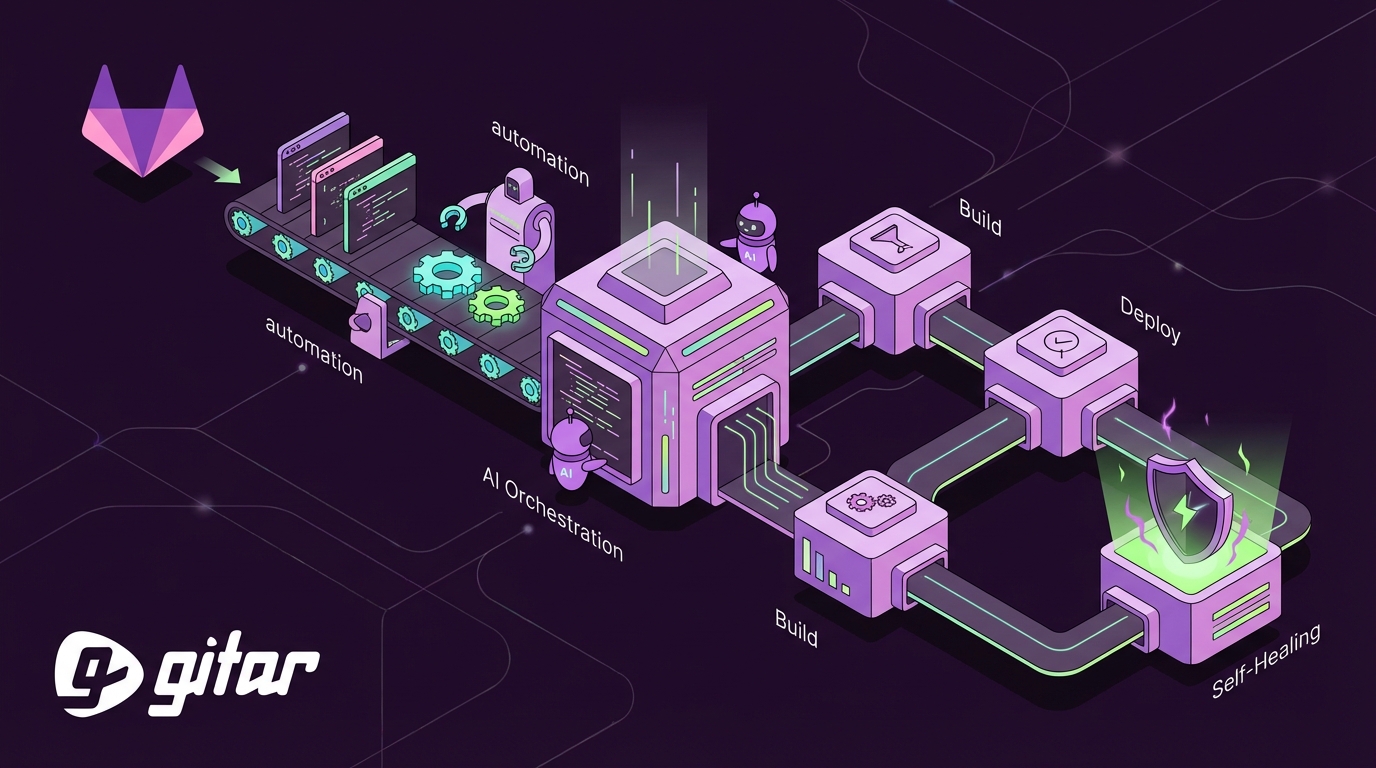
Key Takeaways
- GitLab CI pipelines in 2026 face higher load, more frequent failures, and greater complexity than in 2024 and 2025, which makes manual troubleshooting increasingly costly.
- Traditional automation and AI suggestion tools help diagnose problems but still rely on developers to context switch, apply fixes, and restart pipelines.
- Autonomous AI agents that analyze failures, generate fixes, and validate them in CI reduce review cycles, limit context switching, and lower CI infrastructure waste.
- Successful adoption of advanced GitLab CI automation depends on gradual trust building, clear guardrails, and an explicit ROI model that leadership can track.
- Teams that want autonomous CI fixing and code-review assistance inside GitLab can start quickly by installing Gitar for self-healing pipelines and automated merge request updates.
Why Traditional GitLab CI Automation Approaches Are Falling Short in 2026
Enterprise GitLab CI strategies now focus on large-scale, heterogeneous architectures that mix microservices, infrastructure as code, and monorepos, which increases pipeline surface area and failure modes.
The CI/CD gauntlet in 2026 often looks the same: a merge request triggers builds, tests, and scans, then fails on dependency conflicts, flaky tests, or security issues. Each failure pulls developers out of deep work into log reading, manual edits, and reruns, turning a quick fix into repeated interruption.
Context switching amplifies the impact. Developers submit merge requests, move on to new tasks, then get pulled back for CI failures or review comments. Even short interruptions can stretch a small change into an hour of lost productivity when focus recovery time is included.
Distributed teams feel this more sharply. A merge request from San Francisco that needs review in London can stretch simple exchanges across days. AI tools that only suggest fixes do not close this loop because someone still needs to implement and validate each change.
AI-assisted coding has also shifted the bottleneck to the right. More generated code means more merge requests, more tests, and more CI failures. The main constraint now sits in validation and merge, not in writing code. Gitar addresses this constraint by fixing many failed GitLab CI jobs automatically so teams can ship changes faster.
Understanding the Evolving Landscape of GitLab CI Integration Automation Tools
From Basic Scripting to Intelligent Orchestration
Early GitLab CI automation centered on .gitlab-ci.yml files and shell scripts that tied together builds, tests, and deployments. GitLab positioned its CI as a single-platform automation layer for the software delivery lifecycle, but failure handling still depended on humans.
A second phase introduced Auto DevOps, security scanning, and infrastructure as code. Auto DevOps now detects project characteristics and assembles pipelines automatically, which streamlines setup yet still stops short of autonomous repair when pipelines break.
The current phase adds context-aware automation. Tools now interpret change intent, learn common failure patterns, and propose or apply fixes. The focus shifts from running scripts to closing the loop from failure detection to resolution.
Emerging AI-Powered GitLab CI Approaches
GitLab now includes generative AI for CI/CD job failure analysis, which shows that manual troubleshooting does not scale for large organizations.
Modern tools fall into three groups:
- Suggestion engines that highlight likely causes and propose fixes for developers to apply.
- On-demand assistants that respond to prompts but need manual follow-through.
- Autonomous agents such as Gitar that observe failures, decide on a fix, and push validated commits back to the branch.
The main difference is whether tools handle the last mile. Only autonomous agents move from diagnosis to implemented, validated fixes without an explicit developer action on each failure.
Strategic Pressures Behind Advanced Automation
GitLab priorities now emphasize security by default, developer productivity, and cost control, which aligns with how executives evaluate CI investments.
Developer time has become a board-level line item. A 20-person team losing an hour per engineer each day to CI issues and review friction can forfeit roughly 5,000 hours a year and close to $1M in loaded costs. Frequent retries also increase cloud spending as runners execute failed jobs multiple times.
The Next Frontier: Autonomous AI Agents for GitLab CI Integration
Gitar as a Self-Healing GitLab CI Integration Option
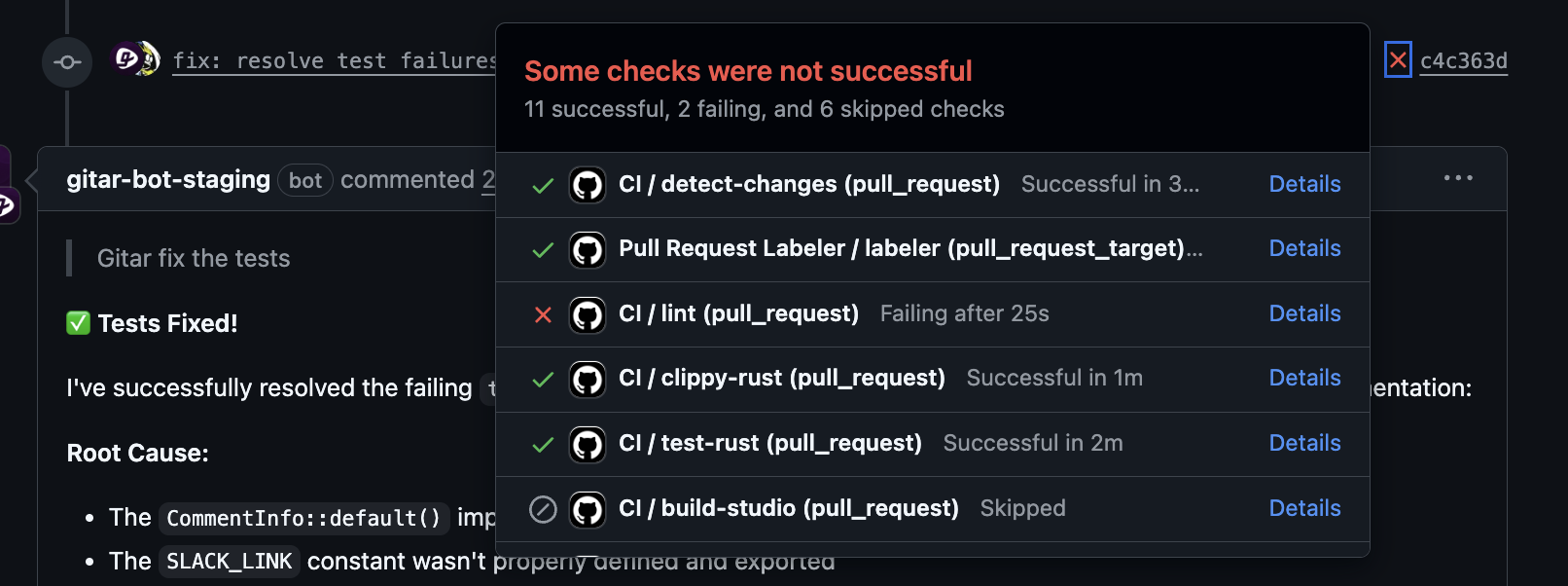
Gitar shifts GitLab CI shifts from reactive fixing to automated recovery. When a pipeline fails or a reviewer leaves actionable feedback on a merge request, Gitar analyzes logs and code, prepares a change, and commits the fix back to the branch once it passes validation.
Teams control how much autonomy they grant. They can start with suggestion mode that requires one-click approval, then move to auto-commit mode as they gain confidence. This gradual path lowers adoption risk and supports internal governance standards.
Gitar architecture supports real-world complexity, including parallel pipelines, concurrent user actions, and events that arrive out of order. That reliability matters for large organizations that run many jobs and services in parallel.
How Gitar Changes Daily GitLab CI Workflows
Gitar focuses on the most repetitive CI tasks. When builds fail for linting, tests, snapshots, or dependency issues, it inspects the logs, proposes or applies code edits, and pushes updates until the pipeline returns to green.
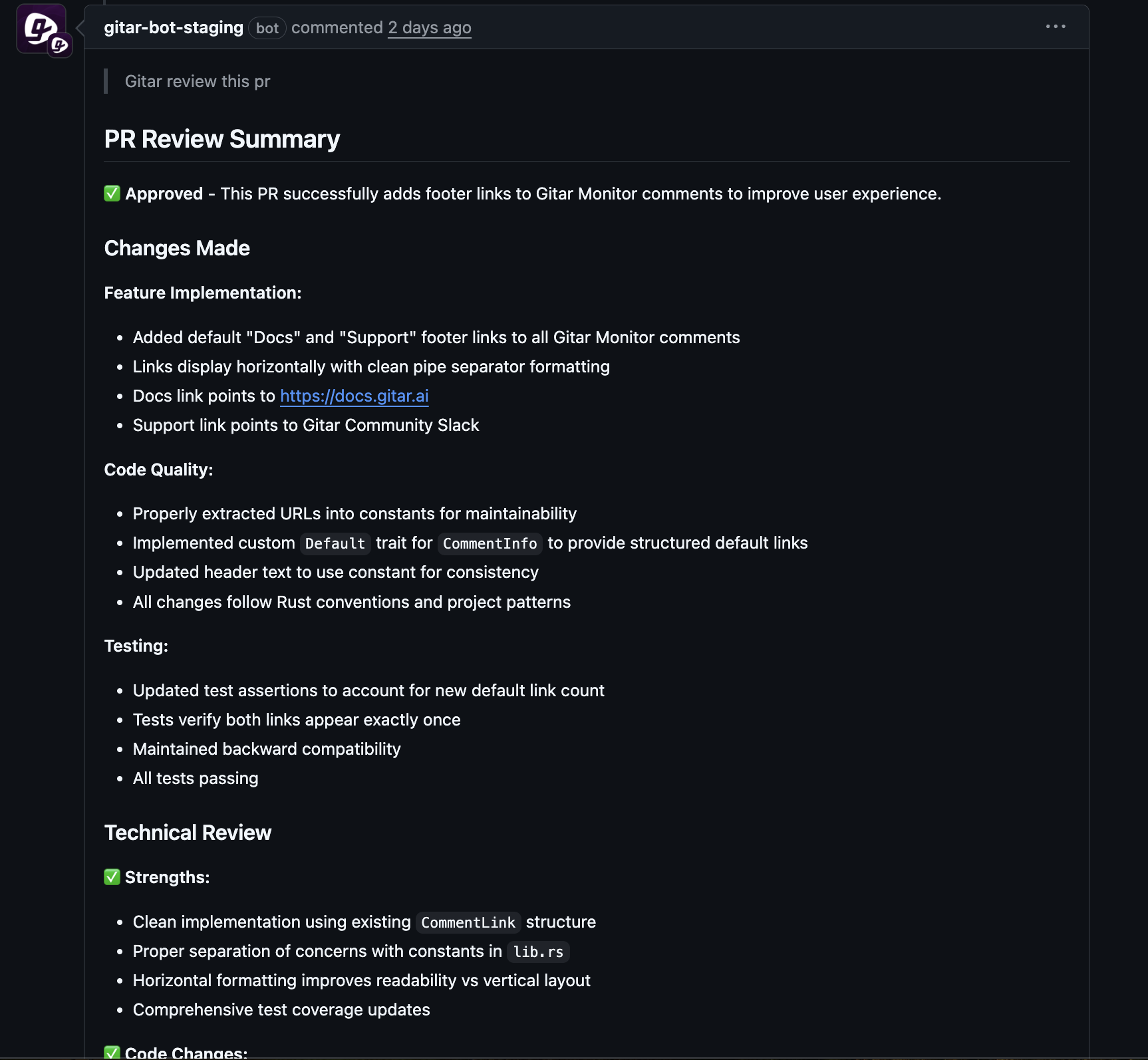
On the code review side, reviewers can mention Gitar to generate summaries or ask it to implement requested changes. Instead of waiting for a developer in another time zone, the system can apply edits overnight and leave a clear commit trail.
This behavior shortens review cycles for distributed teams. Feedback left in one region can become a passing pipeline by the time another team comes online, without extra manual steps.
Strategic Considerations for Advanced GitLab CI Automation
Build vs. Buy for GitLab CI Integration
GitLab describes itself as a complete DevSecOps platform that consolidates tooling, so many teams consider building on top of it.
Teams that build custom automation must implement failure detection, fix logic, and ongoing maintenance as APIs and features change. The GitLab deprecation list illustrates how often interfaces evolve, which adds long-term ownership costs.
Specialized products such as Gitar deliver these capabilities out of the box for GitLab CI environments. This buy approach lets internal teams focus on product features rather than custom CI repair systems.
Readiness, Trust, and Control
Trust is central when tools can modify code. Gitar supports conservative operation where it only posts suggestions, intermediate modes, where it opens merge request changes for review, and full auto-commit for selected repositories or file types.
Teams often start with simple, low-risk fixes such as linting or snapshot updates, then expand coverage based on observed accuracy. This path supports security, compliance, and change-management practices.
Modeling ROI for Leadership
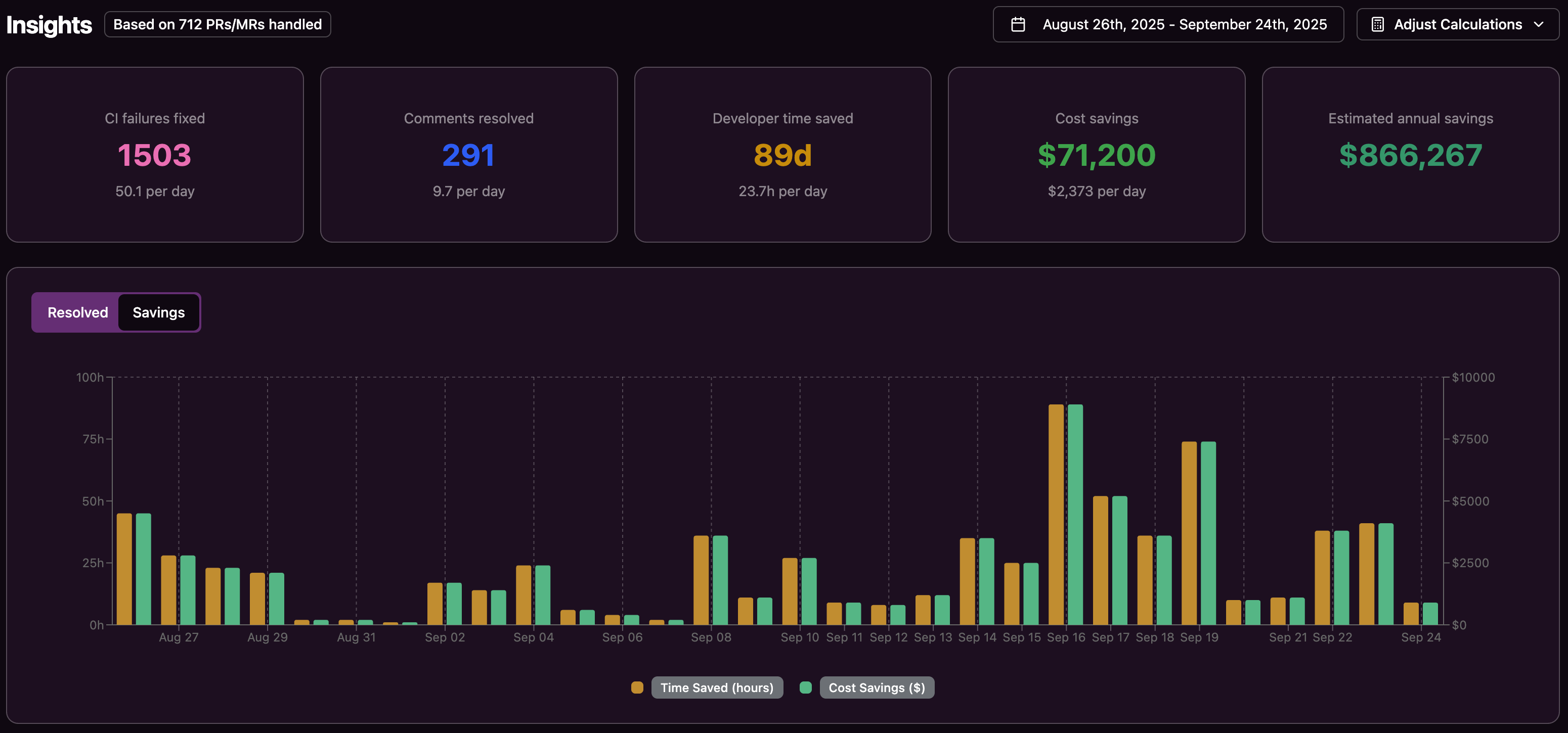
Leadership teams respond to clear numbers. A 20-developer group that spends one hour per day on CI and review friction loses roughly 25 percent of its time. If Gitar removes even half of that work through autonomous fixes, it can reclaim thousands of hours and hundreds of thousands of dollars per year, while also reducing runner usage from fewer retries.
Beyond the Basics: Handling Complex GitLab CI Environments
Managing Enterprise-Grade GitLab CI Complexity
Large GitLab CI installations often span microservices, infrastructure as code, and monorepos, with specific SDK versions, security scanners, and custom workflows.
Gitar replicates each environment rather than applying generic patterns. It respects tool versions, configuration files, and organization-specific quality gates so that fixes succeed in real pipelines, not just in theory.
Developer-In-The-Loop Controls
Regulated teams often need audit trails and approvals. Gitar supports workflows where it proposes patches but requires maintainers to approve or merge them, and teams can restrict autonomous fixes to routine changes while keeping critical paths fully reviewed.
GitLab CI Integration Automation Tools Comparison: Gitar vs. Alternatives
|
Feature |
Manual Work |
AI Code Reviewers |
Gitar |
|
Fixes CI Failures |
Manual investigation |
Suggestions only |
Autonomous and validated |
|
Code Review Resolution |
Manual implementation |
Analysis only |
Direct implementation |
|
Environment Replication |
Local setup dependent |
Limited context |
Enterprise emulation |
|
Developer Productivity |
High context switching |
Partial assistance |
Flow preservation |
Manual approaches demand attention at every step and disrupt flow. AI code reviewers reduce diagnosis time but still leave implementation work to developers. Gitar closes that gap by applying and validating fixes so that many pipelines recover without additional input.
Strategic Pitfalls to Avoid in GitLab CI Automation
Many teams underestimate the last-mile challenge. Tools that only highlight problems can still leave developers with the same context switching and manual editing workload.
Environmental awareness also matters. GitLab CI best practices emphasize fast, reliable feedback loops, but tools that cannot mirror real environments often propose fixes that fail in production pipelines.
Adopting autonomous tools without a phased trust plan can create resistance. A staged rollout with clear guardrails tends to produce better adoption and more reliable outcomes.
Many traditional CI tools automate builds and tests but still leave coordination and dependency bottlenecks unsolved, which creates space for focused GitLab CI repair agents instead of more custom scripts.
Frequently Asked Questions about GitLab CI Integration Automation Tools
How do autonomous AI agents like Gitar integrate with existing GitLab CI pipelines?
Gitar installs as a GitLab application that listens to merge request events and pipeline status updates. It does not require changes to .gitlab-ci.yml files or runner configuration. Teams select repositories, set automation levels, and let the agent observe failures or comments, then propose or apply fixes based on those rules.
Can an AI automation tool handle complex enterprise dependencies and compliance?
Gitar emulates the full CI environment, including language versions, frameworks, security scanners, and compliance checks. It validates every change through the same pipelines that human-written changes use, which keeps fixes aligned with internal standards.
What ROI can teams expect from GitLab CI integration automation?
Teams that spend significant time on CI failures and code review updates often recover thousands of hours per year when autonomous tools remove much of that manual work. Gitar turns many failures into background repairs, which reduces developer interruption and can lower runner and cloud usage from fewer retries.
Conclusion: Moving GitLab CI Toward Self-Healing Pipelines
GitLab has expanded CI/CD toward more intelligent, context-aware automation, and autonomous agents now extend that direction inside real pipelines.
Gitar focuses on the operational gap between detection and resolution by fixing many failures directly in GitLab CI and applying actionable review feedback. This helps teams reduce context switching, shorten review cycles, and keep pipelines green more often.