
Key Takeaways
- CI failures and slow code reviews create a significant, often hidden, productivity cost that directly affects delivery speed and engineering spend.
- AI suggestion tools reduce some friction but still rely on developers to implement and validate fixes, which keeps context-switching overhead high.
- Autonomous DevOps agents can detect, diagnose, and remediate specific classes of CI and review issues, enabling more self-healing pipelines.
- A phased rollout, clear metrics, and a configurable trust model help teams adopt autonomous systems without losing control or visibility.
- Gitar applies and validates CI fixes automatically, helping teams shorten time-to-merge and reduce manual toil.
The Unseen Costs: Why Traditional DevOps Falls Short on Efficiency
CI/CD inefficiency has become a direct business issue, not just an engineering concern. Enterprise-scale DevOps now acts as a lever for productivity, resilience, security posture, and operating cost. Teams that rely on manual CI triage and slow code reviews can lose up to 30% of developer time to rework and context switching.
Context switching creates the largest drag. A developer who ships a pull request, moves on, then gets pulled back by a red build loses far more than the time needed to fix a lint error. Flow state breaks, so a 10-minute fix can turn into an hour of lost productivity. Elite teams deploy on demand with very short lead times, while low performers deploy rarely and face higher failure rates. The gap reflects how efficiently each group handles validation and recovery.
Modern code-generation tools increase throughput on the coding side, but they also create more changes to validate. Teams need AI-driven DevOps efficiency solutions that keep validation and remediation as fast as code creation.
Install Gitar to automatically fix broken builds and shorten your feedback loop.
Unlock Autonomous Efficiency: How AI Agents Improve CI/CD with Gitar
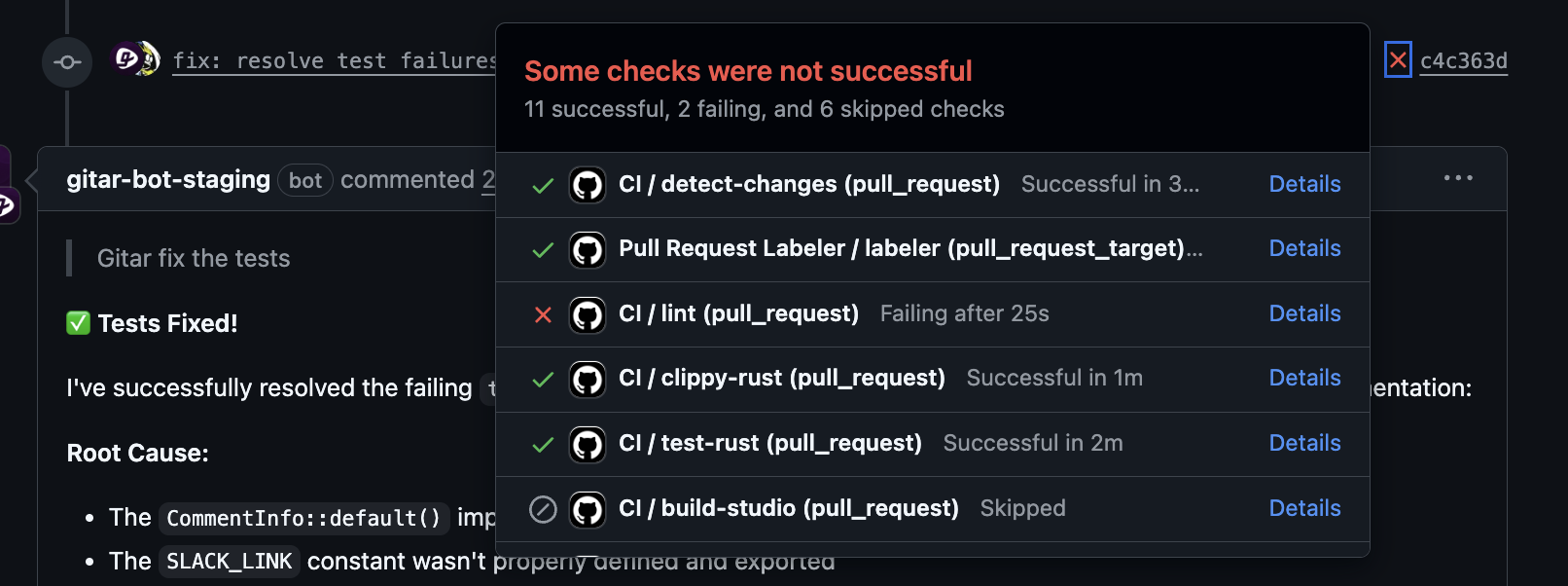
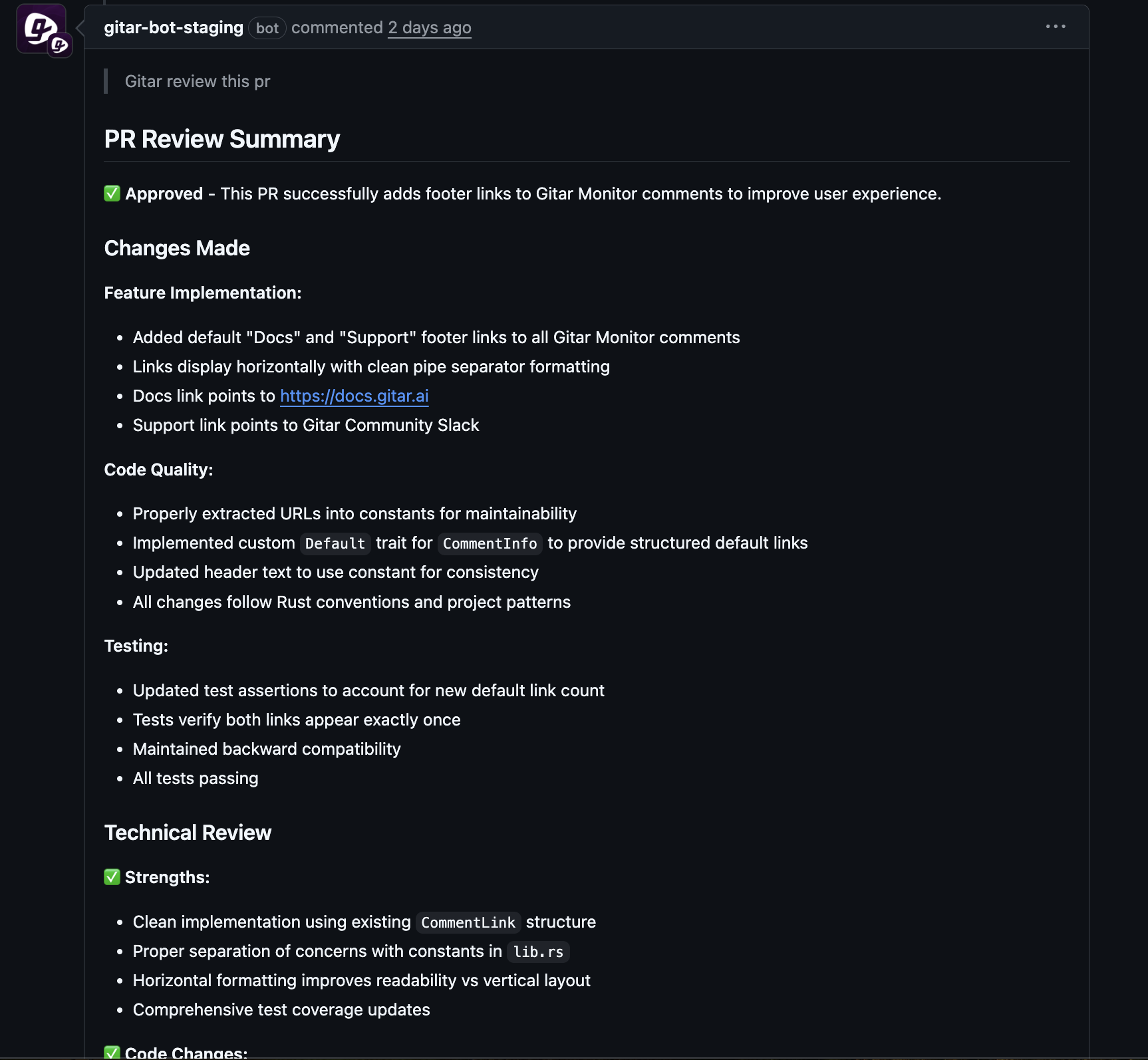
Gitar operates as a CI healing engine. When CI fails or reviewers request changes, Gitar analyzes the issue, generates a fix, validates it in CI, and updates the pull or merge request. Developers stay focused on feature work while routine issues resolve in the background.
Key capabilities include:
- End-to-end autonomous fixing, from diagnosis through validated commits
- Full environment replication, including language versions, SDK combinations, and tools such as SonarQube and Snyk
- A configurable trust model, from suggestion-only to auto-commit
- Support for platforms such as GitHub Actions, GitLab CI, CircleCI, and Buildkite
- Reduced time zone friction for distributed teams through automatic implementation of review feedback
Unlike AI code reviewers that stop at comments or suggestions, Gitar completes the loop by applying and validating fixes, which turns CI from a blocking step into a largely self-healing system.
From Suggestions to Self-Healing: The Evolution of AI in DevOps
Where Traditional AI Tools Stop
Most AI tools in DevOps act as suggestion engines. They comment on pull requests, propose snippets, or draft configuration changes, but developers still implement and validate the work. GitHub Copilot Workspaces can understand tasks, explore codebases, propose plans, and apply multi-file edits, yet it keeps a human firmly in the loop. Amazon Q Developer assists with CI/CD setup and security scans, but teams still shoulder the final responsibility for validation, especially in complex environments.
This pattern shifts work rather than removing it. Developers must interpret suggestions, adjust them for the pipeline, and re-run CI until everything passes.
How Autonomous Agents Enable Self-Healing Pipelines
Autonomous DevSecOps agents can plan actions, update configuration, and raise merge requests across the lifecycle. Self-healing CI/CD pipelines automatically detect, diagnose, and remediate defined classes of failures, which reduces mean time to recovery and manual toil.
Gitar applies that model specifically to CI and code review. Its architecture handles concurrent operations, asynchronous events, and long-running jobs while preserving context. By replicating the full enterprise environment, it can propose and validate fixes that match real conditions, not just a small diff.
Try Gitar to see autonomous CI healing in your own pipelines.
Adopt AI-Driven DevOps Solutions with a Clear Framework
Check Readiness Before You Automate
Strong foundations make AI more effective. Teams need solid automation, testing, and observability so AI does not amplify existing problems. Technical readiness includes:
- Reliable automated tests and fast feedback
- Clear CI/CD pipelines managed by a platform or enablement team
- Good logging, tracing, and metrics
Platform teams that offer shared, self-service CI/CD capabilities improve consistency and reduce duplicated effort. Cultural readiness also matters: teams need defined ownership boundaries and agreement on which changes can be automated.
Use a Phased Rollout for Gitar
A staged implementation limits risk while building confidence:
- Phase 1: Run Gitar in suggestion-only mode on selected repositories. Developers review and accept fixes with one click, while Gitar builds a track record on low-risk issues.
- Phase 2: Increase automation for well-understood scenarios. Transparent behavior, observability, and rollback options support trust in AI systems, and Gitar’s trust model lets teams tune behavior per repo or workflow.
- Phase 3: Expand to advanced workflows, including review comments that delegate specific refactors or cleanup tasks to Gitar.
Measure ROI with Technical and Business Metrics
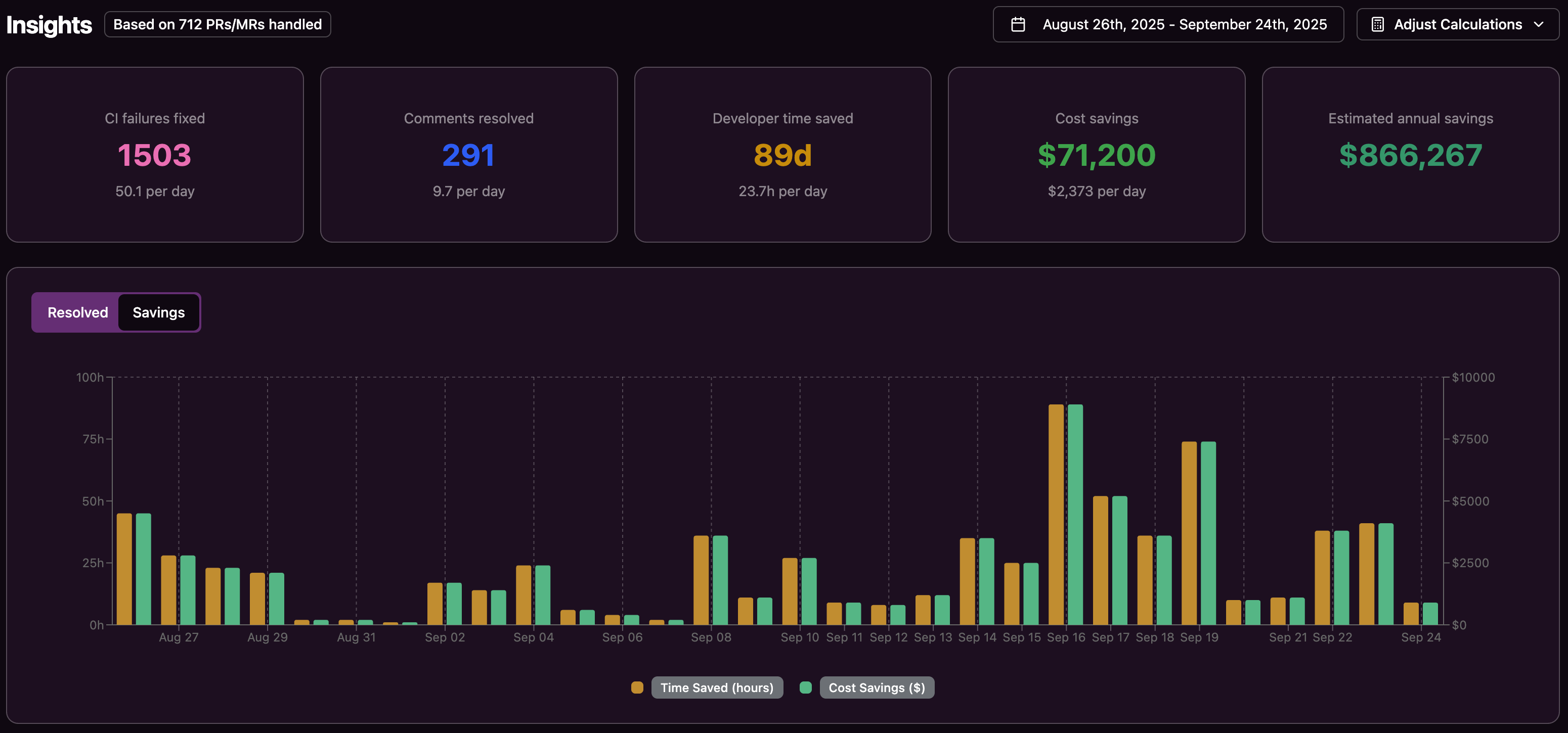
DORA metrics such as deployment frequency, lead time, change-failure rate, and MTTR correlate with business outcomes. Organizations that adopt AI for software engineering report higher productivity, better quality, and faster time-to-market.
For a 20-developer team that spends an hour per person per day on CI and review issues, annual lost productivity can reach seven figures. Cutting that effort in half with autonomous fixes can free hundreds of developer days per year. High-performing organizations also connect DevSecOps metrics to revenue, churn, and delivery of strategic initiatives, so improvements show up clearly in business reports.
Overcome Common Concerns About AI-Driven DevOps
Balance Trust, Complexity, and Control
Teams often worry that they already have AI reviewers or that automated fixes might be unsafe. Suggestion tools such as CodeRabbit add insight, but they still require manual implementation and CI validation. Gitar focuses on execution and validation, with a trust model that allows conservative rollout and easy rollback.
Complex enterprise pipelines tend to be the hardest to automate. Gitar’s environment replication supports specific JDK versions, multiple SDKs, security scanners, and snapshot tests so fixes reflect real conditions instead of idealized ones.
Avoid Strategic and Governance Pitfalls
Deploying AI without clear goals or integration plans often leads to “AI washing” and poor results. Successful teams treat AI as part of the platform, not a disconnected point tool.
Strong governance is also essential. Production AI requires attention to data governance, privacy, and model behavior over time. CI/CD systems often hold powerful credentials and need robust security controls. Autonomous agents should use scoped identities, clear authorization policies, and detailed audit logs.
Compare Approaches: Gitar and Other AI-Driven DevOps Tools
The AI DevOps market spans from lightweight suggestion tools to task-specific agents. Understanding the differences helps teams match tools to their goals.
|
Feature |
Gitar (Autonomous Healing Engine) |
AI Code Reviewers |
On-Demand AI Coding Assistants |
|
Primary function |
Autonomous code fixing and CI validation |
Code suggestions and analysis |
General coding help and issue resolution |
|
Level of automation |
Configurable autonomous action, from suggestions to auto-commit |
Suggestions that developers apply manually |
Often requires prompts and manual validation |
|
CI validation |
Runs fixes through full CI workflows |
No direct CI validation of comments |
Limited, usually user-triggered checks |
|
Environment context |
Replicates enterprise CI environments |
Focuses on diffs or files under review |
Varies by tool and setup |
Gitar reduces the manual steps between “we know what to fix” and “the build is green,” which is where many teams lose time today.
See how Gitar’s autonomous CI healing compares in your environment.
Frequently Asked Questions (FAQ) about AI-Driven DevOps Efficiency Solutions
How does Gitar handle complex CI/CD environments?
Gitar replicates full enterprise environments, including language and SDK versions, third-party scanners such as SonarQube and Snyk, and snapshot tests. This approach helps ensure that fixes are accurate within your actual pipeline.
How can teams control the level of automation?
Gitar offers a configurable trust model. Teams can start in conservative mode, where Gitar posts suggested changes for review. As confidence grows, they can enable direct commits for defined workflows, with rollback paths and audit logs in place.
Which metrics show the impact of Gitar?
Teams typically monitor DORA metrics, time-to-merge, time spent on CI and review issues, and developer satisfaction. Reductions in manual CI firefighting and review back-and-forth highlight the value of autonomous fixes.
Conclusion: Make CI/CD in 2026 More Autonomous and Efficient
DevOps in 2026 continues to move from manual triage toward autonomous, policy-driven systems. The largest gains now come from reducing friction in validation and recovery, not only from speeding up coding.
Gitar focuses on that bottleneck, turning CI failures and review feedback into automatically applied and validated fixes. Teams that adopt autonomous CI healing gain faster delivery, lower operational overhead, and more time for strategic work instead of repetitive repairs.
Book a Gitar demo to see how autonomous CI healing can support your 2026 delivery goals.