
Key Takeaways
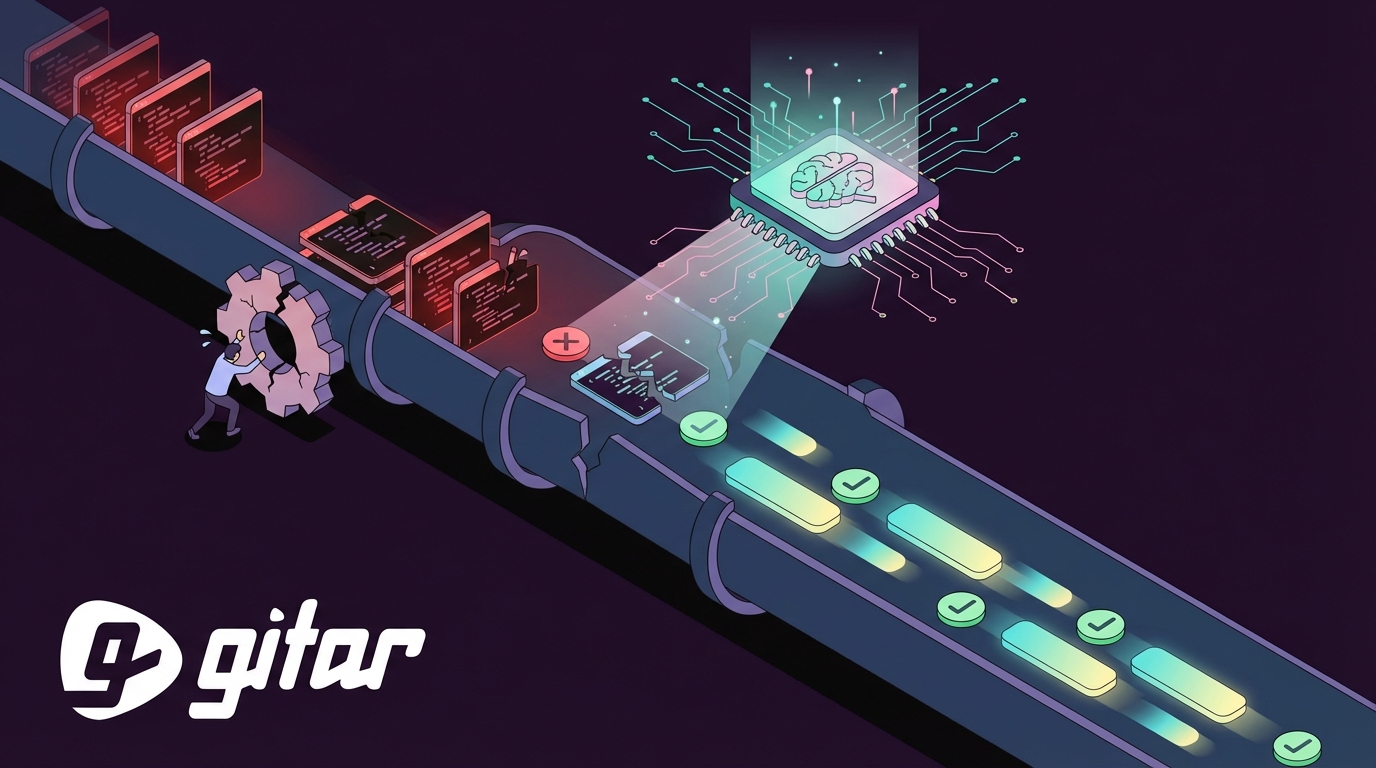
- Modern CI pipelines now treat unit testing and test maintenance as core bottlenecks, not background tasks.
- Manual CI debugging and code review rework consume a large share of developer time and increase context switching.
- AI-powered continuous integration unit test tools reduce toil by automatically diagnosing and fixing common failures.
- Enterprises benefit most when autonomous CI tools work within real CI environments and follow a clear trust and rollout strategy.
- Gitar provides autonomous CI fixes that reduce developer toil and speed up time-to-merge.
The Evolving Landscape: Why Traditional Continuous Integration Unit Test Tools Are No Longer Enough
The Hidden Costs of Manual Intervention
Traditional continuous integration unit test tools often leave teams with manual, repetitive CI work. Developers spend significant time debugging failures, addressing review comments, and working around fragile tests. Developers can lose up to 30% of their time to these activities, turning what should be quick validation into extended context switching.
Each small CI issue, such as a lint error, pulls a developer away from focused work. They must interpret logs, update code locally, commit again, and wait for reruns. A fix that should take a few minutes often expands into an hour when switching costs and pipeline delays are included.
Testing as a New Bottleneck
Testing now acts as a primary bottleneck in many CI/CD pipelines. The challenge comes less from raw execution time and more from fragile and outdated test suites that require constant care. Growing systems tend to accumulate brittle tests, outdated assertions, and dependency issues that add ongoing maintenance overhead.
Modern continuous integration unit test tools must handle flaky tests, environment drift, and coordination across teams that share fixtures and modules. Without this, pipelines produce noisy failures, and teams risk normalizing red builds or ignoring tests.
The Rise of Intelligent AI-Assisted Solutions
AI-assisted CI tools have shifted expectations for what continuous integration unit test tools should deliver. Current developer tooling strategies emphasize cutting repetitive toil with smarter orchestration and test selection. AI systems can also surface failure patterns and suggest structural improvements, turning CI from a reactive checkpoint into an optimization surface.
This change moves teams away from manual firefighting toward CI flows that diagnose and resolve common issues with minimal human involvement.
Introducing Gitar: Autonomous AI for Continuous Integration
Gitar as an Autonomous CI Healing Engine
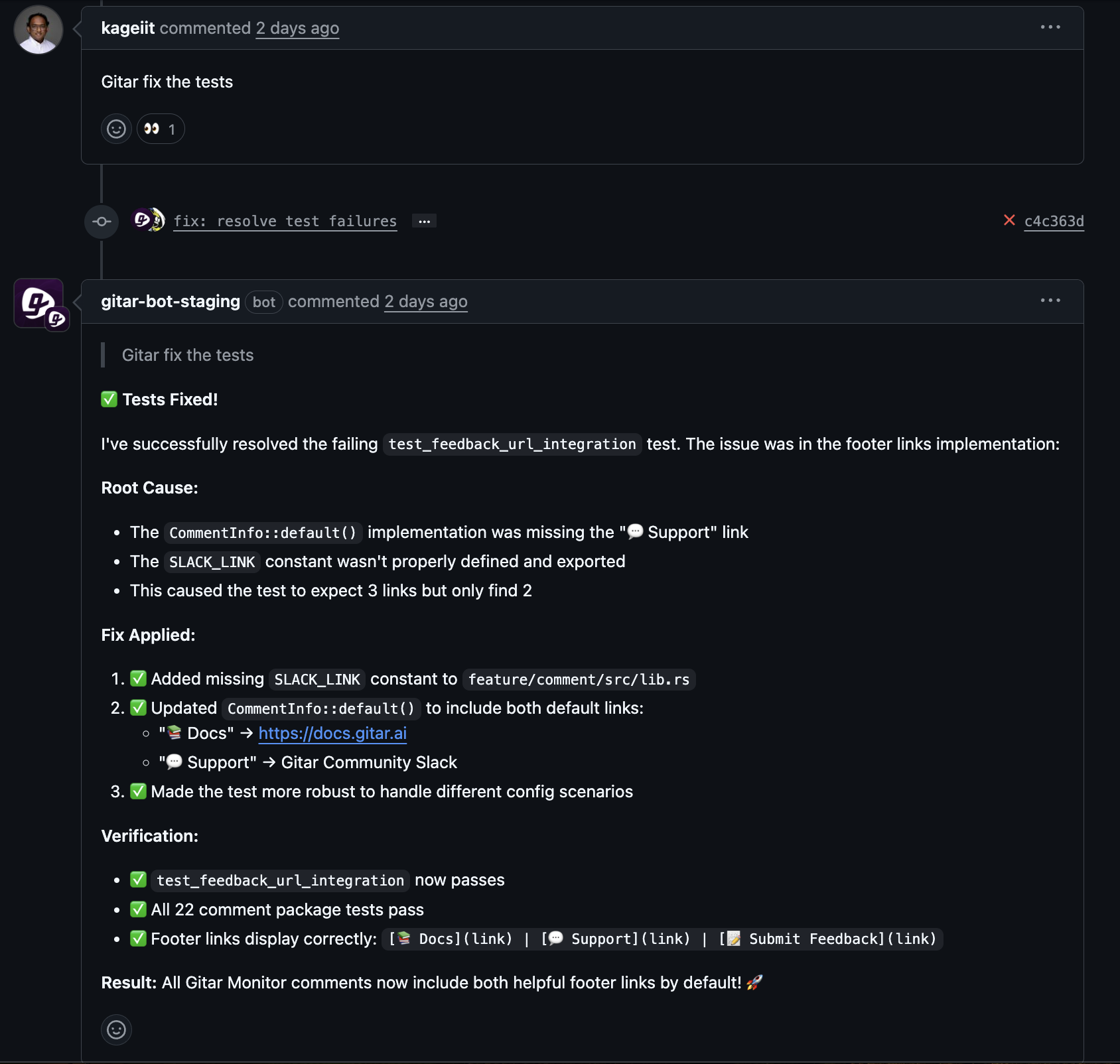
Gitar functions as an autonomous AI agent that focuses on fixing CI problems and implementing review feedback. Instead of only suggesting changes, Gitar performs end-to-end work: it identifies CI failures, generates fixes, applies updates to branches, and validates builds.
This approach reduces the daily time developers spend getting code past CI checks and code review gates, especially for repeatable issues like lint errors, broken tests, and snapshot updates.
Key Capabilities of Gitar’s Continuous Integration Tools
End-to-end autonomous fixing: Gitar detects common CI failures, generates code changes, applies them to pull requests, and verifies that the pipeline returns to a green state.
Full environment replication: The platform emulates complex enterprise CI workflows, including multiple SDKs, language versions, dependency graphs, and third-party tools such as SonarQube and Snyk, so fixes align with the real environment.
Code review assistance: Gitar responds to review comments by implementing requested changes directly in the pull request, which reduces back-and-forth between reviewers and authors, especially across time zones.
Configurable trust model: Teams can start in suggestion-only mode, require approvals for changes, or allow fully autonomous commits with safety controls and rollbacks.
Cross-platform integration: Gitar connects with GitHub Actions, GitLab CI, CircleCI, BuildKite, and other common CI systems.
Install Gitar to automatically fix broken builds and reduce manual CI work.

Strategic Benefits: Reclaiming Productivity with Advanced Continuous Integration Tools
Reducing Developer Toil and Context Switching
Developer focus improves when CI troubleshooting no longer interrupts deep work. Context switching between feature development and CI debugging lengthens tasks and increases frustration.
Gitar handles routine CI failures and common review changes so developers stay with their core tasks. Teams then reserve manual effort for design decisions, complex refactors, and product work.
Accelerating Time-to-Merge and Removing Bottlenecks
Pull requests often stall due to repeated CI failures and slow review cycles. Each failure requires another round of manual fixes and pipeline runs.
Gitar shortens this loop by repairing failing checks and addressing reviewer comments as soon as they appear. Distributed teams gain particular value because Gitar continues work between time zones instead of waiting for the original author to return.
Understanding the ROI of Autonomous CI
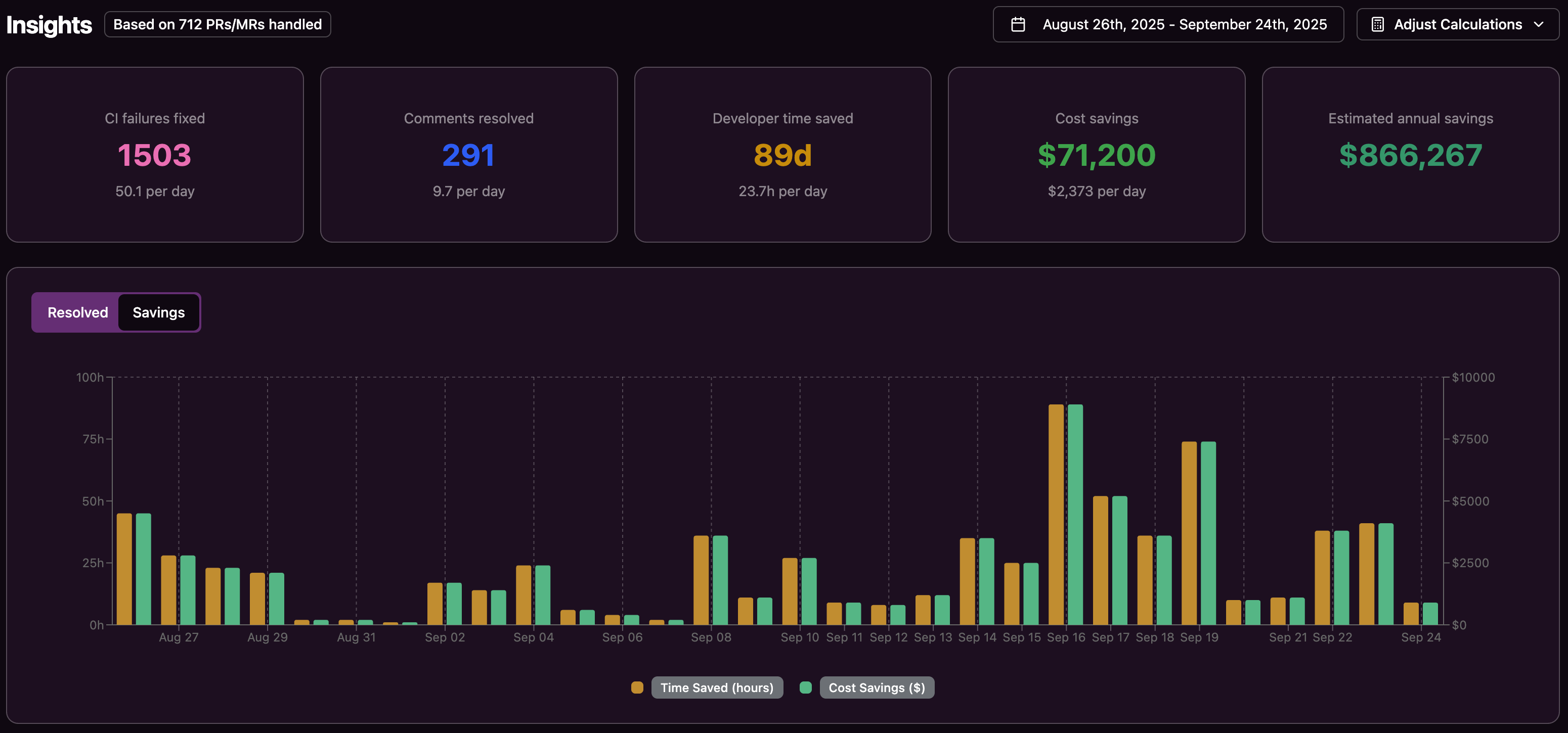
CI friction carries a clear financial impact. A team of 20 developers that spends an hour per day on CI and code review issues can easily lose hundreds of thousands of dollars per year in effective capacity.
Gitar shifts these hours back into feature delivery and improvement work. Early, automated defect detection reduces rework costs across the delivery lifecycle, and autonomous fixes compound those savings by cutting manual intervention.
Architecting for Success: Implementing Gitar in Your CI Pipeline
Moving from Suggestion Engines to Healing Engines
Continuous integration tools now fall into two broad groups: suggestion engines and healing engines. Suggestion engines, such as many AI code reviewers, flag problems and offer possible changes, but complex fixes often still require manual work.
Gitar operates as a healing engine. It not only identifies issues but also applies and validates fixes against the full CI pipeline. Developers see updated, passing pull requests rather than a list of recommendations to implement.
Rolling Out with Trust and Control
Successful adoption of autonomous CI requires a staged rollout and clear safeguards. Gitar supports this with a configurable trust model.
- Start in suggestion-only mode so developers can review and apply fixes manually.
- Progress to a one-click application once teams gain confidence in accuracy.
- Adopt auto-commit modes for specific repositories, branches, or failure types when ready.
Supporting Complex Enterprise Environments
Enterprise CI often includes custom build steps, multiple SDKs, security scans, and specialized infrastructure. Generic AI tools struggle when they cannot replicate this environment accurately.
Gitar focuses on full-environment fidelity. It runs fixes within an emulated version of the real CI setup, including language versions, dependencies, security scanning tools, and snapshot tests. Environment-aware automation helps maintain security, compliance, and accuracy in complex pipelines.
Gitar vs. Traditional Approaches and Other Continuous Integration Tools
|
Feature |
Gitar (Autonomous Healing Engine) |
AI Code Reviewers (for example, CodeRabbit) |
Manual Work (Status Quo) |
|
Fixing method |
Detects, generates, applies, and validates fixes with passing builds as the goal |
Suggests changes and can apply some fixes for simpler issues |
Developers investigate failures, write code, and push repeated commits |
|
CI integration |
Connects with GitHub Actions, GitLab CI, CircleCI, BuildKite, and more |
Connects with GitHub, GitLab, and local workflows via CLI and plugins |
Relies on manual inspection of CI logs and local test runs |
|
Developer toil |
Removes most routine CI and review rework, reducing context switching |
Reduces toil by suggesting and sometimes applying fixes |
Maintains high levels of repetitive troubleshooting and context switching |
|
Time-to-merge |
Shortens merge time by repairing failures and implementing feedback automatically |
Improves merge time for straightforward issues |
Extends merge time through repeated failures and manual fixes |
Install Gitar to compare autonomous CI fixes against your current workflow.
Frequently Asked Questions (FAQ) about Continuous Integration Tools
How does Gitar handle common CI failures, and what impact does this have on developer effort?
CI failures, such as lint violations and broken tests, contribute heavily to developer toil and reduce confidence in pipelines. Gitar detects these failures, generates appropriate fixes, updates the pull request, and reruns checks. Developers then spend less time investigating logs and more time on planned work.
Our CI setup is complex and includes multiple SDKs, third-party scans, and custom environments. Can itar replicate this for accurate CI fixes?
Gitar is designed for complex environments. It emulates your CI configuration, including specific language and JDK versions, multi-SDK builds, tools like SonarQube and Snyk, and snapshot tests. This replication allows Gitar to produce fixes that pass within your actual pipeline while respecting security and compliance requirements.
We already use AI code reviewers. How is Gitar different, and why should we consider it as well?
AI code reviewers provide analysis and suggestions during pull requests and can sometimes apply simple fixes. Gitar focuses on autonomous resolution. When checks fail or reviewers leave comments, Gitar updates the code directly, pushes commits to the branch, and validates the outcome across the full CI workflow. Teams can keep their existing reviewers and add Gitar to reduce the remaining manual rework.
Our organization has more than 20 developers. How does an autonomous CI tool like Gitar affect our long-term platform engineering strategy?
Larger teams accumulate recurring CI maintenance and coordination costs. Gitar reduces this load by automatically resolving common failures and implementing review feedback. Platform engineering teams can then focus on test strategy, reliability improvements, and developer experience instead of daily CI firefighting.
What security and compliance considerations apply to autonomous CI tools in enterprise environments?
Enterprises should review how tools handle credentials, repository access, and data storage. Gitar includes access controls, secure handling of sensitive information, and integration with existing security tooling. The configurable trust model also lets organizations enforce review requirements and approval flows that match internal governance policies.
Conclusion: A Practical Path to Lower-Toil Continuous Integration
CI in 2026 requires more than faster pipelines. Teams need tools that reduce manual rework, stabilize tests, and keep developers focused on building software instead of repairing builds.
Gitar provides autonomous CI fixes and review updates within real CI environments. This approach helps teams reclaim developer time, shorten time-to-merge, and improve confidence in their pipelines without discarding existing tooling.
Teams that adopt autonomous CI solutions now position themselves to scale engineering output without matching increases in operational overhead.
Install Gitar to reduce CI toil and help your team ship reliable software faster.