
Distributed teams rely on efficient workflows to maintain project momentum, but vague commit messages often create unnoticed delays in asynchronous code reviews. This article highlights the impact of unclear messages on collaboration and debugging, then offers a practical guide to writing detailed, context-rich commits. With tools like Gitar AI, this approach can turn code reviews into a smoother, more productive process.
Why Vague Commit Messages Disrupt Asynchronous Code Reviews
Distributed development depends on asynchronous code reviews to keep teams in sync across time zones. Yet, poorly written commit messages quietly undermine this process, creating avoidable inefficiencies.
Developers often write brief or empty commit messages due to time constraints or lack of motivation. This small shortcut leads to big problems, slowing down reviews and straining team coordination.
Reviewers face immediate challenges with messages like “bug fix” or “code update.” Without context, they must analyze code changes in detail, pulling focus from their own tasks. This mental shift increases context-switching costs and often requires reaching out to the author for clarity.
For teams spread across regions, like a reviewer in Bangalore checking a pull request from San Francisco, time zone differences turn simple questions into day-long delays. A quick review can stretch into a prolonged cycle, stalling project timelines.
Quality issues add to the problem. Poor commit messages correlate with higher software defect rates due to delayed reviews and misunderstandings. Without clear intent, reviewers might overlook issues or approve problematic changes.
Many developers prioritize speed over documentation, viewing detailed messages as extra effort. The time spent on a thorough message often feels less valuable to the individual than to the team. This mindset builds technical debt through unclear project history.
The overall impact is measurable. A team of 20 developers losing just one hour daily to unclear messages faces significant yearly productivity loss. Add to that delayed releases and frustrated team members, and the cost becomes even clearer.
Try Gitar AI to automate build fixes and ship software faster while adopting better commit message habits for stronger team collaboration.
How Detailed Commit Messages Improve Code Review Efficiency
Clear commit messages act as a vital link between a developer’s intent and the team’s understanding. They create a self-documenting workflow that speeds up reviews and reduces friction for distributed teams.
Effective commit messages cover both the summary of changes and the reasoning behind them. This dual focus gives reviewers instant context, cutting down on guesswork during asynchronous reviews.
The advantages build over time. Reviewers grasp code changes faster, leading to quicker review cycles and faster pull request merges. Less back-and-forth communication means developers can focus on core tasks instead of explaining changes after the fact.
Well-written commit messages also serve as ongoing documentation, reducing future confusion. This is especially useful for distributed teams with limited real-time communication options.
Writing Clear Commit Messages: Structure for Clarity
A structured commit message reduces cognitive load for reviewers. Start with a short summary, under 50 characters, describing the change. This acts as a quick reference point for prioritizing reviews.
Follow with a detailed body explaining the purpose, assumptions, potential impacts, and key implementation notes. This added context helps reviewers understand the reasoning behind the code without needing extra clarification.
Using formats like Conventional Commits, such as “feat: add login feature” or “fix: correct payment error,” ensures consistency. These patterns make commit histories easy to follow for both humans and automated tools.
Connecting Commits to Broader Context
Even detailed messages can lack broader project context if left isolated. Linking to issues or pull requests adds value only when those references include meaningful details. The goal is to enhance, not replace, the message content.
Useful links might point to issue tickets with problem summaries, design documents guiding the change, or related pull requests for additional background. These connections help reviewers see how the change fits into the project, bridging gaps for asynchronous teams.
Explaining the Purpose Behind Changes
In synchronous settings, the reasoning for code changes often comes from discussions or informal chats. Asynchronous reviews lack this, making the commit message the main way to share intent.
Include the motivation for the change, alternatives considered, user behavior assumptions, possible side effects, and any temporary elements in the code. This depth turns reviews into meaningful conversations about design and user needs, helping reviewers spot issues beyond just code logic.
How Gitar AI Enhances Code Review and CI Processes
Detailed commit messages set the stage for efficient reviews, and Gitar AI builds on this by automating solutions to common workflow blockers. Pairing clear context with AI-driven fixes cuts manual effort for distributed teams.

Gitar tackles the delays and context-switching costs of fixing issues post-submission. Here’s how its features work alongside clear commit messages:
- Automatic CI Fixes: Gitar detects and resolves issues like lint errors or test failures, using commit context to align solutions with intent.
- Feedback Implementation: Gitar acts on review comments, applying updates directly, with detailed messages ensuring accuracy.
- Minimized Interruptions: By handling fixes, Gitar lets developers stay focused, freeing time for better documentation.
- Time Zone Support: Gitar applies changes across time zones, using commit details to ensure relevance when authors aren’t available.
- Environment Matching: Gitar replicates enterprise CI setups, including SDK versions and integrations, for reliable fixes.
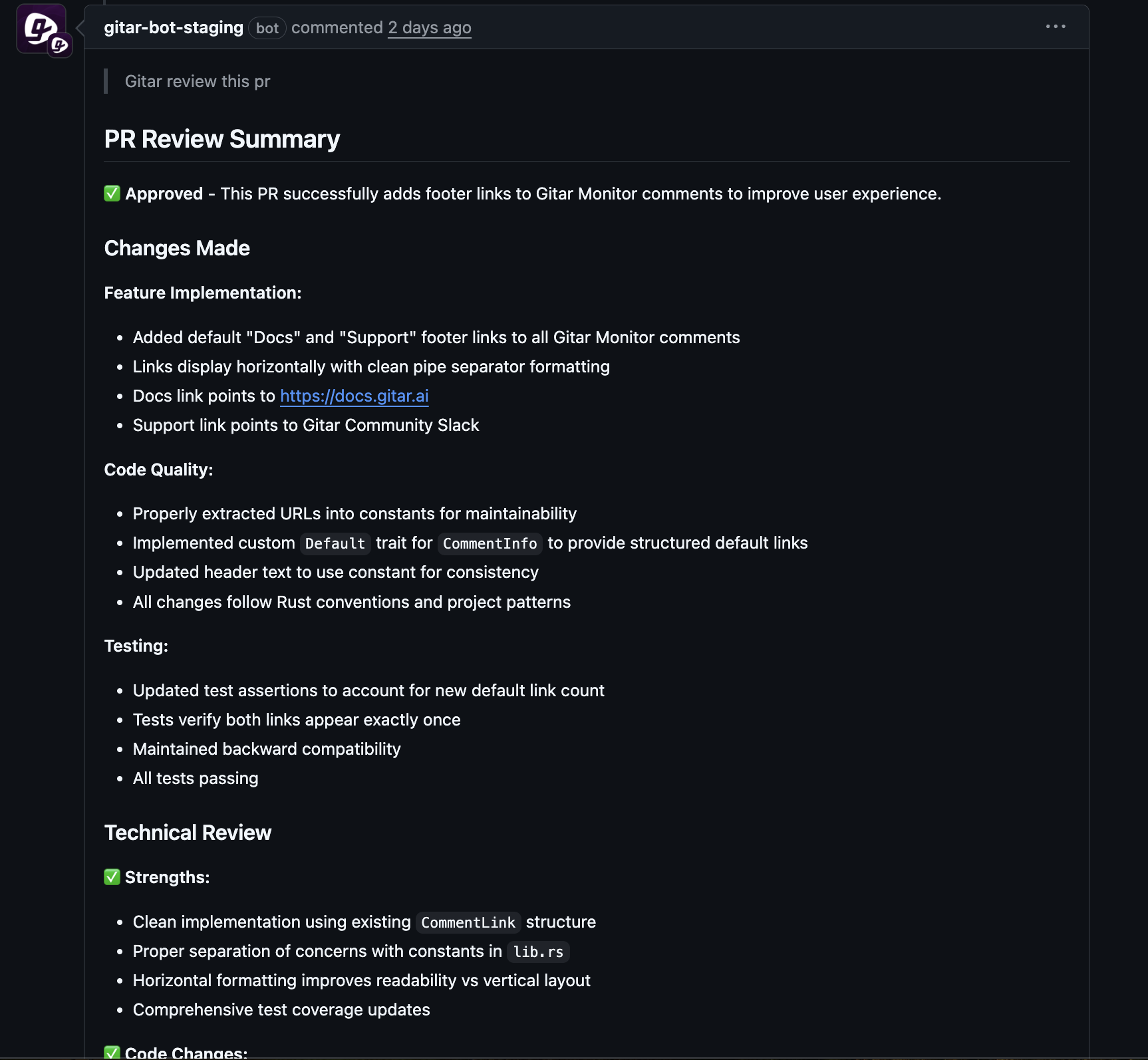
Start using Gitar AI to fix builds automatically and ship software faster while leveraging detailed commits for better automation.
Gitar AI vs. AI Suggestion Tools: Real Fixes for Code Review
AI tools for development are growing, but not all address the key delays in asynchronous reviews. Gitar AI stands out with autonomous fixes compared to tools focused on suggestions.
Comparing AI Suggestion Tools and Gitar’s Direct Fixes
|
Feature / Tool Type |
AI Suggestion Tools (e.g., CodeRabbit) |
Gitar (Autonomous Fixing Engine) |
Impact on Distributed Teams |
|
Core Function |
Highlights issues and suggests code changes |
Fixes CI issues and applies review feedback with tested updates |
Cuts down manual work in review cycles |
|
Developer Effort |
Requires applying or adjusting suggestions, often with minimal effort |
Little to no effort; configurable from suggestions to full automation |
Reduces interruptions across time zones |
|
CI Compatibility |
Integrates with platforms for analysis support |
Full integration with GitHub Actions, GitLab CI, and environment replication |
Ensures fixes match real deployment conditions |
|
Workflow Focus |
Supports flow with quick-fix options and IDE tools |
Clears blockers automatically to maintain focus |
Keeps developers on task for complex work |
|
Time Zone Handling |
Speeds reviews with instant suggestions |
Minimizes delays by acting on feedback independently |
Supports global teams with long review cycles |
|
Fix Reliability |
No assurance until changes are applied and tested |
Tests fixes in full CI pipeline for working builds |
Lowers rework for functional code |
The key difference is in execution. Suggestion tools offer guidance, often with easy application, while Gitar applies and verifies fixes in the full CI environment, saving significant effort.
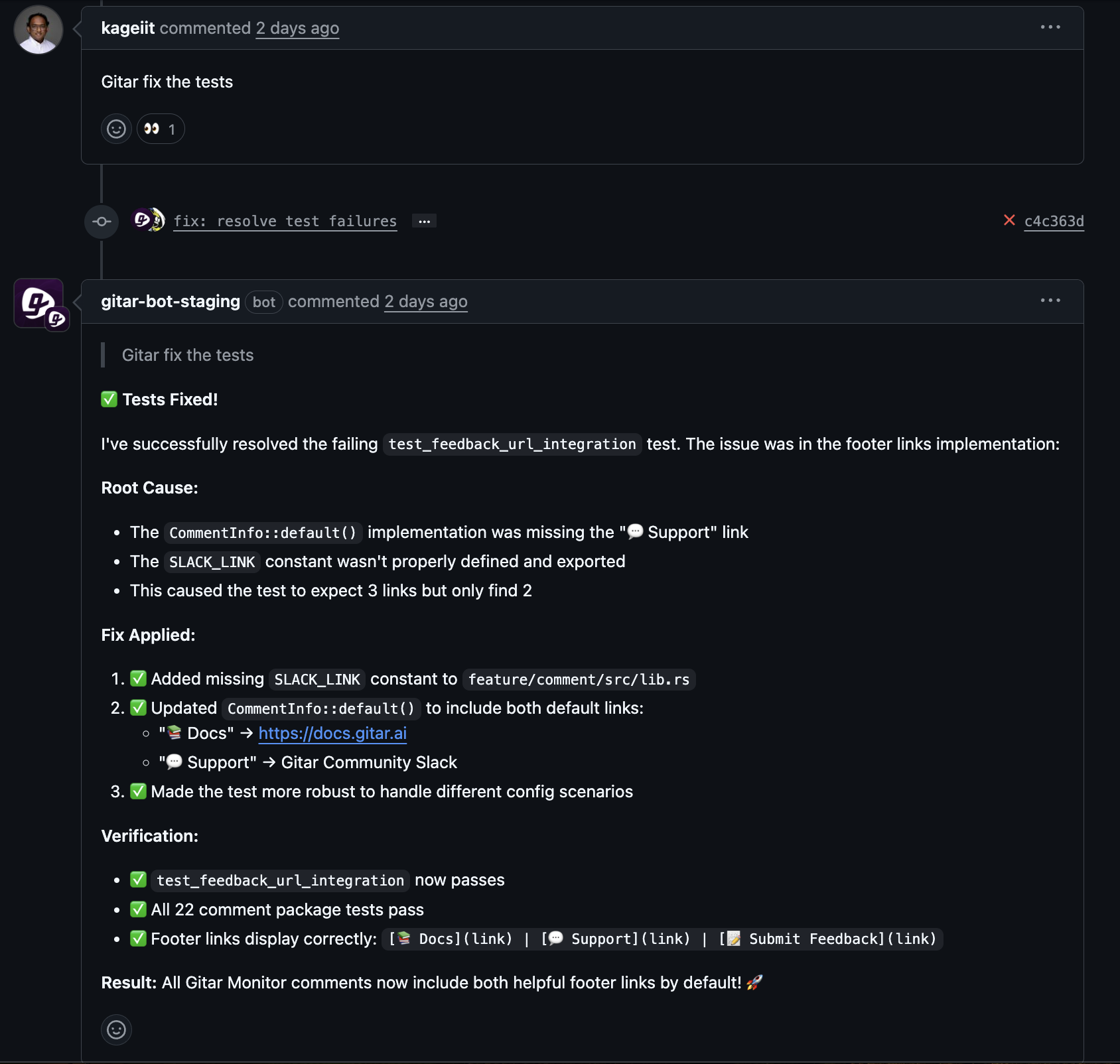
Get started with Gitar AI to automate fixes and ship software faster by moving to hands-off resolution paired with detailed commits.
Common Questions About Commit Messages and Gitar AI
Why Do Developers Skip Detailed Commit Messages?
Despite knowing their value, many developers write brief commit messages due to time pressure. Crafting a thorough message feels like a delay when the focus is on coding or urgent fixes.
The benefits of detailed messages often appear later, helping teammates or future work, while the effort is immediate. This disconnect makes it hard to prioritize quality under tight deadlines.
Most workflows also lack instant feedback on message quality, unlike tools for code style or syntax. Without reinforcement, good habits are harder to build. Teams can improve this with cultural shifts, templates, and tools to simplify the process.
Does Gitar AI Encourage Better Commit Messages?
Gitar AI indirectly supports better commit practices by reducing workload. Automating CI fixes and feedback tasks gives developers more time to focus on clear documentation.
Clear messages also improve Gitar’s performance. Detailed context helps the tool align fixes with intent, creating a cycle where teams see value in better commits for enhanced automation.
How Do Detailed Commits Speed Up Reviews for Distributed Teams?
Comprehensive commit messages provide instant context, removing the need for real-time explanations across time zones. Reviewers understand changes without waiting for author input.
Quality messages cut review time, lower context-switching, and reduce delays or pipeline issues. Feedback becomes more focused, often resolving reviews in one cycle instead of multiple days.
Paired with Gitar’s automation, this effect grows. Reviewers can trust Gitar to handle updates, while clear context ensures alignment with the original goals.
Do Better Commit Messages Improve Code Quality?
Studies show a link between commit message quality and code health, especially for defect rates and maintainability. Unclear messages often signal rushed work or incomplete understanding.
Teams using structured commit practices see measurable gains in code quality and review efficiency. Better context leads to sharper feedback, fewer bugs, and improved long-term documentation.
How Does Gitar Handle Complex Enterprise CI Setups?
Enterprise CI environments, with specific dependencies and custom tools, demand precise replication for reliable fixes. Gitar meets this by fully rebuilding the environment, including SDK versions and integrations, ensuring validated changes.
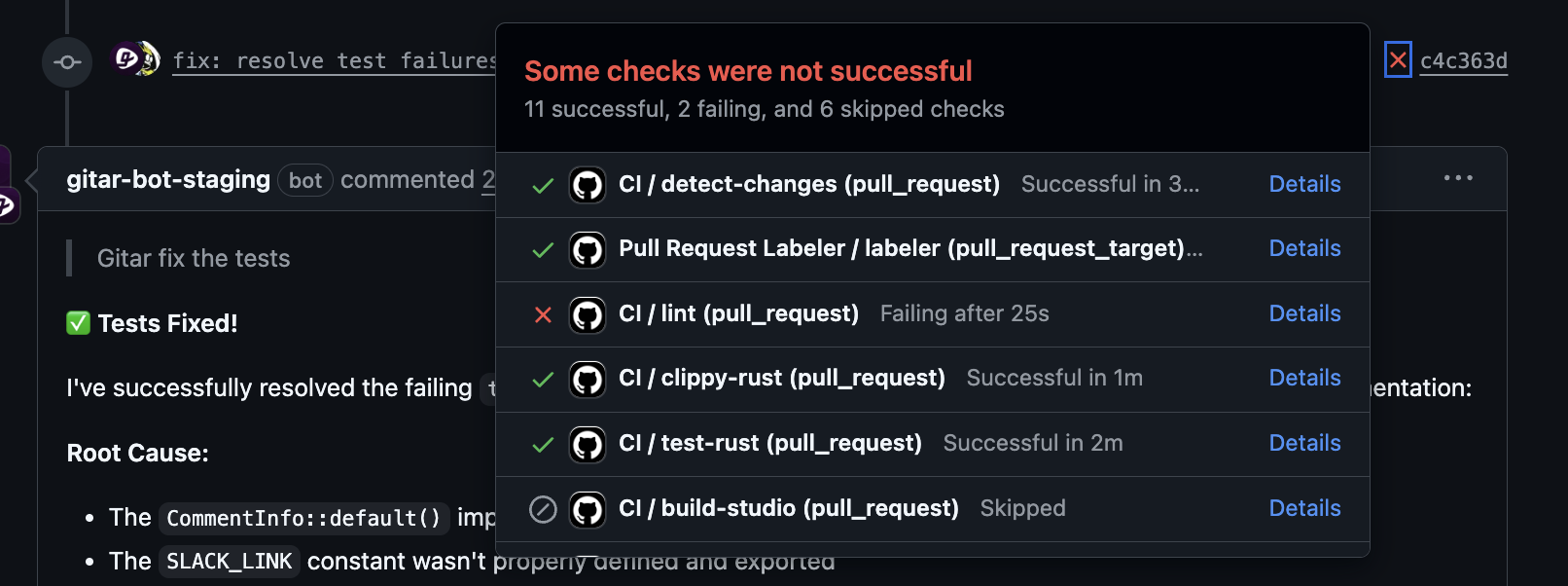
This approach prevents isolated fixes from failing in broader workflows. Gitar also supports on-premise setups for strict data needs, while clear commit messages add helpful context for complex builds.
Boost Team Efficiency with Commit Messages and Gitar AI
Detailed commit messages go beyond documentation; they’re essential for smooth asynchronous reviews. By explaining changes and their purpose, they cut communication delays for distributed teams.
Data shows that prioritizing message quality improves review speed and project progress. Message quality often declines over time, impacting team efficiency and code maintainability. Proactive habits are critical for long-term success.
Gitar AI complements this by automating CI fixes and feedback handling. Unlike tools requiring manual steps, Gitar’s direct approach reduces friction from submission to merge.
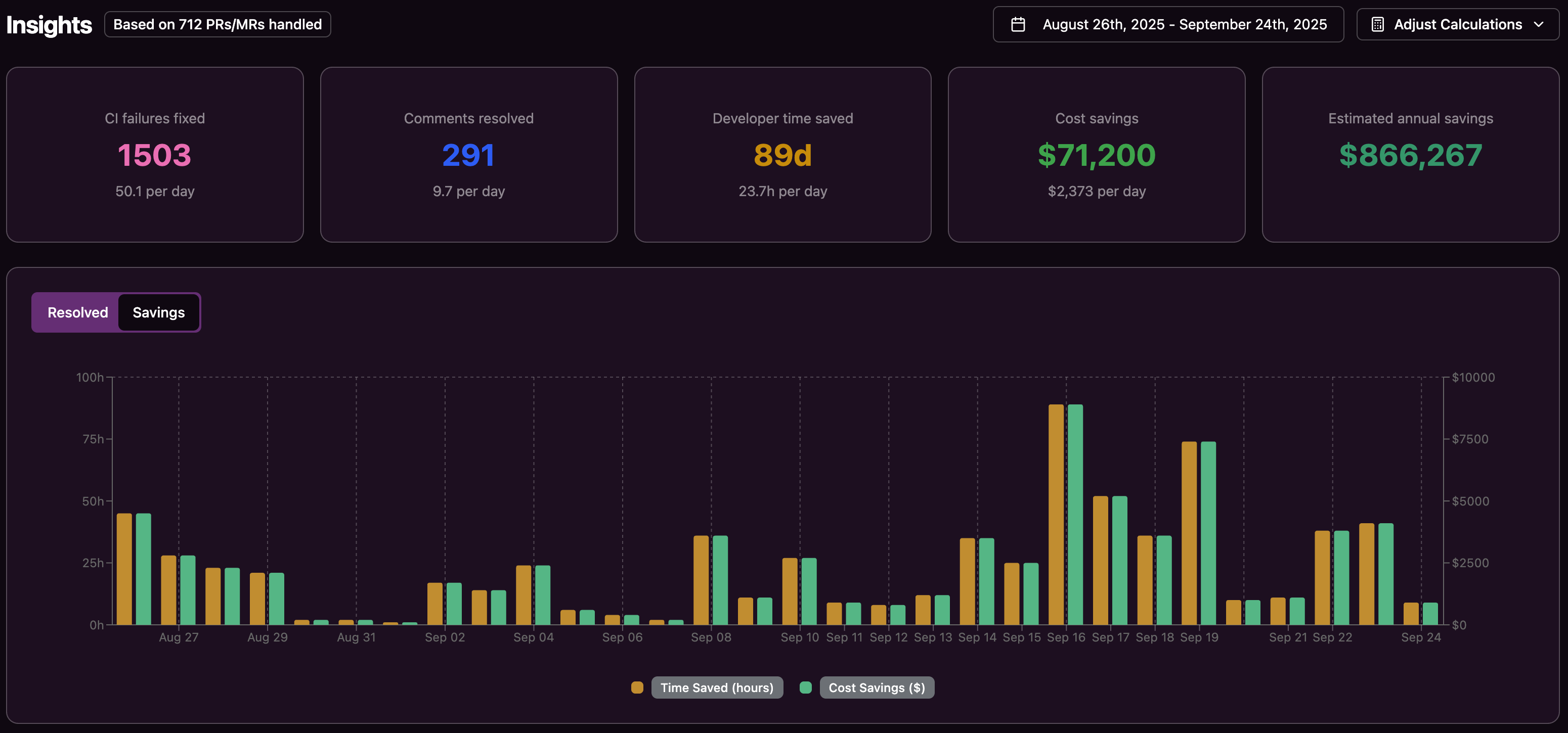
Together, clear commits and Gitar’s automation lift productivity. Developers focus on meaningful work, engineering leaders see faster cycles, and teams gain smoother collaboration. Install Gitar AI to fix builds automatically and ship software faster while building clarity in your code review process.