
Key Takeaways
- Enterprise engineering teams in 2026 face significant productivity loss from flaky tests, failing builds, and manual CI troubleshooting.
- Enterprise Test Automation AI Platforms use autonomous agents to diagnose and fix CI issues, shifting work away from manual debugging.
- Self-healing CI pipelines reduce context switching, shorten feedback loops, and help teams ship reliable software faster.
- Successful adoption depends on clear ROI metrics, strong governance, and a gradual trust model that keeps developers in control.
- Teams can start reducing CI toil immediately by using Gitar to automatically fix broken builds and resolve review feedback: Install Gitar.
The Strategic Imperative: Why Enterprise Test Automation AI Platforms are Non-Negotiable for 2026
Traditional CI/CD setups now block productivity. Many teams spend a large share of engineering time debugging failing builds, stabilizing flaky tests, and handling code review rework. For a 20-developer team, this often approaches seven figures in annual productivity cost.
These delays slow releases, erode customer confidence, and increase burnout. AI-assisted coding has also increased code volume, which means more pull requests, more tests, and more failure points. Enterprise Test Automation AI Platforms address this by turning CI from a manual support function into an autonomous system that keeps pipelines healthy with minimal human intervention.
Install Gitar to cut CI toil and ship higher-quality software with less manual debugging
What is an Enterprise Test Automation AI Platform?
An Enterprise Test Automation AI Platform extends beyond test runners or basic scripting. It uses autonomous AI agents to watch CI pipelines, understand failures in context, propose fixes, and apply those fixes in code and configuration.
Beyond Traditional Test Automation
Scripted test automation often breaks as systems evolve. Teams then spend time updating brittle scripts, triaging flakiness, and rerunning jobs. At enterprise scale, with many services and stacks, this maintenance burden grows faster than headcount.
Core Components of an AI-Powered Platform
Modern platforms combine several capabilities:
- Failure pattern analysis across logs, tests, and recent code changes
- Root cause analysis that links symptoms to specific files, lines, or configs
- Automated fix generation and validation in the real CI environment
- Continuous learning from past fixes and outcomes
Effective platforms validate proposed changes inside the same CI environment that caught the issue, so developers see green builds instead of raw error logs.
Autonomous Agents Inside CI/CD
Agent-based systems stay active across runs. They monitor pipelines, react to new failures, coordinate with code review tools, and open or update pull requests. This level of autonomy reduces the need for developers to stop feature work to repair infrastructure issues on every build.
Navigating the Enterprise AI Test Automation Landscape
The AI testing space has shifted from simple test generation to end-to-end pipeline assistance. Understanding what current tools can and cannot do helps leaders make informed investment decisions.
From Reactive Checks to Proactive Quality
Newer tools use historical data and code changes to choose which tests to run, predict where failures will appear, and update tests or configs before issues spread. This reduces both run times and the number of blocking failures that reach main branches.
Essential AI Capabilities for Enterprises
Three capabilities matter most in enterprise settings:
- Self-healing and adaptive maintenance that repairs flaky tests, broken configs, and simple code issues without a ticket
- Intelligent test generation and prioritization that keep coverage high while respecting build time limits
- Autonomous root cause analysis that shortens the path from failure signal to concrete change
Working With Existing DevOps Tooling
Enterprise platforms need tight integration with CI/CD systems, version control, and collaboration tools. AI should run on every build, comment where developers already work, and update code through familiar pull request workflows, not side channels.
Introducing Gitar: An Autonomous AI Agent for Self-Healing CI
Gitar focuses on one key outcome: keeping CI pipelines green with minimal manual effort. It acts as an autonomous agent that diagnoses failures, applies fixes, and validates those fixes inside your CI environment.
Healing Engine vs. Suggestion Engine
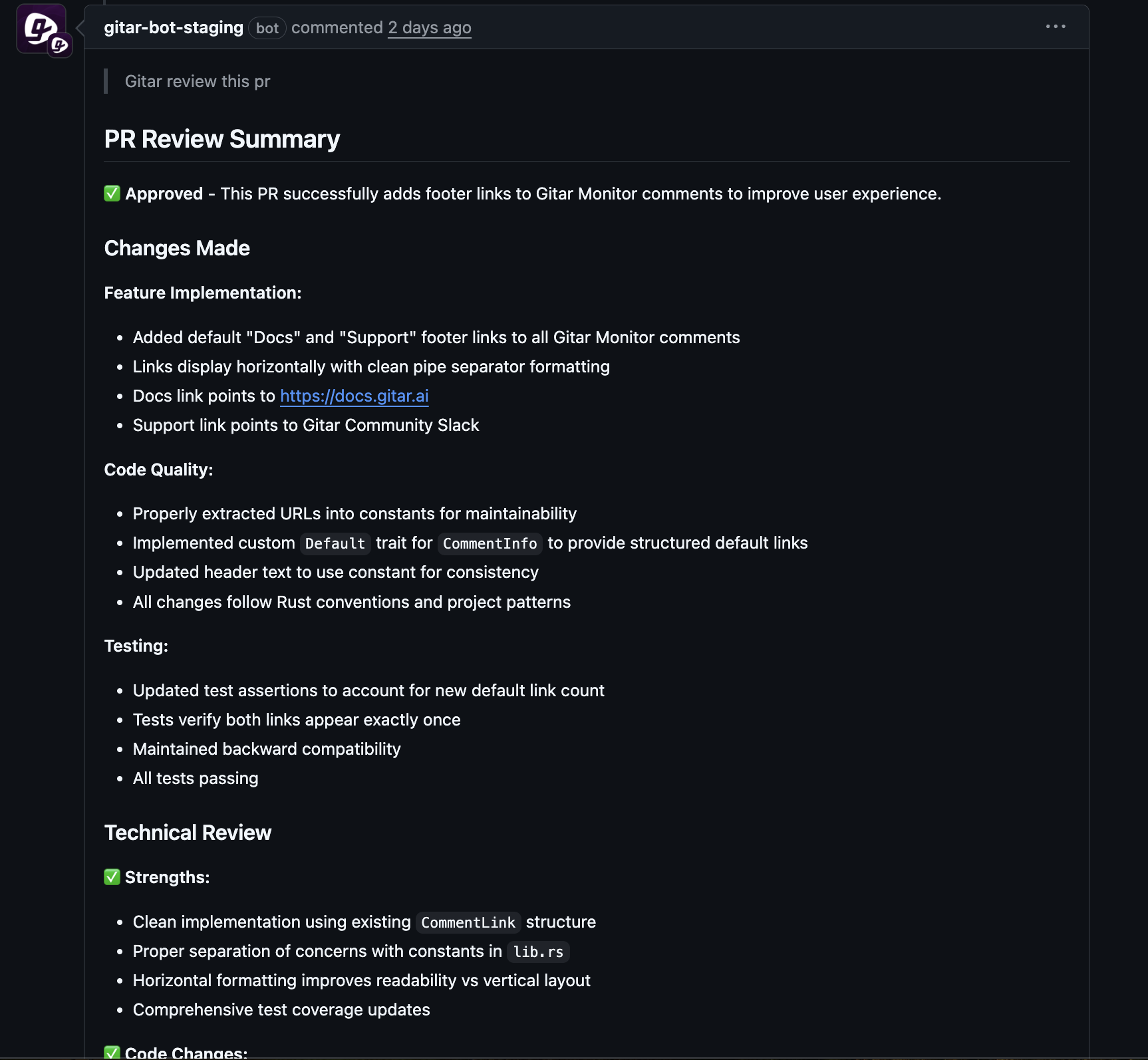
Many AI tools suggest edits but rely on developers to apply and verify changes. Gitar operates as a healing engine. It not only suggests fixes, but it also implements them, reruns the pipeline, and confirms that jobs pass before handing work back to the team.
Key Capabilities for Enterprise Environments
Gitar focuses on features that matter at scale:
- End-to-end fixing that updates code, tests, or configs, then validates the result in CI
- Environment-aware behavior that respects specific SDK versions, languages, and dependencies
- Configurable trust models that support suggestion-only, approval-based, or auto-commit modes with rollback
- Support for distributed teams by resolving routine review comments and CI failures across time zones
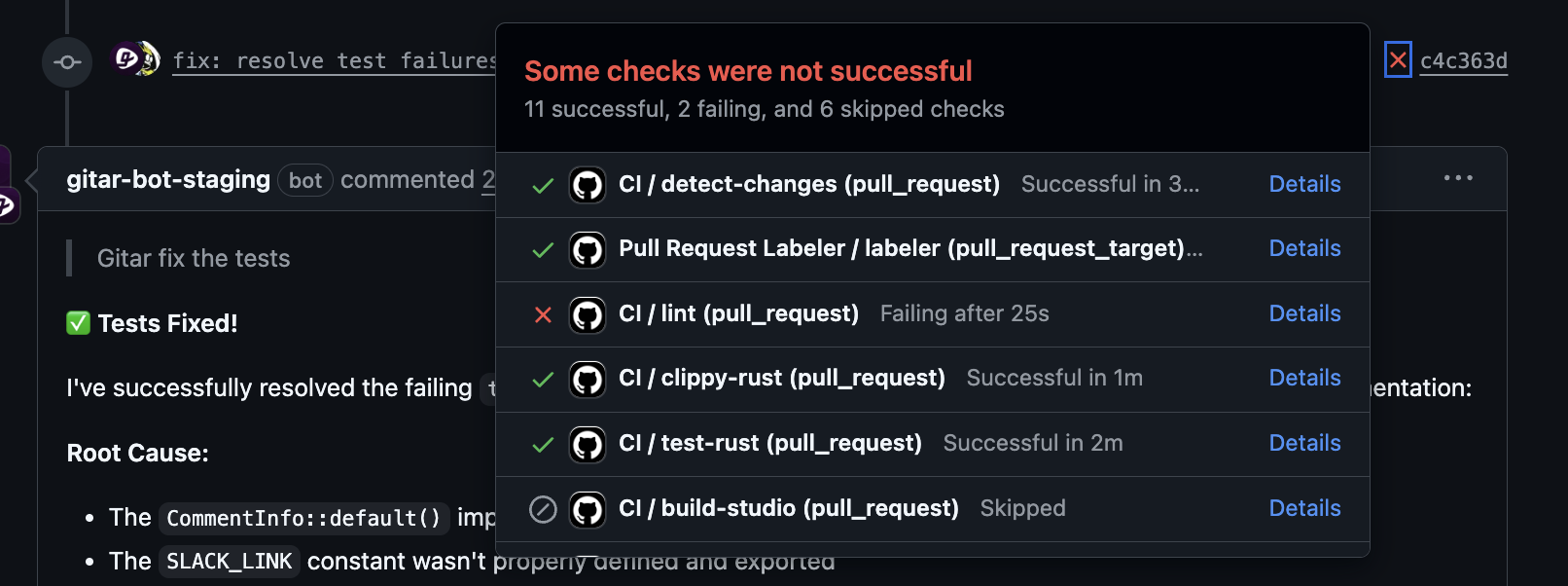
Developers experience the benefit when a commit triggers a failing test or lint error, and Gitar quietly fixes and validates the change before they return to the pull request.
Unblock your engineering team with self-healing CI powered by Gitar
Strategic Considerations for Enterprise Adoption
Enterprises see the most value when they treat AI test automation as a core platform capability, not a small pilot. That approach requires attention to architecture, governance, and people.
Designing for Scale and Resilience
AI platforms must handle many parallel pipelines, long-running jobs, and complex dependency graphs. A scalable design keeps performance stable as more teams and services adopt the system.
Data Quality and Governance
Training signals, logs, and configuration data shape AI behavior. Clear governance policies ensure that automated changes stay auditable, follow security rules, and align with internal standards.
Modularity and Vendor Flexibility
Tooling in this space continues to evolve. Platforms that integrate with multiple CI providers, code hosts, and ticketing tools give organizations room to change vendors without restarting their AI strategy.
Developer Trust and Collaboration
Developers need clear visibility into automated actions. Gradual rollouts, transparent logs of AI changes, and easy override options help teams build confidence in autonomous fixes.
Measuring ROI and Success
Useful metrics include:
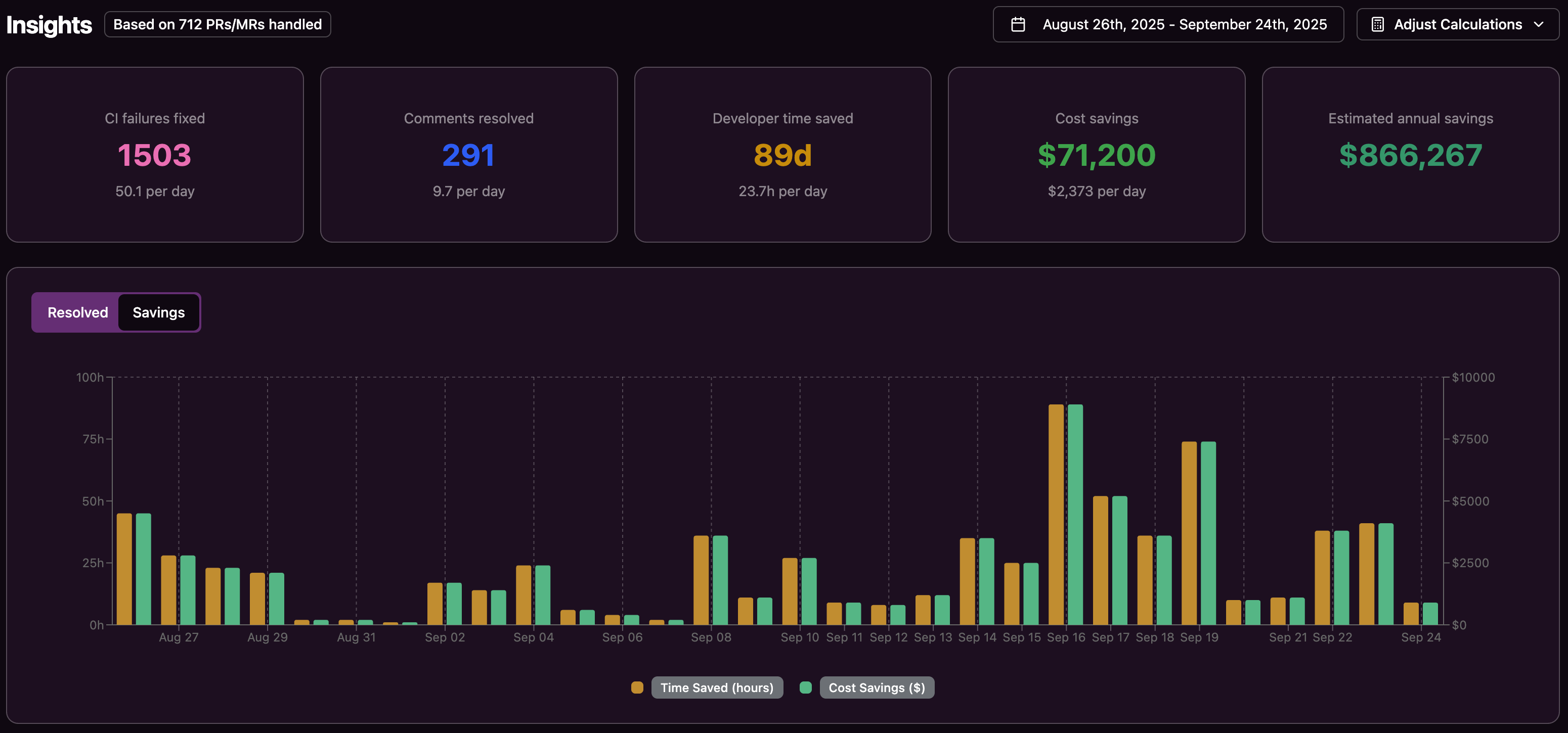
- Average time to resolve CI failures
- Number of failures auto-resolved without human intervention
- Context switches per developer related to CI issues
- Lead time from pull request open to merge
Even partial automation that removes a fraction of daily CI toil can produce meaningful savings in large teams.
Evaluating Enterprise Test Automation AI Platforms
Not all tools labeled as AI testing platforms provide the same level of autonomy or enterprise readiness. The table below highlights key differences.
Healing Engines vs. Suggestion Engines vs. Manual Work
|
Feature / Platform |
Gitar (Healing Engine) |
CodeRabbit (Suggestion Engine) |
Manual Work (Status Quo) |
|
Primary Action |
Automates and validates fixes |
Suggests changes |
Requires manual debugging and fixing |
|
Autonomy |
High, with configurable controls |
Medium, supports some auto-fixes |
None |
|
Environmental Context |
Replicates a full CI environment |
Integrates with CI/CD workflows |
Depends on local setup |
|
CI Integration |
Runs inside CI pipelines end-to-end |
Connects to Git and CI pipelines |
Relies on ad hoc scripts and tools |
Domain-Specific Intelligence
Generic AI coding assistants often lack awareness of CI topology, test suites, and deployment rules. Domain-specific platforms embed that context, which reduces false positives and failed attempts to fix production pipelines.
Security, Governance, and Scale
Enterprise buyers should expect strong access controls, detailed audit logs, and support for compliance needs, alongside the ability to roll out the platform across many services without performance degradation.
Strategic Pitfalls and How to Avoid Them
Pilot Purgatory
Pilots that lack clear goals or owners rarely progress. Teams benefit from defined success metrics, time-boxed evaluations, and a plan for scaling to additional services once the pilot meets its targets.
Operational Complexity
CI systems often include long fan-out test stages, external dependencies, and intermittent infrastructure issues. Platforms built specifically for this complexity handle asynchronous events and stateful workflows more reliably than generic tools.
Developer Resistance
Teams may resist automation that feels opaque. Early involvement, opt-in projects, and clear controls over automation levels help ensure that AI assistance feels like support, not replacement.
Install Gitar to reduce CI noise and keep pipelines consistently green
Frequently Asked Questions (FAQ)
Our team already uses AI reviewers like CodeRabbit. How is an Enterprise Test Automation AI Platform like Gitar different?
AI reviewers assist during code review by pointing out issues and suggesting edits. Gitar focuses on CI health. It applies and validates fixes inside your pipelines so developers see completed work, not just suggestions, which reduces manual follow-up after reviews.
How can we trust automated fixes from an AI platform when our CI setup is complex and unique?
Gitar runs fixes in your actual CI environment and respects your specific toolchain, versions, and dependencies. Teams can start in suggestion-only mode, then progress to automated changes with approvals once they see consistent, reliable behavior.
Will an AI test automation platform replace QA or platform engineers?
These platforms reduce repetitive work rather than replace roles. QA and platform engineers spend less time on routine failures and more time on strategy, reliability, and improving test and release processes.
What does self-healing CI mean for day-to-day development?
Self-healing CI describes pipelines that detect, diagnose, and resolve many issues without human intervention. Developers spend more time on product work and less time chasing transient failures and configuration drift.
How do we measure the ROI of an Enterprise Test Automation AI Platform?
ROI often appears in reduced time spent per failure, fewer failed builds reaching main branches, and shorter merge times. For teams that currently lose hours per day to CI issues, even modest improvements translate into significant annual savings.
Conclusion: Moving Toward Autonomous Test Automation
Enterprise teams in 2026 can no longer treat CI reliability as a background concern. Autonomous capabilities now make it practical to keep pipelines healthy without constant human attention.
Platforms like Gitar help organizations reclaim developer time, improve release reliability, and scale their software delivery without linearly increasing CI support work.
Improve developer productivity and move toward self-healing CI with a Gitar deployment