
CI build failures drain productivity and cost organizations millions every year. Developers lose up to 30% of their work time debugging and fixing issues when pipelines fail. Tools like GitHub Copilot have sped up coding, but the real challenge now is moving code through CI and review processes without delays.
AI-driven CI fixes offer a solution by shifting from manual debugging to automatic resolution. Gitar’s autonomous agent doesn’t just suggest fixes, it identifies problems, applies solutions, and validates builds, keeping developers focused and pipelines running smoothly.
For leaders of engineering teams, where a 20-developer group can lose $1 million yearly to CI delays, adopting automated tools is critical. Teams that embrace this technology gain a clear edge over those stuck with manual processes.
Why CI Build Failures Slow Down Engineering Teams
How CI Failures Disrupt Developer Focus
Picture this: you push a pull request, confident in your work, only to get a failure notification minutes later. What should be a quick fix turns into an hour of lost focus.
Switching tasks costs more than just time. When developers are deep in problem-solving, a CI failure pulls them out of that focused state. They must stop, analyze error logs, find the issue, fix it, commit changes, and wait for the pipeline to rerun. Regaining focus after such interruptions can take up to 23 minutes, turning a small error into a major productivity loss.
These failures vary widely, from test issues to build errors or misconfigured scripts. Each type demands a different approach, multiplying the mental effort needed throughout the day.
The High Cost of Manual CI Fixes
CI failures hit hard financially. For a team of 20 developers spending an hour daily on fixes, the annual productivity loss can reach $1 million. At an average cost of $200 per hour per engineer, that’s 5,000 hours of valuable time lost to troubleshooting instead of building features.
Delays also slow down commits and deployments, as seen with sluggish pipelines. This leads to riskier updates, increased technical debt, and missed deadlines. Beyond numbers, developers face burnout from constant fixes, innovation suffers, and customers wait longer for new features.
In competitive markets, every hour spent on CI issues is an hour not spent on delivering value. The impact on market position can be significant.
Why Current Tools Don’t Fully Solve the Problem
Most CI/CD tools fall short in addressing the core issue of productivity loss. Here’s why:
- Manual Debugging: Developers spend time on environment checks, dependency fixes, and test updates. This reactive method is slow and error-prone.
- AI Suggestion Tools: Solutions like CodeRabbit offer insights but leave implementation to developers. Suggestions don’t guarantee a passing build.
- On-Demand AI Fixes: These require manual triggers, use up CI minutes, and often lack full context of complex environments.
Issues like bad configurations or inconsistent setups need tools that understand enterprise pipelines completely. Also, limited visibility into failures often results in patchwork fixes, adding to technical debt.
Ready to stop CI failures from slowing you down? Install Gitar now to fix broken builds automatically and ship quality software faster.
Meet Gitar: Your Solution for Autonomous CI Fixes
Gitar brings AI-driven fixes to continuous integration, moving beyond mere suggestions to fully automated resolutions. It detects issues, applies fixes, validates them, and ensures builds pass, all without pulling developers away from their work.
As an autonomous AI agent, Gitar understands complex workflows and mirrors enterprise environments to deliver reliable fixes. It’s built to fit into your existing processes, saving time and maintaining code quality.

How Gitar Automatically Resolves CI Issues
Gitar goes beyond suggestions to handle the entire fix process. When a CI check fails, whether it’s a linting error or a test issue, Gitar analyzes logs, creates fixes, applies them, and commits changes to the pull request. Developers stay focused on their next task while common failures get resolved.
It replicates full enterprise setups, including specific SDKs, multi-language builds, and tools like SonarQube. This ensures fixes work in your exact environment, avoiding the “works on my machine” problem.
Gitar offers a flexible trust model to match team preferences:
- Conservative Mode: Suggests fixes for review and approval with one click, easing teams into automation.
- Aggressive Mode: Commits fixes directly with rollback options, maximizing efficiency once trust is built.
As a code review assistant, Gitar also handles feedback directly. Reviewers can leave specific instructions, like removing a feature, and Gitar implements the change, posts an update, and keeps distributed teams in sync across time zones.
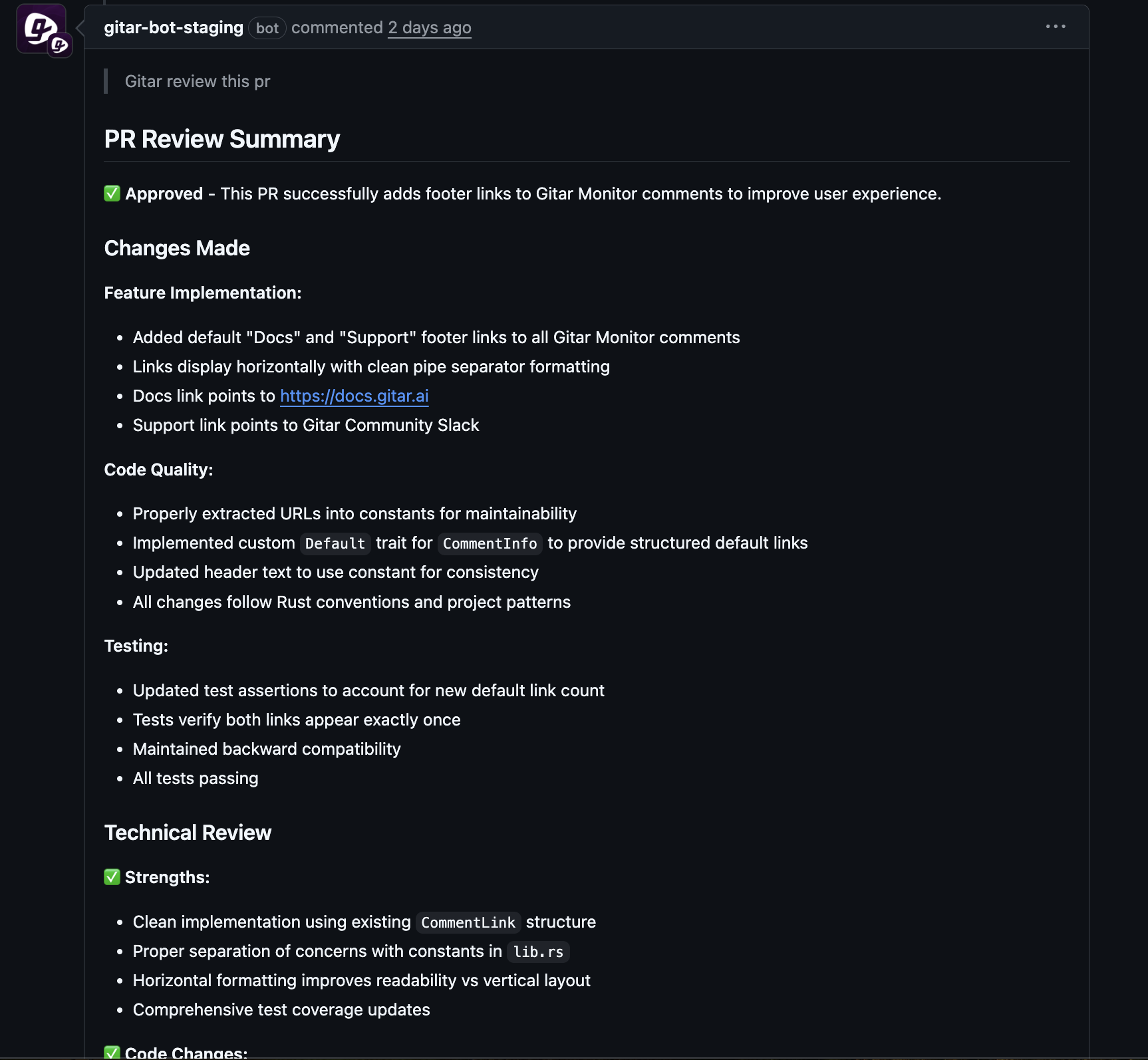
Gitar at Work: Self-Healing CI for Faster Delivery
Eliminating Manual Debugging Efforts
With Gitar, the old cycle of push, fail, fix, and retry becomes push, auto-fix, and merge for many issues. It detects failures, analyzes root causes, and applies solutions while developers keep working.
Teams often notice the difference within days. A developer pushes a pull request with a small error, moves to another task, and later sees Gitar has already fixed it with a clear explanation. What used to take 15 to 30 minutes now happens without interruption, boosting satisfaction and focus.
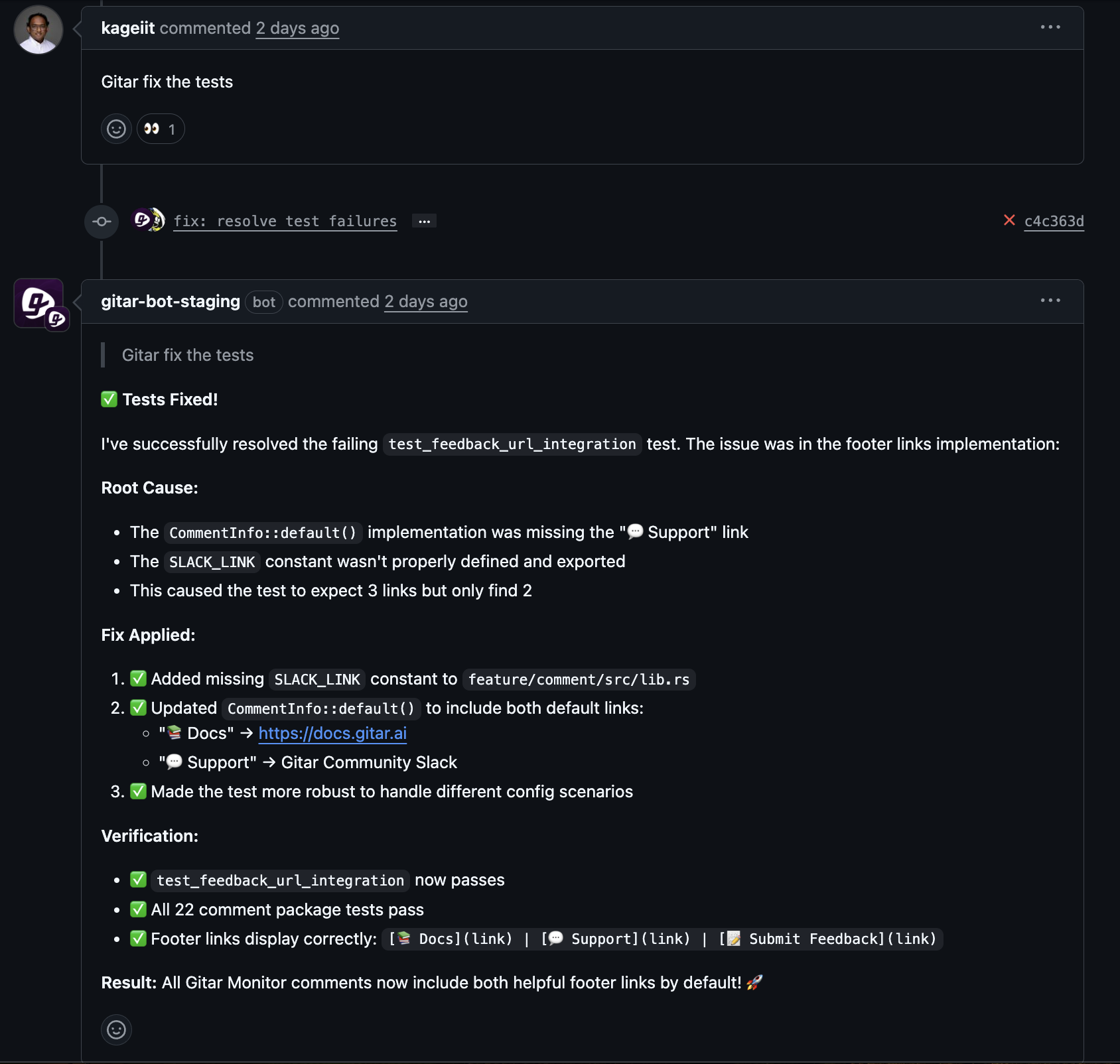
Ensuring Reliable Builds in Enterprise Settings
Enterprise CI setups often involve multiple languages, specific versions, and complex integrations. Gitar mirrors these conditions, including Docker setups and security tools, to ensure fixes are accurate.
Before committing changes, Gitar tests them in a replicated pipeline to confirm they resolve issues without creating new ones. This validation is key for teams managing microservices or monorepos, allowing focus on core development over infrastructure woes.
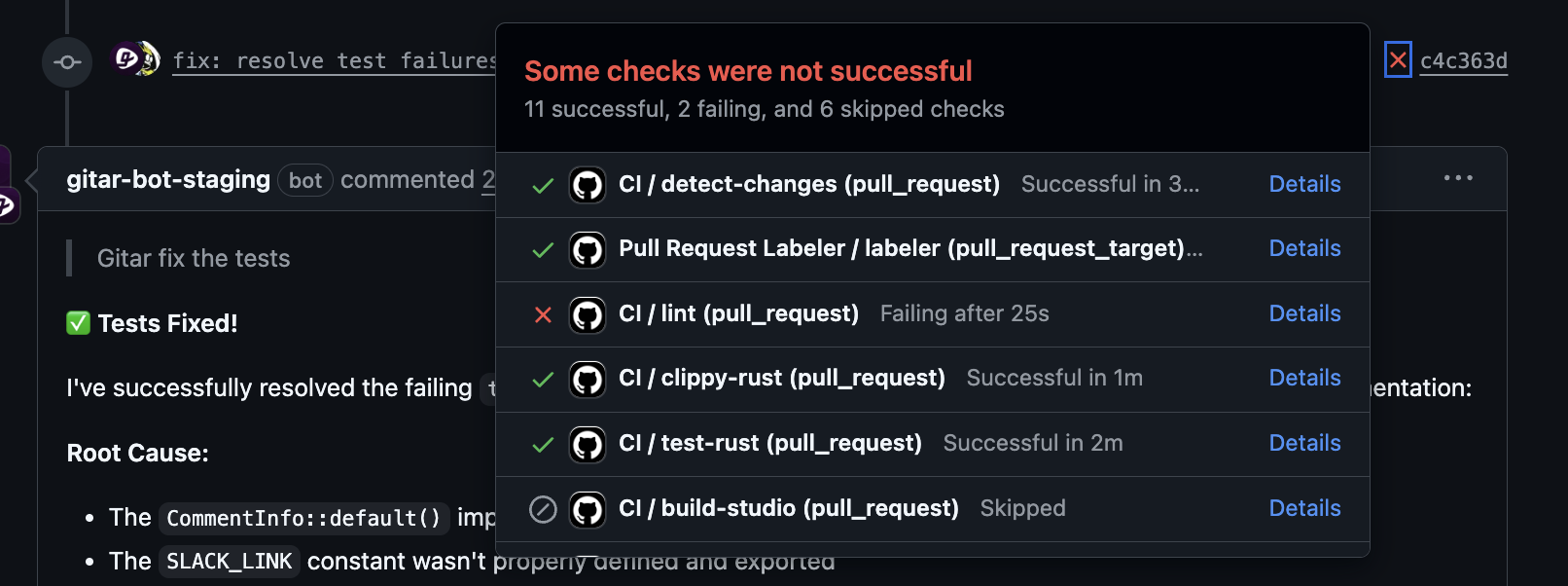
Speeding Up Code Reviews for Distributed Teams
Distributed teams often face delays in code reviews due to time zone differences. Gitar cuts through this by acting on reviewer feedback instantly. A comment left in one region gets implemented before the developer in another logs in, shrinking review cycles from days to hours.
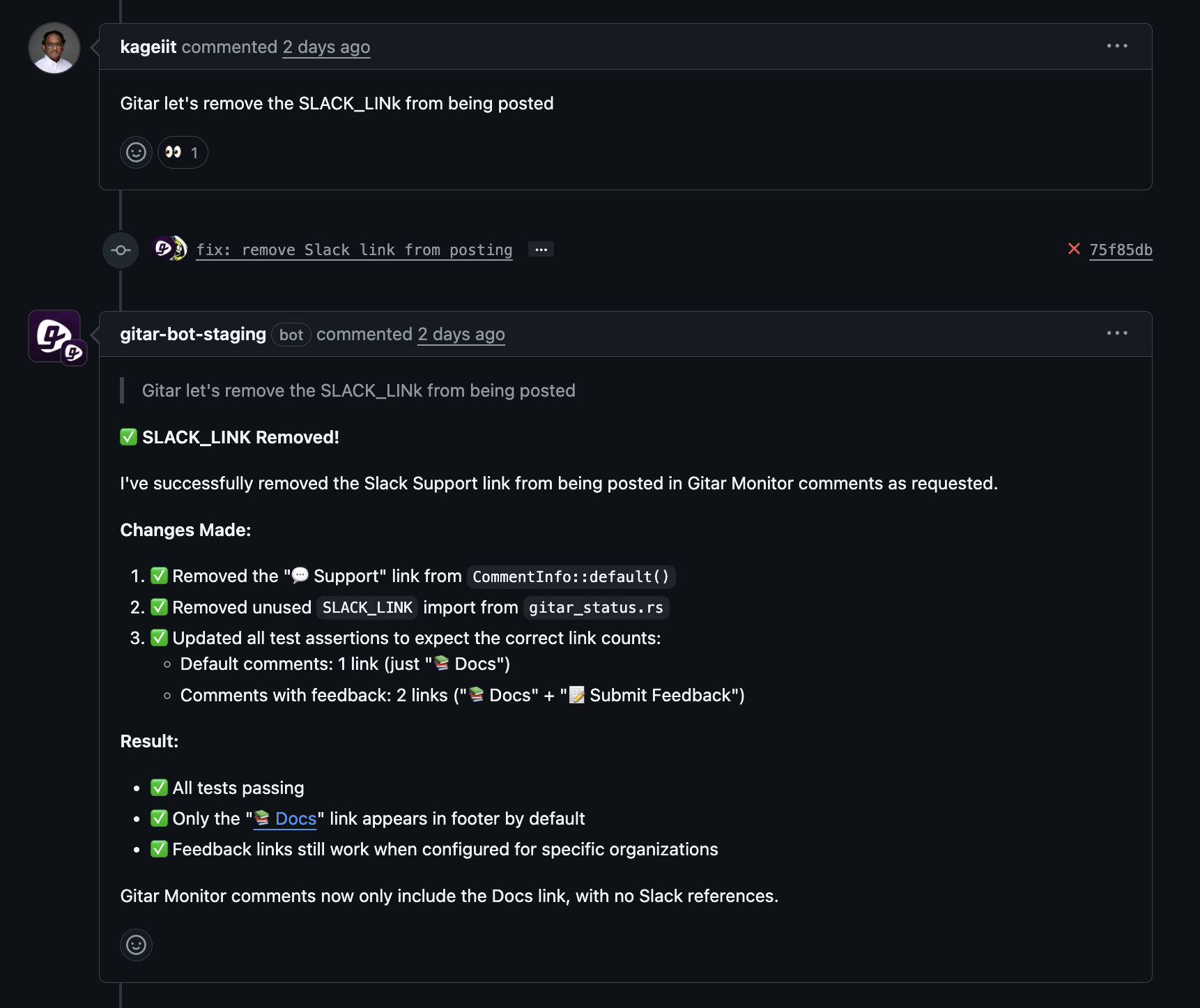
Boosting Developer Productivity and Morale
Automating CI fixes frees developers to tackle complex challenges instead of routine errors. Feature delivery speeds up, cycle times shorten, and code quality improves with more time for strategic work.
Developers feel less frustrated with fewer interruptions, gain confidence in reliable builds, and collaborate better with faster reviews. For leaders, this means better retention, more capacity for key projects, and predictable timelines.
Want to see the difference for yourself? Install Gitar now to fix builds automatically and ship quality software faster.
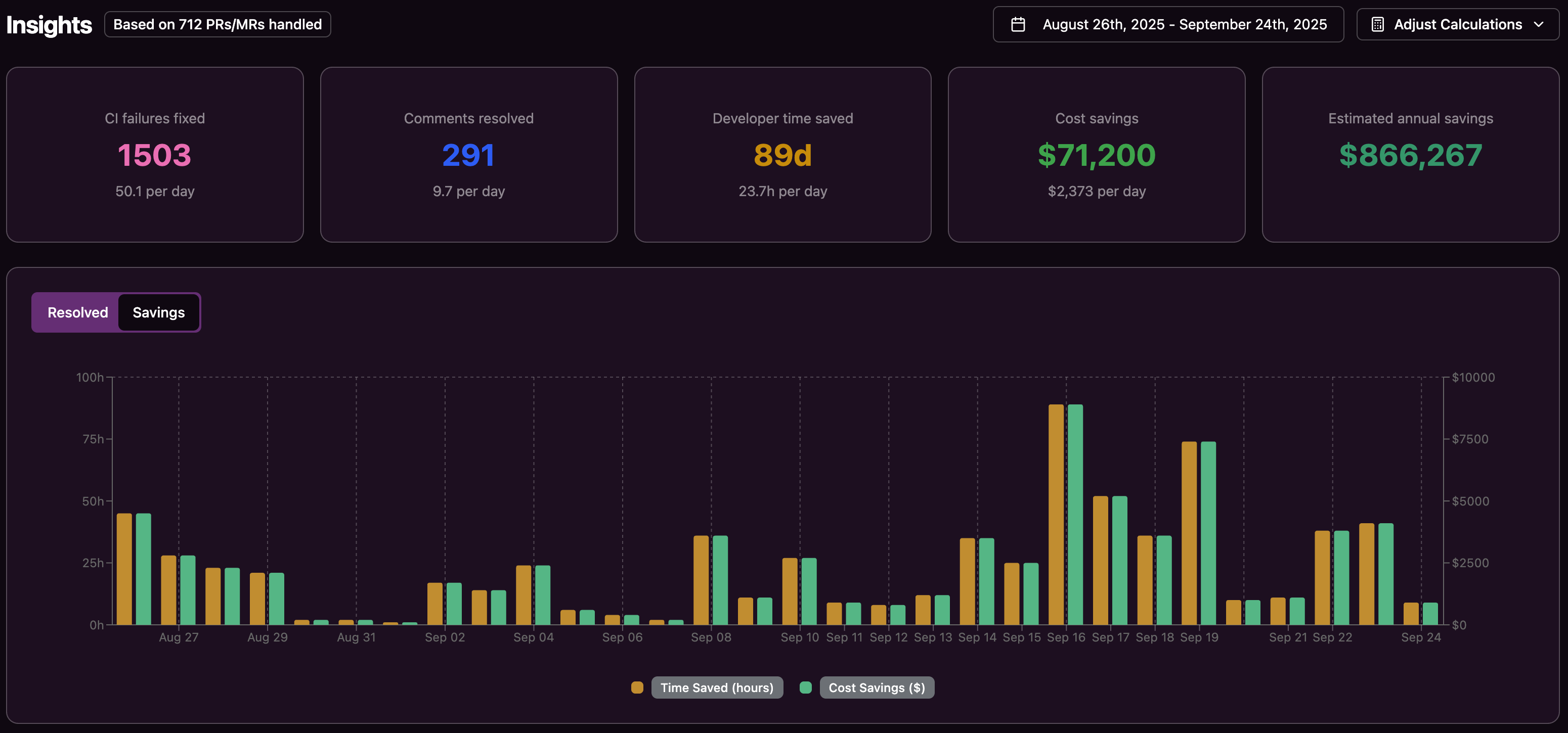
How Gitar Stands Out: Healing Engine vs. Suggestion Tools
Gitar’s approach as a healing engine sets it apart from suggestion-based tools. It doesn’t just point out problems, it fixes and validates them in your full CI environment for guaranteed results.
|
Feature/Tool |
Gitar (CI Healing Engine) |
AI Code Reviewers (e.g., CodeRabbit) |
IDE-Based Assistants (e.g., GitHub Copilot) |
Manual Work (Status Quo) |
|
Fixes CI Build Failures |
Yes (Autonomous & Validated) |
No (Suggestions Only) |
No (Pre-commit Help) |
Yes (Manual Effort) |
|
Handles Code Review Feedback |
Yes (Autonomous & Validated) |
No (Suggestions Only) |
No (Pre-commit Help) |
Yes (Manual Effort) |
|
Full Environment Replication |
Yes |
No |
No |
Yes (Manual Setup) |
|
Ensures Passing Builds |
Yes |
No |
No |
No (Trial & Error) |
Suggestion tools leave developers to implement fixes manually, risking further delays. IDE assistants help with coding but miss CI context. Manual processes, while thorough, drain time and don’t scale. Gitar handles the full process, reducing interruptions for many common issues.
Common Questions About AI-Driven CI Fixes
Can Gitar Manage Our Unique CI Setup?
Yes, Gitar is built to handle complex CI environments. It mirrors your setup, including specific software versions, Docker configs, and tools like SonarQube or Snyk. This ensures fixes match your exact conditions for reliable builds.
How Does Gitar Differ from Tools Like CodeRabbit?
Gitar goes beyond suggestions. While tools like CodeRabbit recommend fixes for manual application, Gitar applies changes, validates them in your CI environment, and ensures builds pass, all without breaking your focus.
How Can I Trust Gitar with My Codebase?
Gitar offers a trust model to ease concerns. Start with conservative mode for suggested fixes you can review. As confidence grows, switch to aggressive mode for direct commits with rollback options. Every change is validated first and fully transparent.
How Does Gitar Help Distributed Teams?
Gitar cuts delays in distributed teams by acting on review feedback instantly. A comment left in one time zone gets addressed before others log in, turning multi-day cycles into hours for faster merges.
What CI Failures Can Gitar Fix Automatically?
Gitar resolves common issues like linting errors, test failures from outdated snapshots, and build issues tied to dependencies or scripts. It targets routine problems that disrupt workflow but are straightforward to fix.
Wrap-Up: Move from Debugging to Delivering with Gitar
Manual CI fixes are outdated in today’s fast-paced development world. As AI tools speed up coding, the focus shifts to validating and merging code efficiently. Suggestion tools don’t cut it, still requiring developers to step in.
Gitar’s autonomous AI agent changes the game by automating fixes, mirroring your environment, and offering flexible trust settings. It turns CI from a hurdle into a streamlined part of your workflow.
For engineering leaders, the choice is between losing $1 million yearly to manual fixes or adopting automation to save time and stay competitive. The future of development lies in reducing debugging through smart tools, freeing creativity for bigger challenges.
Ready to turn CI into an advantage? Install Gitar now to fix builds automatically and ship quality software faster.