
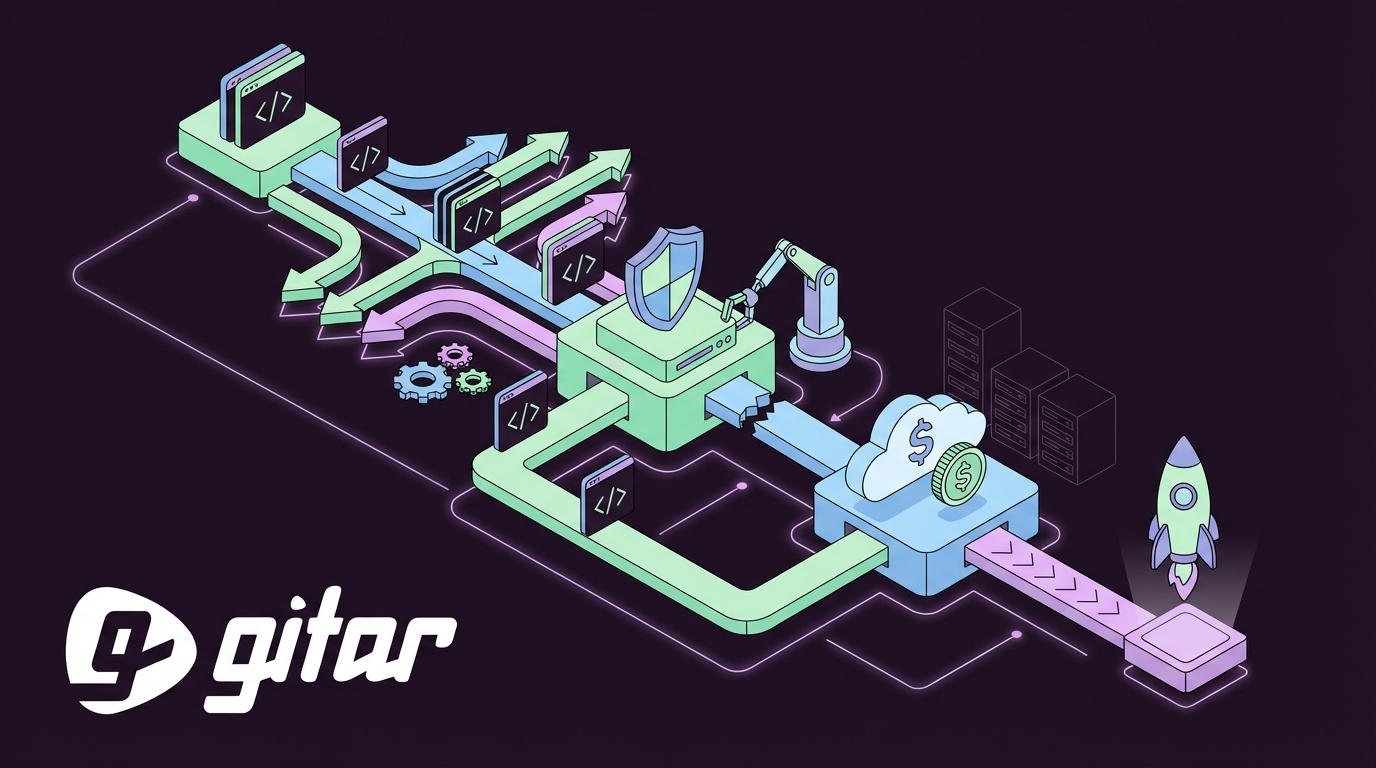
Key Takeaways
- Many teams experience long-running CI/CD pipelines, flaky tests, and slow reviews that delay releases and drain developer focus.
- Optimizing pipelines, shifting security left, improving self-service, and adding cost controls can recover significant engineering time.
- Autonomous, self-healing CI/CD reduces context switching by fixing common failures and code review changes without manual effort.
- Clear feedback loops and a better developer experience improve delivery speed, quality, and team morale.
- Teams can use Gitar to automatically fix broken builds and review feedback and keep pipelines healthy; install Gitar now to automatically fix broken builds and ship higher quality software faster.
The Critical Need for CI/CD Productivity Solutions
Modern DevOps teams face growing delays from CI/CD. Infrastructure work can consume up to 40% of engineering time, while long-running pipelines are now a common bottleneck. Developers lose flow as they wait on builds, track down flaky tests, and respond to fragmented feedback.
The cost adds up quickly. A team of 20 developers that spends one hour per day on CI and review issues loses about 5,000 hours per year, or roughly $1M at typical loaded rates. Only 29% of organizations can deploy on demand, which keeps release cycles slow and risk-averse.
Autonomous CI solutions like Gitar help close this gap. Gitar acts as a CI healing engine that detects failing checks, analyzes logs, generates fixes, and updates pull requests automatically. Developers avoid long debugging sessions and can keep moving on higher-value work.
#1 Speed Up CI/CD Pipelines With Parallelization
Many pipelines have grown into large, slow workflows that rebuild too much and run redundant tests. These delays discourage small, frequent changes and contribute to burnout.
Teams can improve performance by:
- Mapping stages to find hotspots, then removing or merging redundant steps.
- Using incremental builds so only changed components rebuild.
- Adding smart caching to avoid recomputing unchanged work.
- Optimizing dependency graphs so heavy jobs run only when needed.
Parallel execution often delivers the biggest gains. Features such as CircleCI parallelism and GitHub Actions matrix builds allow test suites and checks to run across multiple runners. Container-based builds can run independent stages side by side, which shortens wall-clock time even when total compute stays similar.
Faster pipelines work best when failures resolve quickly. Gitar automatically investigates failing jobs, applies fixes, and re-runs checks, so optimized pipelines stay healthy without constant developer attention.
#2 Shift Security Left With Automated DevSecOps
Security now sits inside the delivery pipeline rather than at the end of it. More than 60% of DevOps teams integrate automated security scans into CI/CD, yet two-thirds of organizations still introduce vulnerabilities during CI/CD.
Effective DevSecOps programs typically include:
- Static analysis, dynamic testing, and software composition analysis.
- Container and configuration scanning for images and infrastructure.
- Policy-as-code rules in the pipeline, so security requirements live alongside build logic.
Recommended practices include signing artifacts, hardening build agents, and securing secrets. Helpful tools present clear explanations and remediation steps so developers can act on findings without deep security expertise.
Gitar fits into this workflow by fixing CI failures that surface security-related issues. When a scan causes the pipeline to fail, Gitar can inspect logs, apply targeted changes, and re-run checks, which keeps security integrated without slowing delivery.
#3 Improve Developer Experience With Self-Service CI/CD
Limited access to DevOps tooling often causes day-to-day friction. Developers may struggle to see logs, adjust environments, or understand failing builds. Secure self-service access has become a core need.
Internal Developer Platforms (IDPs) help by providing consistent interfaces for provisioning environments, triggering deployments, and inspecting pipeline runs. When CI feedback appears directly in the IDE or version control system, developers spend less time hunting for information and more time writing code.
Key enablers include Infrastructure as Code, centralized observability, and clear runbooks. These reduce reliance on tribal knowledge and make standard tasks repeatable.
Gitar extends this experience by removing much of the manual work around failed builds and review comments. Developers no longer need to dig through logs or re-run pipelines repeatedly, because Gitar proposes and applies fixes automatically, then updates the pull request with context.
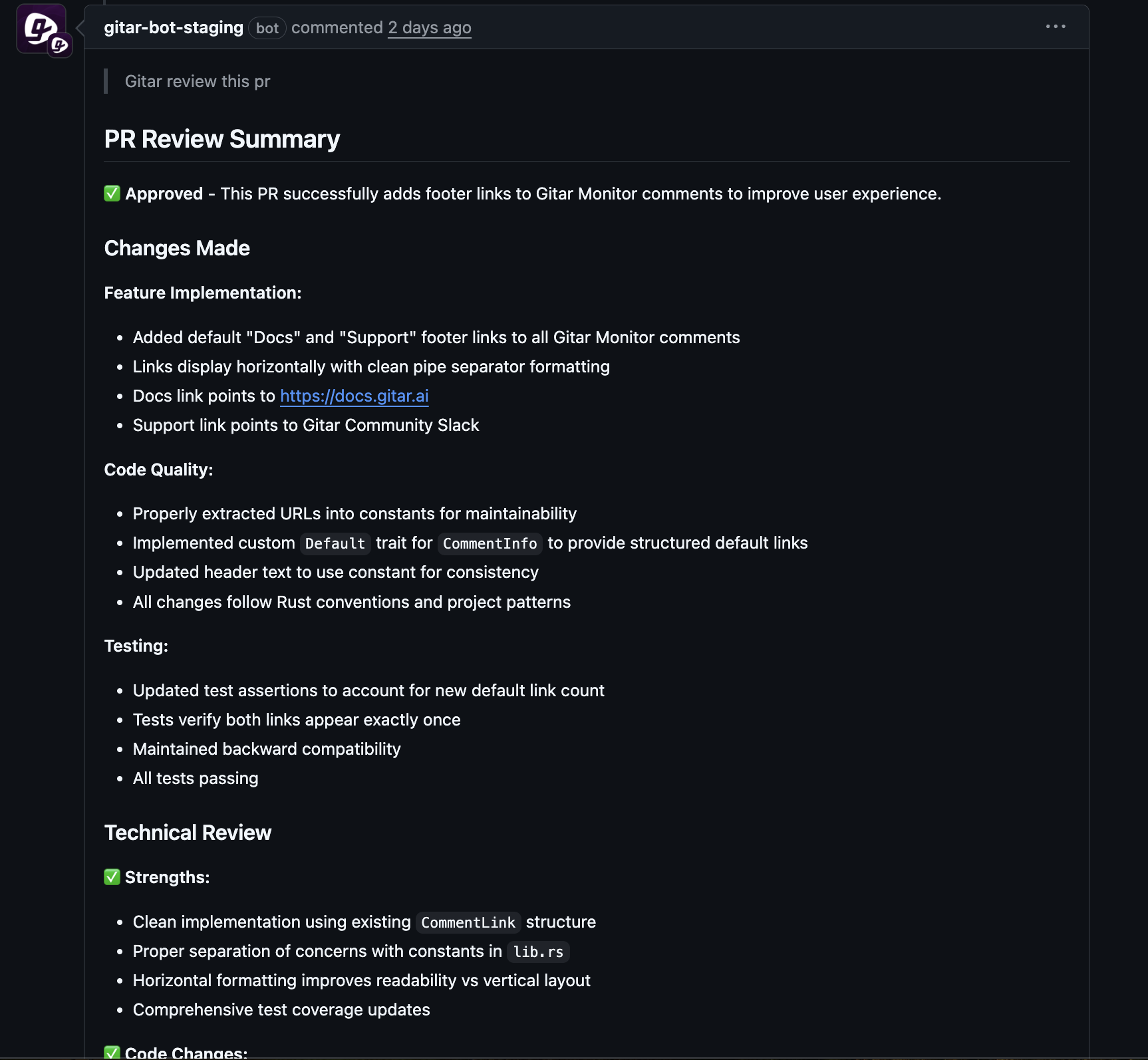
Install Gitar now to automatically fix broken builds and ship higher quality software faster.
#4 Apply FinOps To Control CI/CD Spend
Cost visibility has become a standard part of DevOps practice. Unexpected spend often comes from sprawl and idle resources, including test environments and noisy pipelines.
FinOps for CI/CD usually includes:
- Budgets and guardrails in pipeline definitions for compute-heavy jobs.
- Automatic teardown of ephemeral environments after tests complete.
- Reports that show cost per pipeline, branch, or service over time.
- Right-sizing guidance for builds and tests based on historical runs.
Policy-as-code helps enforce limits before work runs, which reduces risk of sudden bill spikes.
Gitar supports these goals by lowering the number of failed or repeated runs. When the system fixes issues on the first retry, teams use fewer CI minutes and smaller environments to reach green builds.
#5 Use Self-Healing CI/CD To Cut Context Switching
The most effective CI/CD setups keep people focused on design and feature work instead of pipeline triage. Suggestion-only AI tools help, but they still rely on developers to apply fixes and validate results.
Self-healing CI/CD goes further by:
- Monitoring logs and events for failures across builds and tests.
- Generating targeted fixes for common issues such as lint errors, flaky tests, and configuration mismatches.
- Applying changes to branches and re-running the necessary checks.
- Optionally routing results through approval workflows for higher-risk areas.
These systems must manage asynchronous events, concurrent pipelines, and shared state across long-running workflows. Reliable self-healing agents track context over time so they can respond correctly when new commits land or additional tests start.
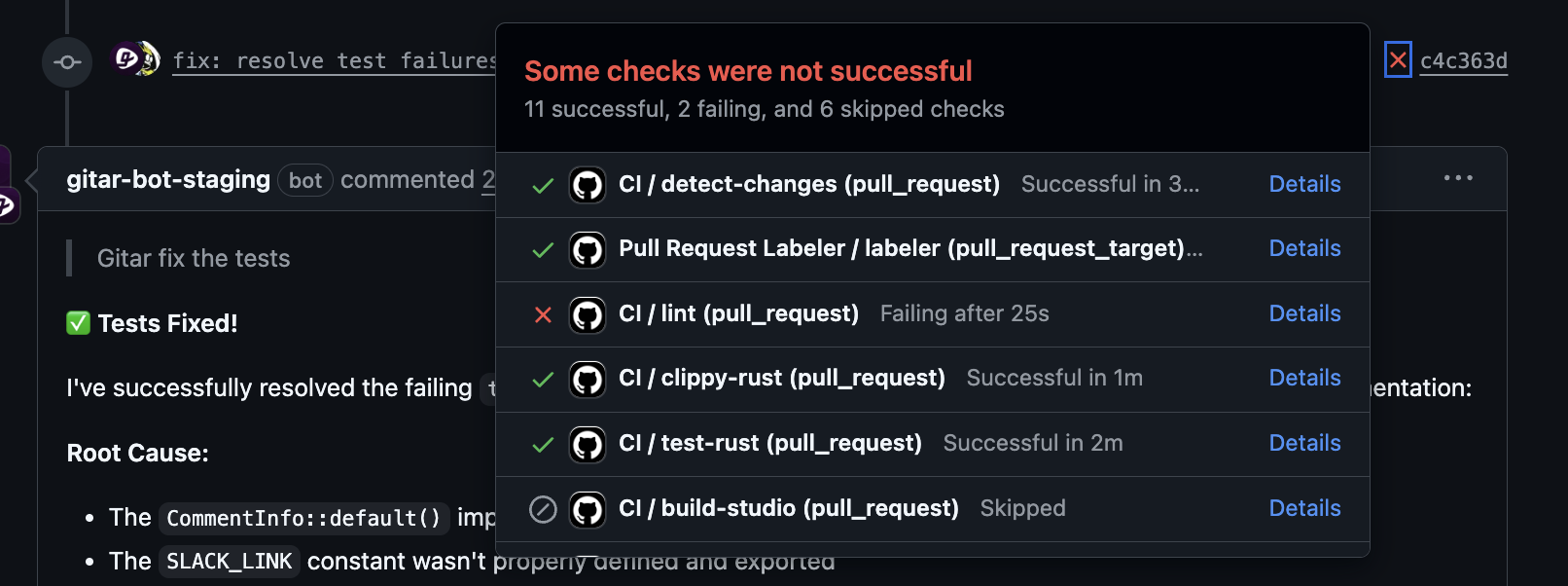
Gitar provides this type of autonomous CI healing. When a CI check fails, Gitar inspects the logs, updates the code, and pushes commits back to the pull request. It can also handle code review feedback, implement requested edits, and confirm that all checks stay green.
CI Healing vs. Suggestion Engines: A Comparison
Understanding the gap between autonomous CI healing and suggestion-based tools helps teams select the right approach.
|
Feature |
Gitar (CI Healing Engine) |
AI Code Reviewers |
On-Demand AI Fixers |
|
Primary Function |
Autonomous fix and validate |
Suggest improvements |
Generate fixes on request |
|
Fix Application |
Applies and commits fixes automatically |
Requires manual application |
Requires manual application |
|
CI Validation |
Runs checks and returns green builds |
Does not validate in CI |
Does not validate in CI |
|
Context Switching |
Removes most context switching |
Reduces some switching |
Reduces some switching |
Autonomous healing tools complete the full loop from detection through validation, while suggestion engines focus on recommendations. This difference explains why self-healing systems can recover more developer time.
Driving ROI With Gitar: Autonomous CI Fixes
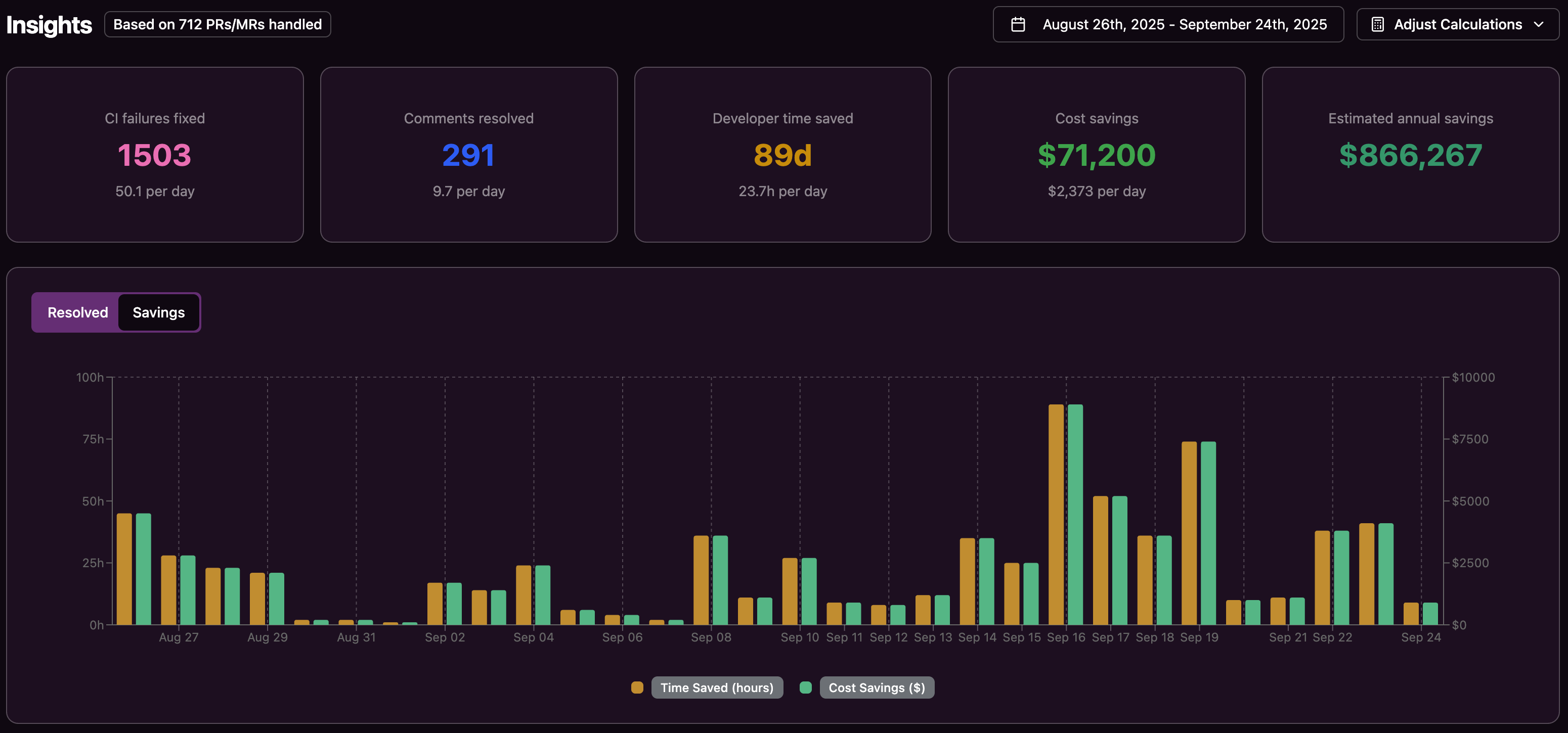
CI/CD inefficiency quickly becomes a budget issue. A 20-person team that spends one hour per day on CI and review work loses about $1M per year in time that does not contribute directly to features or reliability.
Gitar reduces this gap by fixing routine CI failures and code review feedback on behalf of the team. Time from first commit to merge shortens, and developers spend fewer afternoons chasing logs and re-running broken pipelines.
Infrastructure savings compound the benefit. Fewer failed runs and retries mean lower CI usage and smaller ephemeral environments. Even partial coverage of issues can translate into hundreds of thousands of dollars in avoided cost for larger teams.
Frequently Asked Questions
How can teams build trust in automated CI/CD fixes?
Teams often begin with a conservative mode where the system proposes fixes as pull request suggestions. After seeing consistent, correct results on lower-risk issues such as formatting and linting, teams expand automation to allow auto-commits for selected categories. Mature setups use policies to define which types of changes can merge automatically and which require human review.
Can automated solutions handle complex CI setups with many dependencies?
Modern autonomous CI tools, including Gitar, work across complex enterprise environments. They replicate required SDK versions, handle multi-language repositories, and interact with services such as SonarQube and Snyk so that fixes respect the full set of checks in the pipeline.
How do autonomous CI fixes help distributed teams across time zones?
Distributed teams benefit from shorter feedback loops. When a pull request fails overnight, a self-healing agent can diagnose and fix it before the next workday begins in another region. Review comments can also trigger automated updates, so simple changes no longer stretch across several days of back-and-forth messages.
How do these solutions improve overall developer experience?
Autonomous CI tools reduce repetitive debugging and minimize interruptions. Developers stay focused on design and implementation instead of chasing build logs, which supports deeper work, lower stress, and better long-term productivity.
What is the difference between AI-assisted and autonomous CI/CD solutions?
AI-assisted tools suggest edits or tests but rely on people to apply and validate changes. Autonomous systems detect issues, modify code, run the necessary checks, and report final status. Gitar operates in this autonomous category by updating pull requests and returning green builds once issues are resolved.
Use Gitar To Reduce CI/CD Toil And Costs
The five approaches in this guide give DevOps teams a practical roadmap for CI/CD improvements. Pipeline optimization, integrated security, self-service platforms, cost controls, and self-healing automation each address a different source of slowdowns and frustration.
Gitar complements these practices by handling much of the repetitive CI work automatically. It fixes failed builds, implements code review feedback, reduces unnecessary retries, and shortens time to merge.
Teams that adopt autonomous CI healing can focus more attention on architecture and features while keeping delivery reliable and efficient. Install Gitar now to automatically fix broken builds and ship higher quality software faster.