
Key Takeaways
- CI/CD pipelines often slow teams down because of long-running builds, flaky tests, and manual troubleshooting that drain developer time.
- AI observability, test orchestration, security scanning, and cost optimization tools help DevOps teams detect issues earlier and run pipelines more efficiently.
- Autonomous CI fixers go beyond suggestions by diagnosing failures, applying code changes, and validating fixes directly in your pipelines.
- Gitar validates fixes in your real CI environment, which reduces context switching, shortens feedback loops, and helps control CI/CD costs.
- Teams that want to automatically fix failing builds and reduce CI toil can get started with Gitar at https://gitar.ai/fix.
The Evolving CI/CD Landscape: Why Traditional Optimization No Longer Keeps Up
Modern DevOps teams manage complex pipelines where builds, tests, and deploy steps often run too long and leave developers waiting for feedback. These delays disrupt focus and turn CI/CD from an accelerator into a bottleneck.
The financial impact scales quickly. Teams spend a large share of their time on repetitive delivery work such as triage, config updates, flaky test fixes, and pipeline maintenance, with developers losing as much as 30% of their time to CI/CD issues.
Faster code generation has shifted the main bottlenecks to integration, testing, and release. Manual tuning, basic monitoring, and reactive troubleshooting no longer keep pace. DevOps teams now rely on AI systems that detect issues early, recommend optimizations, and in some cases apply fixes automatically.
Top 5 AI Tools For Faster, More Reliable Builds in 2026
1. Use AI Observability To Spot CI/CD Issues Early
AI-powered observability platforms ingest logs, metrics, traces, and performance data from CI/CD systems and learn what normal behavior looks like. They then highlight anomalies that signal emerging issues before they break builds.
These tools help reduce Mean Time To Resolution by surfacing likely root causes, predicting when extra capacity is needed, and exposing slow steps across distributed build environments. Centralized observability and planning for DevOps challenges up front support stable productivity and more predictable costs as teams scale CI/CD.
Teams benefit most from platforms that integrate with existing CI tools and clouds, provide predictive alerting, automate root cause analysis, and offer clear dashboards that map findings to concrete actions.
2. Orchestrate Tests With AI And Reduce Flaky Failures
AI test orchestration tools analyze historical runs, code changes, and dependencies to choose which tests to run, in what order, and in how many parallel workers. They often quarantine or deprioritize flaky tests so they do not repeatedly break pipelines.
Flaky tests and unstable CI pipelines consume significant engineering time. Smarter orchestration shortens test suites, stabilizes results, and tightens feedback loops.
Look for tools that integrate with frameworks such as Jest, pytest, or JUnit, provide visibility into test health and flakiness trends, and offer automated retries or targeted diagnostics for unreliable tests.
3. Build Security Checks Into The Pipeline With AI DevSecOps
AI-enhanced security scanners analyze code, dependencies, and infrastructure definitions for vulnerabilities, misconfigurations, and compliance issues. They use pattern recognition to prioritize critical findings and reduce noisy false positives.
Security now operates as a core DevOps concern (DevSecOps), and AI scanning helps teams embed security into builds without creating new bottlenecks. Early detection keeps fixes cheaper and simpler.
Teams should favor tools that integrate directly with CI/CD pipelines, provide contextual explanations and remediation guidance, and learn from organization-specific patterns to improve signal quality over time.
4. Optimize CI/CD Resources And Cost With AI
AI-based cost and resource tools analyze historical build and test activity to automatically scale runners, tune container limits, and find waste in CI infrastructure.
Many DevOps teams struggle with unexpected and unexplained infrastructure costs. For a 20-developer team, CI inefficiencies and context switching can reach roughly $1M per year in lost productivity, with additional cloud spend on top.
Useful platforms provide cost per build, pipeline, and team; integrate with cloud billing APIs and CI orchestrators; and recommend or apply rightsizing changes so usage matches real demand.
5. Use Autonomous CI Fixers For Self-Healing Pipelines With Gitar
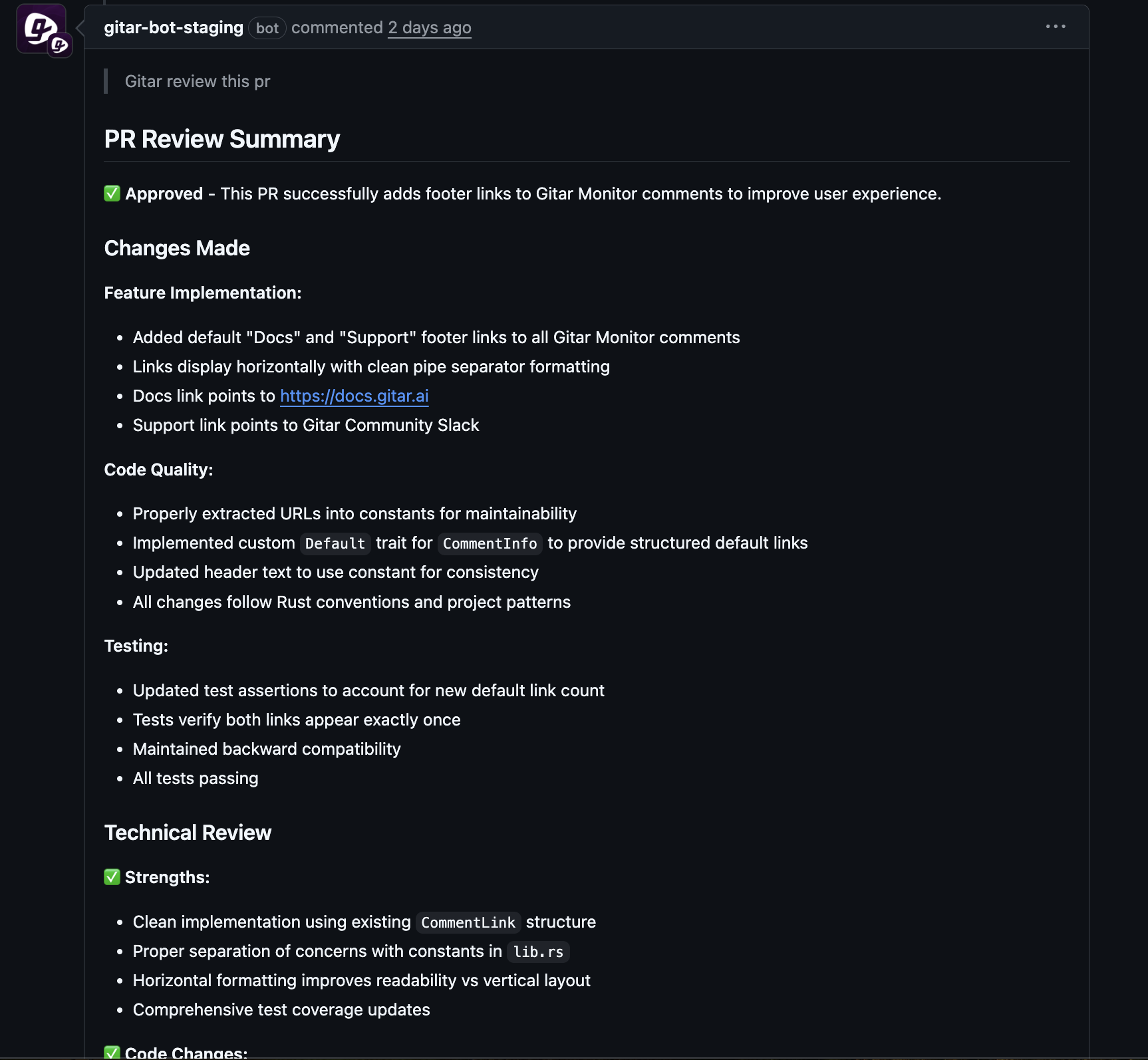
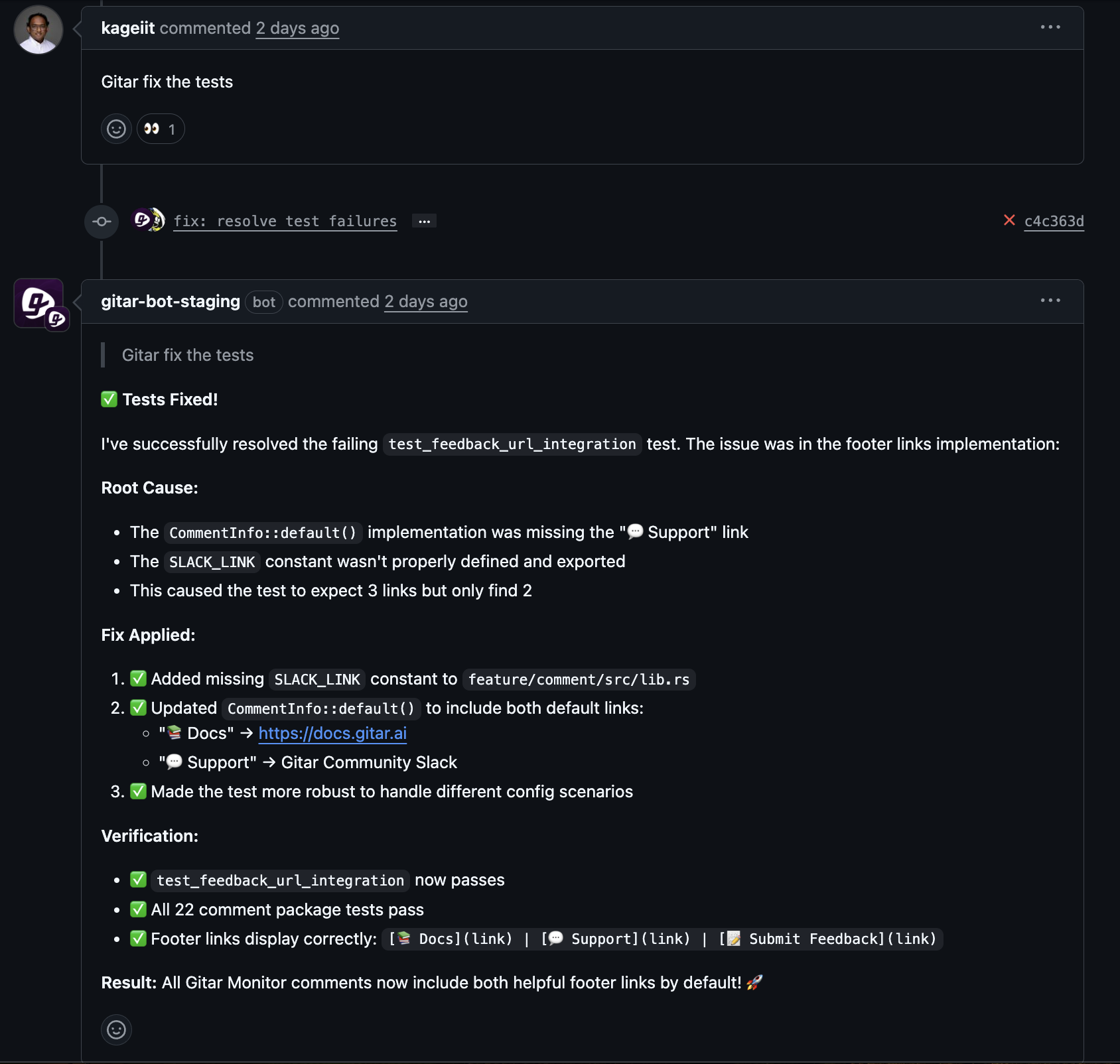
Autonomous CI fixers represent the most direct way to remove manual toil from broken builds. Gitar monitors CI pipelines, diagnoses failures such as lint errors, test failures, and build issues, generates candidate fixes, and commits changes back to the pull request after validation.
This approach gives developers a self-healing CI experience. Instead of manually debugging, editing code, and re-running pipelines, engineers let Gitar clear many failures on its own. That reduces context switching, shortens merge times, and keeps feature work moving.
Gitar replicates the real enterprise environment, including SDK versions and third-party tools, and supports GitHub Actions, GitLab CI, and CircleCI. Teams can configure it to only suggest changes for review or to apply fixes automatically with audit trails.

Install Gitar to automatically fix broken builds and ship higher quality software faster.
How Gitar’s Autonomous Fixing Compares To Other Approaches
|
Feature |
Gitar |
Traditional AI Code Reviewers |
Manual Work (Status Quo) |
|
Core function |
Autonomously fixes CI failures and addresses code review feedback. |
Provides static code analysis, summaries, and suggestions on pull requests. |
Developers manually debug, fix, and re-run CI. |
|
Action taken |
Generates, applies, and commits validated code fixes. |
Offers textual suggestions that engineers must implement and validate. |
Full manual effort: debug, code, commit, re-run CI. |
|
Automation level |
High: self-healing CI and automated review feedback implementation. |
Low to medium: assists reviews but requires human action for changes. |
None: entirely manual. |
|
Environmental context |
Replicates the enterprise CI environment, including SDKs, dependencies, and third-party tools. |
Limited to code context within the pull request. |
Relies on human memory and understanding of the CI environment. |
The key difference is that Gitar validates fixes in your own pipelines before applying them, rather than offering suggestions that may not work in your environment.
How To Start Moving Toward Self-Healing CI
The shift from reactive CI firefighting to proactive, self-healing pipelines changes how DevOps teams think about build optimization. Human verification is becoming more important as automation and AI take over routine execution tasks.
Point solutions for observability, testing, security, and cost all provide value, but autonomous tools like Gitar reduce manual fixing work directly. Even partial automation can save significant labor costs while improving developer satisfaction and delivery speed.
Gitar acts as an autonomous agent that fixes many failing CI pipelines and returns time to engineers. Teams that want to reduce CI toil and turn pipelines back into accelerators can start with Gitar in suggestion mode, then move to more automation as trust grows.
Install Gitar to start reducing CI friction and recover engineering time.
Frequently Asked Questions (FAQ)
How do AI tools for build optimization reduce long-running CI/CD pipelines?
AI tools shorten pipelines by selecting the most relevant tests, parallelizing execution, and skipping redundant work. Observability platforms highlight slow stages and recurring failures so teams can optimize them. Autonomous fixers such as Gitar diagnose and fix many failures without manual effort, which reduces time spent in broken states and avoids repeated runs.
Can autonomous AI tools handle complex enterprise CI environments?
Enterprise-focused tools like Gitar model the full CI environment, including specific SDK versions, dependency graphs, and integrations such as SonarQube or Snyk. That context allows the AI to generate fixes that respect real build constraints rather than operating only on isolated code snippets.
How do AI tools help with CI/CD cost optimization beyond faster builds?
AI systems cut waste by reducing failed builds, limiting re-runs, and scaling infrastructure to match load. They also limit the context switching that occurs when developers stop feature work to debug CI issues, which can cost a 20-person team around $1M per year in lost productivity. Tools like Gitar return that time to feature delivery.
How do autonomous AI agents stay safe and trustworthy when changing code?
Gitar supports configurable modes. Teams can start in a conservative mode where fixes appear as suggestions that require approval. Over time, they can enable direct commits with rollback options and full audit logs. Every change runs through the CI pipeline, which serves as an additional safety check.
How does Gitar integrate with existing DevOps toolchains?
Gitar connects through standard APIs to platforms such as GitHub, GitLab, GitHub Actions, GitLab CI, and CircleCI. The AI acts on pull requests and pipeline events without replacing existing tools, so code review practices and security policies remain in place while automation handles much of the repetitive fixing work.