
Cloud-native CI/CD promised faster deployments and happier developers, but many engineering teams face a different reality. Developers often spend up to 30% of their time fixing failing CI builds, debugging errors, and losing focus due to pipeline alerts. For a 20-developer team, this can mean $1 million in lost productivity each year, a cost many organizations overlook.
Manual fixes for CI build failures, like debugging locally or making iterative commits, don’t work well in complex cloud-native setups. While AI coding assistants speed up code creation, they also increase pull requests and potential failures, making validation and merging a bigger bottleneck than writing code itself.
Autonomous CI build fixing offers a new approach. Tools like Gitar go beyond identifying issues by actively applying fixes, validating them in full CI workflows, and committing solutions without developer input. This shift can redefine how teams deliver software in cloud-native environments.
Why CI Build Failures Hurt Your Engineering Team Most
How Context Switching Drains Productivity in Cloud-Native CI
CI failures disrupt developers’ focus. You push a pull request, move to another task, and then a failure notification pulls you back. A simple lint error or dependency glitch can turn into an hour-long distraction, breaking your concentration in complex cloud-native setups with multiple services and integrations.
Switching tasks carries a heavy cognitive cost. It takes about 23 minutes to refocus after an interruption. Add the time to analyze the failure, fix it locally, and rerun the pipeline, and a small issue can easily eat up an hour. This context-switching drain from failed builds remains a major, often ignored, hit to developer productivity.
Cloud-native systems worsen this issue. Unlike simpler monolithic apps, these setups involve containerized services, external APIs, infrastructure validations, and security scans. A pipeline might test multiple SDK versions or validate configurations across environments. When something fails, developers must address not just the error but its impact across a distributed system.
Ready to solve CI failures automatically? Book a Demo with Gitar.
The Rising Cost of Failed Builds on CI/CD Metrics
CI build failures affect more than individual developers; they drag down entire organizations. High failure rates increase the change failure rate, a key DORA metric, slowing team velocity and causing broader delays.
For a 20-developer team, just one hour daily on CI issues adds up to 5,000 hours yearly, or 2.5 full-time roles. At $200 per hour, that’s $1 million in lost productivity. Beyond time, failed builds delay releases, extend lead time for changes, and disrupt product timelines.
The effect on mean time to recovery is critical in cloud-native setups. Delays in fixing failures can stretch resolution from minutes to hours, especially with unreliable pipelines. Deployment frequency also drops as teams hesitate to push changes without confidence in their CI process.
Failed builds also harm team morale. Developers dread pushing code, leading to riskier, larger commits that worsen failures. This cautious mindset clashes with the fast iteration cloud-native systems are built for.
Why Traditional Debugging Fails Distributed Teams
Manual debugging, once viable for co-located teams, struggles in distributed, cloud-native environments. It assumes the code author is available to fix issues with full context, but today’s teams span time zones and include specialists with partial system knowledge.
Time zone gaps create delays. A developer in San Francisco might push a PR at day’s end, only for a failure to need input from London or Sydney, turning a quick fix into a 24-hour wait. Reviewer feedback can sit idle for hours, awaiting the original developer’s response.
Cloud-native CI setups add unique challenges. Ephemeral infrastructure and third-party integrations make local replication of failures nearly impossible. Developers waste time on trial-and-error commits, clogging pipelines while chasing solutions for subtle, interdependent issues across services.
Meet Gitar: Your Autonomous Fix for Cloud-Native CI Failures
Gitar changes the game from reactive debugging to automatic CI healing. Unlike AI tools that only suggest fixes, Gitar acts as a full CI repair engine. It analyzes failures, applies solutions, validates them in your workflow, and commits fixes without pulling developers away from their work.

Here’s how Gitar boosts CI reliability in cloud-native setups:
- Full Autonomous Fixes: Gitar resolves issues like lint errors or test failures by analyzing logs, applying changes, validating against CI, and committing solutions, minimizing manual effort.
- Accurate Environment Setup: It mirrors your exact workflow, including specific JDK versions, security scans, and custom configs, ensuring fixes match your real setup.
- Flexible Trust Options: Start with suggestions for review in Conservative Mode, then move to automatic commits in Aggressive Mode with rollback options as confidence grows.
- Wide CI Platform Support: Gitar works with GitHub Actions, GitLab CI, CircleCI, BuildKite, and more, fitting diverse tooling needs.
- Context-Rich AI Integration: It connects local developer tools with CI fixing, aligning solutions with code intent and quality standards.
Ready to automate CI fixes? Book a Demo with Gitar.
How Autonomous CI Fixing Improves Your Pipeline
Turning Failed Builds into Success with Self-Healing CI
Gitar redefines the CI failure process into an automatic, self-repairing system. When a check fails, whether it’s a lint issue, test error, or dependency conflict, Gitar’s AI kicks in to analyze the problem deeply.
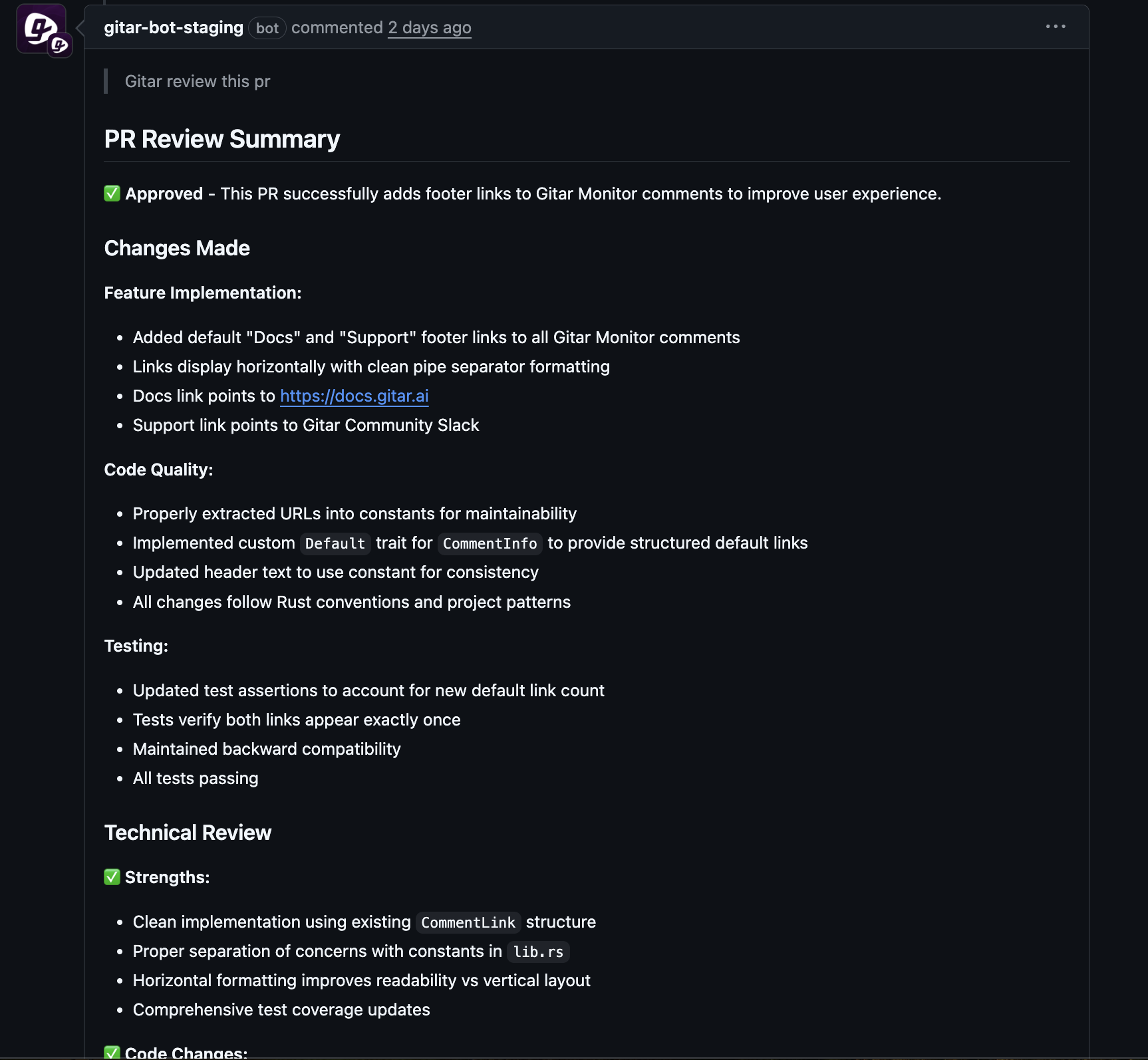
It examines logs to pinpoint the root cause and context. For lint issues, it aligns fixes with project style rules. For test failures, it assesses whether to update tests or code. Unlike tools that stop at suggestions, Gitar applies changes, tests them across the full CI setup, and commits only when validated, ensuring reliability in complex cloud-native environments.
Gitar handles common issues automatically, such as:
- Fixing style and formatting errors.
- Correcting basic test failures like outdated snapshots.
- Resolving build issues from dependencies or scripts.
Restoring Developer Focus by Removing Context Switching
Automatic CI fixing does more than save time; it changes how developers work. Knowing failures will be handled without intervention, developers can push code and move to the next task without worry.
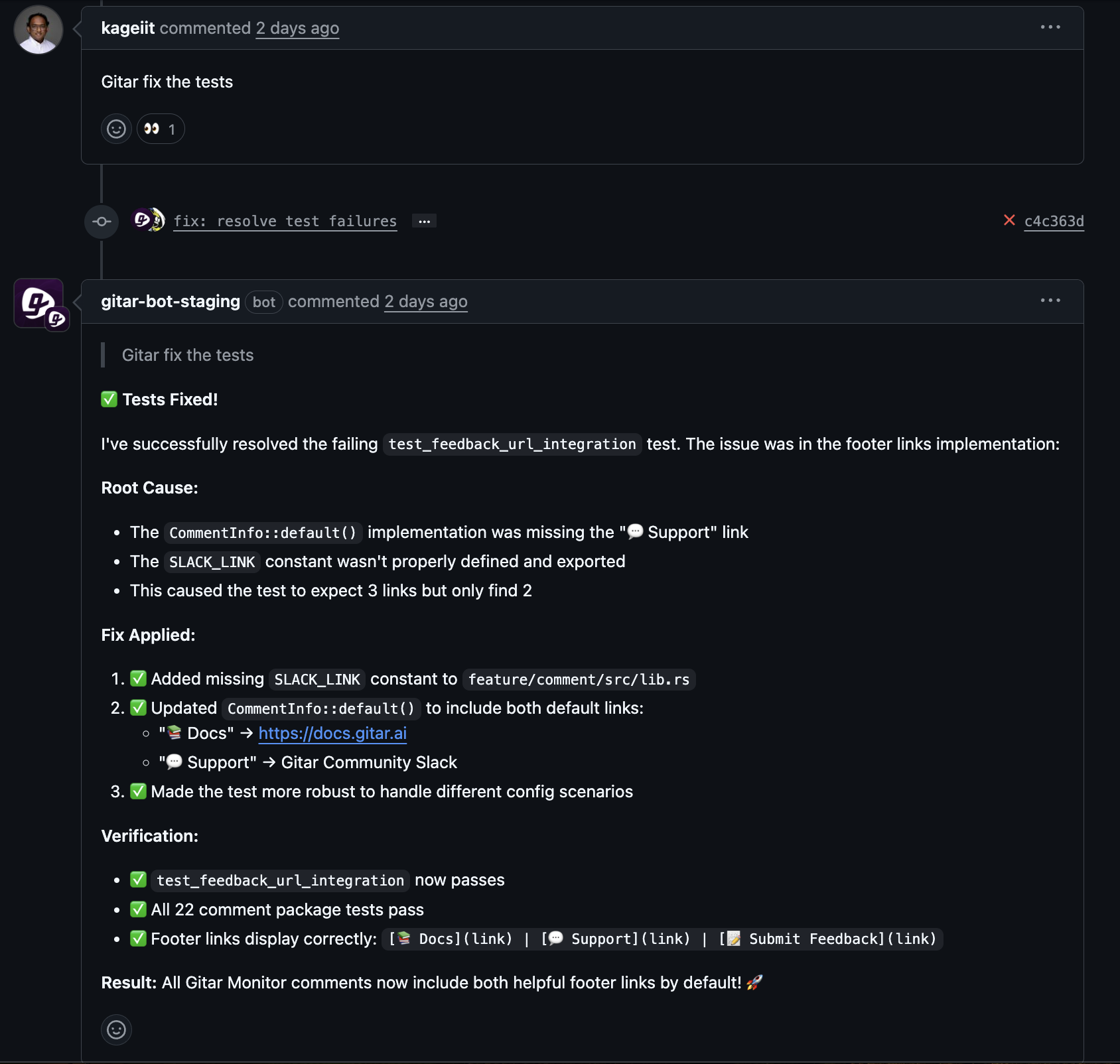
In cloud-native development, where local testing can’t mimic production, CI often reveals issues first. Eliminating context switching means developers stay focused, as fixes happen in the background.
For teams using trunk-based or continuous deployment, this enables steady integration. Developers make quick changes without blocking progress. Code reviews shift to higher-level decisions, senior staff focus on mentoring, and product timelines become more predictable.
Speeding Up Merges and Team Velocity with Automated Fixes
Automatic CI fixing boosts key DevOps metrics. Lead time for changes shrinks when failures are fixed in minutes instead of days, especially for distributed teams facing time zone delays.
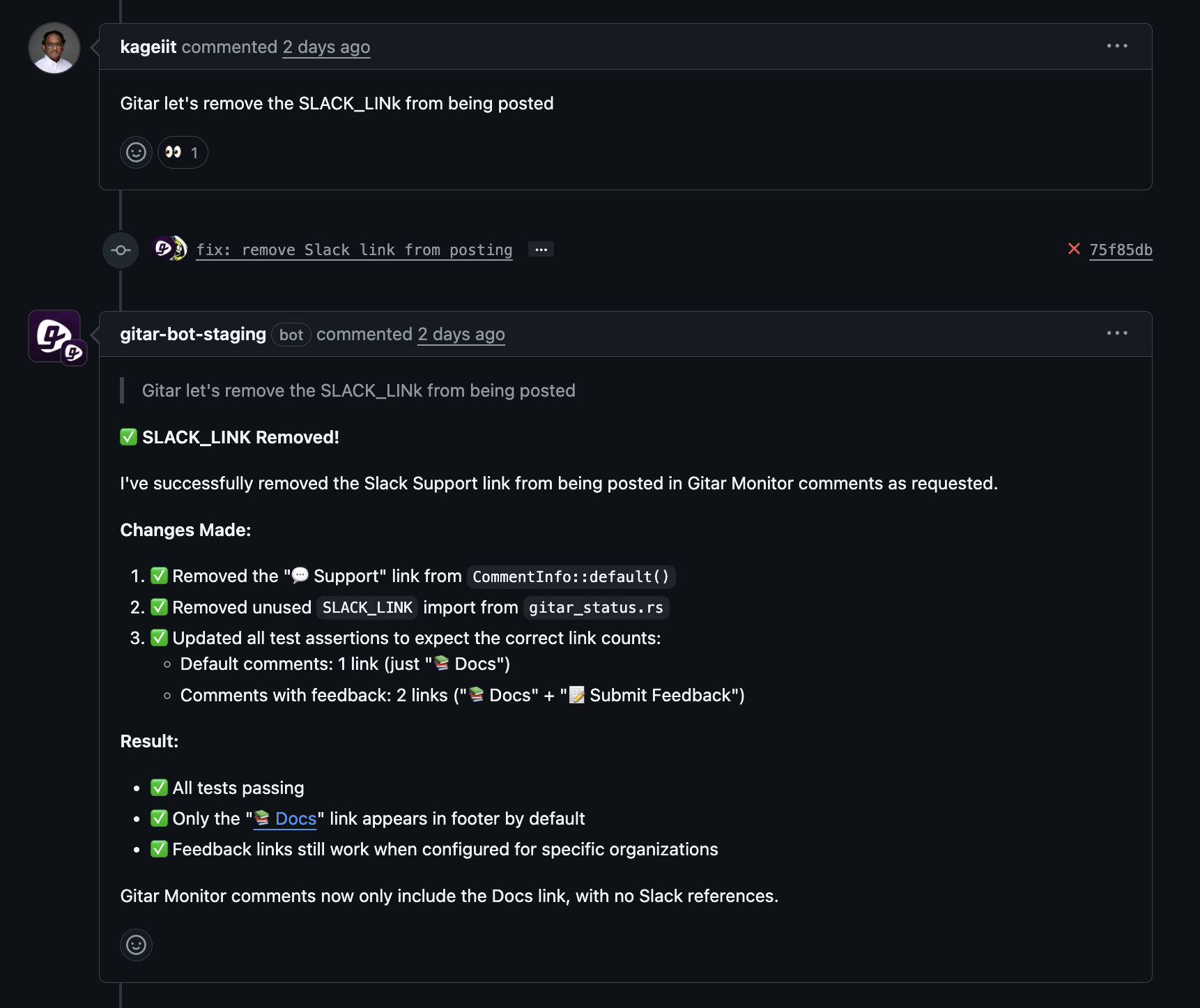
Gitar keeps feedback loops running 24/7. A reviewer leaves comments, and fixes are applied instantly, ready for approval by the next workday. Deployment frequency rises as teams trust their pipeline, encouraging smaller, safer changes over risky batches, aligning with cloud-native practices.
Change failure rates drop too. Validated fixes before production cut deployment issues. If problems arise, the same automation speeds up recovery, minimizing impact.
Why a Healing Engine Beats Suggestion Tools for CI Fixes
Gitar’s healing approach outperforms suggestion tools in cloud-native CI/CD. Suggestion engines still require developer effort to apply and test fixes, maintaining the context-switching issue.
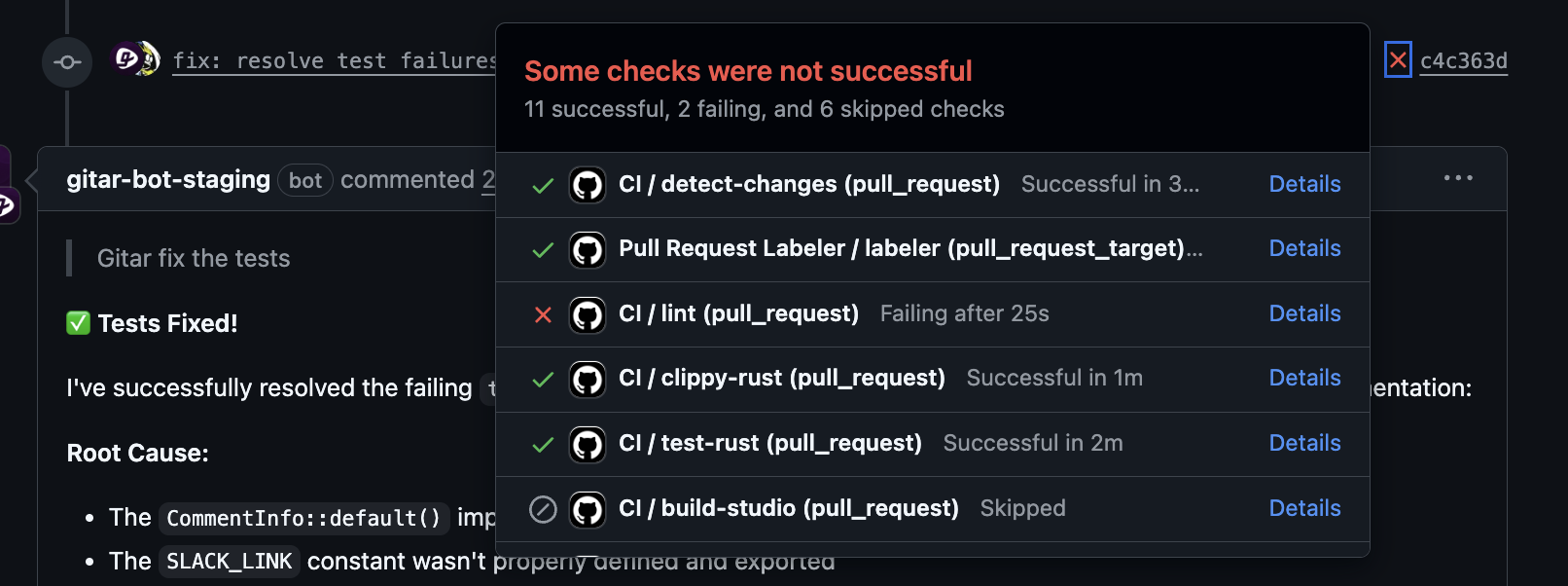
Here’s how Gitar compares to suggestion tools:
|
Feature |
Gitar (CI Healing Engine) |
Suggestion Engines (e.g., CodeRabbit, Claude for CI) |
|
Action Taken |
Applies, validates, and commits fixes on CI |
Offers suggestions or one-click fixes |
|
CI Integration |
Replicates full enterprise CI setups for validation |
Integrates with CI for some fix validation |
|
Trust Model |
Configurable from suggestions to auto-commits |
Includes options for automated fixes with approval |
|
Developer Impact |
Removes context switching, preserves focus |
Reduces switching with some automation |
|
Feature |
Gitar (CI Healing Engine) |
Suggestion Engines (e.g., CodeRabbit, Claude for CI) |
|
Platform Scope |
Supports GitHub, GitLab, CircleCI, BuildKite, etc. |
Works across multiple platforms and tools |
|
Enterprise Readiness |
Manages complex dependencies and scans in CI |
Handles custom enterprise CI environments |
The key difference is validation. Suggestion tools assume fixes will work, but cloud-native systems are unpredictable. Gitar tests fixes across the full workflow before committing, reducing uncertainty.
Ready to fix builds automatically? Install Gitar Now.
Common Questions About Autonomous CI Fixing
Can Gitar Manage Complex CI Setups with Unique Dependencies?
Gitar is built to handle intricate enterprise CI workflows. It supports specific JDK versions, mixed-language builds, security scans like SonarQube, and custom setups. By mirroring your exact environment, Gitar ensures fixes work in your real system, not just in theory, even with highly tailored pipelines.
How Does Gitar Build Trust for Automated Fixes in Critical Pipelines?
Gitar offers a flexible trust system to ease teams into automation. Start in Conservative Mode with suggestions for review and one-click approval, then move to Aggressive Mode for automatic commits with rollback options. Detailed explanations and custom rules ensure control, while audit trails align with governance needs.
What’s the Real ROI of Autonomous CI Fixing with Gitar?
The benefits of tools like Gitar show up quickly. For a 20-developer team losing $1 million yearly to CI issues, fixing 50% of failures saves $500,000. Beyond time, faster merges speed up delivery, better focus lowers turnover, and improved metrics like lead time boost business agility, especially for distributed teams.
How Does Gitar Fit Into Existing Workflows for Distributed Teams?
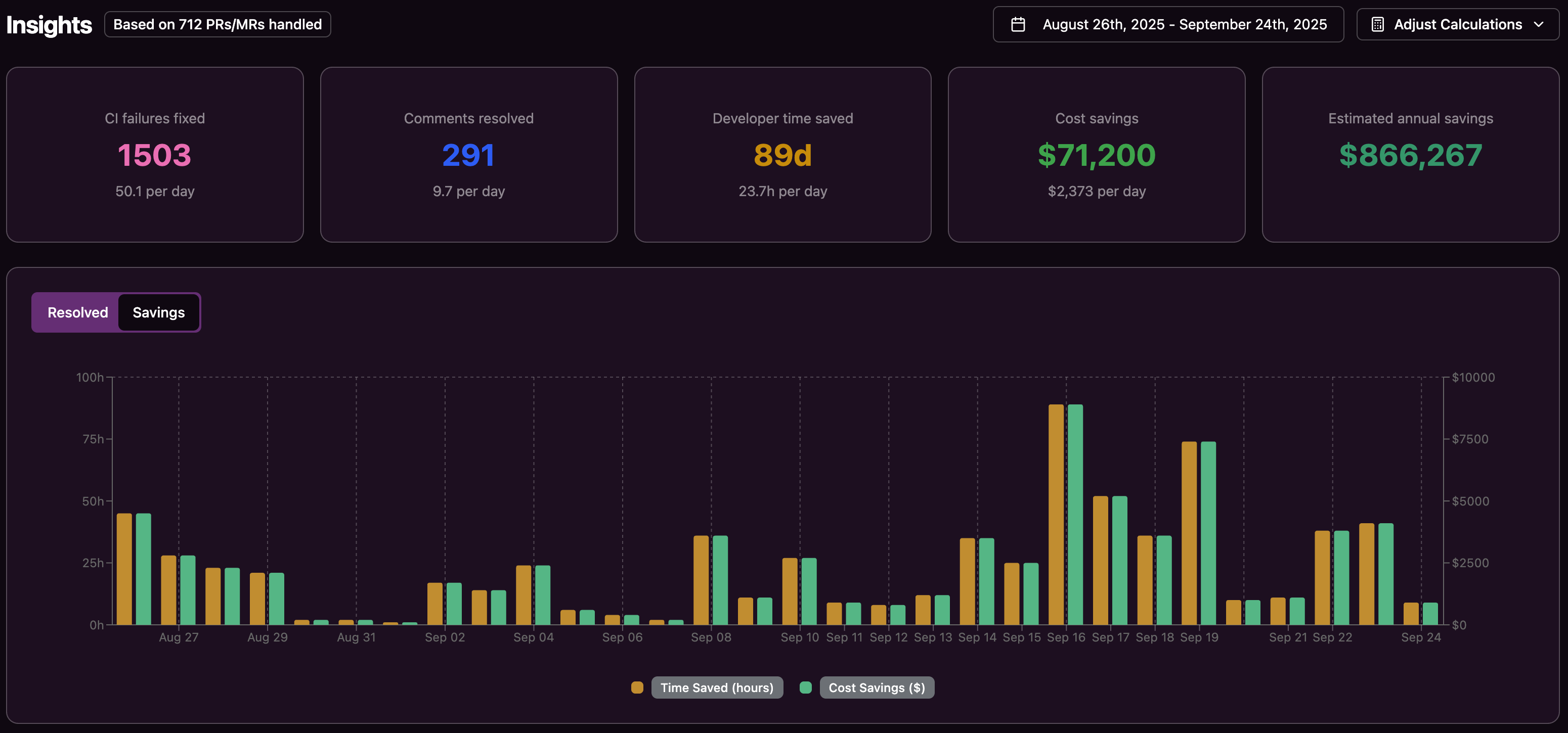
Gitar integrates easily with GitHub, GitLab, CircleCI, and other platforms, requiring no major workflow changes. It acts as a smart assistant, updating pull requests via familiar interfaces. Reviewers leave feedback, and Gitar applies changes instantly, keeping code moving across time zones. Dashboards provide CI health insights for optimization.
Conclusion: Autonomous CI/CD Is the Future for Cloud-Native Builds
Manual CI failure fixes are a growing burden in cloud-native systems. As architectures grow more complex, this approach slows innovation and delays projects. Gitar offers a true fix by automatically resolving issues, validating solutions, and committing changes, turning CI/CD into a strength.
Moving to autonomous development operations is the next step for engineering teams. Pipeline health improves when fixes take minutes instead of hours. Teams adopting this now will see better DORA metrics, lower costs, and happier developers.
Saving just one hour daily on CI tasks for a 20-developer team means $1 million yearly, plus faster delivery and better code. Cloud-native challenges need modern solutions, and autonomous CI fixing is the way forward for validation and merging.
Ready to boost productivity and end CI build failures? Book a Demo with Gitar Today.