
CI build failures are a common headache for developers, disrupting workflows and slowing down releases. This article explores the challenges of manual patch management and why it often leads to inefficiencies. We’ll also introduce automated patch management as a powerful solution, highlighting how Gitar’s AI-driven, self-healing CI engine resolves issues directly, saving time and improving team efficiency.
Why Manual Patch Management Hurts CI Builds and Developer Focus
Unstable CI Pipelines Cost Time and Money
CI build failures create significant delays in software development. They stall the CI/CD process, pushing back deployments and increasing time-to-market for many organizations. For a team of 20 developers, these disruptions can lead to about $1 million in lost productivity each year, based on the full cost of engineering hours.
The impact goes further. Manually identifying and fixing failed builds adds delays and raises operational costs per developer every year. When builds fail, teams lose access to essential artifacts for testing and deployment, causing costly setbacks that can delay entire product releases.
These issues affect more than just budgets. In a fast-moving tech world, delivering features quickly can define success. Companies with unstable CI pipelines often lag behind competitors who prioritize reliable, automated systems.
Context Switching Wastes Developer Energy
CI failures do more than just eat up time, they break a developer’s focus. These failures block access to key build assets, waste engineering effort, and force constant context-switching, draining productivity. A quick 5-minute fix can stretch into an hour as developers pause their work, dig through error logs, replicate issues locally, and apply solutions.
Common causes of these interruptions include several technical issues. Flaky tests, build errors, deployment pipeline issues, misconfigured setups, environment variable mismatches, dependency conflicts, and version control errors are frequent culprits. Each type demands a unique approach to diagnose, pulling developers away from coding to troubleshoot.
Flaky tests are especially frustrating since they fail inconsistently. Developers can spend hours chasing down whether a failure signals a real problem or just a timing glitch. These often stem from timing issues or external system dependencies, causing sporadic failures. Such uncertainty can undermine trust in the testing process.
Build errors add another layer of complexity, often requiring detailed knowledge of build systems and configurations. They might arise from outdated scripts or incompatible tool versions, like an old runtime. This forces developers to shift focus from coding to infrastructure troubleshooting.
CI Practices That Slow Down Deployments
Many teams follow CI habits that worsen failure impacts and reduce deployment speed. Monolithic pipelines, running all checks in sequence, drag down CI builds and magnify the effect of a single test failing, limiting how often teams can deploy. If one test fails, the entire build halts, blocking other teams from moving forward.
Security missteps also create problems. Hardcoded secrets in pipeline setups pose risks and make builds more prone to instability and failure. These habits not only weaken security but also make debugging harder when issues pop up.
Pipeline speed directly ties to deployment frequency. Teams with pipelines running over 10 minutes deploy less often, showing a clear connection between slow builds and delayed market delivery. Slow, unreliable pipelines discourage frequent updates, resulting in bigger, riskier releases that are more likely to fail.
Install Gitar now to automatically fix broken builds and ship quality software faster.
How Automated Patch Management Creates a Self-Healing CI
Automated patch management changes the game by shifting CI maintenance from reactive fixes to proactive solutions. Instead of waiting for failures and manually resolving them, these systems monitor build health continuously and address issues as they happen. This turns fragile CI/CD pipelines into strong, self-healing setups.
The approach rests on three core strengths: smart detection, precise diagnosis, and independent resolution. While traditional tools can spot a failed build, they leave developers to figure out why and how to fix it. Automated systems take it further by analyzing failure trends, understanding the build environment, and applying proven fixes tailored to specific CI setups.
What sets automated patch management apart from basic suggestion tools is action. Many AI tools can point out issues and offer ideas, but developers still need to apply those fixes, test them, commit changes, and verify they work in CI. This partial help eases some mental load but doesn’t fully solve the productivity loss from CI failures.
Self-healing CI takes it to the next level. The pipeline itself acts as a smart agent, maintaining its own health. It grasps the full context of build environments, like dependency versions, SDK setups, third-party tools, and company quality standards. When failures occur, it doesn’t just flag them, it resolves them, tests the fixes across the CI workflow, and restores builds to a working state without human input.
Moving from a “set and forget” CI to a self-healing one cuts out the costliest parts of build failures: losing focus, debugging by hand, and worrying if fixes will hold up in production. This shift matters even more as AI code tools like GitHub Copilot speed up coding, increasing the volume of work that needs to flow through CI/CD pipelines.
How Gitar Uses AI to Transform CI with Automated Fixes
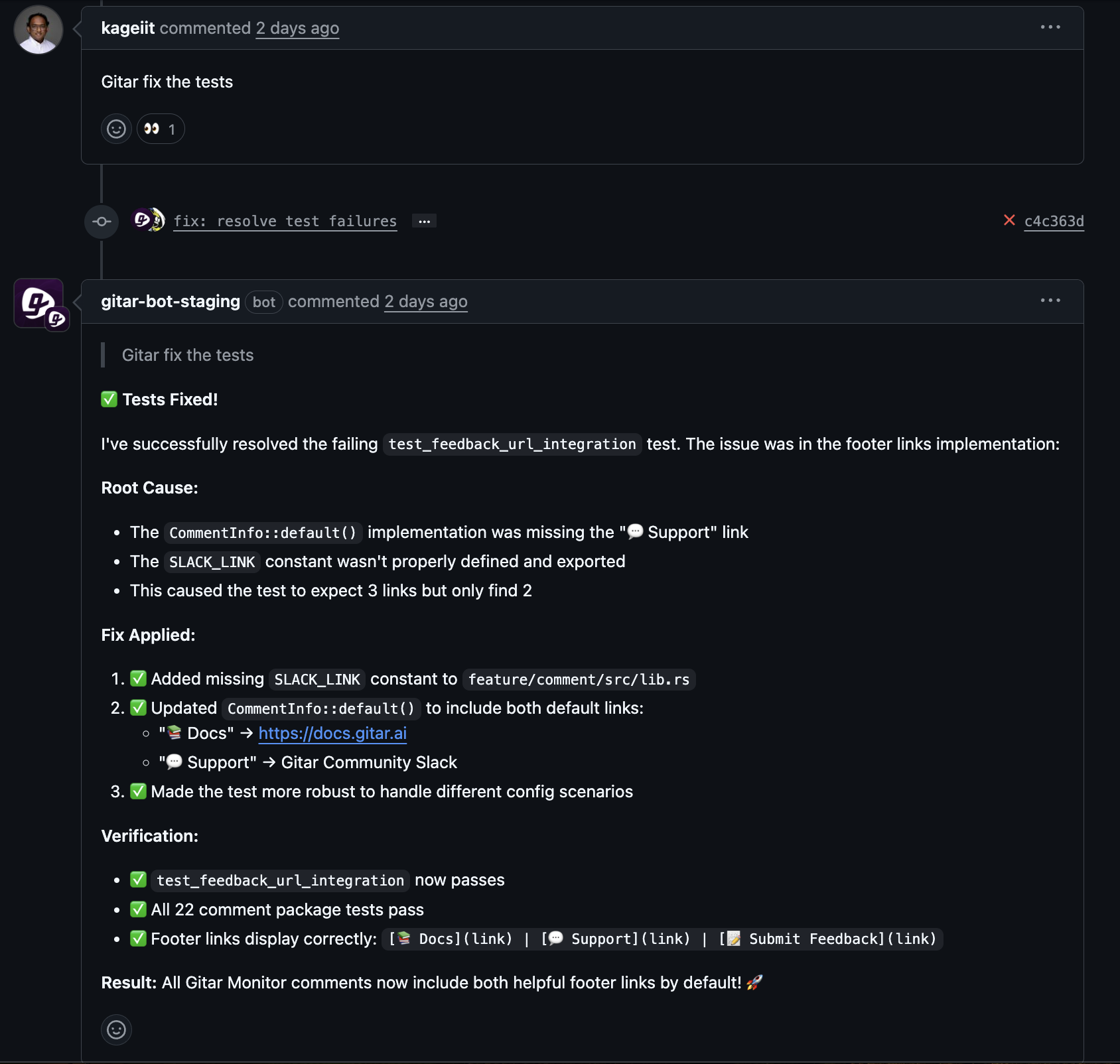
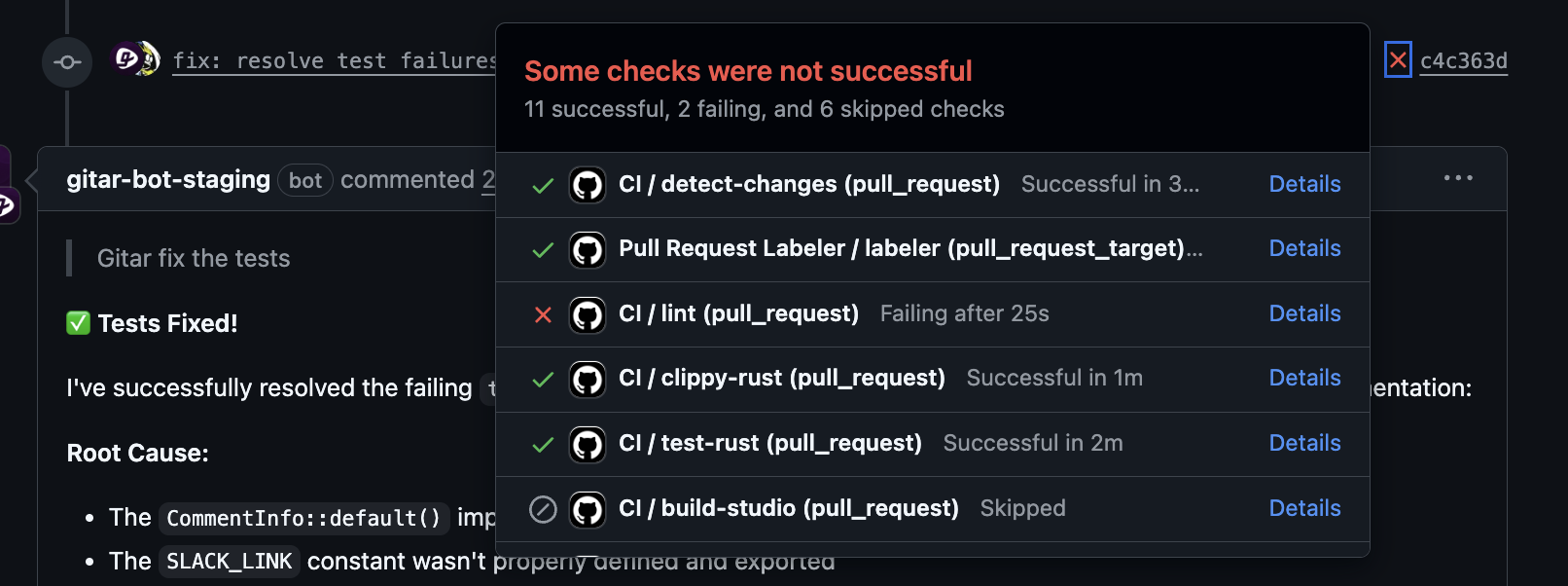
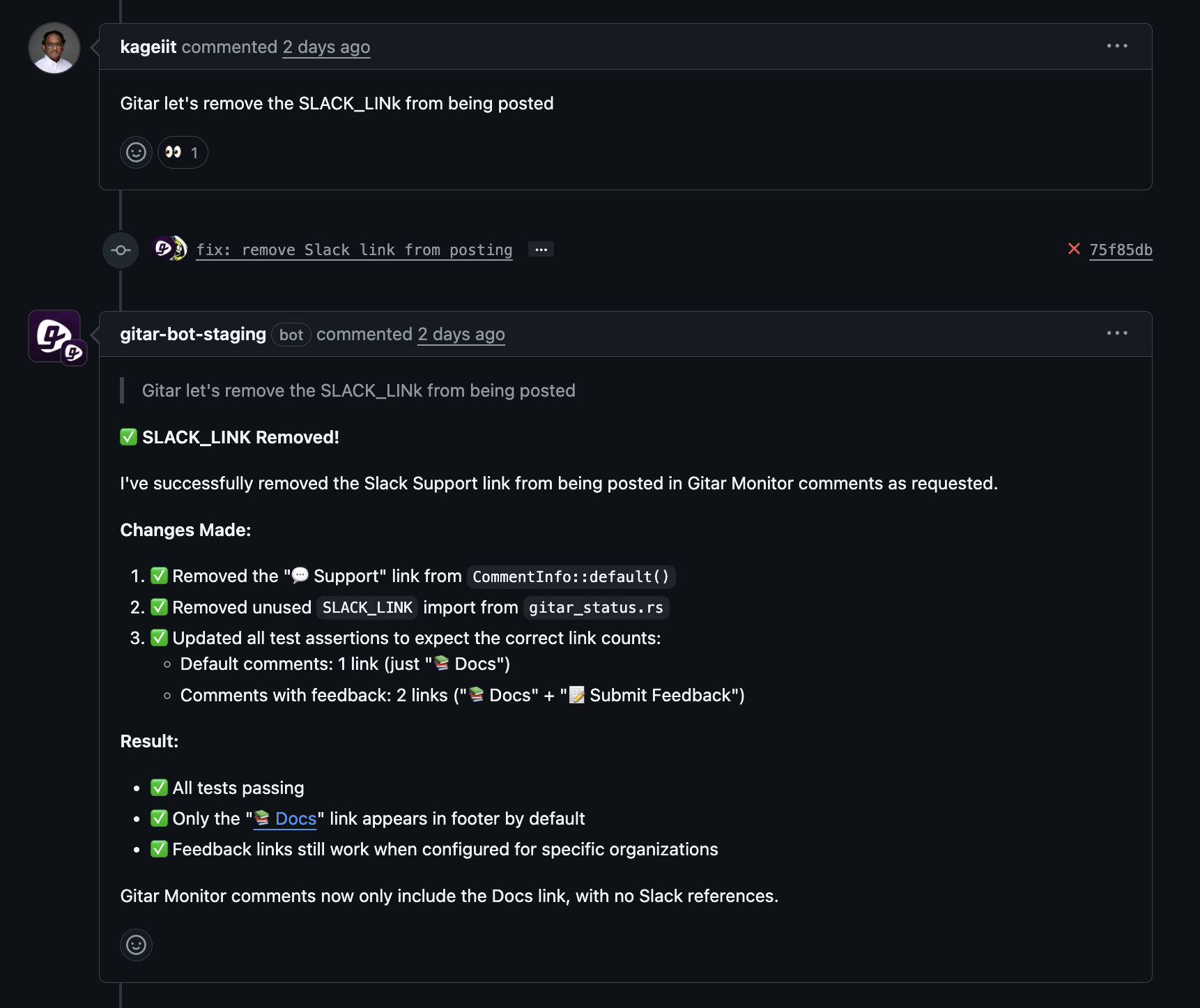
Gitar stands out as a practical tool for automated patch management, acting as a true “healing engine” rather than just offering suggestions. When CI builds fail or reviewers leave feedback, Gitar’s AI analyzes the problem, creates a fix, applies it to the code, tests it in the full CI environment, and commits the change, all without needing developer involvement.
Key features that make Gitar different from standard CI tools include:
- Complete Fix Process: Gitar goes beyond spotting issues. It applies fixes, validates them across platforms like GitHub Actions, GitLab CI, CircleCI, and BuildKite, and ensures all checks pass, delivering working builds to developers.
- Accurate Environment Matching: Unlike generic AI tools, Gitar mirrors complex enterprise CI setups, accounting for specific JDK versions, multi-SDK dependencies, and security scans like SonarQube and Snyk. This guarantees fixes fit within existing rules.
- Smart Code Review Support: Gitar also automates responses to human feedback in pull requests. Reviewers can leave comments, and Gitar implements the changes, aiding distributed teams by bridging time zone gaps with ready fixes.
- Customizable Trust Settings: Gitar offers flexibility with automation levels, from suggestion-only modes to full auto-commits with rollback options. Teams can start cautiously and scale automation as they gain confidence.
Gitar fits effortlessly into current workflows with a simple GitHub or GitLab app setup, no changes needed for CI configs or processes. Once active, it tracks all pull requests, responds to failures or comments, and updates status directly in the PR view.

Book a demo to see Gitar in action and streamline your CI process.
Real Benefits of Using Gitar for Automated Patch Management
Keep Developers Focused and Productive
One major advantage of automated patch management is reducing context switching, a significant drain on developer productivity. Typically, when CI builds fail, developers must drop their tasks, analyze logs, replicate issues locally, apply fixes, and wait for pipelines to rerun. This disrupts focus and consumes mental energy.
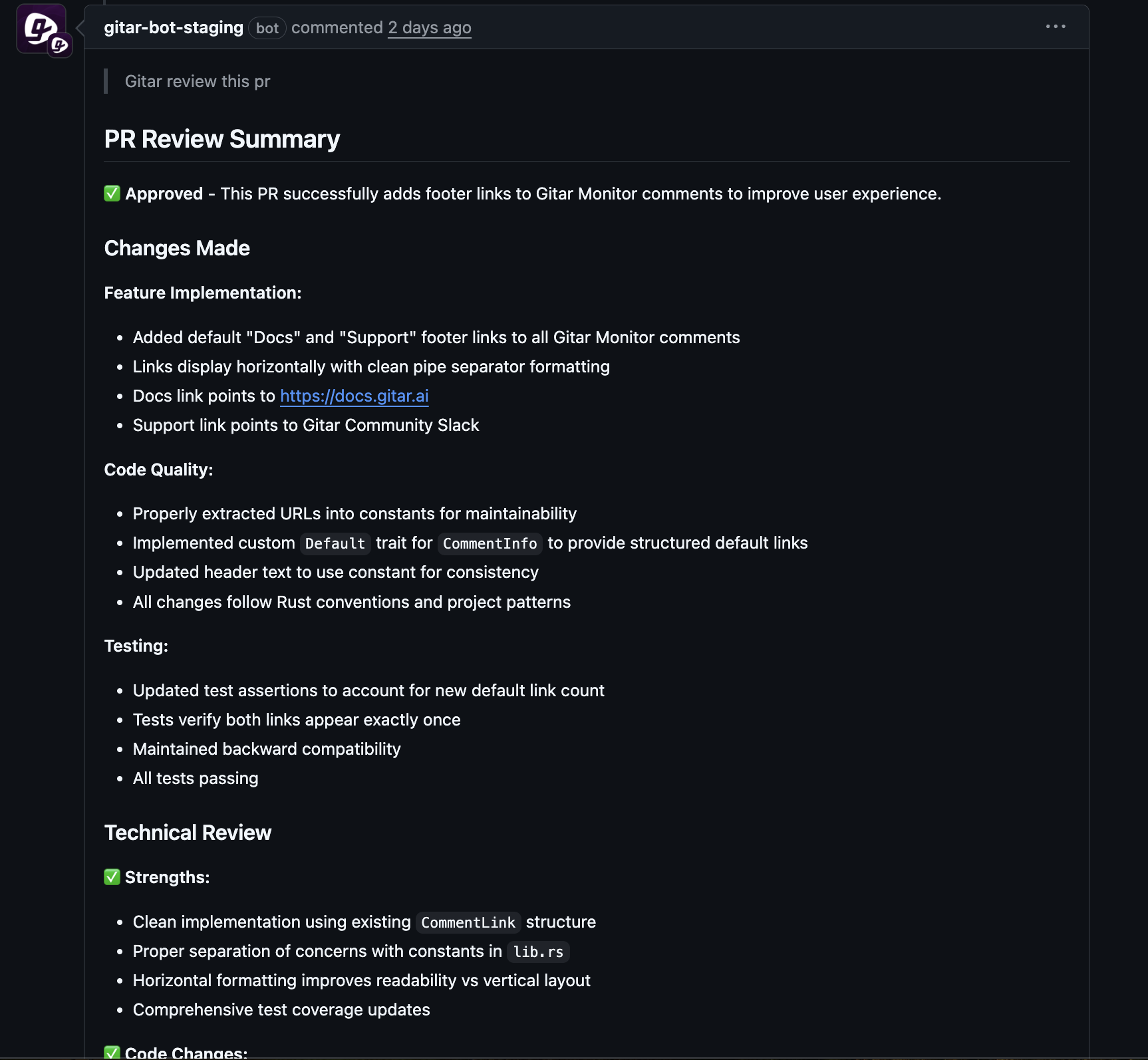
Gitar solves this by managing CI failures on its own. Developers stay focused on creating features instead of fixing infrastructure. For instance, if a linting error pops up, Gitar detects it, formats the code correctly, commits the change, and updates the pull request, often before the developer even notices. Maintaining this focus is critical for complex tasks needing deep concentration.
Over time, these productivity gains add up. Teams build trust in the system and feel more satisfied as they escape repetitive debugging, focusing instead on meaningful, creative work.
Speed Up Releases and Reach Market Faster
Automated patch management directly boosts release speed by cutting delays from failed builds and long review cycles. In typical workflows, feedback between authors and reviewers can involve several back-and-forths, each needing manual updates and CI reruns. For distributed teams, time zone differences stretch these cycles even longer.
Gitar shortens these loops by applying reviewer feedback automatically and swiftly. If a reviewer suggests a change, Gitar implements it, tests it across the full CI suite, and prepares it for final approval. This speed helps teams across different regions stay on track with development.
The overall impact on release cycles can be substantial. Teams using automated patch management often see quicker pull request merges and more frequent deployments, as CI failures no longer hold up progress.
Cut Engineering Costs and Improve CI Efficiency
Automated patch management brings clear financial savings through operational gains. Weak CI/CD setups often stem from limited training, expertise, or resources, worsening build stability and recovery times. By automating fixes for common CI issues, platform engineers can focus on bigger infrastructure goals instead of constant troubleshooting.
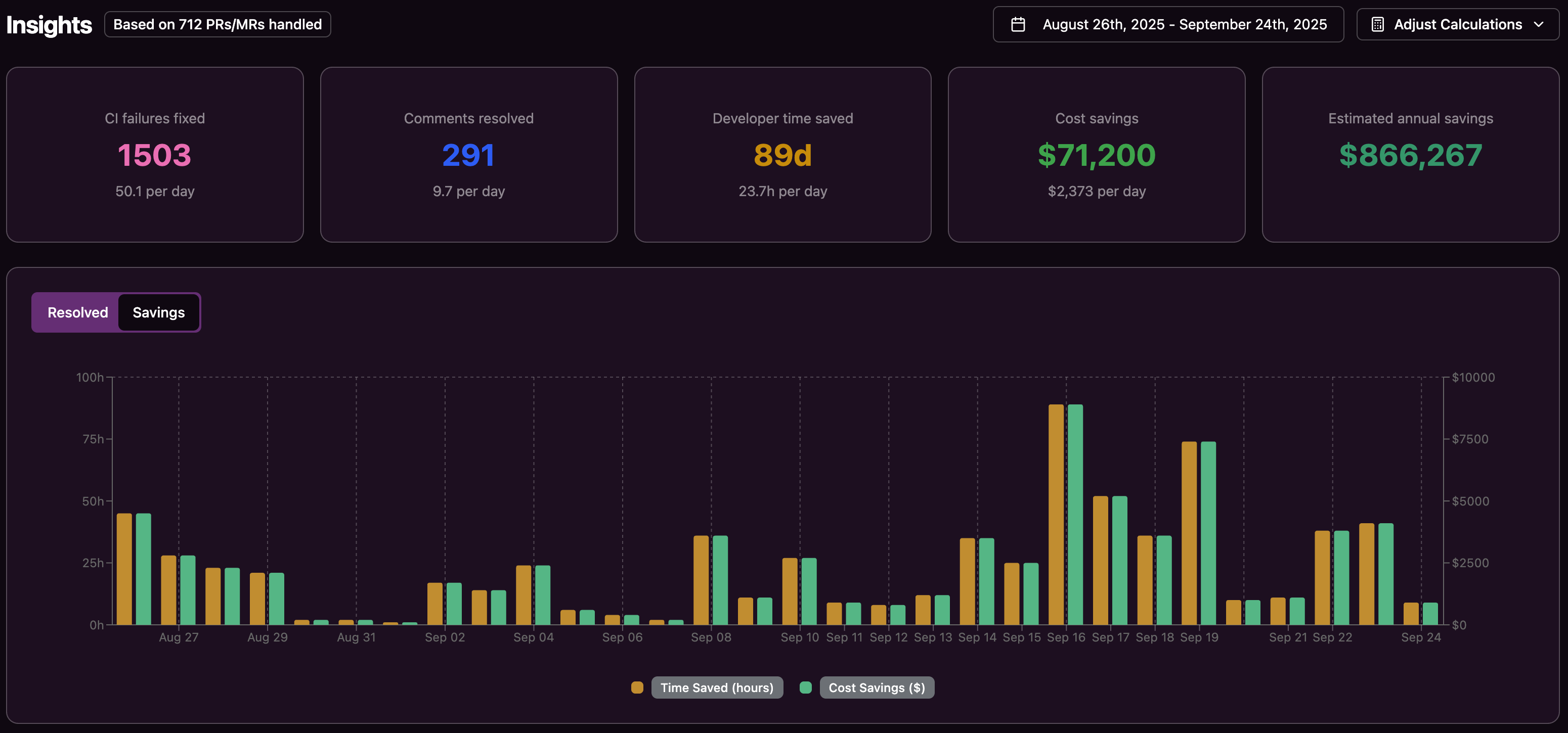
For a 20-developer team spending an hour daily on CI problems, annual costs can hit around $1 million, factoring in full developer salaries. Using Gitar for automated patch management can slash this waste, delivering measurable returns even with modest estimates.
Boost Team Morale and Support Innovation
Automated patch management offers notable morale benefits. Developers often feel more satisfied when freed from the frustration of broken builds and repetitive fixes. This lift in spirits can strengthen team collaboration and improve overall engineering culture.
For new hires, automated tools ease onboarding. Junior developers don’t need to master complex CI setups right away to contribute. They can focus on the codebase and business needs while Gitar handles build details.
Senior engineers gain time by offloading routine tasks to automation. This lets them tackle bigger decisions, strategic projects, and mentorship, enhancing job satisfaction and team growth.
Comparing Gitar to Other Automated Patch Management Tools
|
Feature / Solution |
Gitar (Autonomous AI Agent) |
AI Code Reviewers (e.g., CodeRabbit) |
Big Model Integrations (e.g., Claude for CI) |
Manual Work (Status Quo) |
|
Fixes CI Failures Automatically |
Yes |
Yes (Limited Automation) |
No (Requires Custom Integration) |
No |
|
Validates Fixes Against Full CI |
Yes |
Partial (Via Integrations) |
No (Requires Custom Integration) |
No |
|
Self-Healing CI & Green Builds |
Yes |
No |
No |
No |
|
Replicates Complex CI Environments |
Yes |
Partial (Via Workflow Integration) |
No |
No |
|
Beyond Suggestions |
Yes |
Partial |
No |
No |
This table shows a key difference between tools that only suggest fixes and those, like Gitar, that take action. AI code reviewers such as CodeRabbit offer useful insights and some automation, but they often require manual steps to fully resolve CI issues. This helps a bit but doesn’t completely stop productivity losses from context switching or CI debugging.
Big model integrations bring strong AI potential but demand heavy engineering work to create custom workflows and manage CI connections. Companies choosing this route must build their own systems, pulling resources away from core product work.
Gitar’s hands-on approach removes the manual burden of suggestion tools and the setup hassle of custom solutions. It offers full automation out of the box, letting teams gain the advantages of automated patch management without typical costs or risks.
Install Gitar now to fix broken builds automatically and ship better software faster.
Common Questions About Automated CI Fixing
How Does Gitar Handle Unique CI Environments?
Gitar adds substantial value in complex enterprise CI setups. It’s built to replicate full workflows, including specific JDK versions, multi-SDK dependencies, and integrations like SonarQube and Snyk. Unlike basic AI tools with limited context, Gitar understands the entire environment and ensures fixes align with organizational standards.
It manages complexity by maintaining detailed build environment models, covering dependency versions, build scripts, and external service connections. Fixes account for these details to ensure they’re correct and compatible with current setups.
For unique configurations, Gitar’s settings let teams adjust how the AI handles different failures. This adaptability ensures reliable automation even in specialized CI environments.
Can You Trust AI for Automated Code Fixes?
Trust matters in automated patch management. Gitar addresses this with adjustable trust levels, so teams can start with caution and ramp up automation as they feel ready. In “conservative mode,” Gitar suggests fixes for review and approval with one click, keeping developers in control.
Even in “aggressive mode” with automatic commits, rollback options are available if changes need reversal. Gitar logs and explains every action, offering full transparency on what was changed and why.
Teams often build confidence quickly as Gitar handles routine tasks like linting fixes, dependency updates, and simple test corrections. Control remains with the team to set automation levels based on their comfort and the types of fixes they want automated.
How Is Gitar Different from Other AI Code Tools?
Gitar stands out due to its place in the development workflow and its focus on action. IDE Assistants like GitHub Copilot help during coding, speeding up creation. AI reviewers like CodeRabbit assist during review, offering feedback on pull requests. Both are useful but don’t tackle CI failures directly.
Gitar works after commits, acting as an independent agent to ensure code meets quality standards. Unlike tools offering suggestions for manual application, Gitar applies fixes, validates them across the full CI process, and ensures builds pass without extra steps.
These tools can work together. Use Copilot for faster coding, CodeRabbit for review insights, and Gitar to guarantee CI success without manual effort.
How Does Gitar Integrate with Current Workflows?
Gitar connects smoothly with existing setups. It installs as a standard GitHub or GitLab app, requiring no tweaks to CI configurations, build scripts, or processes. Once active, it monitors pull requests and handles failures or feedback directly in the PR interface.
Status updates appear within each pull request, detailing actions like fixing CI issues or addressing comments. Developers keep using familiar tools while Gitar works behind the scenes to remove obstacles. It supports multiple CI platforms like GitHub Actions, CircleCI, and BuildKite at once.
Setup happens through a web dashboard where teams define preferences, automation levels, and which fixes need approval. Most teams are up and running with Gitar in just a few hours, with little to no learning curve.
What CI Failures Can Gitar Resolve?
Gitar excels at fixing common CI issues that eat up debugging time. It automatically corrects linting and formatting errors based on project rules. Test failures, like snapshot mismatches or broken assertions, are analyzed and fixed.
Build issues from dependency conflicts or script errors are addressed by reviewing logs and configurations. Gitar also automates code review feedback, acting on reviewer suggestions. It tackles most routine failures, leaving only unique or complex problems for human input.
Wrap-Up: Strengthen Your Team with Self-Healing CI
Manually battling CI issues and losing focus to constant interruptions doesn’t have to be the norm. Companies sticking with manual patch management risk inefficiencies that hurt their market position, especially where speed and reliability count. Automated patch management, powered by Gitar’s AI agent, turns CI/CD pipelines into smart, self-healing systems.
The advantages go beyond just saving time. Developers freed from repetitive fixes can deliver real value to users. Teams often see better productivity and higher morale. The financial savings, potentially substantial for mid-sized groups, offer clear returns.
Engineering leaders face a choice: stick with the drag of manual CI handling or adopt automation where build failures fix themselves. Teams starting with automated patch management now can gain a notable edge in efficiency.
Ready to stop CI build failures and boost developer output? Request a demo of Gitar today and see self-healing CI in action.