
CI build failures silently drain productivity in software development, pulling developers away from coding and slowing project momentum. While continuous integration is essential, nearly 40% of CI pipeline runs fail, forcing teams to spend hours on manual debugging and reruns. Standard monitoring tools spot issues but don’t fix them, leaving developers stuck decoding logs and applying solutions.
Continuous integration monitoring with autonomous AI changes this. It moves beyond detecting problems to solving them automatically, using AI to analyze failures, create fixes, and verify them in your CI workflow. Gitar pioneers this approach, offering a self-healing CI system that cuts down on manual work and keeps developers focused. Install Gitar now to fix broken builds and ship better software faster.
Why CI Build Failures Hurt Productivity and Delay Projects
Debugging and Context Switching Waste Valuable Time
CI failures disrupt workflows. A developer pushes a pull request, expecting success, only to face error messages. This starts a frustrating cycle of troubleshooting that steals focus. Up to 30% of a developer’s time can go toward resolving CI issues, especially when errors aren’t clear.
Beyond debugging, context switching adds a hidden cost. After submitting a PR and moving to another task, a failure notification pulls the developer back. Studies show it takes about 23 minutes to refocus after an interruption. A quick 15-minute fix can turn into an hour of lost productivity due to mental strain.
The process itself is inefficient. Developers parse complex logs, pinpoint issues across build steps, switch to their local setup, make changes, commit, and wait for another run, sometimes finding new errors in the process.
Failures Cause Project Delays and Higher Costs
CI failures impact entire teams, not just individuals. With failure rates around 40%, build times often exceed an hour, inflating infrastructure expenses and slowing delivery.
For a 20-person team, spending one hour daily on CI issues adds up to 5,000 hours yearly, roughly $1 million in lost productivity at standard developer rates. These delays push back releases, miss market windows, and weaken competitive positioning.
The ripple effects hit hard. Unreliable sprints, slipping timelines, and frustrated stakeholders become common. Engineering managers shift to constant problem-solving, while product teams struggle with unpredictable schedules.
More Code Means More Breakages
AI coding tools like GitHub Copilot speed up writing code but create bottlenecks in validation. Developers now generate more pull requests and complex changes, all needing CI approval.
This shift increases failure frequency and complexity. Tools meant to boost output instead overload CI pipelines. Teams that once handled issues manually now face an unmanageable volume of validation tasks.
Traditional CI Monitoring Isn’t Enough
Current CI monitoring tools focus on alerts, not solutions. They track metrics like build success and recovery time, but human developers must still fix the problems.
These tools assume people will always step in. They aggregate data and send notifications but take no action. With AI capable of coding and debugging, sticking to manual fixes feels outdated.
How Autonomous AI Fixes CI Monitoring Challenges
CI monitoring now shifts from just spotting issues to resolving them automatically. This isn’t a small upgrade, it’s a complete change from tools that only suggest fixes to systems that apply them.
AI tools can diagnose failures and propose solutions quickly, but the best go further with full automation. They understand enterprise CI setups, including dependencies and third-party tools.
The tech behind this uses natural language processing for error logs, code generation for fixes, simulation to test solutions, and automation to commit changes. Failures like syntax errors or dependency conflicts are ideal for AI resolution.
True autonomous monitoring removes human effort from fixing issues. It detects failures, creates validated solutions, and applies them without interruption, turning CI into a background process.
Meet Gitar: Your Solution for Self-Healing CI
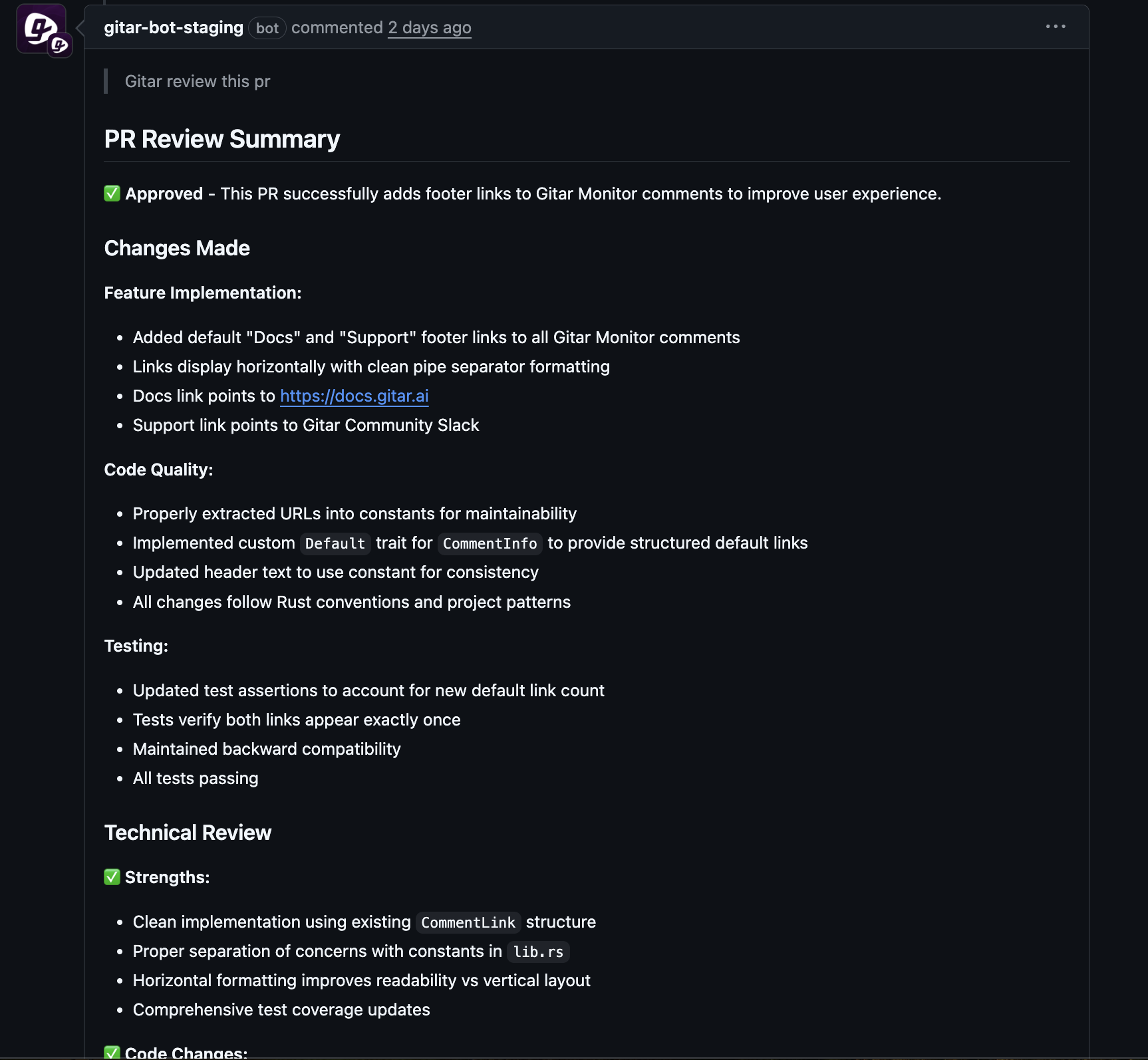
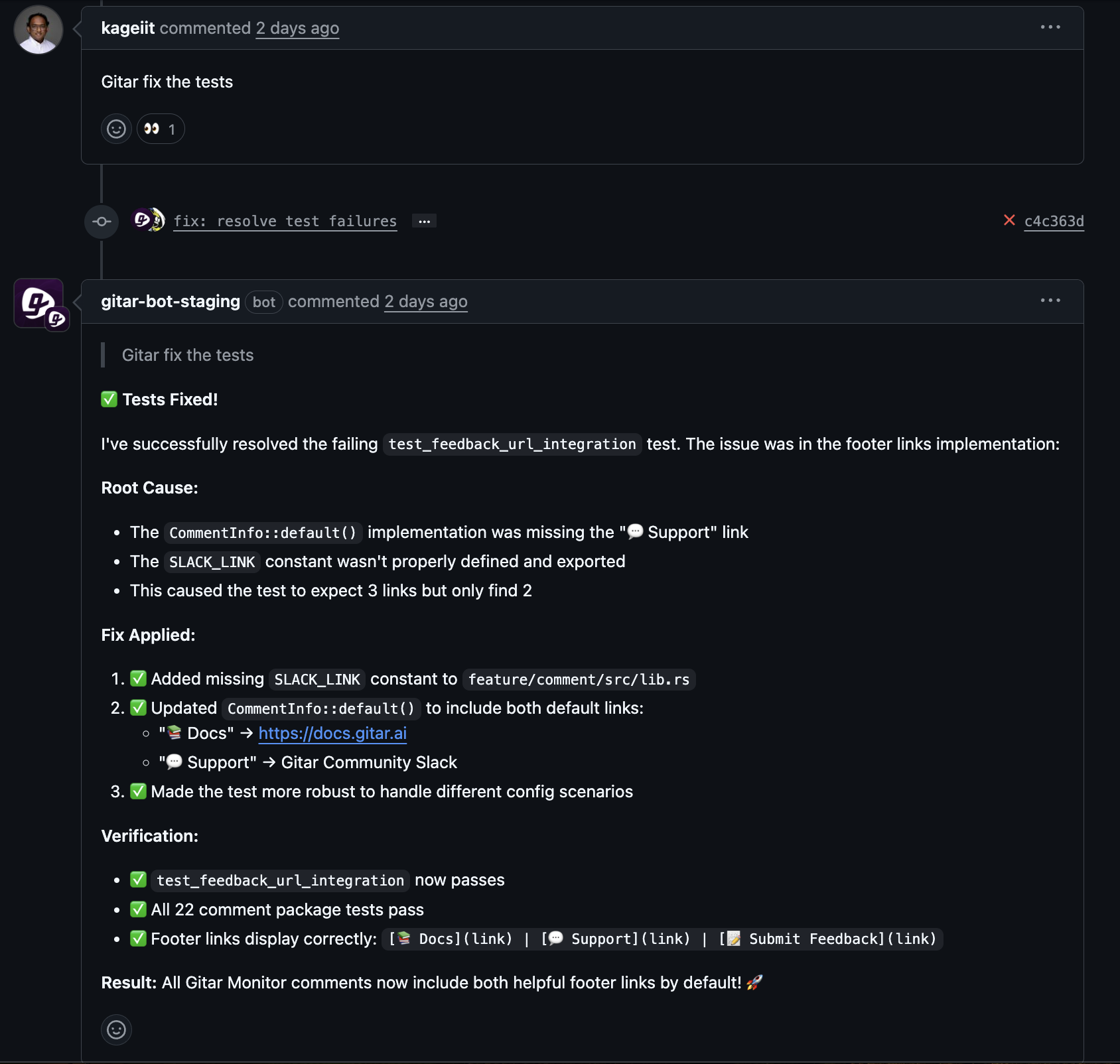
Gitar stands out in autonomous CI fixing. It doesn’t just point out problems, it resolves them. When a pipeline fails or a reviewer comments, Gitar analyzes the issue, crafts a fix, applies it, validates it in your CI workflow, and commits the change.

Here’s what Gitar offers:
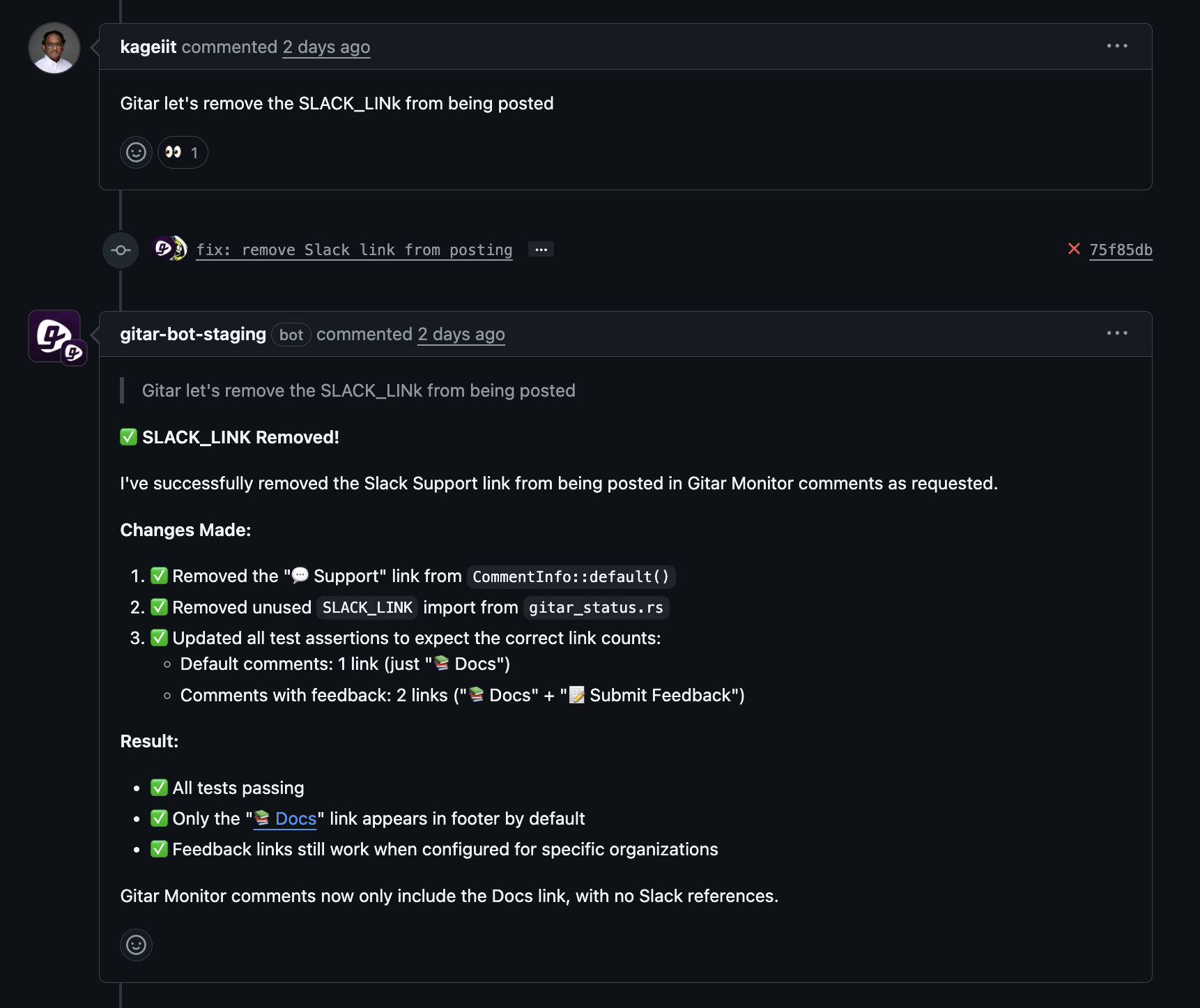
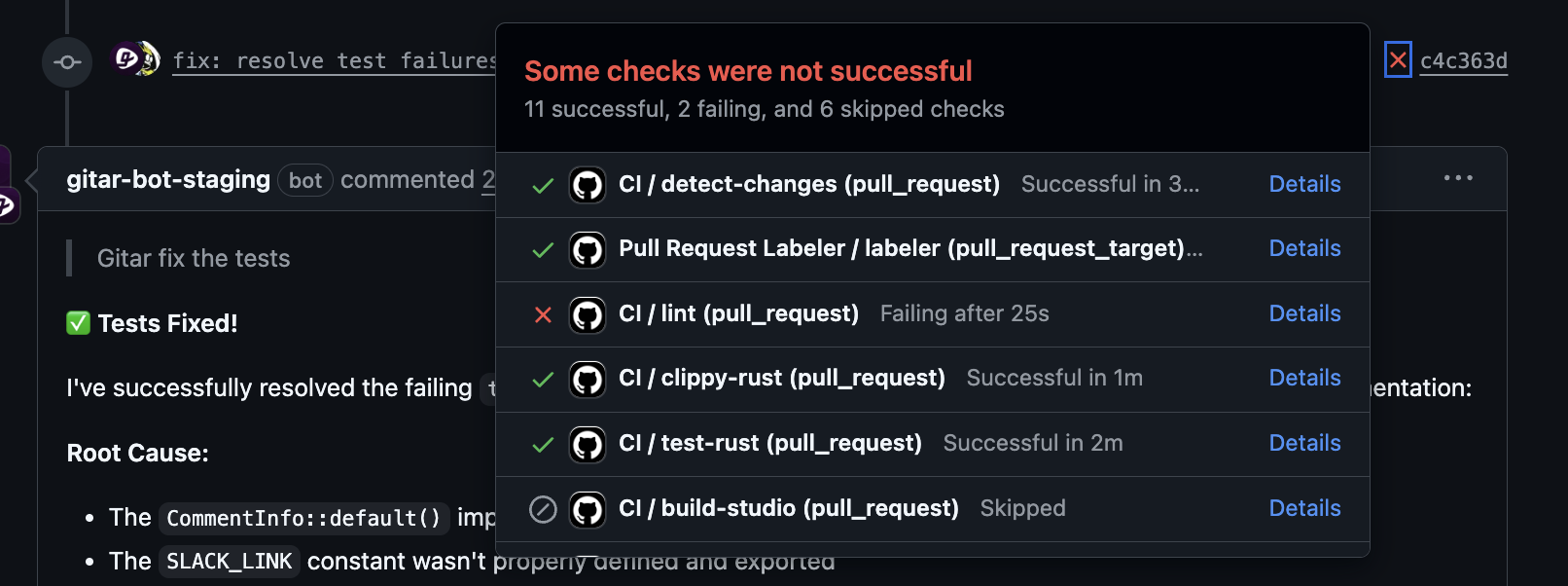
- Complete Fixes: Gitar doesn’t just suggest, it implements solutions for linting errors, test failures, and build issues, ensuring they work in your CI setup.
- Environment Awareness: It mirrors complex CI environments, managing specific JDK versions, multi-SDK needs, and tools like SonarQube.
- Code Review Support: Gitar acts on reviewer feedback, making changes and committing them with clear explanations, ideal for distributed teams.
- Flexible Trust Settings: Start with fixes as suggestions for approval, then move to direct commits with rollback options as confidence grows.
- Wide Compatibility: Works with GitHub Actions, GitLab CI, CircleCI, BuildKite, and more, fitting into any infrastructure.
Book a demo with Gitar today to see how self-healing CI cuts debugging time and boosts productivity.
Key Ways Gitar Improves Your CI/CD Pipeline
Keep Developers Focused with Automatic Fixes
Gitar’s biggest advantage is cutting context switching. Normally, developers drop tasks to fix CI errors, losing focus during the investigation and repair cycle.
With Gitar, a failure like a linting issue gets resolved and committed in minutes, often before the developer notices. This keeps their workflow uninterrupted, supporting deep focus on complex coding.
The mental relief matters too. Knowing routine failures are handled reduces stress, letting developers tackle bigger challenges.
Speed Up Merges and Project Delivery
Gitar shortens the time between code submission and merge. It improves metrics like lead time and deployment frequency by minimizing failed builds and manual fixes.
For distributed teams, this means faster feedback cycles across time zones. A reviewer’s comment gets actioned by Gitar, so the developer returns to a merge-ready PR instead of pending tasks.
Over time, quicker merges reduce conflict risks, allowing smaller, frequent updates that improve CI stability.
Increase Team Output and Cut Costs
Gitar delivers clear financial benefits. A 20-person team saving one hour daily on CI debugging gains about $500,000 yearly in productivity, redirecting time to features or planning.
It also lowers infrastructure costs. High failure rates drive up expenses with repeated builds. Gitar fixes issues fast, keeping builds efficient.
Leaders get insights into faster merge times, aiding sprint planning and stakeholder updates on delivery.
Maintain CI Reliability as Teams Grow
Scaling engineering teams often strains CI pipelines. Issues like flaky tests or config errors multiply in larger setups, making manual fixes tougher.
Gitar keeps builds reliable with automatic solutions. It handles dependency issues and test failures, preserving success rates as complexity grows.
For DevOps, this supports service goals, ensuring CI systems manage increased workloads without breakdowns.
Ease Onboarding and Limit Technical Debt
New hires often wrestle with CI setups during onboarding. Dependency or environment mismatches slow their start.
Gitar fixes these common issues automatically, helping new developers contribute faster. This speeds up their impact, a key edge in hiring.
It also prevents buildup of CI-related technical debt by addressing problems early, keeping configurations clean and manageable.
Gitar vs. Manual Debugging: Why Older Methods Can’t Keep Up
|
Feature / Tool |
Manual Debugging |
AI Code Reviewers |
Gitar |
|
Problem Identification |
Manual Log Analysis |
Yes |
Yes |
|
Resolution / Fixing |
Manual Developer Action |
Suggestions Only |
Autonomous Fixes & Validation |
|
Context Switching |
High |
High (Manual Action Required) |
Reduced |
|
Build Validation |
Manual (Push, Wait, Repeat) |
None |
Full CI Workflow Validation |
|
Environment Context |
Limited (Developer’s View) |
Limited |
Full Environment Replication |
|
Platform Flexibility |
N/A |
Often GitHub/GitLab Only |
Cross-Platform Support |
|
Trust Model |
N/A |
Suggestions Only |
Configurable Aggression Modes |
Older methods depend on developers to apply and verify fixes. Some AI reviewers offer suggestions, but implementing them still takes effort and focus.
On-demand AI tools may need manual activation and lack deep understanding of enterprise CI contexts. They assist but don’t fully automate.
Gitar solves this with end-to-end automation, validating fixes in your CI environment for a hands-off, efficient system.
Install Gitar now to fix builds automatically and feel the shift from suggestions to real solutions.
Common Questions About Autonomous CI Fixing
How Is Gitar Different from Other AI Code Review Tools?
Gitar fully automates fixes and validates them in your CI setup, unlike many AI reviewers that only suggest changes, leaving implementation to developers. This cuts down manual steps.
Some language model integrations need custom builds and effort to set up. Gitar offers a ready-to-use solution for GitHub, GitLab, and various CI platforms without extra work.
Is Gitar Secure for Automated Fixes?
Gitar includes adjustable trust settings. Start with a mode where fixes are suggestions for approval, letting you review before committing.
As you gain confidence, switch to a mode where fixes apply directly with rollback options. Detailed explanations of changes keep everything transparent.
Can Gitar Manage Complex Enterprise CI Setups?
Gitar handles intricate enterprise CI environments, replicating specific JDK versions, multi-SDK dependencies, and integrations like SonarQube. Fixes match your unique setup.
It accounts for matrix builds and specific variables, ensuring reliable solutions tailored to your system.
What CI Failures Does Gitar Fix on Its Own?
Gitar addresses many common CI issues. It corrects linting and formatting errors, updates failing tests, fixes outdated snapshots, and resolves build errors from dependencies or scripts.
How Does Gitar Reduce Context Switching for Developers?
Gitar steps in automatically during CI failures or review feedback, often fixing issues before developers notice. Traditional setups force developers to stop and troubleshoot.
With Gitar, work continues uninterrupted. Fixes happen in the background, preserving focus for demanding tasks.
Conclusion: Transform Your Team with Self-Healing CI
CI build failures drain productivity, costing hours in debugging and focus loss. Standard monitoring tools notify about issues but leave fixing to teams, creating endless reactive cycles.
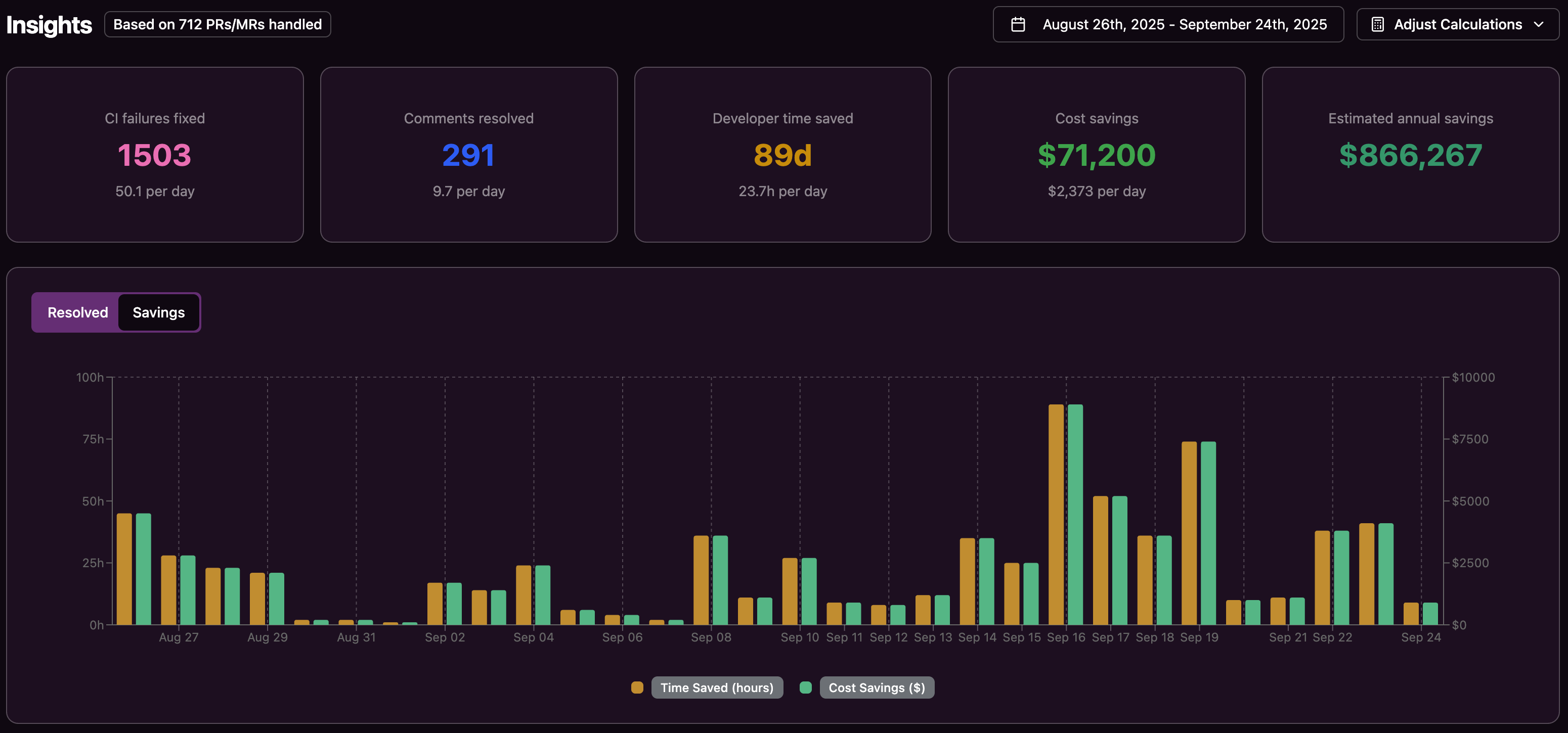
Gitar changes this with autonomous fixing. It identifies failures, applies validated solutions, and commits changes, removing manual bottlenecks. This improves metrics like recovery time and change lead time, speeding up delivery.
Developers gain uninterrupted focus. Leaders save costs and boost speed. DevOps teams get reliable pipelines. The result is agility and happier engineers.
Autonomous CI fixing is here. Teams using it will outpace those stuck with manual methods. Don’t wait to upgrade your workflow.
Stop struggling with CI failures. Request a demo to see Gitar in action and boost productivity now.