
Picture your development team moving smoothly from code commits to deployment, with quality metrics trending up. Yet, the reality often bites: CI build failures stall progress, waste time, and drag down performance. Let’s dive into three vital software quality metrics affected by these failures and explore how Gitar, an autonomous tool for fixing CI issues, can keep your team on track.
Why CI Failures Hit Harder Than You Realize
CI build failures do more than annoy developers; they sap productivity across your entire team. Developers may spend up to 30% of their time handling CI problems, costing companies millions each year. For a team of 20 developers, that’s roughly $1 million in lost productivity annually when factoring in overhead and context switching.
These issues ripple further. CI failures often point to deeper flaws in code or workflow. When developers are stuck fixing broken builds instead of coding features, technical debt grows, deadlines slip, and morale drops.
Accepting CI failures as normal won’t cut it. Addressing them directly helps maintain focus, speeds up delivery, and drives steady progress. Gitar steps in with an automated fix process that works quietly in the background.
Want to tackle CI failures and boost output? Install Gitar now to automate build fixes.
Meet Gitar: Your Automated Fix for CI Headaches
Gitar isn’t another tool just offering suggestions. It’s an autonomous system that detects CI failures, creates fixes, applies them, and commits changes without developer input. Here’s what sets Gitar apart:
- Complete Fix Process: Automatically applies solutions, tests them against full CI pipelines, and delivers passing pull requests.
- Accurate Environment Matching: Mirrors complex setups with specific JDK versions, multiple SDKs, and tools like SonarQube or Snyk for reliable fixes.
- Flexible Control Options: Adapts to team preferences with settings from cautious suggestions to automatic commits with rollback safety.
Ready to cut CI downtime? Discover how Gitar works.
1. Code Quality and Defect Density: Fixing Build Issues Fast
Frequent CI failures from linting, tests, or builds often signal struggles with code quality and defect density. Failing builds due to style errors, test issues, or dependencies highlight gaps in quality checks that should catch bad code early.
Manually fixing these problems creates a draining loop. Developers lose focus to decode errors, rush fixes, and sometimes add new bugs. Bug fixes and maintenance updates frequently trigger these failures, especially without thorough testing in place.
77% of professionals blame code issues for most CI failures. Each failed build hints at quality risks that can snowball into bigger technical debt if ignored.
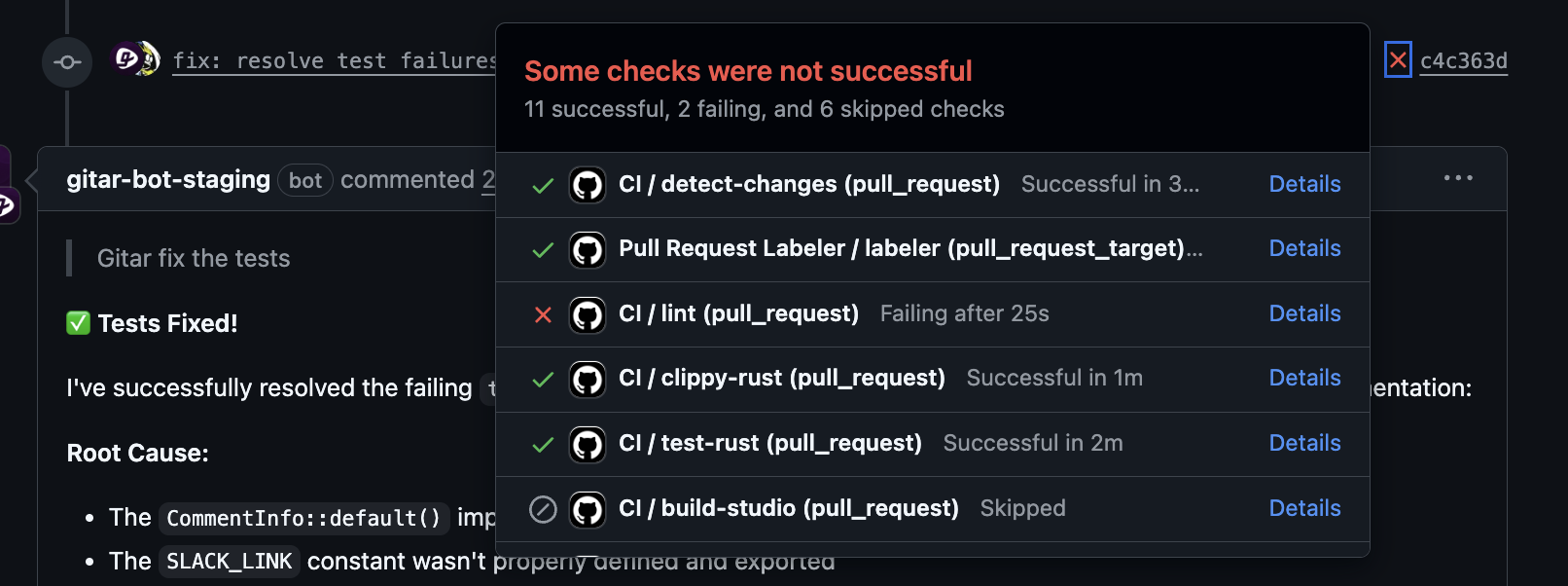
Gitar handles these problems automatically. It spots linting errors or test failures, adjusts the code to meet standards, and commits the fix. This keeps code quality consistent without pulling developers away from their main tasks.
2. Cycle Time and Lead Time: Speeding Up Delivery
CI failures slow down development by creating delays across the process. Each failed build means digging through logs, finding the cause, coding a fix, committing, and waiting for another CI run.
Cycle Time, from commit to deployment, and Lead Time, from idea to production, stretch longer due to manual debugging. A quick change can drag from hours to days with these repeated cycles.
For remote teams, delays worsen. A developer in one time zone pushes a failing PR, needing input from a teammate elsewhere. This can turn a small issue into a multi-day bottleneck across geographies.
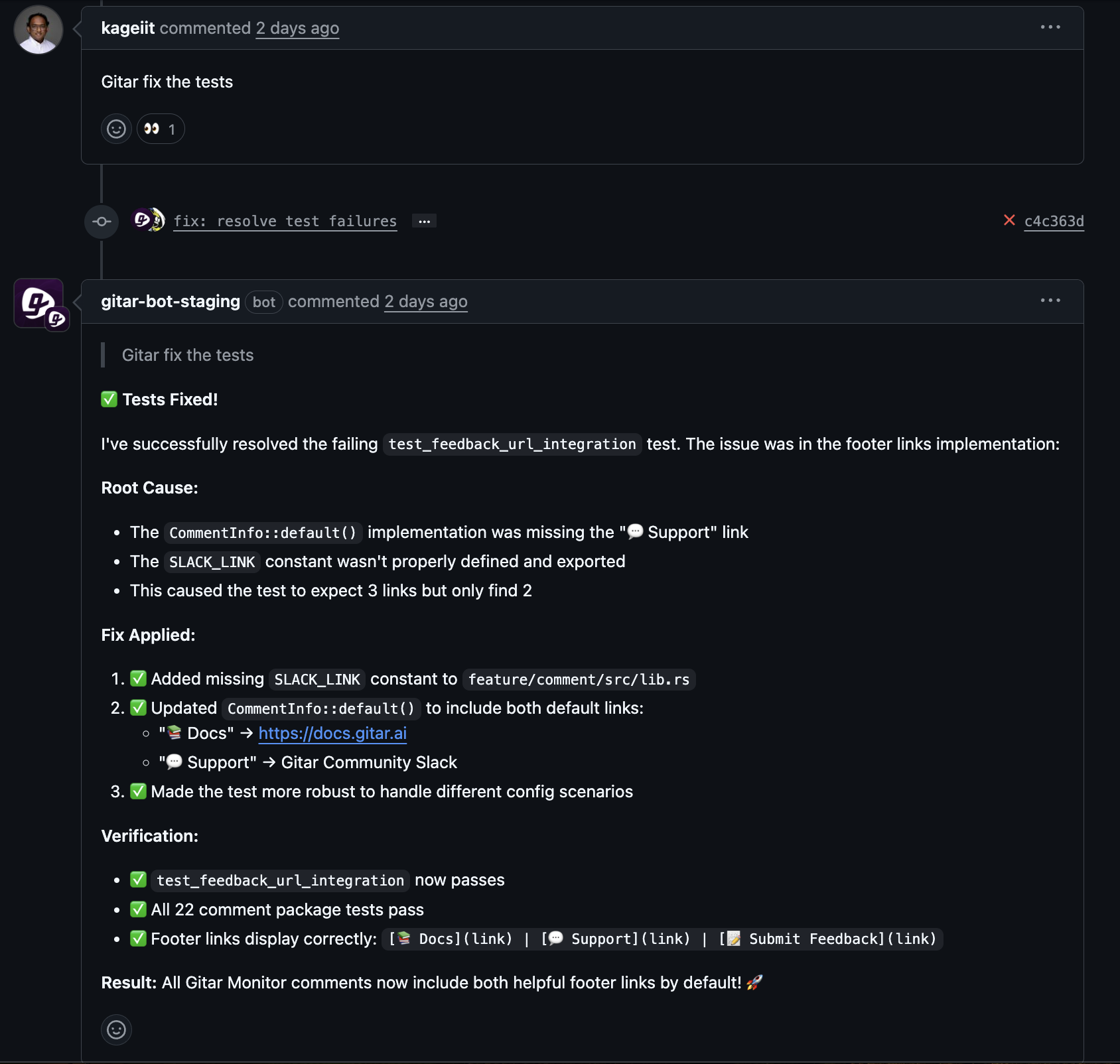
Gitar cuts these delays by automatically fixing CI failures. It identifies issues like test errors, applies solutions, and commits changes fast. Developers stay focused on their work while Gitar handles fixes, speeding up the path from commit to merge.
3. Deployment Frequency and Change Failure Rate: Building Release Confidence
High CI failure rates can undermine trust in deployments, affecting how often teams release and how many changes fail. Unreliable CI pipelines lead to hesitation, with teams batching updates for manual checks before release.
Infrequent deployments slow innovation and feedback, while a high failure rate in changes means more rollbacks. Teams may adopt longer release cycles, adding complexity and risk.
Regular CI failures warn of risks to these metrics, needing action to prevent bigger issues later. Ignoring them can lead to persistent problems in production.
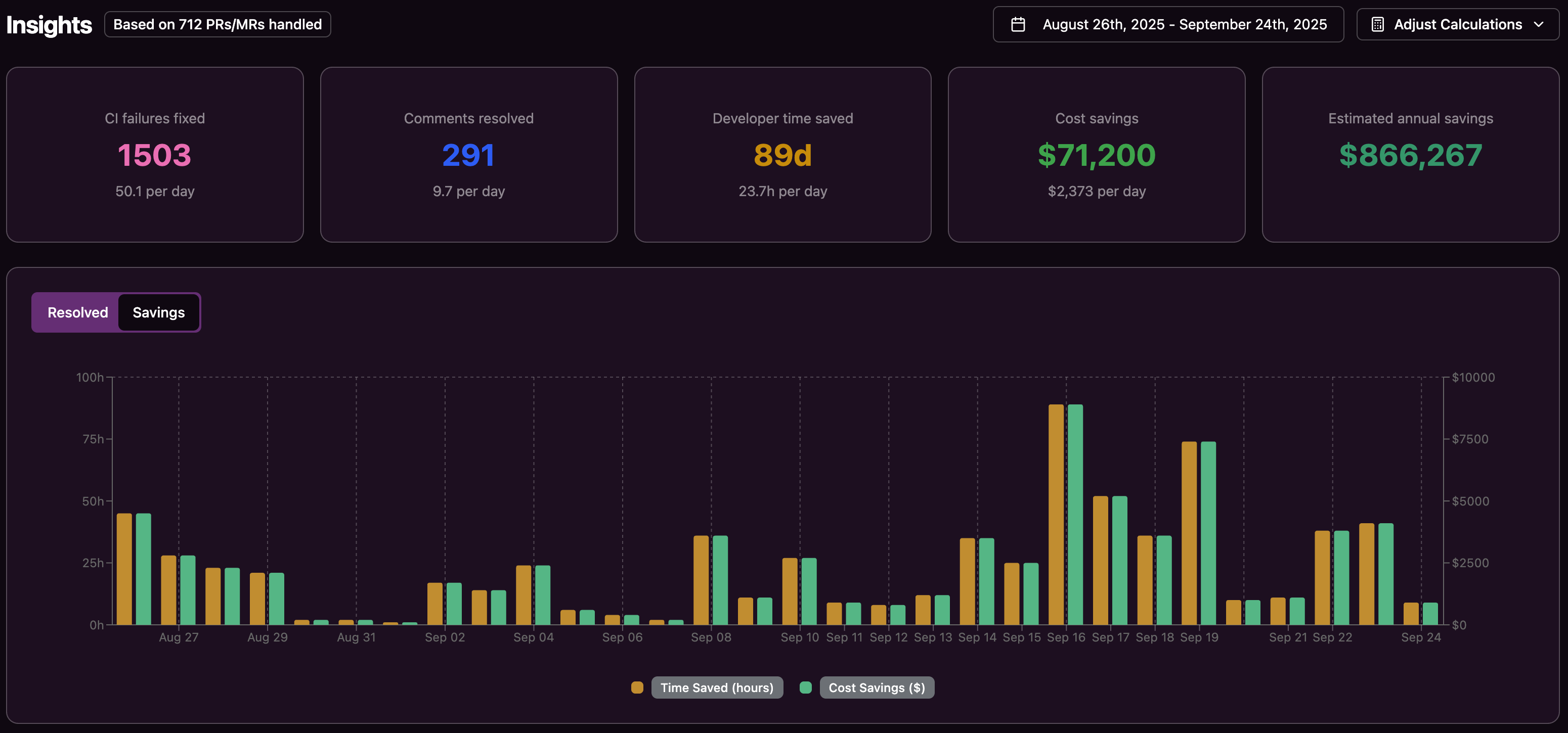
Gitar boosts confidence by ensuring pull requests pass CI checks. It fixes issues like linting or test errors automatically, reducing failed builds that block merges. Teams can deploy more often, knowing fixes are tested against the full pipeline for compatibility.
Ready to strengthen your release process? Install Gitar now to automate build fixes.
Gitar vs. Traditional Fixes: Why Manual Work Falls Short
Gitar stands out from manual fixes and basic AI suggestion tools. While traditional methods keep developers in reactive loops, Gitar automates the entire resolution process.
|
Feature |
Gitar (Automated Fix System) |
Manual Fixing (Current Standard) |
AI Suggestion Tools (e.g., CodeRabbit) |
|
CI Failure Handling |
Auto-fixes, commits, and re-runs CI |
Manual diagnosis, fix, commit, wait, repeat |
Provides one-click fixes or suggestions for quick application |
|
Impact on Developer Focus |
Low, often runs in background |
High, frequent interruptions |
Low, quick feedback reduces disruption |
|
Time to Merge |
Faster with instant, tested fixes |
Slowed by repeated cycles |
Faster with streamlined fix options |
|
Environment Awareness |
Matches complex enterprise CI setups |
Depends on developer’s local setup |
Strong, uses AI scripts for detailed analysis |
Common Questions About CI Failures and Gitar
How do frequent CI failures affect team output? They disrupt focus, force context switching, and waste up to 30% of developer time. This slows delivery, delays releases, and cuts productivity, while constant interruptions harm deep work on complex tasks.
Can automated CI tools manage complex enterprise setups? Yes, Gitar replicates specific workflows, including unique JDK versions, multiple SDKs, and tools like SonarQube or Snyk. This ensures fixes match your exact CI environment.
What causes CI build failures, and how do they tie to software quality? Code issues lead in 77% of cases, alongside linting errors, test failures, and dependency clashes. These affect metrics like code quality and defect density. Automated fixes help maintain higher standards and build stability.
How does fixing CI issues lift developer morale? Cutting the frustration of broken builds and repetitive debugging lets developers focus on creative work. This can improve job satisfaction, support retention, and build a stronger team vibe.
How does Gitar differ from other AI code review tools? Unlike tools offering suggestions or quick fixes, Gitar acts independently. It finds issues, applies solutions, tests them against full CI workflows, and commits changes, closing the gap between spotting and solving problems.

Wrap-Up: Drop Manual CI Fixes and Let Gitar Step In
Dealing with CI build failures isn’t just a technical nuisance; it slows your team and cuts efficiency. The fix isn’t more manual grind, but smarter automation.
The numbers lay it bare: 30% of developer time lost to CI issues means missed chances and higher costs. Each failed build signals not just a coding glitch, but a hit to business goals through delayed features.
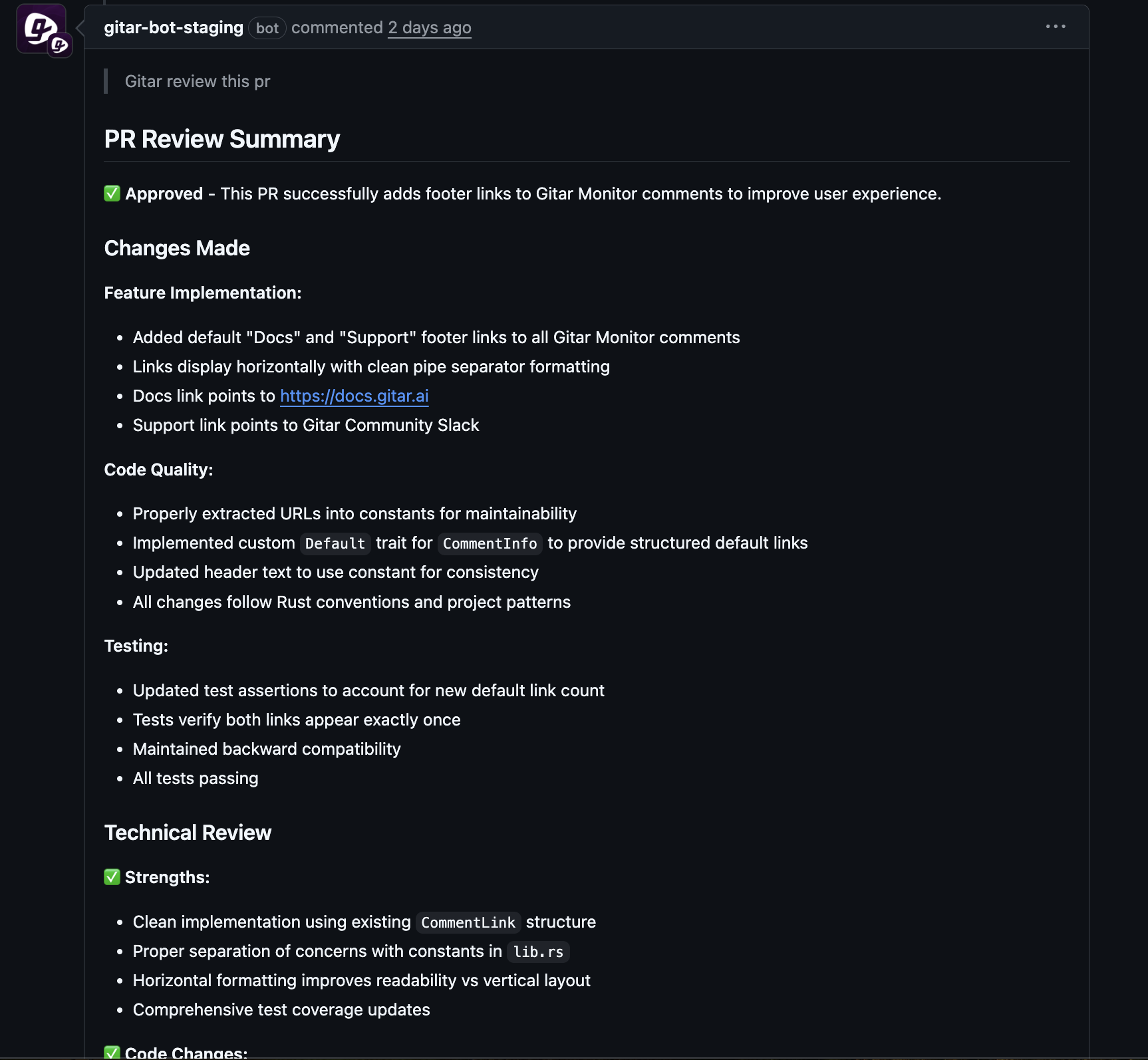
Gitar offers more than tips; it’s an automated system that resolves issues and confirms fixes. By turning CI failures into a background process, your team can focus on crafting features and solving real challenges.
You can keep wrestling with CI failures or try a solution designed to streamline them away. Take a step toward faster, smoother development today.
Ready to save time with automated CI fixes? Install Gitar now and start handling broken builds effortlessly.