
Written by: Ali-Reza Adl-Tabatabai, Founder and CEO, Gitar
In software development, a seemingly flawless pull request can hide issues that surface in production days later. Security flaws, performance drops, or integration failures often result from overlooked details during reviews. With distributed teams and fast-paced workflows, conducting thorough code reviews is both vital and increasingly difficult.
Incomplete reviews quietly harm productivity, increase technical debt, and create risks for organizations. Code review checklists provide a framework for consistency, but manually following them and fixing identified issues slows down modern development processes. This guide explores the challenges and offers a solution.
Why Incomplete Code Reviews Slow Down Development
Missed Issues Cost Time and Money in Distributed Teams
Skipping key checklist items during code reviews leads to problems beyond simple errors. Security gaps, such as SQL injection or XSS attacks, often go unnoticed without thorough checks. Logic flaws, weak error handling, and performance issues also slip through when critical areas are ignored.
Distributed teams face amplified challenges due to time zone differences and communication gaps. Using targeted checklists for areas like security, performance, and testing helps minimize overlooked issues in asynchronous settings. When a developer in one region submits code and a reviewer elsewhere approves it without proper checks, problems often emerge only in production, causing delays and rework.
For a team of 20 developers, production issues from incomplete reviews can lead to around $1 million in annual losses from wasted time, urgent fixes, and delayed releases. This also erodes customer trust, slows competitive progress, and causes developer burnout from constant issue resolution.
Context Switching Drains Developer Focus
Even when checklists catch issues, fixing them manually disrupts workflow. A developer submits a pull request, shifts to another task, then must return hours later to address feedback on security, performance, or style violations flagged by a checklist.
This context switching turns a quick fix into a major time sink. Rebuilding mental focus, interpreting feedback, applying changes, and waiting for CI validation eats up productivity. The original task gets sidelined, breaking momentum.
Many AI review tools offer suggestions but still require manual effort. They highlight issues from checklists, yet developers must implement fixes and confirm CI approval. The ideal of submitting a pull request and moving on remains out of reach in most setups.
Ready to reduce code review delays? Install Gitar to automate fixes for CI failures and feedback.
How to Achieve Consistent Code Quality with Less Effort
Build Better Reviews with Targeted Checklists
Effective code reviews start with clear, detailed checklists. Keep checklists specific and accessible, integrating them into pull request templates or team channels for easy use. Separate checklists by category, like security or performance, to focus reviews and improve efficiency.
Key areas for review include functionality, readability, security, performance, maintainability, scalability, documentation, and error handling. Addressing each area prevents future issues. Formal checklists in workflows boost code quality, especially for security in distributed teams.
Still, even detailed checklists depend on human effort. Manual application leads to errors, inconsistency, and time loss. Automation offers a way to bridge this gap.
Meet Gitar: Your AI Agent for Automated Fixes
Gitar changes how teams handle code reviews and CI challenges. This AI agent autonomously resolves CI failures and feedback, cutting down on manual work after issues are identified.

When a pull request triggers a CI failure or receives feedback, Gitar steps in. It evaluates the issue, creates a fix, and updates the pull request. This self-healing approach keeps development moving while tackling checklist items efficiently.
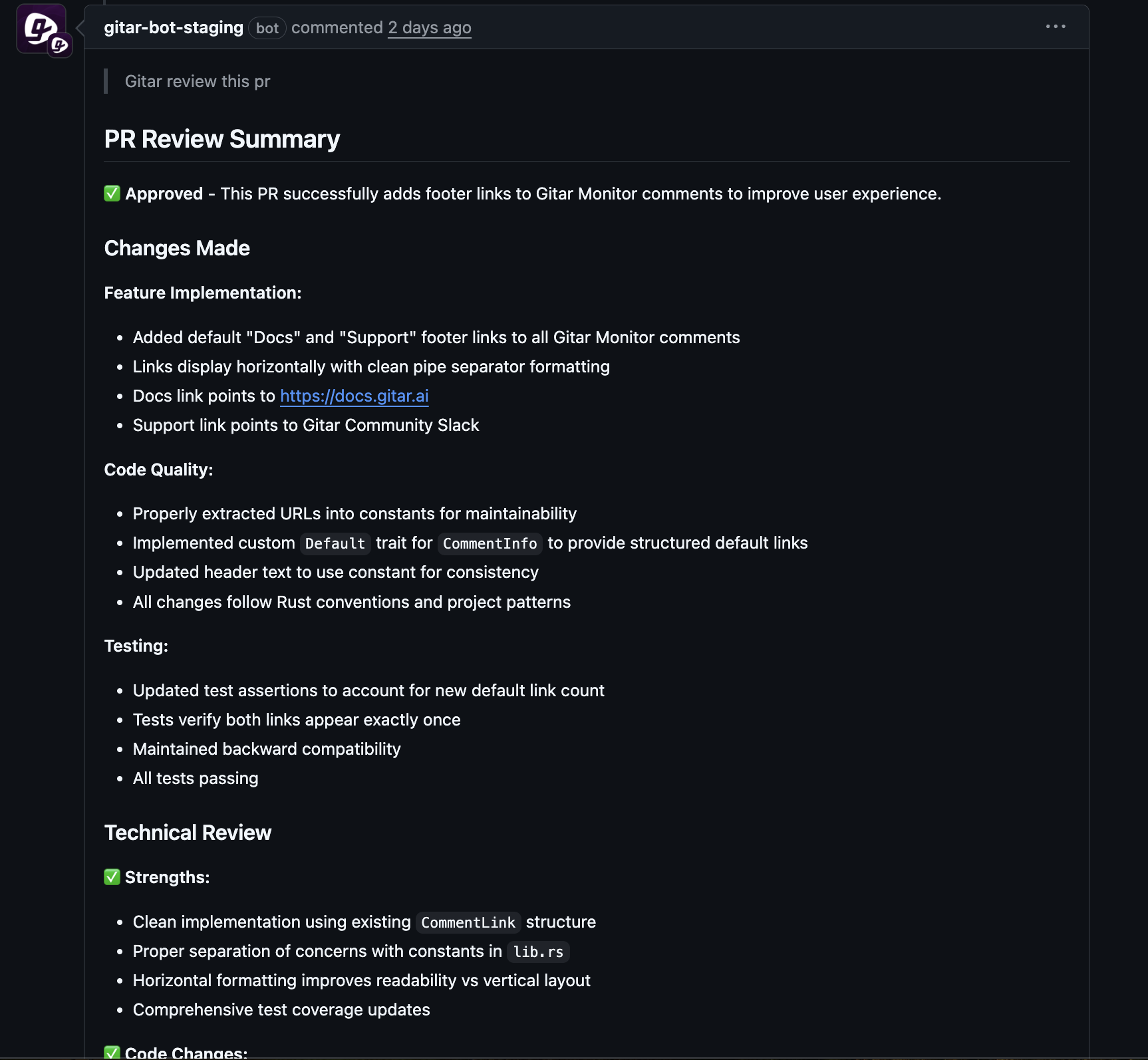
Key ways Gitar supports code reviews:
- Fixes CI failures like lint errors or test issues, validates solutions, and ensures pull requests pass all checks.
- Assists with reviews by summarizing changes, spotting potential issues, and applying feedback from comments.
- Replicates complex enterprise setups, including specific SDKs and scans, for accurate fixes.
- Handles feedback across time zones, keeping global teams on track without delays.
- Offers flexible settings, from cautious suggestions to automatic commits, balancing control and automation.
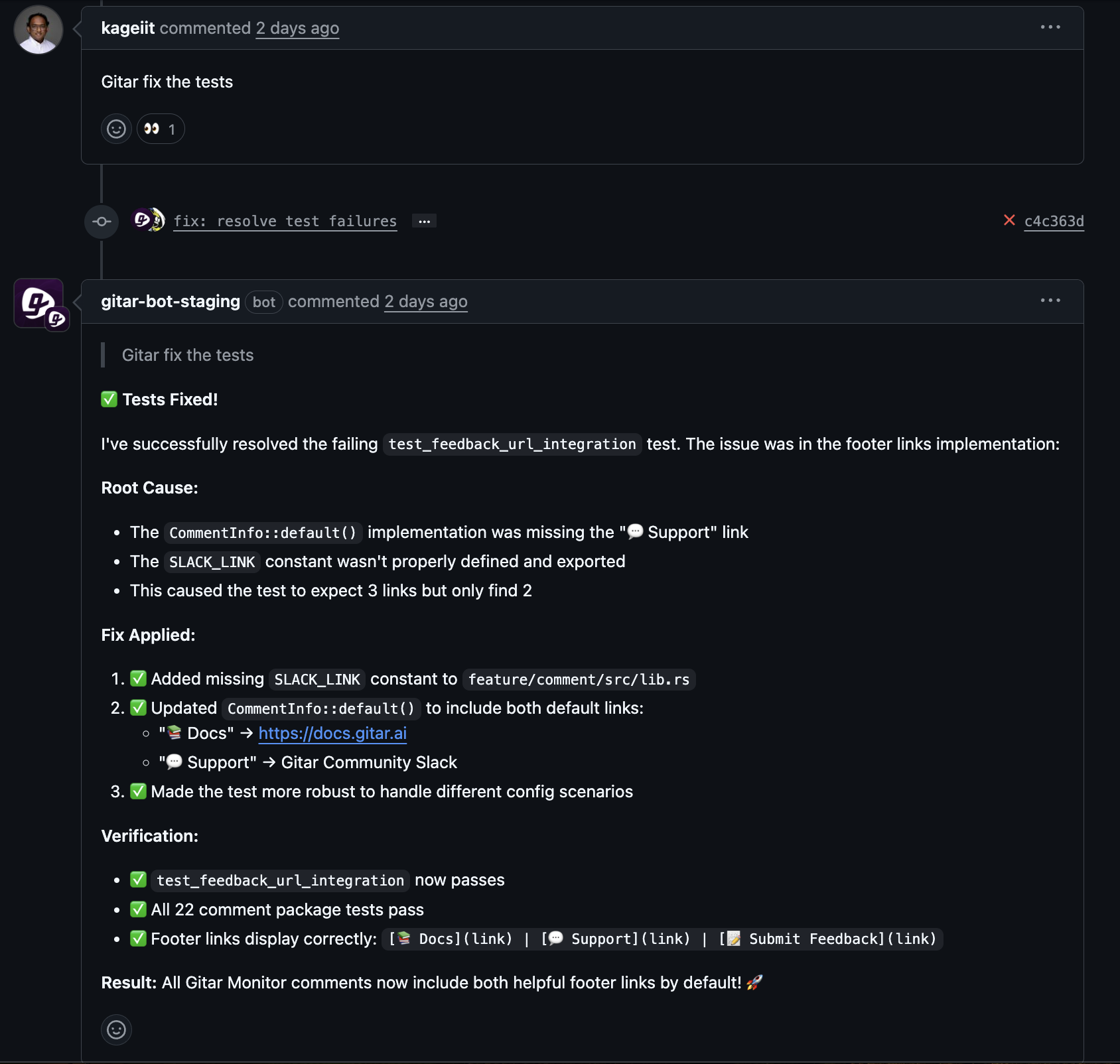
Streamline your reviews with automation. Install Gitar to simplify CI and feedback resolution.
Comparing Gitar to Traditional Code Review Methods
|
Feature/Approach |
Manual Checklists & Fixing |
AI Suggestion Tools |
Gitar (AI Agent) |
|
Issue Detection |
Human review, manual checklist use |
AI flags issues, static analysis |
AI detects CI failures and interprets feedback |
|
Issue Resolution |
Developer fixes manually, re-submits |
Developer applies suggested fixes |
AI autonomously fixes, validates, and commits |
|
Consistency |
Varies with reviewer attention |
Depends on manual follow-through |
Ensures CI passes with automated fixes |
|
Impact on Flow |
High disruption from context switching |
Some disruption with manual steps |
Low disruption with automated fixes |
Why Automated Fixes Beat Suggestions Alone
Many AI review tools stop at suggestions, identifying issues but leaving implementation to developers. Automated audit tools can highlight checklist gaps and enforce standards, yet they still need manual effort to resolve issues.
This creates a disconnect between spotting a problem and fixing it. Developers must apply suggestions, update commits, and await CI results, with no guarantee the fix will work across all checks.
Gitar closes this gap by taking action. It applies fixes for CI issues or feedback, confirms they pass full CI workflows, and commits changes. This ensures efficient resolution, aligning with the goals of detailed code reviews.
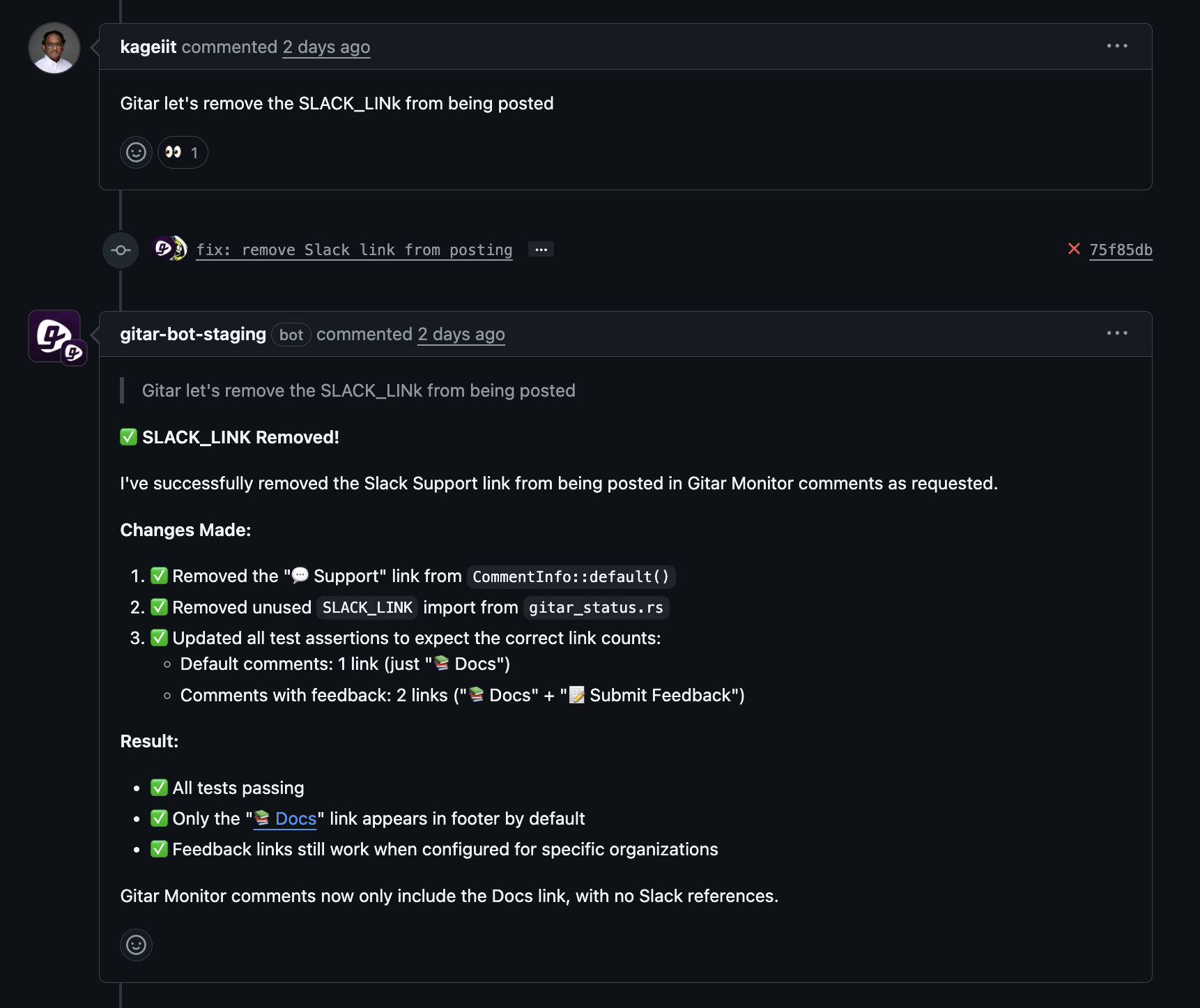
Gain Confidence with Automated CI and Review Fixes
Experience the Ease of Self-Healing CI
Gitar builds trust through flexible settings. Teams can start with a cautious mode, where fixes are posted as suggestions for approval with one click. This lets you see Gitar’s approach firsthand.
A common realization happens early on. A developer submits a pull request, a CI check fails, and before they act, Gitar identifies the issue, applies a fix, and commits it. The CI status shifts to passing with almost no effort from the team.
As successful fixes accumulate, teams often move to full auto-commit mode. CI failures and feedback get handled without constant manual input, freeing up focus for other tasks.
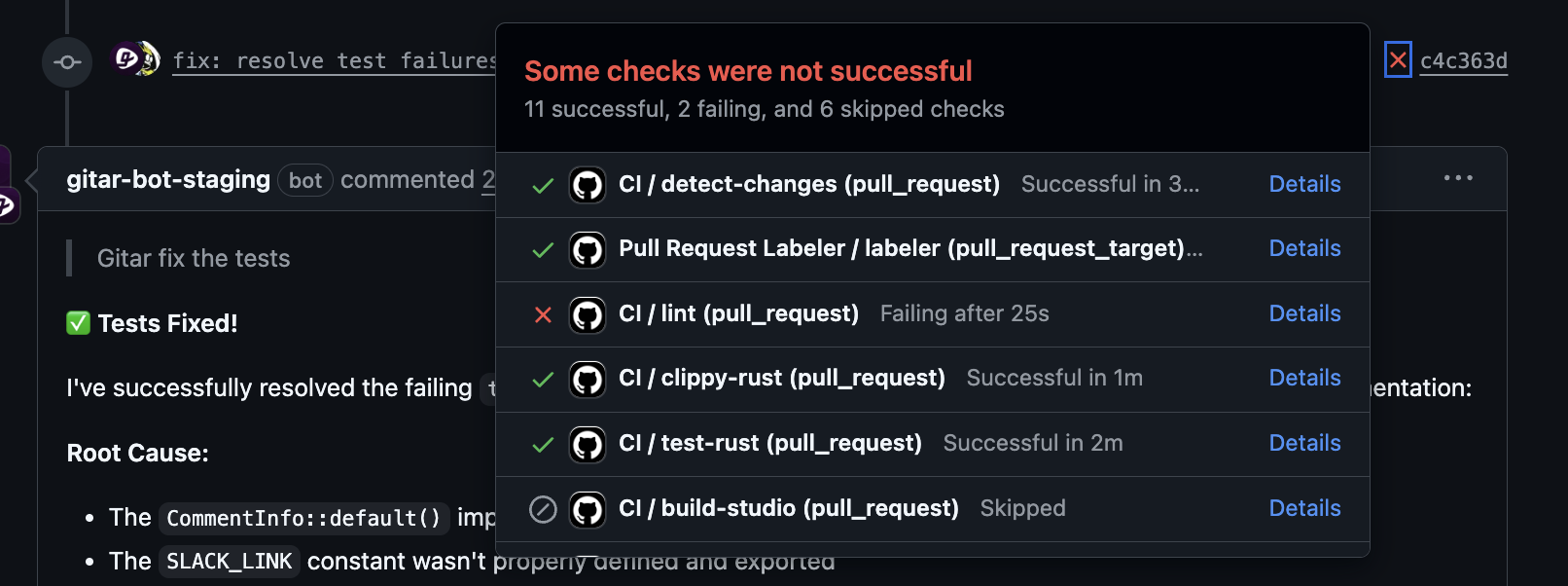
Calculate the Savings from Automated Fixes
Automation delivers clear financial benefits. For a team of 20 developers spending one hour daily on CI and review issues:
- Total Time: 20 developers × 1 hour/day × 250 days = 5,000 hours/year
- Total Cost: 5,000 hours × $200/hour average rate = $1 million yearly loss
- Savings with Gitar: At 50% efficiency, Gitar cuts $500,000 in costs while boosting satisfaction and speed
Additional benefits add to the value:
- Faster releases through shorter review cycles
- Better morale by reducing repetitive debugging
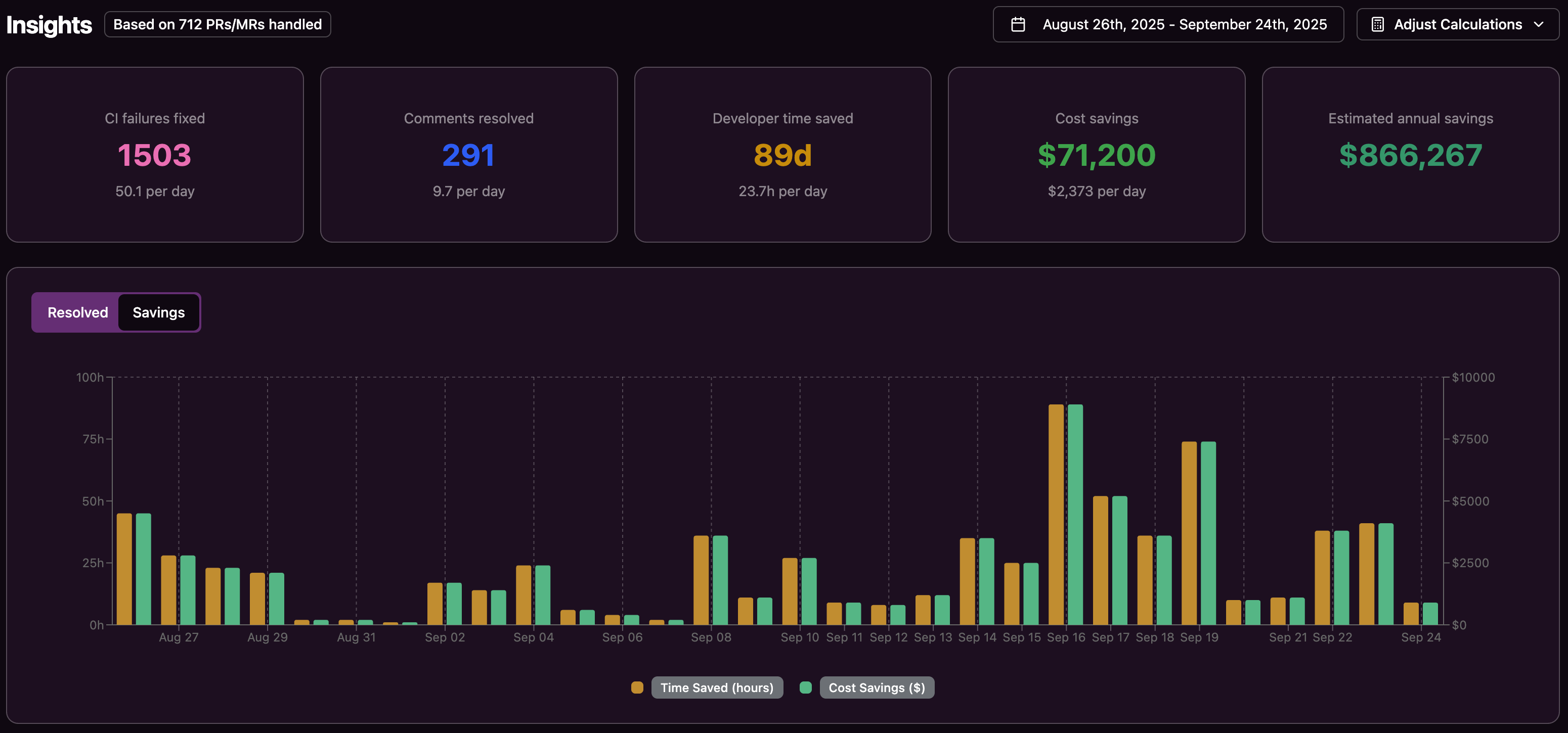
See the impact for yourself. Install Gitar to enhance your development process.
Common Questions About Code Reviews and Gitar
How Do Checklists Help in Asynchronous Teams?
Checklists create a consistent review framework, ensuring areas like security and performance are always evaluated. They cut down on missed details and reduce back-and-forth, which is critical for teams across time zones facing communication delays. Quality stays high despite working on different schedules.
What Issues Do Detailed Checklists Catch?
Well-rounded checklists prevent oversights like ignoring coding standards, missing integration points, skipping security risks such as SQL injection, weak error handling, poor performance setups, sparse documentation, and low test coverage. They also flag concerns with maintainability, scalability, and readability during hurried reviews.
How Does Gitar Enhance Code Review Workflows?
Gitar automates fixes for CI failures and reviewer feedback. It applies solutions, validates them against CI processes, and confirms builds pass without developer input. This tackles checklist-identified issues while keeping workflows smooth.
Does Gitar Work in Complex Enterprise Setups?
Yes, Gitar adapts to intricate environments by matching specific JDK versions, multi-SDK setups, and third-party scans. Fixes remain relevant and effective, even with multiple dependencies in play.
How Does Automation Affect Development Speed?
Automating fixes for CI issues and feedback cuts time on repetitive work. Developers focus on coding and features, merging changes faster with fewer delays. Overall project pace improves as manual hurdles shrink.
Wrap-Up: Elevate Code Reviews with Gitar’s Automation
Code review checklists are essential for maintaining quality and avoiding costly mistakes. However, applying them manually often slows down development in today’s fast-moving environments. Automation offers a practical way forward.
Gitar supports reviews by handling CI failures and feedback automatically, delivering a self-healing experience. This upholds quality while speeding up workflows, letting teams prioritize innovation over repetitive tasks.
With Gitar, CI issues and feedback get resolved quickly, productivity rises, and deadlines become easier to meet. Thorough reviews happen with less effort and delay.
Save time on manual fixes. Try automated CI and review solutions with Gitar today.