
Engineering teams often push new features at the expense of build stability, creating a cycle of disruptions. CI failures pull developers away from their work, breaking focus and slowing progress. Unstable builds waste time, delay releases, and frustrate talented engineers. By using autonomous tools like Gitar to maintain stability, you can minimize interruptions, keep developers productive, and deliver software faster without compromising quality.
Why Unstable CI Builds Hurt Engineering Teams
Unstable CI builds create significant setbacks for teams rushing to deliver features. Prioritizing speed over reliability leads to repeated failures that disrupt workflows, delay projects, and impact overall performance. These issues affect not just timelines but also team morale and business results.
How CI Failures Disrupt Developer Focus
Developers thrive when they can immerse themselves in complex tasks, often called a flow state. CI failures interrupt this focus by forcing a shift to troubleshooting. Instead of building features, they debug minor issues like formatting errors.
This shift comes at a high cost. Studies indicate it can take 15 to 25 minutes to regain deep focus after an interruption. Fixing a small CI issue might take just 10 minutes, but rebuilding the mental context for the original task can add another hour of lost productivity.
The emotional impact adds up too. Constant interruptions sap morale and turn creative work into a grind. Over time, this frustration contributes to burnout and higher turnover among developers.
The Wider Impact of Unreliable CI Pipelines
CI instability affects more than individual focus. Diagnosing failures takes time, piling up delays and technical debt. Teams often resort to quick fixes instead of solving root causes, creating larger issues down the line.
The financial toll is significant. For a team of 20 developers, CI failures can consume up to 30% of their time. At an average cost of $200 per hour per developer, this translates to about $1 million in lost productivity each year. Many companies face project delays due to CI issues, with some losing millions in revenue.
As teams grow, the time spent debugging CI failures increases. What starts as a small annoyance becomes a major obstacle for larger organizations. A single flaky test or environment glitch can trigger multiple failures, compounding the problem.
Release schedules suffer as well. Unreliable CI pipelines make teams hesitant to deploy, resulting in larger, riskier releases and slower feedback loops. This lack of trust slows innovation and weakens competitive edge.
Common Reasons Behind Broken Builds
Identifying why CI builds fail is the first step to fixing them. Common issues include:
- Flaky tests that pass or fail unpredictably, creating doubt about real problems.
- Syntax errors or misconfigured scripts that are avoidable with careful checks.
- Dependency conflicts that work locally but fail in CI settings.
- Monolithic pipelines where one failure halts everything.
- Environment differences between local setups and CI systems, causing inconsistent results.
Install Gitar now to tackle these CI failures and cut down on interruptions for your team.
Gitar: An Autonomous Solution for CI Stability
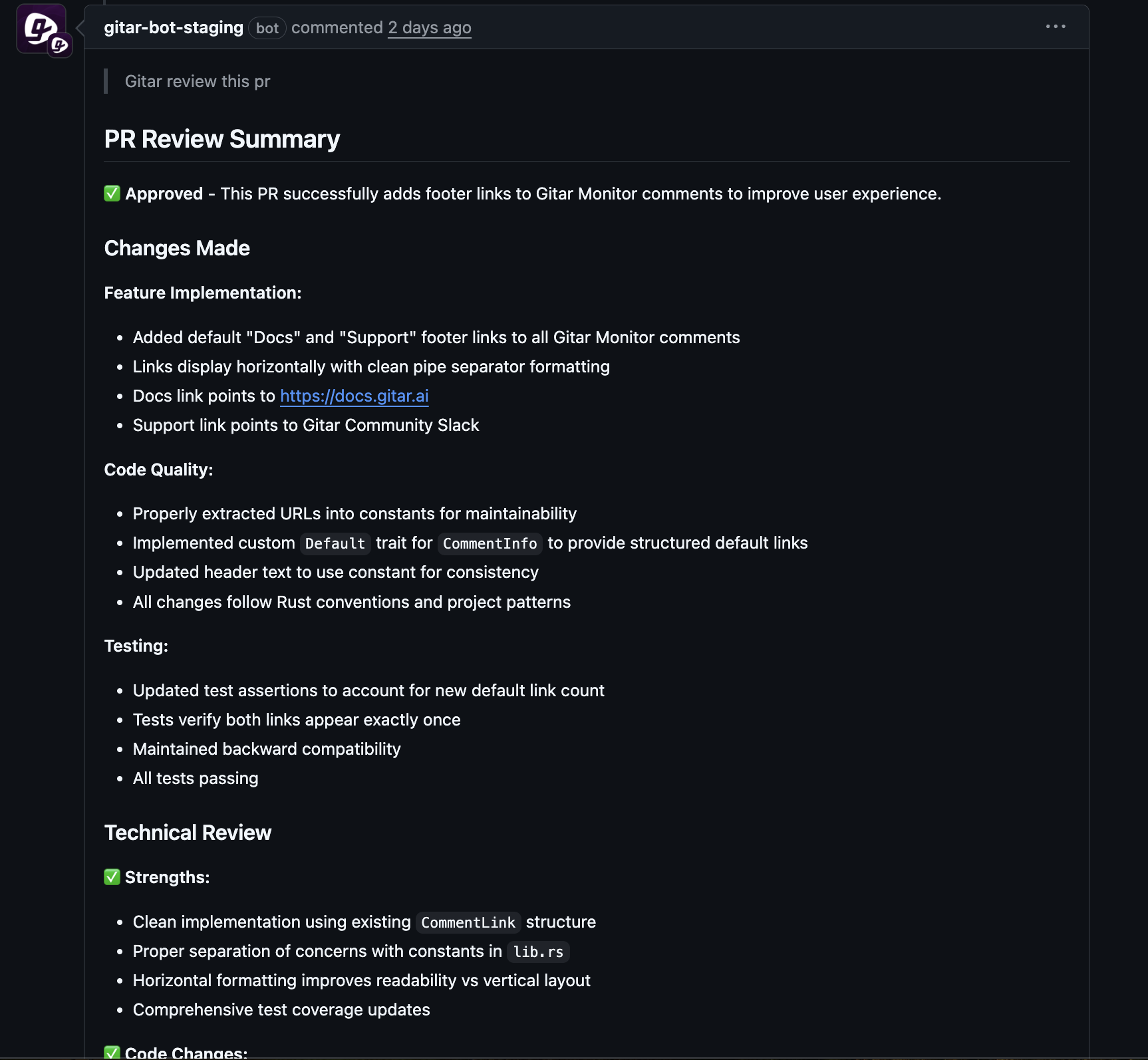
Gitar changes how teams handle CI issues by moving from manual fixes to automated resolution. This AI-driven tool identifies problems, applies solutions, and updates pull requests, letting developers stay focused on their core work.

Gitar turns failing builds into self-correcting processes. When code triggers a CI failure, Gitar steps in to fix it and update the request with a working solution. This keeps workflows smooth and uninterrupted.
Key features of Gitar include:
- Automatic fixes for linting errors, test failures, and build issues.
- Full replication of complex CI environments, matching specific versions and dependencies.
- Flexible trust settings, from suggesting fixes for approval to making autonomous commits with rollback options.
- Resolution of code review feedback to cut down on manual revisions.
- Support for popular CI/CD platforms like GitHub Actions, GitLab CI, and CircleCI.
Book a demo today to see Gitar’s automated CI fixes in action.
How Gitar Improves Build Stability and Team Efficiency
Minimize Interruptions for Better Developer Focus
Gitar keeps developers in their flow state by handling CI failures before they become distractions. If a build fails due to a linting error or dependency clash, Gitar analyzes the issue, fixes it, and commits the update. Developers stay on task without needing to switch gears.
This approach builds confidence in the process. When developers see Gitar resolve an issue like updating a test or fixing a conflict, CI shifts from a problem to a helpful ally. Less time spent debugging means quicker progress. Teams can commit more often, leading to faster reviews and feedback.
Ensure Reliable Builds with Accurate Environments
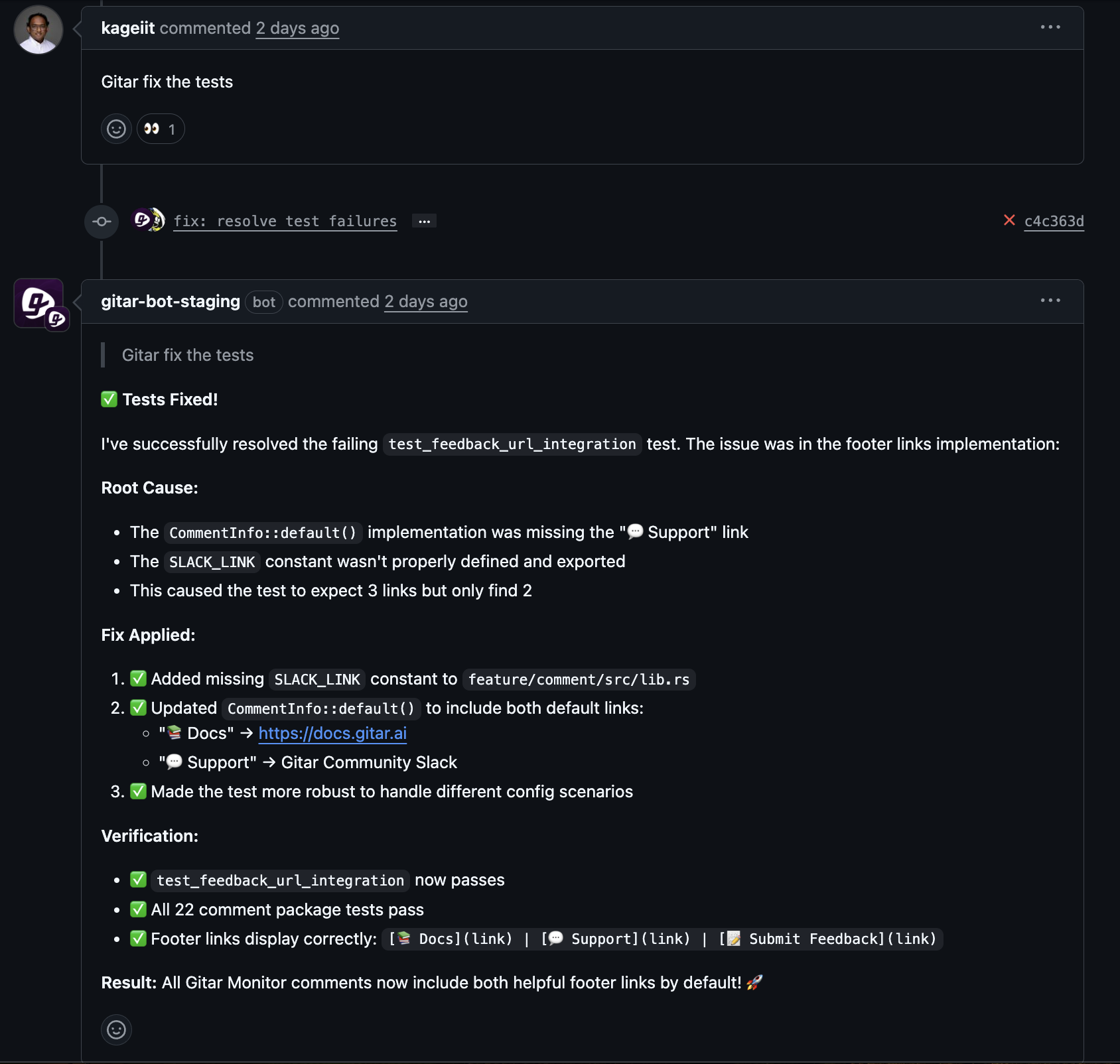
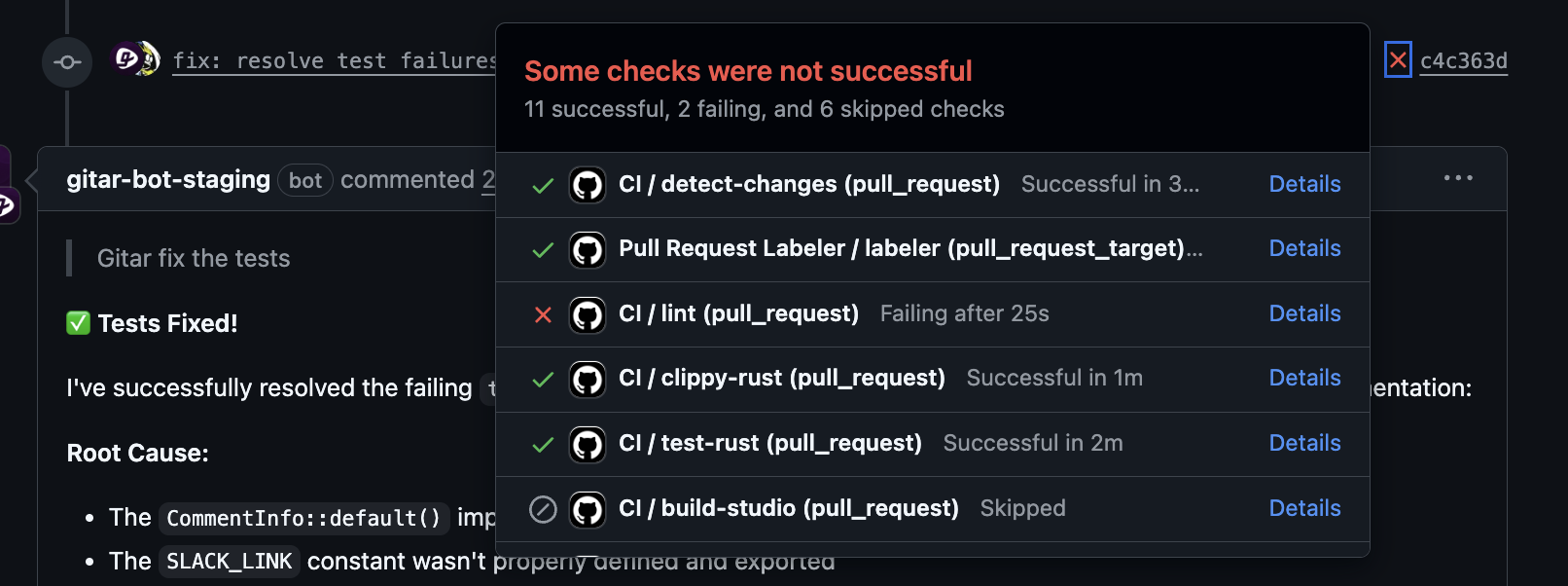
Gitar prioritizes matching the exact CI environment, including specific versions and configurations. Unlike tools that only suggest fixes, Gitar tests solutions in a setup that mirrors the real pipeline. This ensures fixes work reliably, even for teams with complex setups.
Top teams benefit from automated issue resolution, and Gitar’s attention to environment details supports these advanced workflows. Reliable builds become the norm rather than the exception.
Speed Up Delivery with Faster Merges
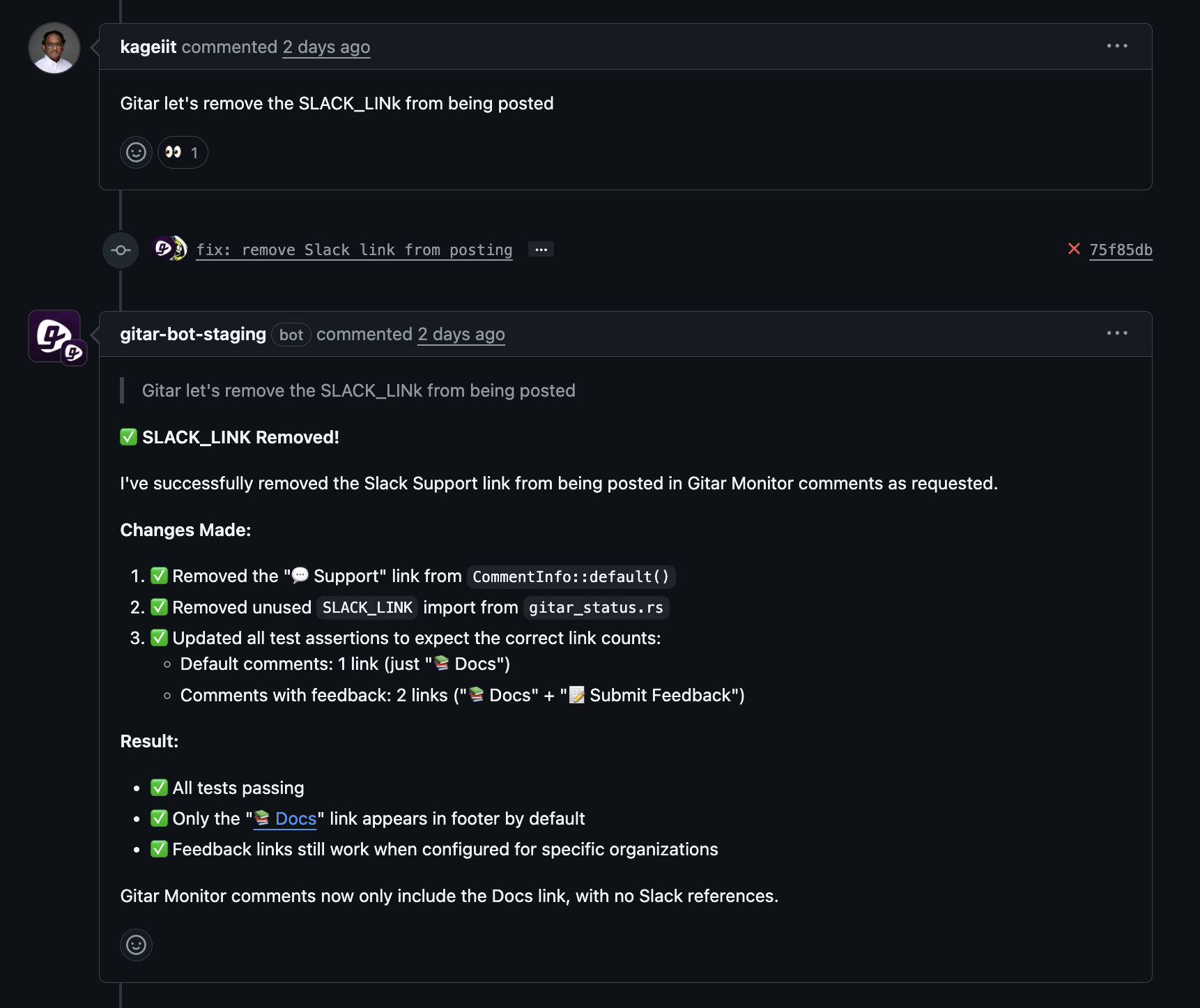
Gitar cuts down the time from commit to merge by autonomously handling CI failures and reviewer feedback. Traditional processes often involve multiple rounds of fixes and reviews, stretching over hours or days, especially for distributed teams.
With Gitar, feedback from one time zone gets addressed overnight. A reviewer’s comment triggers an automated fix, validated and ready for approval by the next day. This efficiency keeps projects moving without unnecessary delays.
Save Money by Reducing Wasted Time
CI instability drains resources across teams. For a 20-developer team spending one hour daily on CI issues and reviews:
- Time lost: 20 developers × 1 hour/day × 250 days = 5,000 hours yearly.
- Cost impact: 5,000 hours × $200 per hour = $1,000,000 in lost productivity.
- Gitar’s value: At 50% effectiveness, it saves $500,000 annually while boosting morale.
Beyond time, stable builds save on CI run costs. Efficient pipelines avoid expenses from repeated failed attempts. Passing builds on the first try means fewer wasted resources.
Start saving time and money—install Gitar now to fix broken builds.
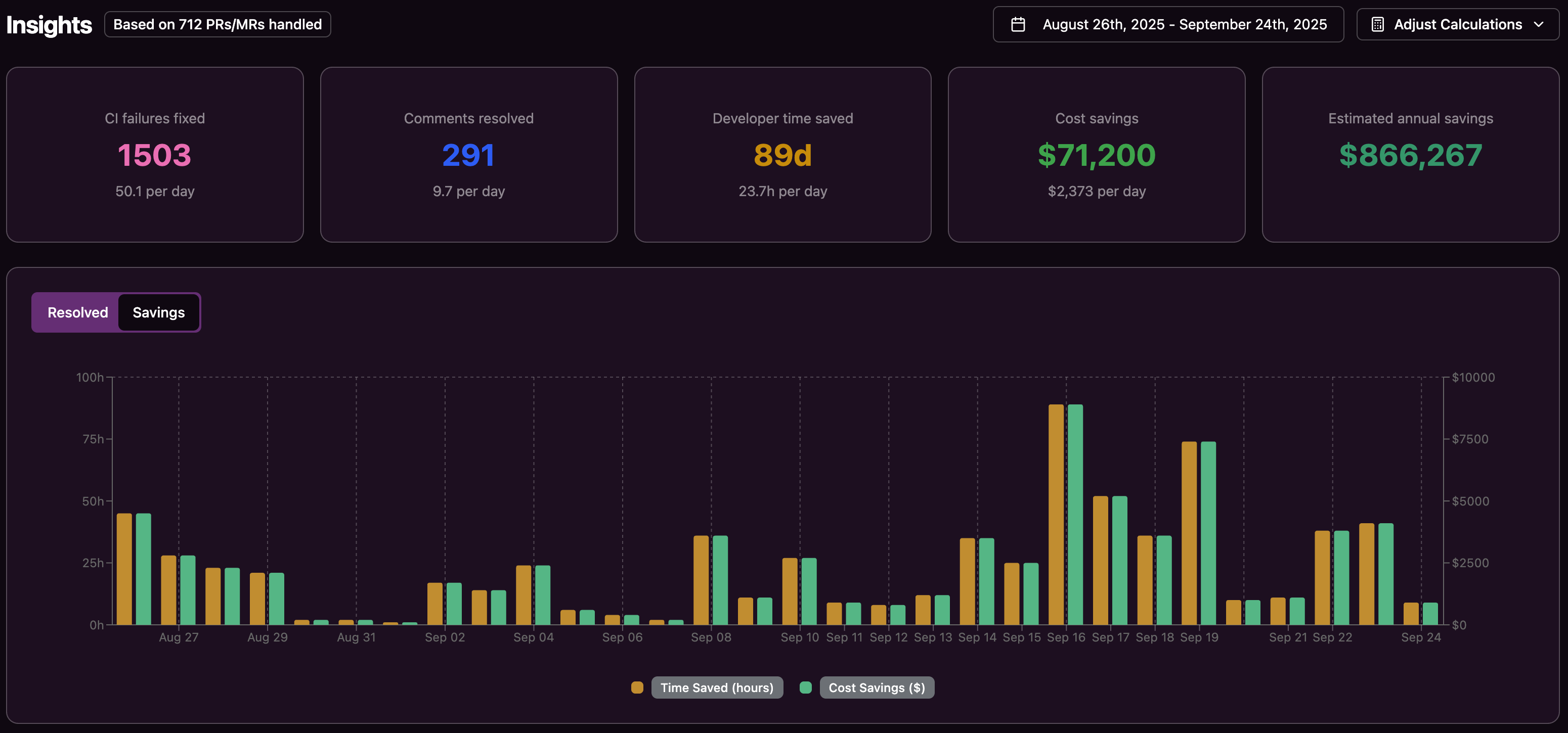
Comparing Gitar’s Healing Approach to Other AI Tools
AI tools for CI/CD vary in how much they automate and understand environments. Knowing these differences helps teams choose the right solution for their needs.
|
Feature |
Gitar (Healing Engine) |
Traditional AI Reviewers (Suggestion Engine) |
Manual Debugging (Status Quo) |
|
Action on CI Failure |
Automatic fix, validation, commit |
Suggests fixes, requires manual work |
Fully manual process |
|
Developer Interruptions |
Greatly reduced |
Still disrupts focus |
Highly disruptive |
|
Build Reliability |
Validated against full CI pipeline |
No guarantee, suggestions only |
Depends on developer effort |
|
Environment Matching |
Full CI setup replication |
Limited to basic code checks |
Based on local setup |
Suggestion tools offer ideas but leave the work to developers, maintaining interruptions. Gitar, as a healing engine, resolves issues end-to-end within the specific CI context, minimizing manual involvement.
Common Questions About Automated CI Fixes with Gitar
How Does Gitar Avoid Creating New Issues or Risks?
Gitar tests every fix against the full CI pipeline, including security checks and tests, before committing. This ensures solutions meet the same standards as manual changes. Teams can start with a cautious mode, reviewing suggestions, and scale up automation with confidence, supported by rollback options and clear logs.
How Is Gitar Different from Other AI Code Review Tools?
Many AI tools only suggest fixes, leaving implementation to developers. Gitar goes further by applying solutions, testing them in the CI environment, and committing the results. This reduces manual steps and keeps workflows efficient.
Can Gitar Manage Complex CI Environments?
Gitar handles enterprise-level setups, replicating detailed CI configurations with multiple languages and tools like SonarQube. Fixes fit within specific constraints, ensuring compatibility with intricate systems.
Does Automation Reduce Developer Ownership?
Gitar takes on routine tasks like fixing lint errors, freeing developers for strategic work. Commits include clear explanations, aiding learning. Teams can adjust automation levels to balance efficiency with hands-on involvement.
How Does Gitar Handle Complex Issues Needing Human Input?
Gitar excels at clear-cut problems with defined solutions, like dependency errors. For ambiguous issues, it flags them for developers with helpful details, ensuring time goes to challenges needing judgment.
Build Stability as Your Strategic Edge with Gitar
Choosing between new features and stable builds shouldn’t be a trade-off. Unstable CI systems slow delivery by disrupting focus and adding technical debt. Every hour spent debugging is an hour lost to creating value.
Gitar addresses this by automating CI fixes and feedback handling, cutting down on wasted effort. Developers stay focused, deliver features sooner, and tackle high-impact problems.
Stable CI builds enable frequent, confident deployments, letting teams adapt quickly to market needs. Reliability becomes a key driver of delivery speed.
Want to fix CI issues, maintain developer focus, and speed up releases? Request a demo with Gitar today to see automated CI solutions in action.