
CI/CD pipelines aim to deliver speed and reliability, but growing complexity often turns them into bottlenecks. This article explores the core challenges engineering teams face, like rising failure rates and draining context switching, when scaling pipelines. It also highlights how self-healing CI, powered by autonomous AI agents like Gitar, addresses these issues by proactively fixing problems and maintaining development velocity in even the most intricate workflows.
Why Pipeline Complexity Slows Down Scalability and Velocity
Rising Failures Create Hidden Costs
Scaling CI/CD infrastructure brings a harsh reality: failures become more frequent and costly. Longer build times, declining test pass rates, and reduced deployment frequency slow down engineering velocity due to delays and sluggish feedback loops. What begins as minor red builds can spiral into a productivity drain, with developers spending more time debugging pipeline issues than coding new features.
The financial hit is real. For a team of 20 developers, time lost to CI failures and manual fixes can add up to $1 million yearly in productivity costs. This estimate assumes just one hour per day lost per developer, a figure many team leads would call conservative. The damage grows when you factor in delayed releases, missed market windows, and frustrated developers stuck in constant problem-solving mode.
These issues show up in clear ways that hurt business results. Build times stretch as pipelines get more complex, delaying feedback and slowing progress. Test success rates drop with more components in play, creating doubt about deployment readiness. Worst of all, recovery time lengthens as teams grapple with diagnosing failures across varied systems and tech stacks.
Context Switching Undermines Developer Focus
Pipeline complexity hits hardest with the mental toll of context switching. Manually debugging failures drags out feedback loops, increases mental strain, and cuts into productivity as pipelines grow more intricate. When a developer moves on after submitting a pull request, a CI failure doesn’t just need a quick tweak. It forces them to mentally jump back to earlier work.
This interruption costs more than the fix itself. Studies show it takes about 23 minutes to refocus after a disruption. For developers in complex fields, that time can stretch even longer. A 5-minute linting fix can easily steal an hour of usable time when you account for the mental reset needed to get back into a productive groove.
For distributed teams, the problem multiplies across time zones. A developer on the US West Coast might submit a PR at day’s end, only to find a failure the next morning. Reviewers in other regions can’t provide feedback on broken code, leading to delays that turn hours into days. These cascading slowdowns heavily impact project timelines.
Common Pain Points: Slowdowns, Bottlenecks, and Unreliable Tests
Scaled CI/CD pipelines face a range of issues that worsen over time. Here’s how they impact teams:
- Bottlenecks from slow jobs or limited servers stall developer work and hinder improvement requests, directly affecting speed and satisfaction.
- Flaky tests create uncertainty, making pipeline results hard to trust as systems grow. This leads teams to ignore real issues or waste time on false alarms, damaging trust in the system.
- Resource contention slows pipelines, causes inconsistent runs, and limits future growth. More builds mean longer queues, erratic performance, and disrupted development patterns.
- Configuration errors increase with complexity, introducing hidden risks and failures that manual checks often overlook. Managing multiple environments and dependencies becomes overwhelming, making systems fragile to small changes.
Install Gitar now to automatically fix broken builds and ship better software faster.
How Self-Healing CI Solves Scalability Challenges
Moving from manual CI maintenance to autonomous pipeline management marks a major shift in software delivery. Traditional scaling often means adding more servers, parallel workers, or monitoring tools. These provide short-term relief but don’t tackle the root issue: the growing burden of manual upkeep as pipelines become more complex.
Self-healing CI changes the game. Autonomous AI agents detect, diagnose, and fix issues before they slow down teams. Resilient pipelines recover fast, cutting the productivity and cost impact of failures. This turns CI/CD into a proactive system that scales with team and codebase growth, rather than a reactive struggle.
What sets self-healing CI apart is its deep understanding of the full environment. Unlike basic AI tools with shallow context, these agents grasp specific SDK versions, dependency setups, testing frameworks, and team coding standards. This ensures fixes are accurate and reliable, even in intricate enterprise setups.
Self-healing CI also builds trust over time. With adjustable automation levels, from cautious suggestions to full autonomy, teams can start small and scale up as confidence grows. This gradual approach delivers quick wins while paving the way for hands-off operation at a comfortable pace.
What Gitar Offers as Your Autonomous CI Agent
Gitar stands out as a powerful tool for self-healing CI, built to manage the demands of modern, complex development setups. Unlike solutions that only suggest fixes, Gitar acts as an independent agent, handling the entire process from issue detection to resolution.

Here’s what makes Gitar effective for complex pipelines:
- Complete Fix Automation: Gitar doesn’t just suggest changes. It applies fixes, validates them, and commits solutions when CI checks fail, ensuring pull requests move forward.
- Accurate Environment Matching: It mirrors specific SDK versions, multi-stage builds, and external tools, delivering fixes that hold up in real-world conditions.
- Flexible Trust Settings: Teams can start with suggestions only and move to full automation as they see consistent results, aligning with their comfort level.
- Smart Review Support: Gitar speeds up feedback for distributed teams by applying reviewer comments automatically, cutting delays caused by time zone gaps.
- Wide Platform Compatibility: It works with GitHub Actions, GitLab CI, CircleCI, BuildKite, and more, fitting seamlessly into varied CI environments.
Book a demo to see how Gitar tackles pipeline complexity.
How Gitar Boosts Scalability in Complex Pipelines
Reducing Manual Work and Mental Strain for Developers
Gitar changes the developer experience by cutting out the grind of CI failure debugging. When a linting error, test failure, or build issue pops up, Gitar identifies the cause, creates a fix, and commits it, often before the developer notices. This keeps focus on coding instead of troubleshooting.
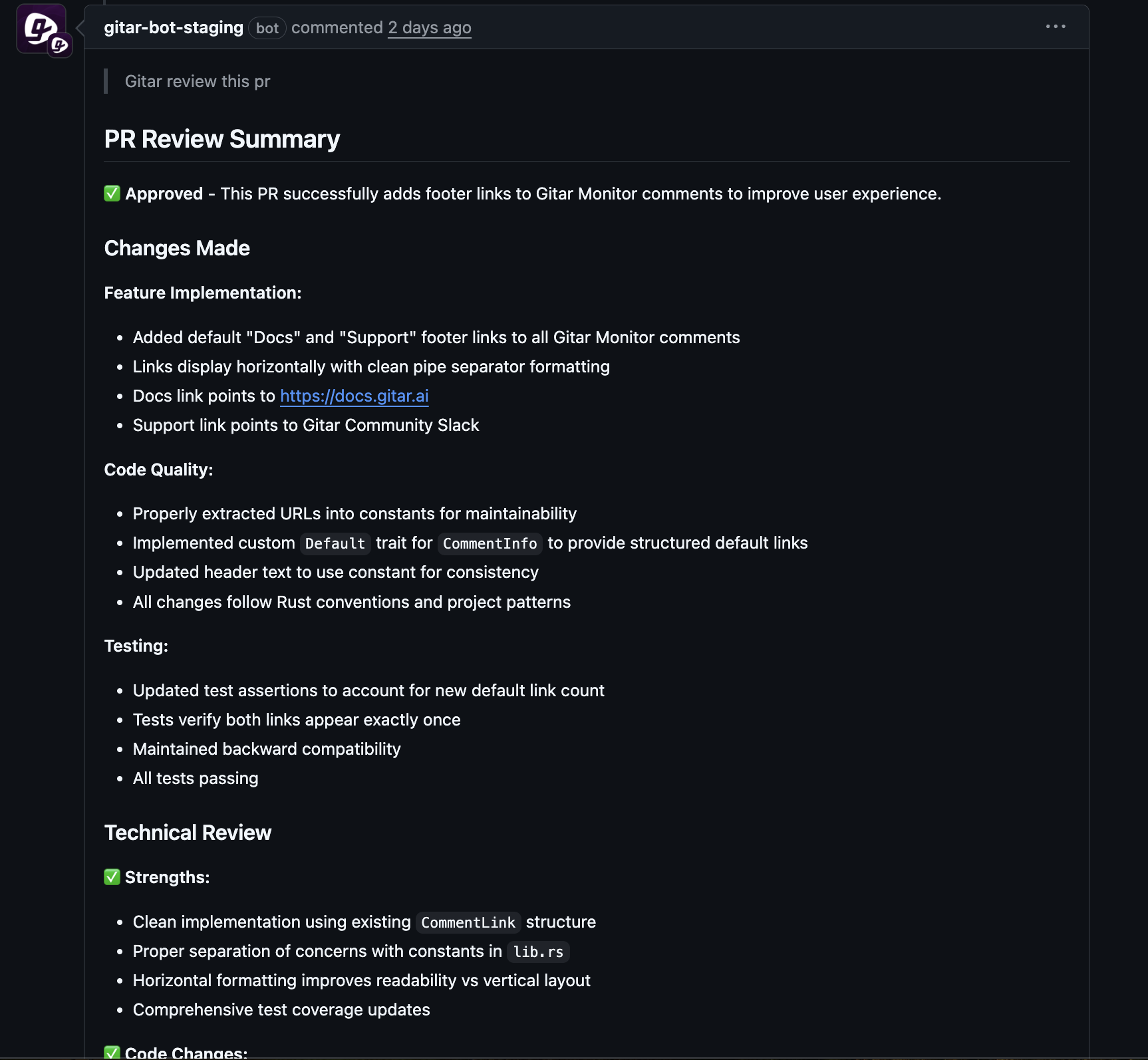
The benefit to productivity stands out. Developers skip hours of log analysis and minor fixes, staying in their creative zone. This matters most in complex setups where failures often tie to tricky dependencies or configurations.
For distributed teams, Gitar acts as a 24/7 agent. A developer in San Francisco can submit a PR at night, and Gitar resolves issues by morning, so colleagues elsewhere can review without waiting. This shrinks delays and speeds up global development cycles.
Improving Reliability in Challenging Workflows
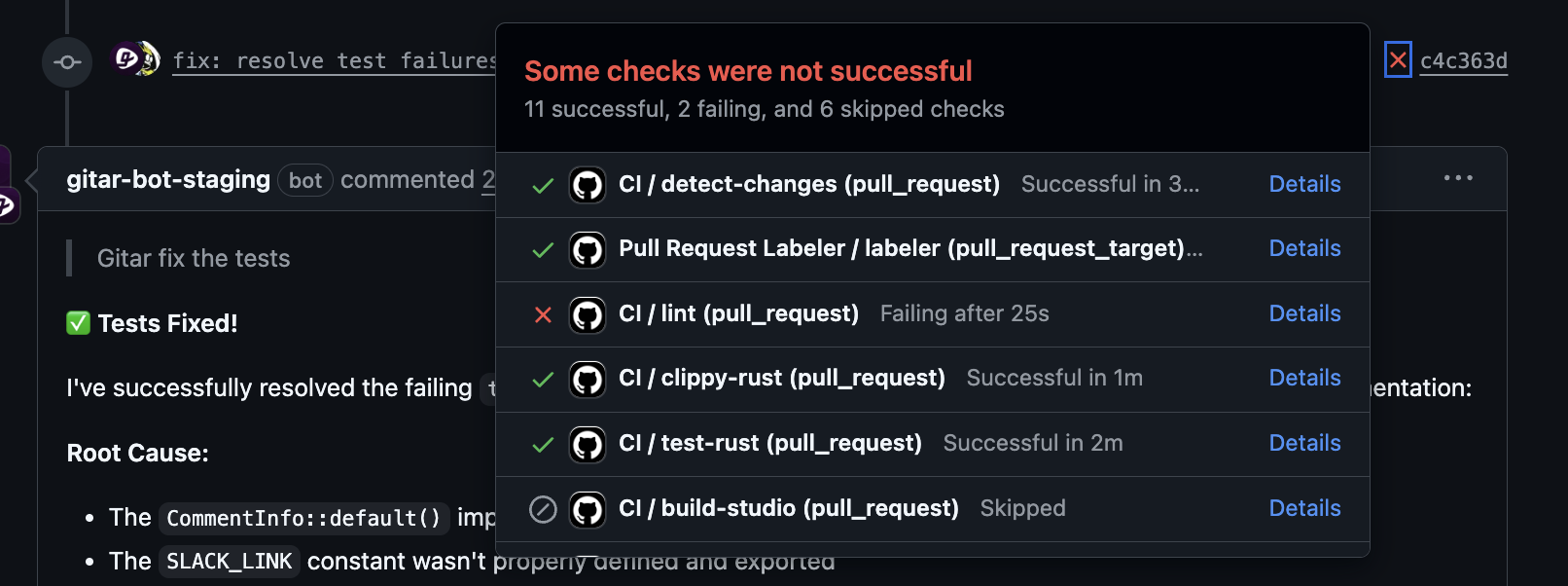
Complex CI/CD setups often struggle with consistency as they scale. Gitar counters this by preemptively fixing issues, cutting failure rates and recovery times. Automating debugging and fixes reduces manual effort, lowering costs and speeding up releases.
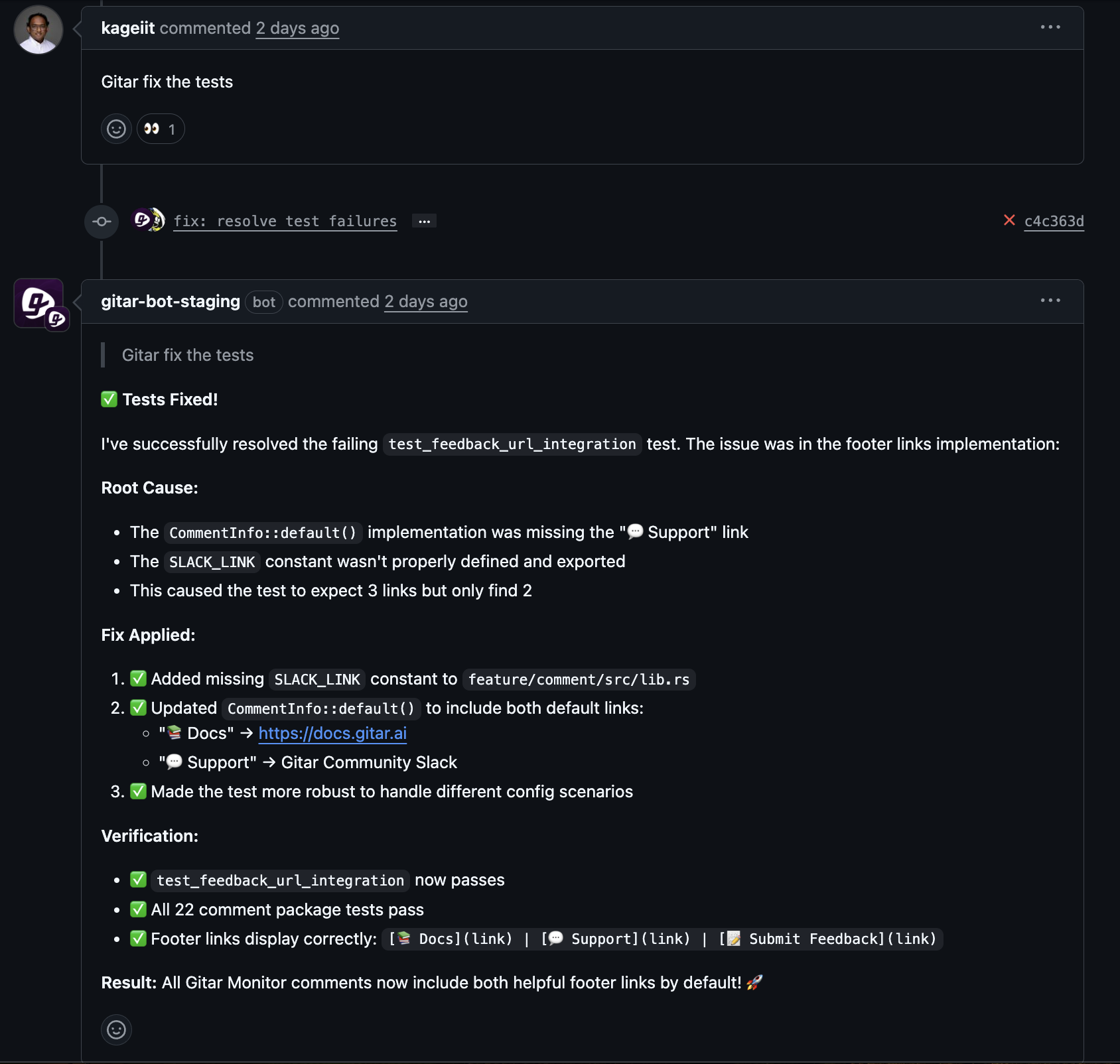
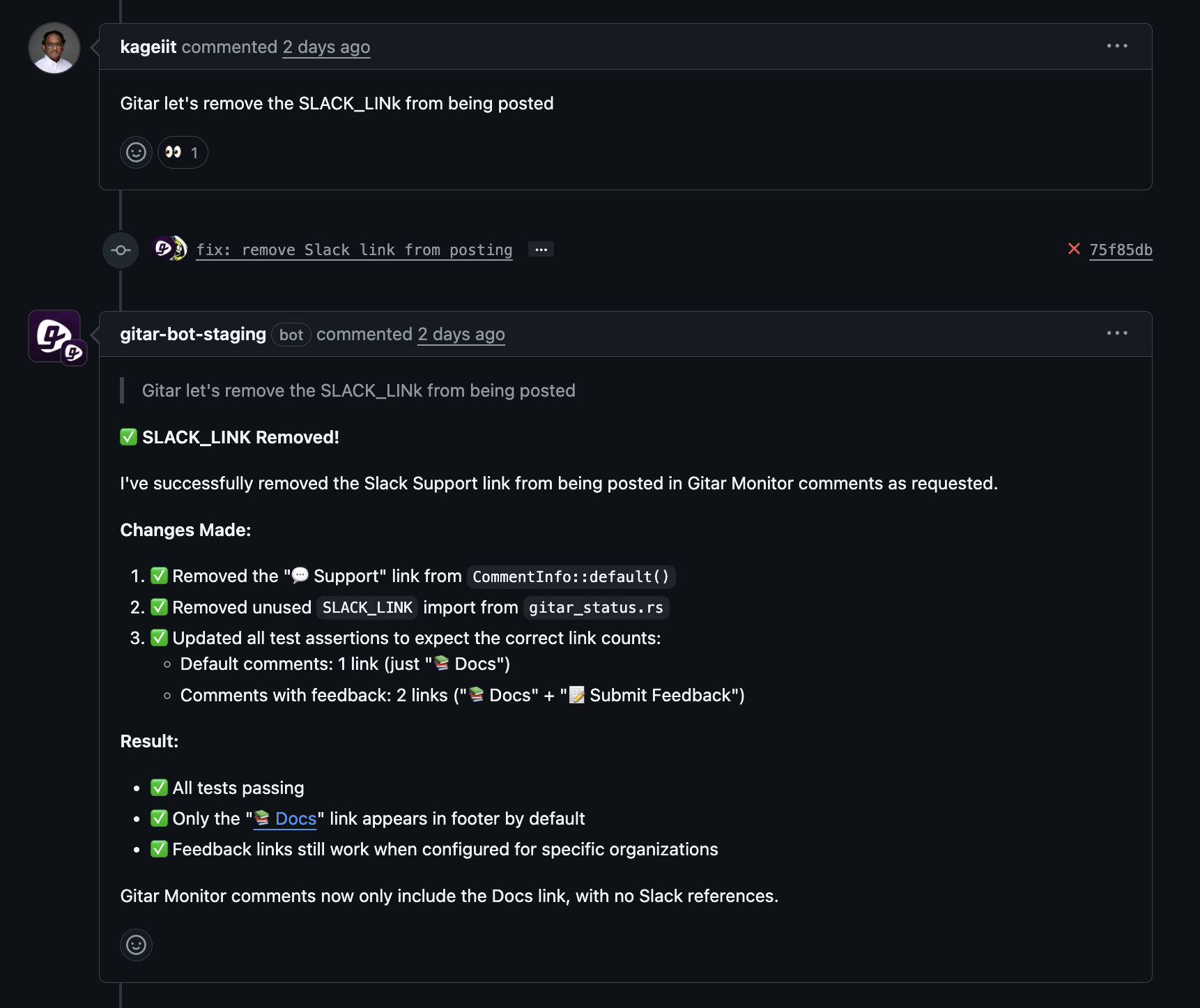
Gitar excels at common problems like linting errors or test failures. Its deep grasp of the environment ensures fixes fit the specific setup and pass validation before deployment.
Consistency comes from Gitar’s methodical approach. It analyzes issues systematically and checks solutions against the pipeline, aiming for reliable outcomes every time.
Speeding Up Delivery for Engineering Leaders
For team leaders, velocity and delivery timelines are key. Gitar cuts the time from commit to merge by automating CI fixes and reviewer feedback, reducing delays in PR cycles.
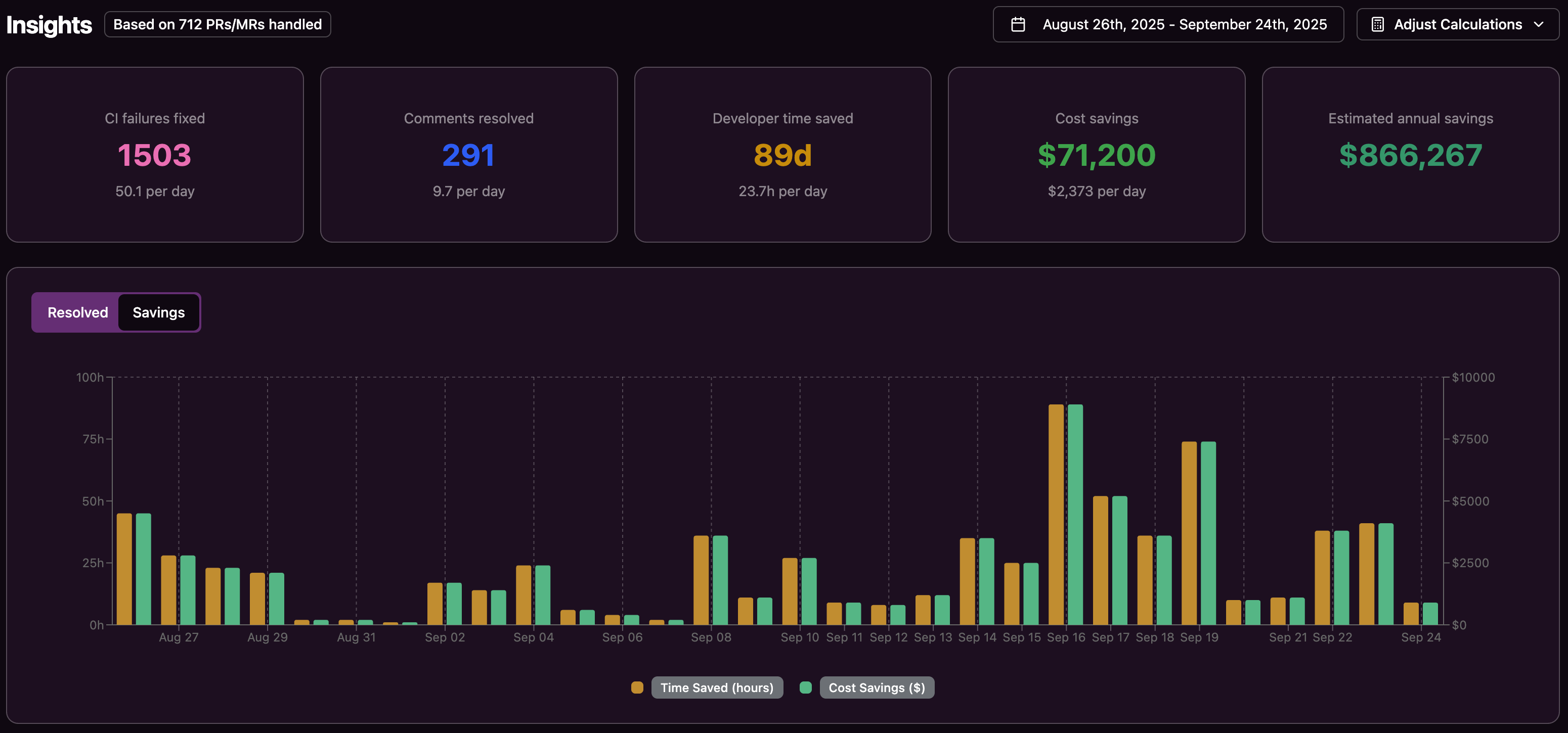
The financial upside is clear. For a 20-developer team, Gitar could save $500,000 annually by handling CI tasks, based on a 50% effectiveness rate. Actual savings depend on workflow details.
More than savings, Gitar frees teams to focus on development. With less CI maintenance, energy goes to coding and merging, driving faster delivery.
Comparing Gitar to Other Tools for Pipeline Complexity
|
Feature |
Gitar (Autonomous Healing Engine) |
AI Code Reviewers (e.g., CodeRabbit) |
On-Demand AI Fixers (e.g., Claude for CI) |
Manual Work (Status Quo) |
|
Problem Solved |
Autonomous CI and code review fixes |
Code review suggestions and some fixes |
Ad-hoc failure help |
Manual debugging and context switching |
|
Action on Failures |
Automatically applies and validates fixes |
Offers suggestions, some fixes via PRs |
Suggests fixes, details limited |
Developer investigates and resolves |
|
Integration Depth |
Full environment replication, cross-platform |
GitHub/GitLab review focus |
Integration unclear |
Limited to developer setup |
|
Impact on Developer Flow |
Cuts context switching, supports focus |
Varies by tool implementation |
Impact unclear |
Major disruption to focus |
Install Gitar now to fix builds automatically and ship quality software faster.
Answers to Common Questions About Pipeline Scalability
Can Gitar Handle Highly Complex CI Setups?
Yes, Gitar is built for intricate CI environments. It mirrors full enterprise setups, including specific SDK versions, multi-SDK dependencies, and tools like SonarQube or Snyk. Fixes are tailored to your unique pipeline, ensuring they work in complex scenarios.
How Does Gitar Build Trust With Autonomous Fixes?
Gitar offers adjustable modes to ease teams into automation. Start with a conservative setting where fixes are suggestions for review. As confidence grows from successful outcomes, switch to direct commits with rollback options, scaling automation at your pace.
How Is Gitar Different From AI Code Review Tools?
Unlike code reviewers that mainly suggest changes, Gitar acts as a full healing engine. It autonomously applies fixes, validates them against your pipeline, and ensures builds pass, offering deeper support for complex CI challenges.
What If Gitar Introduces a Mistake or Bug?
Gitar has safeguards in place. Fixes are tested against your CI setup before committing. Each change comes with a clear explanation, and rollback options are available. You can also set approval requirements for critical updates to maintain control.
How Does Gitar Scale With Growing Teams?
Gitar adapts to team growth effortlessly. As CI failures and review cycles increase with team size, Gitar manages the load independently. Its cross-platform support and consistent approach become even more valuable as teams expand and diversify tools.
Conclusion: Break Free From Pipeline Complexity
Managing complex CI/CD pipelines remains a persistent hurdle. Low reliability hides costs like delayed releases and lost developer time, creating a drag that worsens with growth. Manual fixes and reactive upkeep sap engineering output.
Self-healing CI, powered by tools like Gitar, offers a better path. By cutting manual tasks, preserving developer focus, and fixing pipeline issues upfront, Gitar turns CI/CD into a self-sustaining system that supports team goals.
The potential return on investment is compelling, alongside benefits like happier developers and quicker market delivery. Teams adopting autonomous CI are better equipped to handle growth without the weight of manual pipeline management.
Software delivery’s future lies in tackling CI scalability head-on. Self-healing CI prioritizes efficient problem resolution, freeing engineering potential by easing manual limits on speed.