
Engineering teams often struggle with failed CI builds and lengthy code review cycles. Many automation tools promise relief but lack the flexibility to match unique team needs, making it hard for developers to trust and adopt them. A configurable, autonomous CI fixing platform like Gitar can adapt to specific workflows, helping teams move from commit to production faster while maintaining quality and control.
Developers can spend up to 30% of their time fixing CI failures and addressing feedback. Without tailored automation, this time loss impacts productivity and morale. Customizable solutions address this gap by aligning with team preferences, building trust, and reducing manual effort.
Why Rigid CI Automation Slows Down Engineering Teams
Inflexible Workflows Lead to Distrust and Wasted Time
Rigid CI automation often creates more issues than it solves. When tools don’t adapt to a team’s coding standards or risk preferences, developers lose confidence and resort to manual fixes, defeating the purpose of automation.
This inefficiency adds up. A team of 20 developers could lose up to $1 million yearly due to constant context switching from CI problems. Fixed workflows force manual interventions, disrupting focus and creating frustration that automation was supposed to prevent.
Compliance and quality also suffer. Without configurable rules, teams struggle to align automation with security or coding standards. They must often choose between best practices and accepting fixes that don’t fully fit, risking long-term code quality.
Generic Rules Don’t Match Unique Project Needs
Software projects vary widely in their requirements. A microservices setup for financial transactions needs different CI rules than a frontend app or a machine learning pipeline. Many tools, however, apply the same rules everywhere, leading to poor fits.
For example, a team handling both web apps and backend services might want automated style fixes for the frontend but human approval for sensitive backend logic. Non-configurable tools can’t handle these differences, pushing teams to either accept unsuitable changes or turn off automation.
As AI coding tools speed up code creation, more pull requests and CI runs emerge. Inflexible systems struggle to keep up, creating delays in validation and merging, even as code generation accelerates.
How Gitar Solves CI Challenges with Configurable Workflows
Gitar tackles CI automation issues by offering adaptable workflows that turn a potential bottleneck into a productivity asset. Unlike tools that only suggest fixes, Gitar acts as an autonomous CI fixing engine, aligning with your team’s specific needs and preferences.
Trust is a key focus. Gitar lets teams start with cautious automation and ramp up as confidence grows, ensuring fixes meet organizational standards without overstepping.
Key features of Gitar include:
- Adjustable automation levels, from suggestions in Conservative Mode to full auto-commits in Aggressive Mode, allowing trust to build over time.
- A web dashboard for workflow setup, starting with suggestions and progressing to auto-commits as needed.
- Comment-driven instructions, like “@gitar review this PR”, for easy human-AI collaboration.
- Options for fully automated fixes or human approval before merging, giving control based on context.

Benefits of Configurable Workflows for Engineering Teams
Adapt Automation to Fit Different Project Types
Projects within an organization often have distinct needs for CI automation. Gitar lets teams customize workflows based on project type or risk level, ensuring the right balance of automation and control.
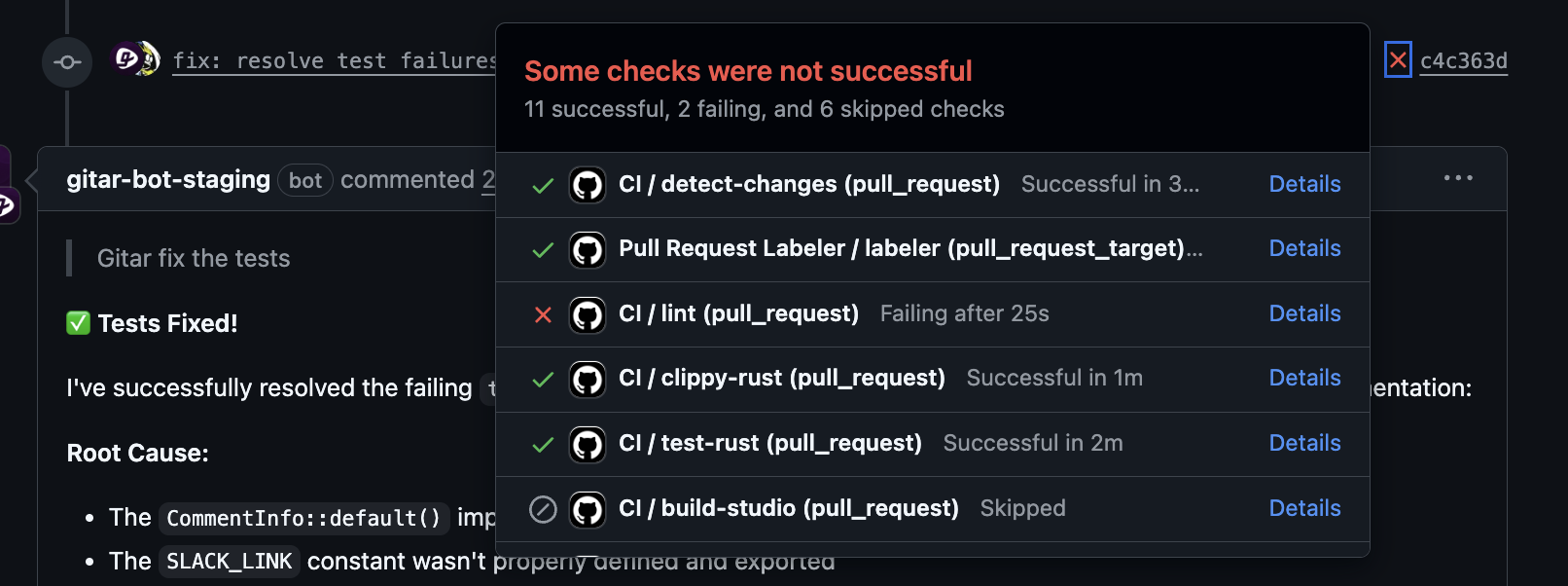
For instance, a team can set auto-fixes for minor linting errors while requiring approval for critical code changes. Gitar replicates the full environment to ensure fixes work within specific technical setups, avoiding errors from mismatched contexts.
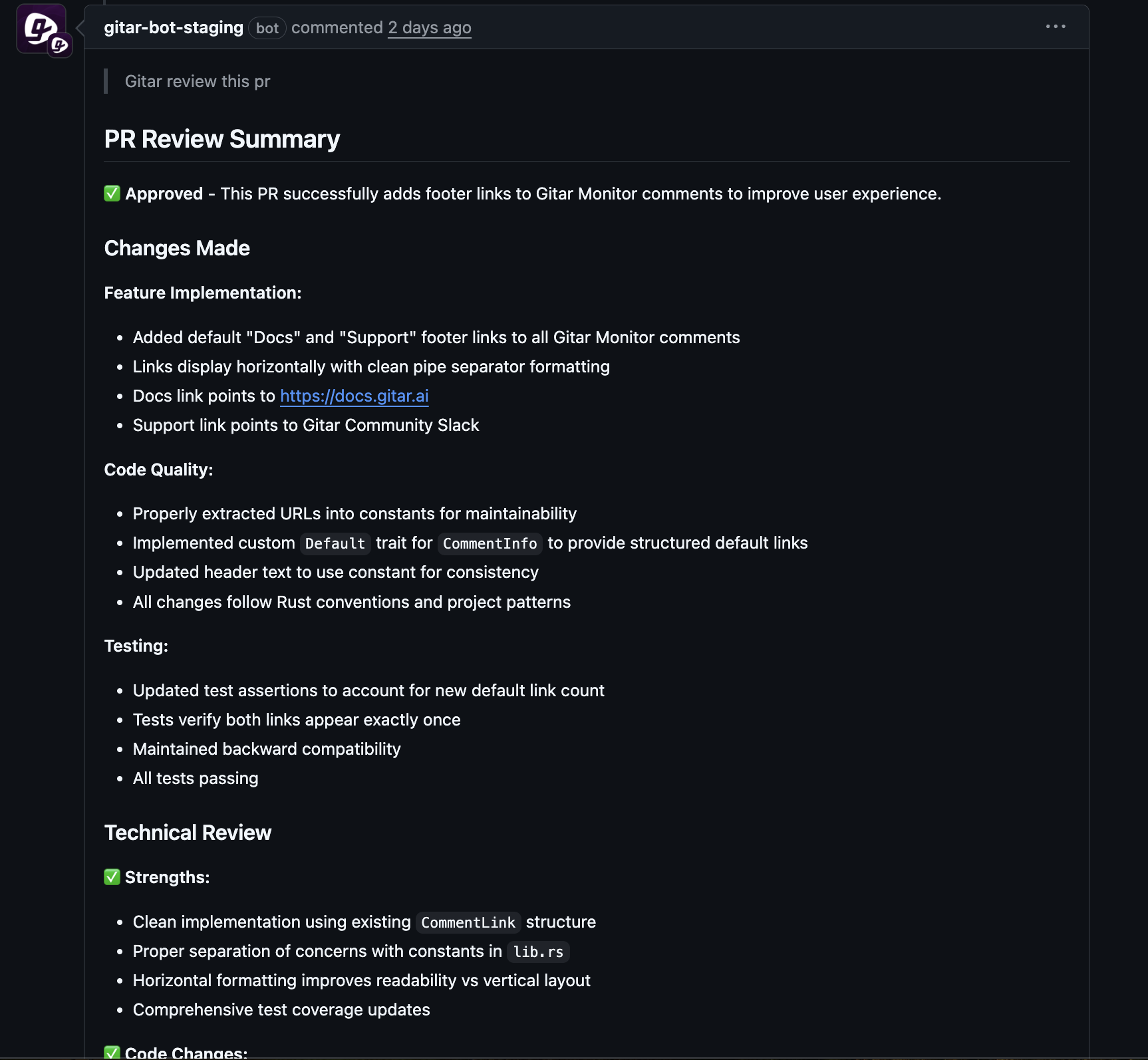
Gain Developer Trust with Gradual Automation
Developers often hesitate to adopt automation they don’t trust. Gitar builds confidence through a phased approach, giving teams control over the process.
Starting in Conservative Mode, Gitar offers suggestions for review and acceptance with one click. As teams see consistent, accurate fixes, they can shift to Aggressive Mode for auto-commits. Options to rollback changes provide added security and visibility for leaders.
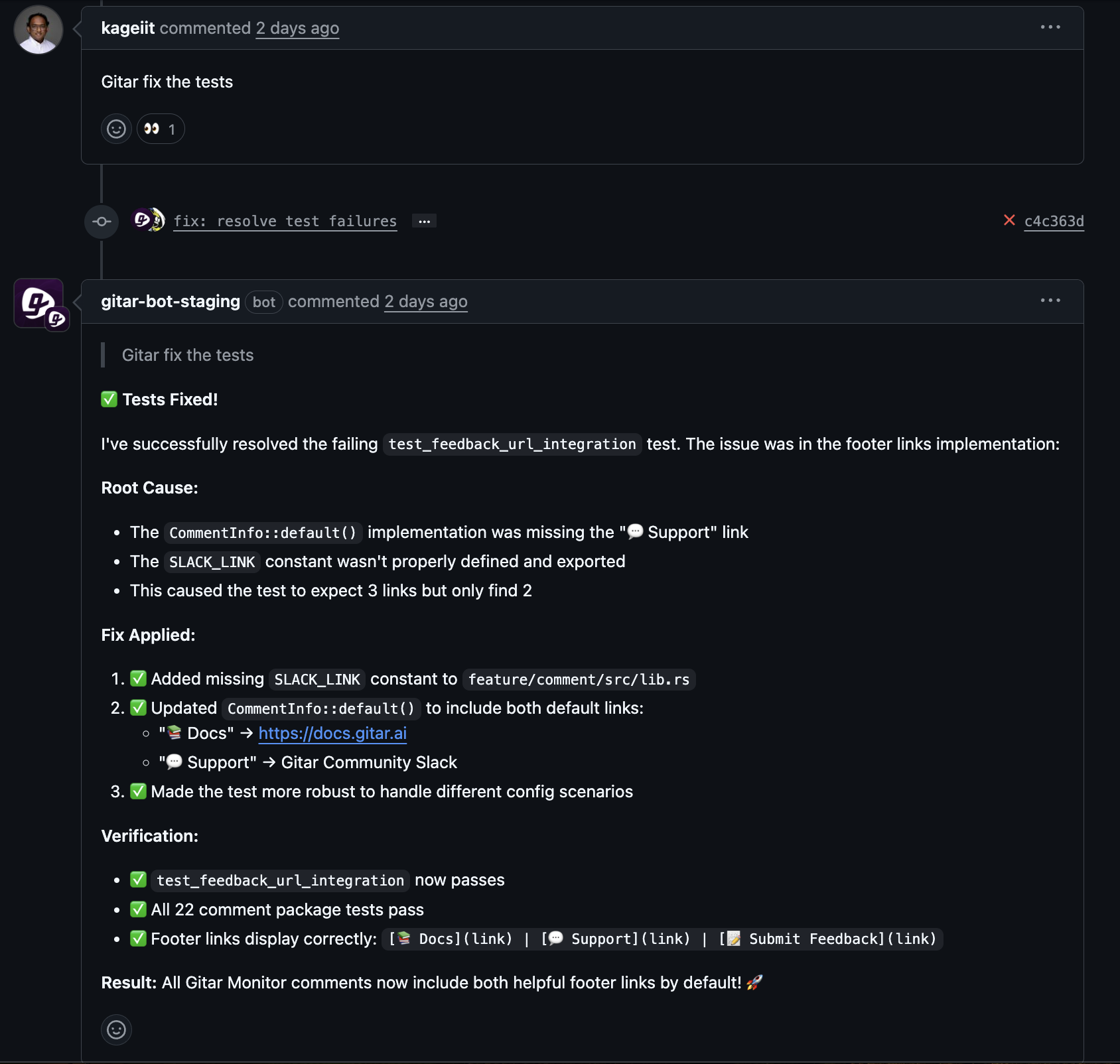
Streamline Collaboration Across Distributed Teams
Distributed teams face delays from time zone differences and code review feedback. Gitar’s workflows support asynchronous collaboration, keeping projects moving forward.
Reviewers can leave comments for Gitar to act on while they’re offline. By the time a developer in another time zone logs in, Gitar has made the requested changes and prepared them for approval, reducing wait times significantly.
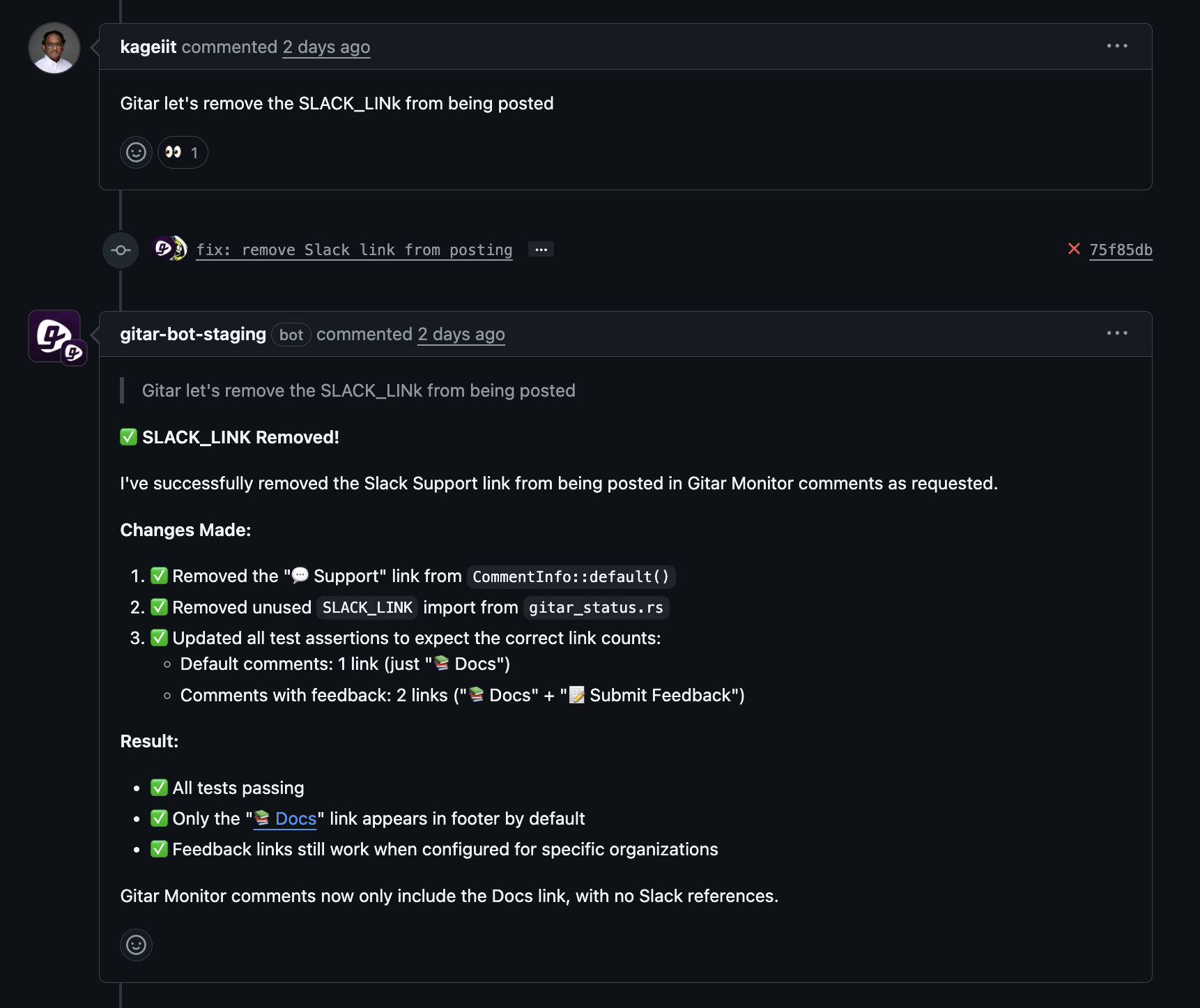
Why Gitar Stands Out Among CI Tools
Configurable CI Fixing vs. Basic Suggestion Tools
|
Feature |
Gitar (AI Autonomous Healing Engine) |
Suggestion Engines (e.g., CodeRabbit) |
Manual CI Fixing |
|
Workflow Configuration |
Adjustable modes from suggestions to auto-commit, fitting team needs |
Custom rules and setups for team guidelines |
Fully manual, no automation or consistency |
|
Fix Application |
Auto-commits validated against full CI, ensuring successful builds |
One-step fixes for simple issues, complex ones need manual work |
Entirely manual implementation and validation |
|
Developer Trust Model |
Flexible from suggestions to auto-commit, with clear actions and rollback options |
Uses static analyzers and linters for automated checks, building trust |
High trust but very time-intensive |
|
Environment Context |
Replicates full environment, supports complex enterprise CI and dependencies |
Analyzes full codebases, manages complex dependencies with context |
Complete context but requires manual effort |
This comparison highlights the value of customization in CI automation. Manual fixing offers control but drains time. Suggestion tools provide partial automation without enough flexibility for enterprise needs. Gitar blends adaptability, autonomous fixes, and deep context to support modern teams effectively.
Common Questions About Gitar’s Configurable Workflows
How Does Gitar Build Trust in Automation Among Developers?
Gitar earns trust with a gradual approach. Teams begin in Conservative Mode, reviewing and accepting suggestions with one click. As they see reliable fixes, automation levels can increase. Clear commit messages and rollback options ensure developers understand and can undo changes if necessary.
Can Gitar Adjust Fixes for Different Code Types or Projects?
Yes, Gitar’s workflows allow customization for various projects or modules. Teams can set auto-fixes for minor issues like linting while requiring approval for critical changes, balancing automation with oversight based on context.
What Control Do Teams Have Over Gitar’s Automated Actions?
Teams retain full control with Gitar’s trust model. Conservative Mode requires approval for fixes, while Aggressive Mode can still demand oversight for specific changes. A web dashboard and transparent commit messages offer visibility to monitor and tweak automation settings.
How Does Gitar Ensure Fixes Work in Complex Enterprise CI Systems?
Gitar replicates the full environment, accommodating complex enterprise CI setups. It matches specific dependencies, SDK versions, and integrations like SonarQube or Snyk, ensuring fixes fit seamlessly. It also supports platforms like GitHub Actions, GitLab CI, CircleCI, and BuildKite.
Maximize Your Team’s Output with Adaptive CI Automation
Rigid CI automation no longer meets the needs of engineering teams. Solutions must adapt to specific workflows, earn trust through clear processes, and provide reliable fixes in complex setups. Gitar’s customizable workflows move teams from AI-assisted to AI-driven operations, cutting down manual delays in software delivery.
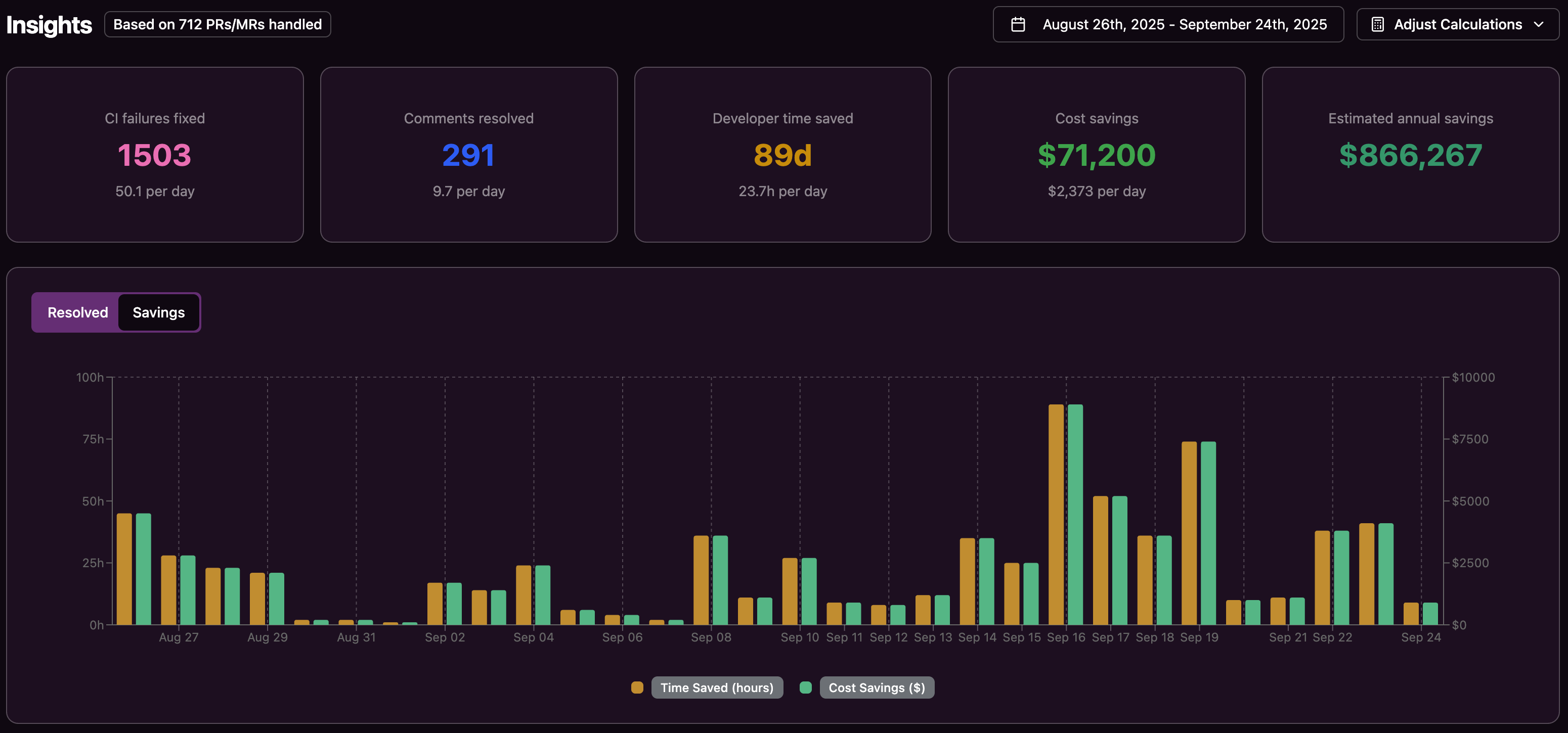
Key advantages include building trust with phased automation, saving time with context-aware fixes, and fitting into varied project demands. Teams using Gitar often see less context switching and faster delivery cycles.
Custom workflows redefine automation for teams. Instead of wrestling with fixed tools, you can shape automation to improve processes and speed up delivery while keeping control.