
CI build failures quietly drain productivity in software development. Developers lose hours to failed builds, error logs, and manual fixes, disrupting their focus. The process of writing and shipping code often becomes a frustrating loop of red builds and delays. Autonomous tools like Gitar offer a way forward by detecting and resolving CI issues without manual effort. These AI agents help teams save time, speed up cycles, and turn CI/CD pipelines into efficient systems. Let’s explore how they work and why they matter.
The Real Cost of CI Build Failures
Lost Focus: How Failures Disrupt Developers
CI build failures hit developers hard by breaking their workflow. Switching tasks due to build issues causes major productivity drops as developers pause work, then face interruptions when failures pop up. This constant back-and-forth kills the deep focus needed for solving tough problems or writing creative code.
A failed build notification after hours of waiting forces developers to drop their current task, revisit old code, decode vague errors, test fixes locally, and rerun the process. A simple lint error that should take minutes can stretch into an hour of wasted effort.
The mental toll adds up too. Around 46% of developers find fixing CI failures very challenging. This daily frustration wears on job satisfaction and fuels burnout. Many start overthinking commits or delaying submissions, slowing down the entire team.
Delayed Projects: The Business Hit from CI Issues
CI failures don’t just affect developers; they hurt the bottom line. Failed builds slow down releases and cut team output, with some projects losing over 2,000 hours to these issues. For a 20-person team, that’s roughly $1 million in lost productivity each year when accounting for engineering costs.
The damage ripples outward. Delayed features push back launches, disrupt marketing plans, and weaken market position. Frequent build failures lower developer efficiency, delay updates, and raise operational expenses. In distributed teams, time zone gaps can stretch a quick fix across days.
Failed builds also waste resources. Each rerun burns compute power with no value delivered, driving up CI costs and further delaying progress.
Hidden Danger: Silent CI Failures Slip Through
Even worse than obvious failures are silent ones, builds that pass but skip key steps. About 11% of ‘successful’ CI jobs get rerun, with silent failures wasting nearly half of server time in repeats. These false positives hide bugs that sneak into later stages.
Silent issues often come from artifact errors, caching glitches, or ignored exit codes, especially in testing or analysis tasks. Spotting them takes manual digging, adding complexity to an already tough process.
When silent failures reach production, the consequences can be severe. Bugs cause customer issues, urgent fixes, and potential revenue loss. Fixing problems in production costs far more than catching them early, making prevention a priority.
Install Gitar now to fix broken builds automatically and ship better software faster.
Solving the Issue: Autonomous CI Tools Take Over
Understanding Autonomous CI Fixers
Autonomous CI fixers change the game by handling failures before they stall progress. These AI tools monitor pipelines, spot issues in real time, analyze causes, and apply fixes without developer input. Unlike manual debugging, they work quietly in the background to keep things running.
They blend knowledge of CI/CD setups with smart code generation. Whether it’s a lint error, test failure, or dependency clash, the tool jumps in, reviews logs, crafts a fix, applies it, and checks the result through the full pipeline.
This shifts CI/CD from a constant struggle to a self-healing system. Green builds become standard, letting developers focus on new features instead of fixing old problems.
Healing vs. Suggesting: Why Full Automation Wins
Not all AI tools for CI are equal. Suggestion engines spot issues and offer fixes, but developers still need to apply and test them. This cuts some work but doesn’t stop workflow interruptions.
These tools often post comments or alerts with ideas for fixes. Developers must review, edit code, commit changes, and wait for results, keeping the frustration of broken focus intact.
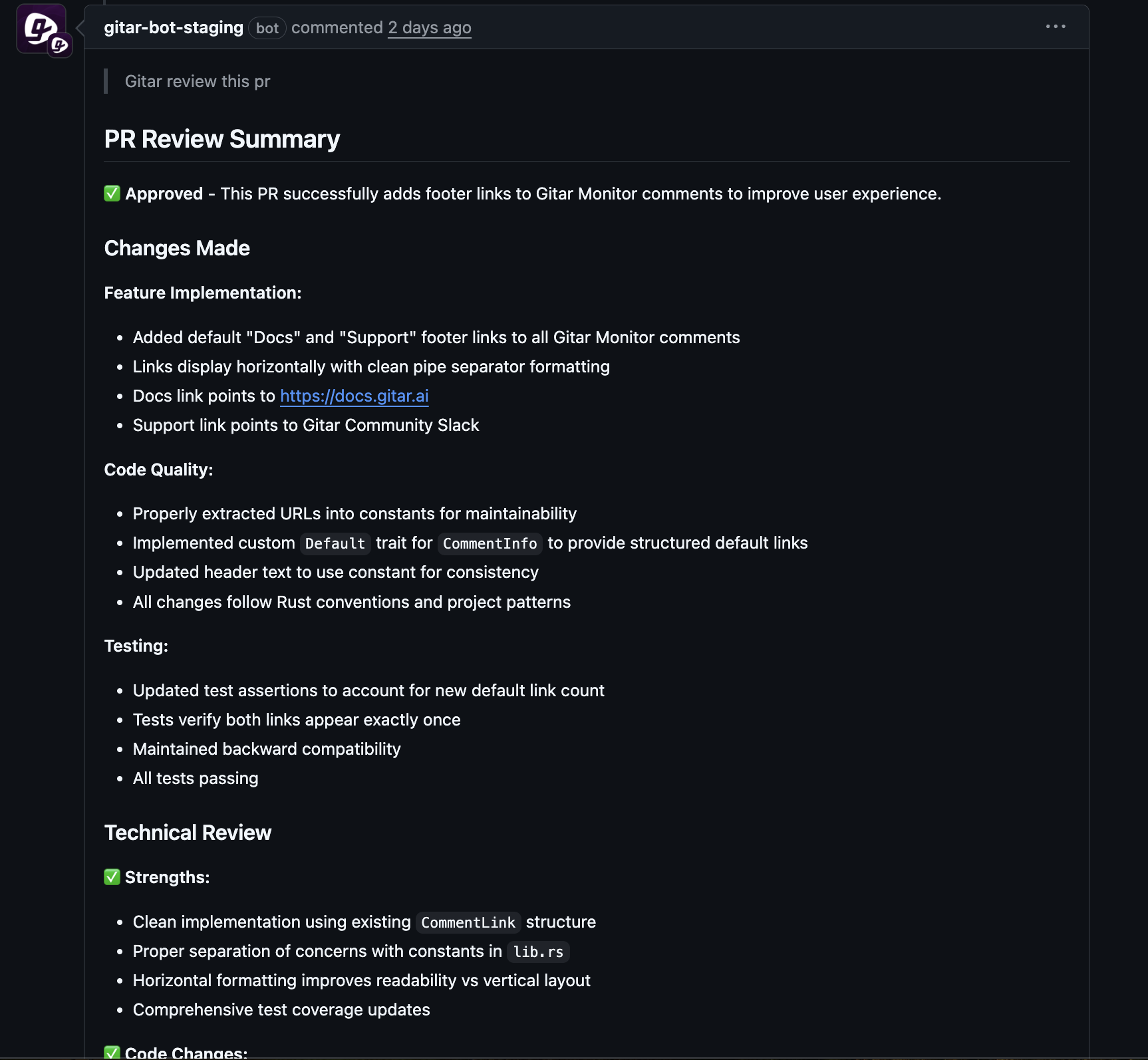
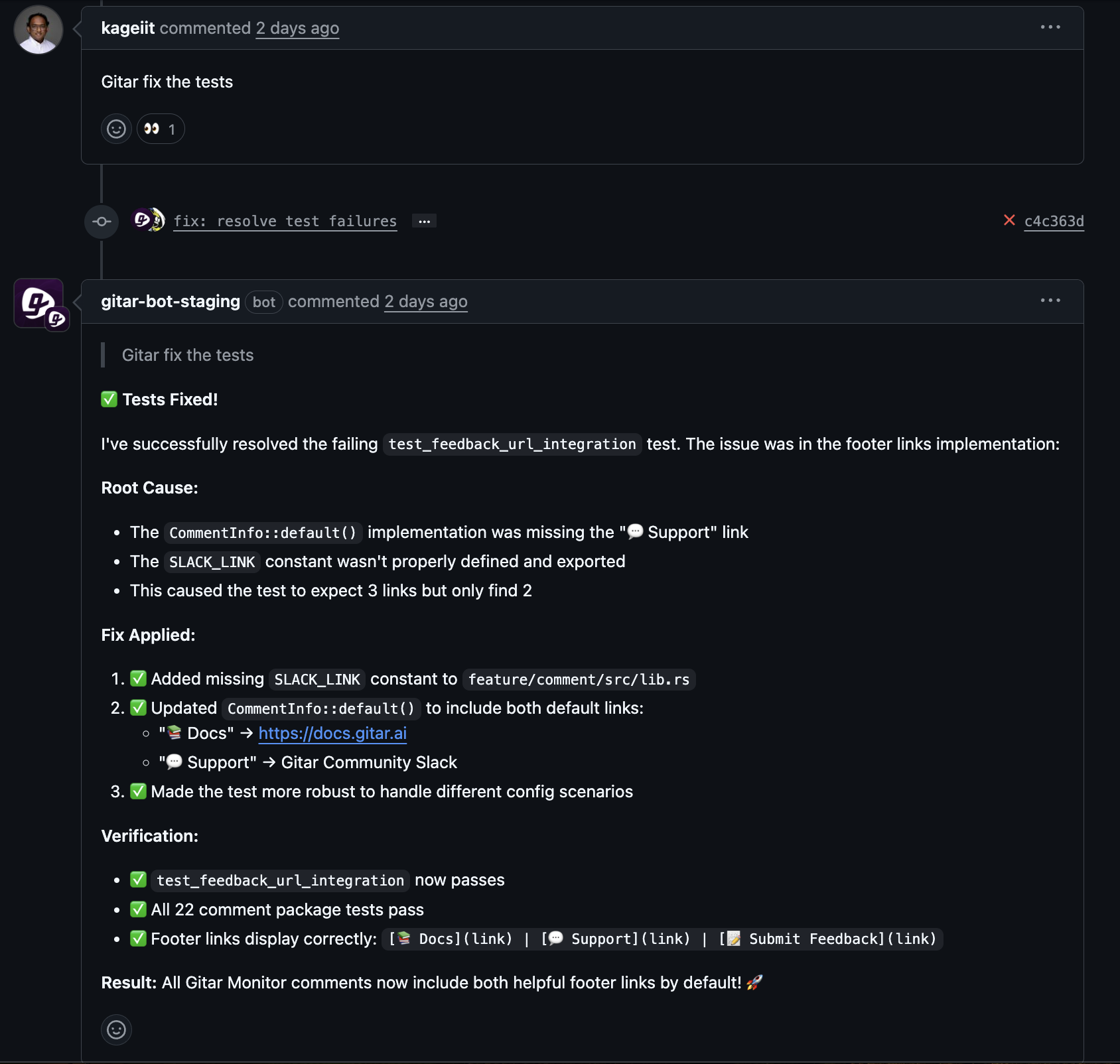
Healing engines like Gitar go further. They don’t just suggest; they fix, test, and confirm the build passes. Developers only see the final, working result, skipping the entire manual process.
Gitar: Your Solution for Automatic CI Fixes
Gitar leads in autonomous CI solutions, tackling build failures so developers can stay focused. As a healing engine, it resolves issues directly, cutting out the grind of debugging pipeline problems.

Here’s what makes Gitar stand out for CI/CD needs:
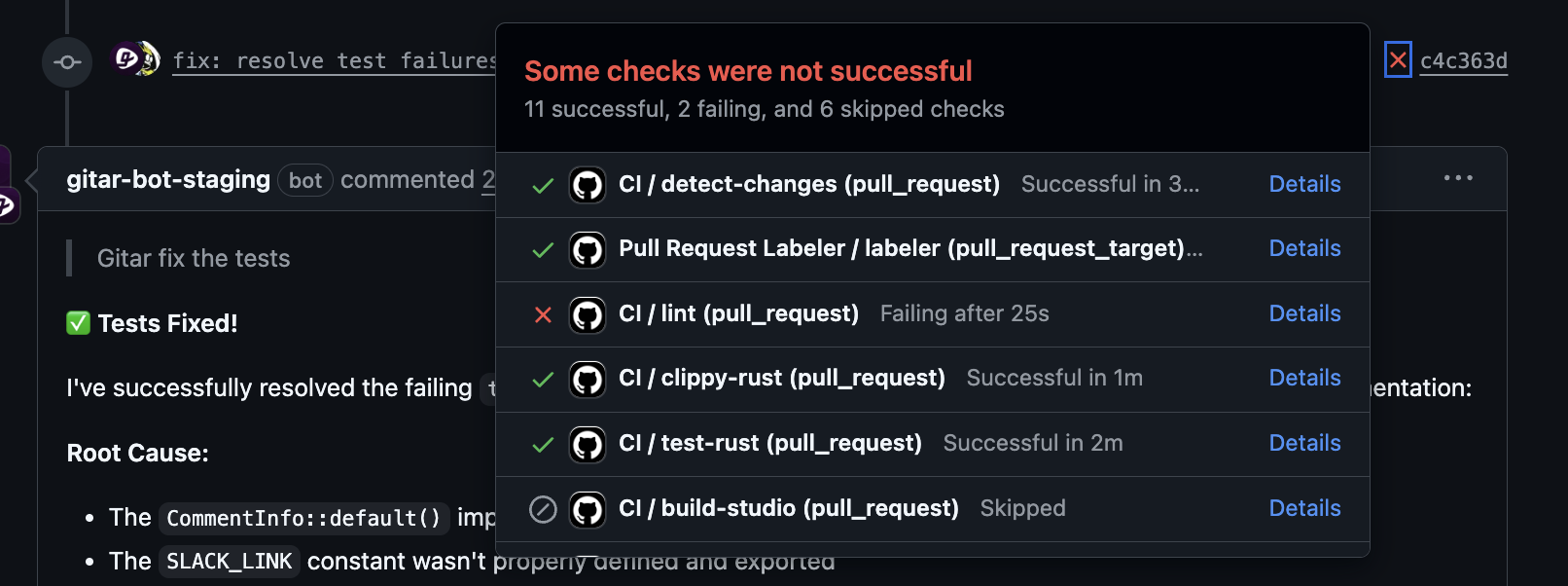
- Full Automation: Gitar handles everything from spotting failures to confirming fixes. It resolves lint errors, test issues, and build glitches, ensuring builds pass every time.
- Flexible Trust Options: Teams can start with suggestions to review before moving to direct commits with rollback options as confidence grows.
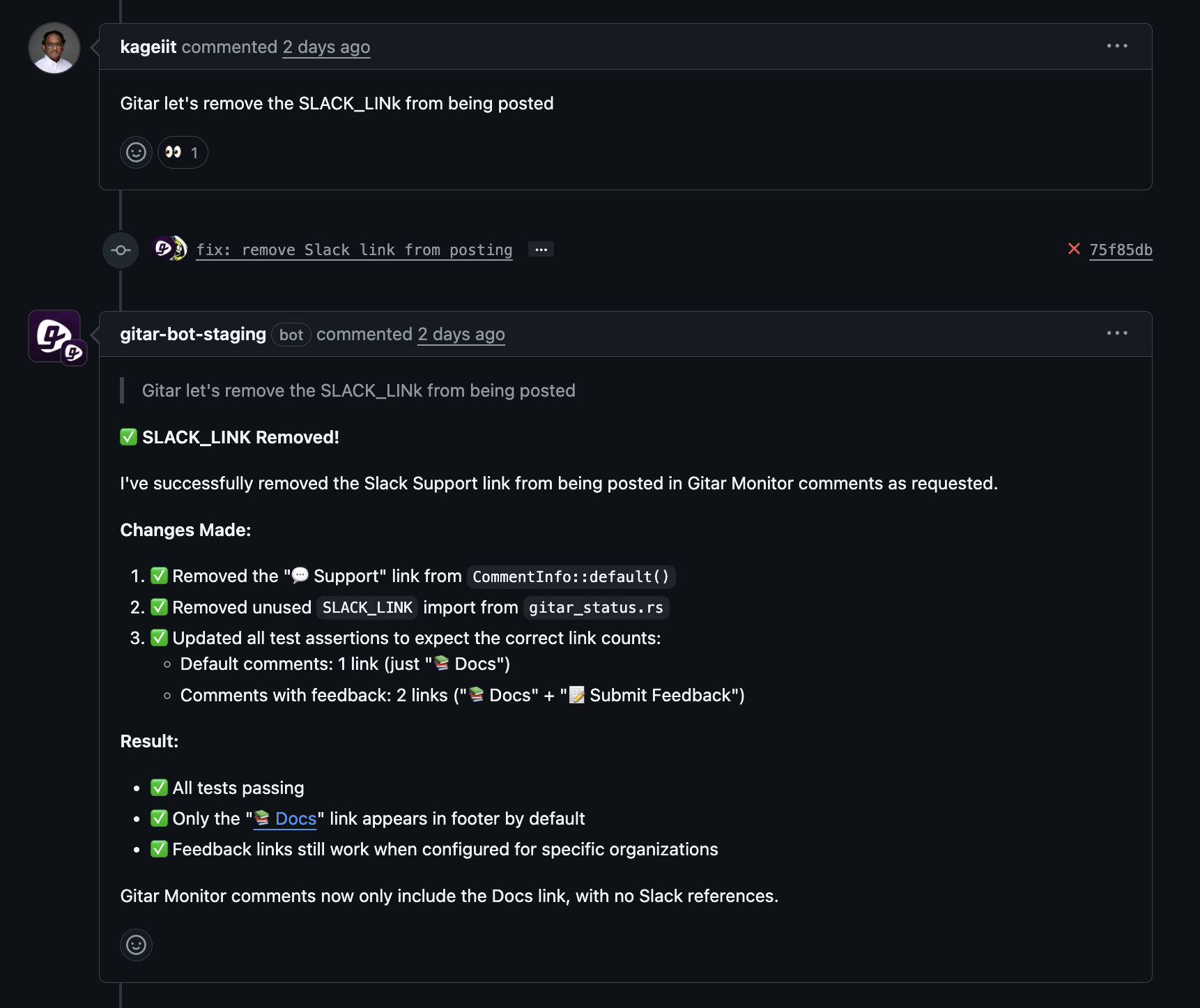
- Smart Code Review Help: Gitar acts on reviewer feedback by making requested changes, speeding up the process without extra developer effort.
- Wide Platform Fit: It supports GitHub Actions, GitLab CI, CircleCI, and BuildKite, working with any existing setup.
- Built for Global Teams: Gitar handles feedback across time zones, applying fixes instantly so they’re ready when developers log in.
Book a demo to see Gitar in action.
Why Choose Gitar: Benefits for Your Team
Speed Up Merges and Delivery
Gitar cuts the time from commit to merge by fixing issues as soon as they appear. This keeps pull requests moving, especially for teams spread across time zones where delays add up.
Faster merges mean quicker feature releases. Developers commit often, knowing small issues won’t derail their day. This leads to tighter feedback loops and a stronger market response.
Boost Developer Focus and Output
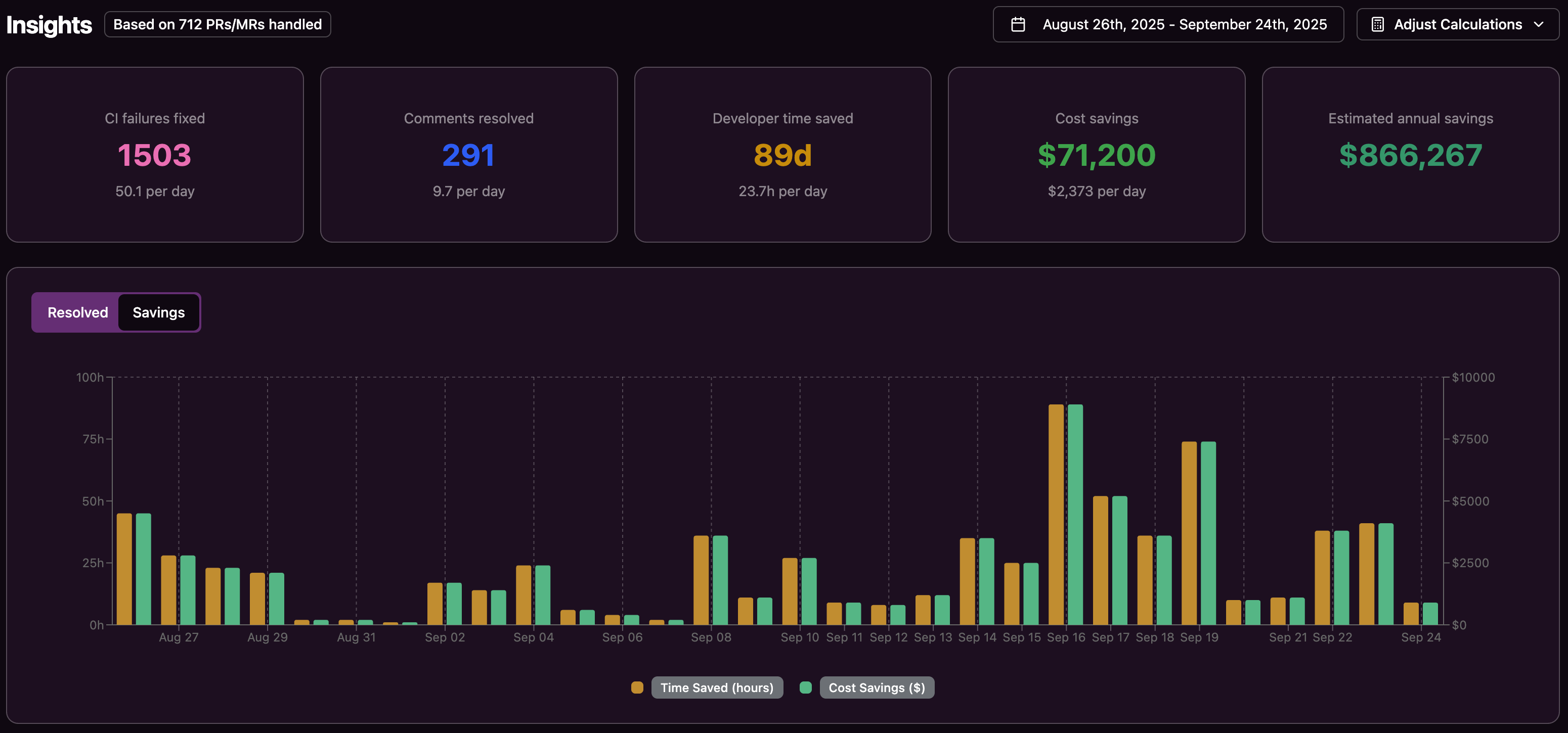
Skipping CI debugging saves more than just time. Developers stay in a focused state, improving code quality and problem-solving. Reports show up to 30% of developer time can go to CI issues; Gitar reclaims much of that.
For a 20-person team losing an hour daily to CI fixes, annual costs can hit $1 million. Gitar’s automation offers clear savings while lifting team spirits.
Strengthen Pipeline Stability and Cut Costs
Gitar keeps pipelines reliable by fixing issues before they stack up. This avoids bigger meltdowns, reducing urgent fix sessions and creating steady workflows.
It also lowers CI resource waste. Failed builds burn compute power; Gitar minimizes retries by fixing issues fast, saving on infrastructure costs.
Ease Onboarding and Manage Tech Debt
New developers often struggle with CI setups. Gitar simplifies this by handling routine fixes, letting them contribute faster without learning every detail.
It also stops small issues from piling up into tech debt. By solving problems early, Gitar keeps codebases cleaner over time, reducing future headaches.
Gitar vs. Traditional CI Fix Methods
|
Feature / Approach |
Manual Debugging |
AI Suggestion Tools |
Gitar (Autonomous Fixer) |
|
Resolution Method |
Human effort and code edits |
AI offers ideas for fixes |
AI applies and tests fixes itself |
|
Time to Fix |
Hours or days |
Minutes plus developer work |
Minutes, often unnoticed |
|
Fix Validation |
Developer tests and reruns |
Developer applies, waits for CI |
Automatic check ensures build passes |
|
Productivity Impact |
Major time loss |
Some loss from manual steps |
Big gain by cutting toil |
Install Gitar now to fix builds automatically and ship better software faster.
Common Questions About CI/CD Tools
How Does Gitar Differ from AI Code Reviewers Like CodeRabbit?
AI code reviewers like CodeRabbit focus on code quality and feedback during reviews. However, resolving CI build failures might still require extra steps for developers.
Gitar targets CI/CD challenges directly. It detects failures, applies fixes, and confirms builds pass, often before developers notice an issue. Plus, it works across platforms like GitHub Actions, GitLab CI, CircleCI, and BuildKite, fitting diverse setups.
How Does Gitar Ensure Trustworthy Fixes?
Gitar builds trust with flexible modes. Start with Conservative Mode, where it suggests fixes for review. Move to Aggressive Mode for direct commits with clear explanations and rollback options.
Its reliability comes from understanding your CI setup deeply. Gitar mirrors your environment and tests every fix fully to ensure it solves the real problem.
Can Gitar Handle Complex CI/CD Setups?
Gitar thrives in complex environments with custom setups and multiple languages. It replicates your CI workflow, including SDK versions and integrations, to create context-aware fixes.
It supports Python, Go, JavaScript, Java, Rust, and more, plus platforms like GitHub Actions and CircleCI. Complex setups gain the most from automation since manual fixes take longer.
Does Gitar Help with Code Reviews Too?
Gitar goes beyond CI fixes to aid code reviews, especially for distributed teams. It applies reviewer feedback directly, so developers don’t lose focus switching tasks.
For teams across time zones, Gitar implements changes overnight. Feedback is ready for approval by morning, cutting delays in review cycles.
Conclusion: Autonomous CI/CD Is the Way Forward
Software development is shifting to automation, with CI/CD at the center. Developers shouldn’t waste hours on failed builds or manual fixes. Teams adopting autonomous tools like Gitar today gain faster cycles, better productivity, and reliable delivery.
CI failures cost teams millions yearly while hurting morale and delaying features. Manual or suggestion-based fixes only ease the burden, not remove it. Gitar shifts to proactive pipeline health.
As AI speeds up coding, the real challenge is validating and merging efficiently. Solving this with autonomous fixes boosts speed without losing quality. The future favors teams free from old CI frustrations.
Book a demo with Gitar to eliminate CI build failures and speed up your cycles.