
Key Takeaways
- CI failures and slow code reviews create repeated context switching, which reduces developer productivity and morale.
- Autonomous CI fixes keep builds green by diagnosing failures, applying changes, and validating results without waiting on human intervention.
- A configurable automation model allows teams to control how and when fixes are applied, which supports gradual adoption in complex environments.
- Engineering leaders can quantify time and cost savings from reduced CI toil, faster time-to-merge, and more consistent delivery.
- Teams can reduce CI and review overhead by installing Gitar and enabling autonomous fixes on active pull requests and merge requests: Install Gitar.
The Problem: Why CI Failures and Code Review Delays Slow Down Your Team
The Costly Cycle of CI Failures
Developers often submit a pull or merge request (PR or MR) with confidence, then face a failing CI pipeline caused by missing dependencies, flaky tests, or style violations. This failure triggers a loop of log analysis, local debugging, small fixes, and repeated pipeline runs. Studies indicate that developers can spend up to 30% of their time on CI and code review issues, which can cost a 20 person team roughly $1 million per year in lost productivity. This cost compounds across large engineering organizations.
The Impact on Developer Morale and Flow State
CI failures and code review feedback interrupt deep work and create frequent context switches. These interruptions push developers out of flow and force them to juggle routine pipeline fixes instead of meaningful product work. Over time, this pattern erodes job satisfaction and contributes to burnout, which makes it harder to maintain stable output and retain experienced engineers.
Challenges for Distributed Teams
Distributed teams feel these delays more acutely. A developer in one region may open a PR that depends on review from a colleague in a distant time zone. A cycle that could complete in hours stretches across days. Many AI tools only provide suggestions that still require manual edits and validation, so the handoff delay remains.
The Solution: Embracing Autonomous CI Fixes with Gitar
The Healing Engine Paradigm
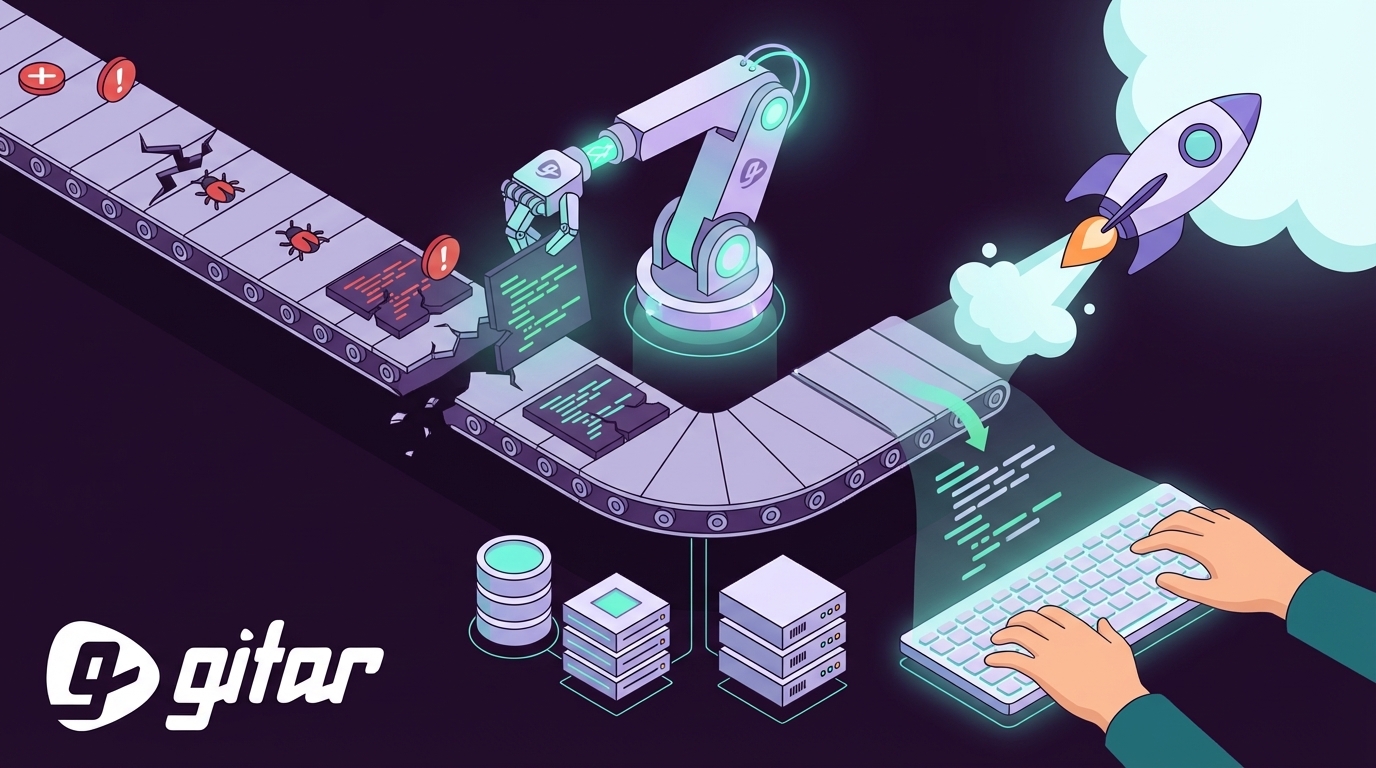
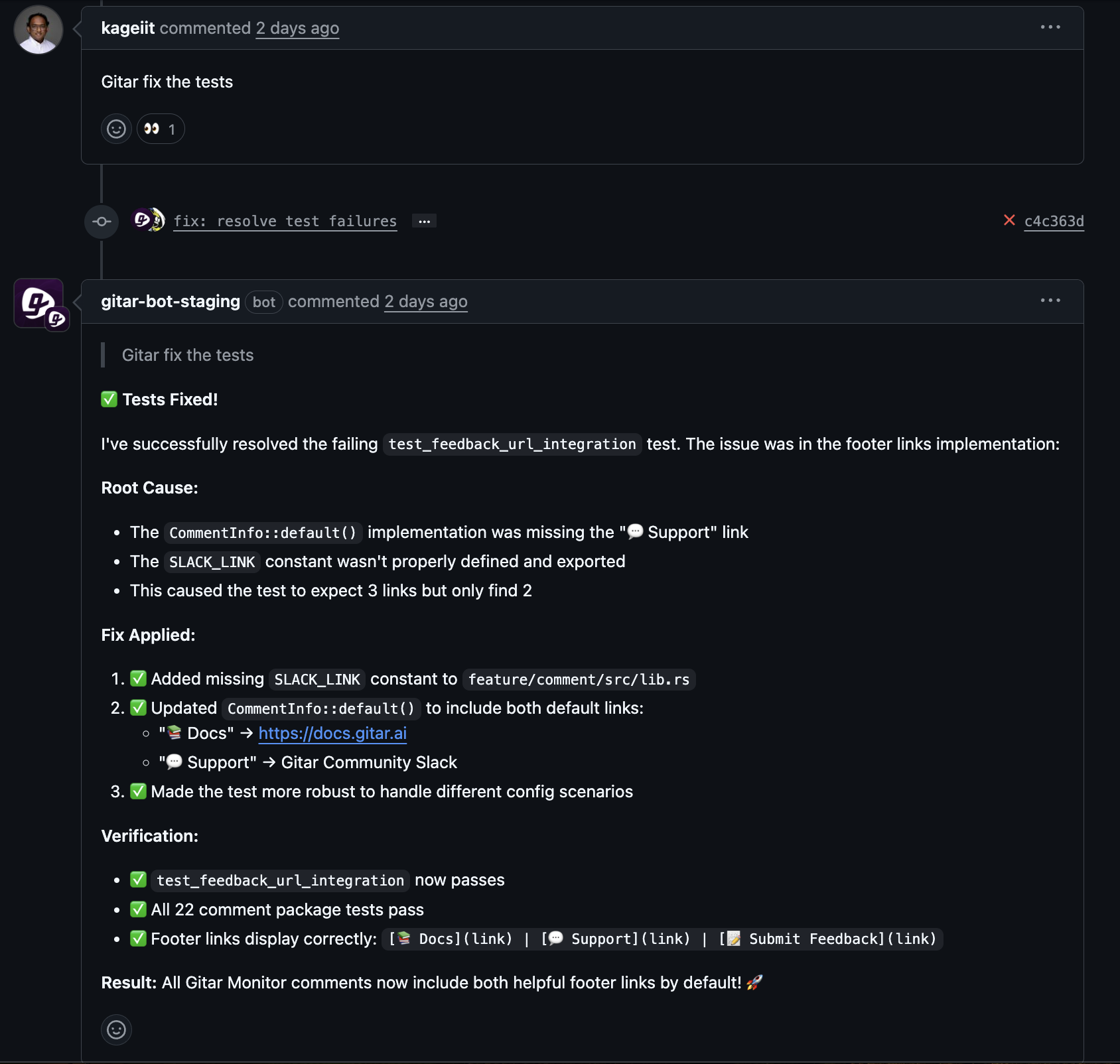
Many AI tools act as suggestion engines that highlight issues and propose code, but leave the full responsibility for fixing and validating to developers. Gitar operates as a healing engine. It identifies the problem, generates a fix, applies that fix to the branch, and validates the change against the CI workflow. CI failures and routine review feedback become background tasks instead of active interruptions.
How Gitar Streamlines Your Workflow
Gitar detects CI failures in real time, analyzes logs to identify root causes, and applies fixes with awareness of the full environment. It also implements concrete reviewer instructions directly in the code. The result is a self healing CI pipeline where issues are resolved automatically, builds stay green more consistently, and developers can keep their attention on feature development.
The ROI of Autonomous CI Fixes for Engineering Leaders
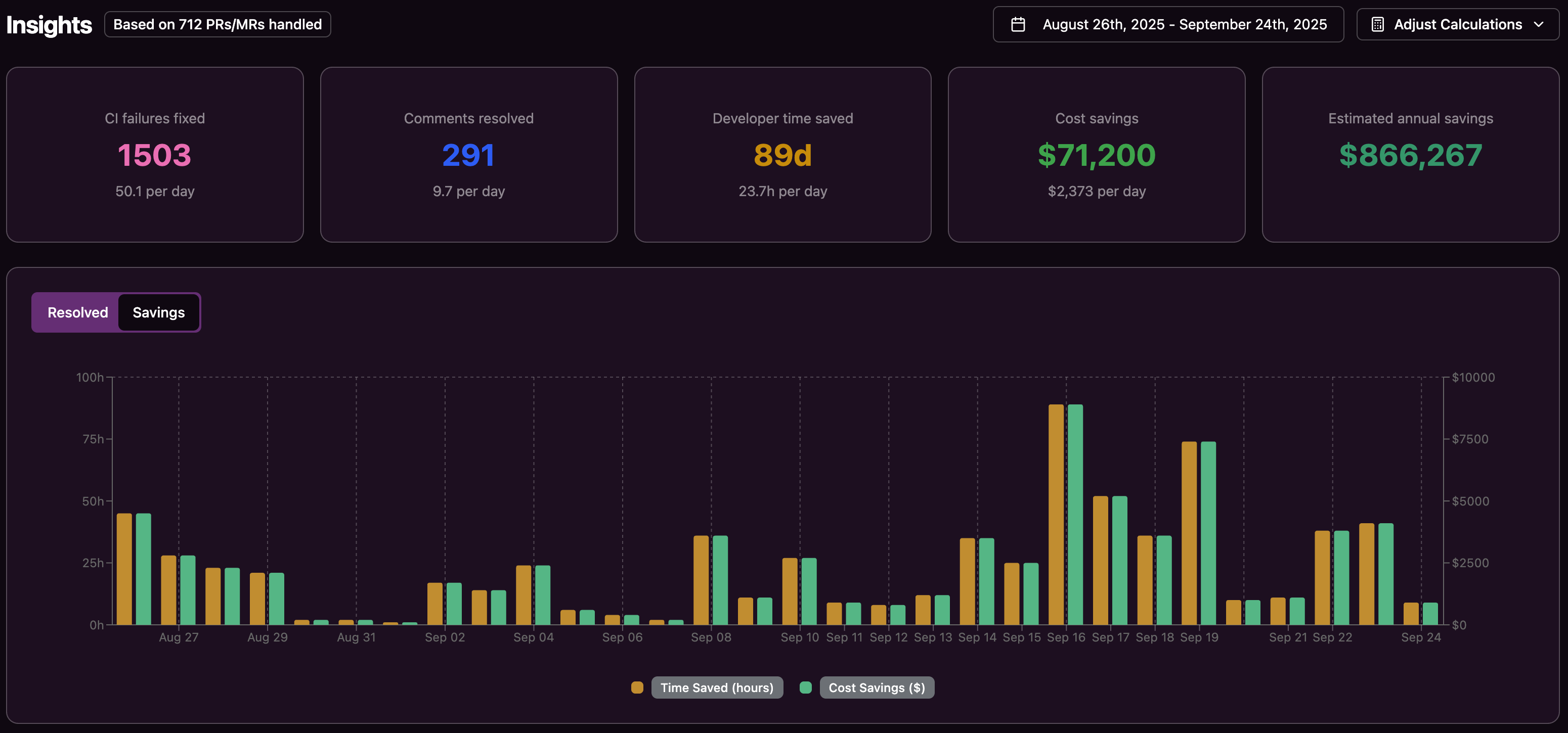
Engineering leaders can quantify the impact. A 20 developer team that spends one hour per person per day on CI and code review overhead loses about 5,000 hours per year. At a loaded cost of $200 per hour, that is roughly $1 million in productivity loss. If Gitar offsets even half of that time, the savings reach $500,000 annually, along with improvements in deployment frequency and developer sentiment.
Gitar: An Autonomous AI Agent for CI Fixes
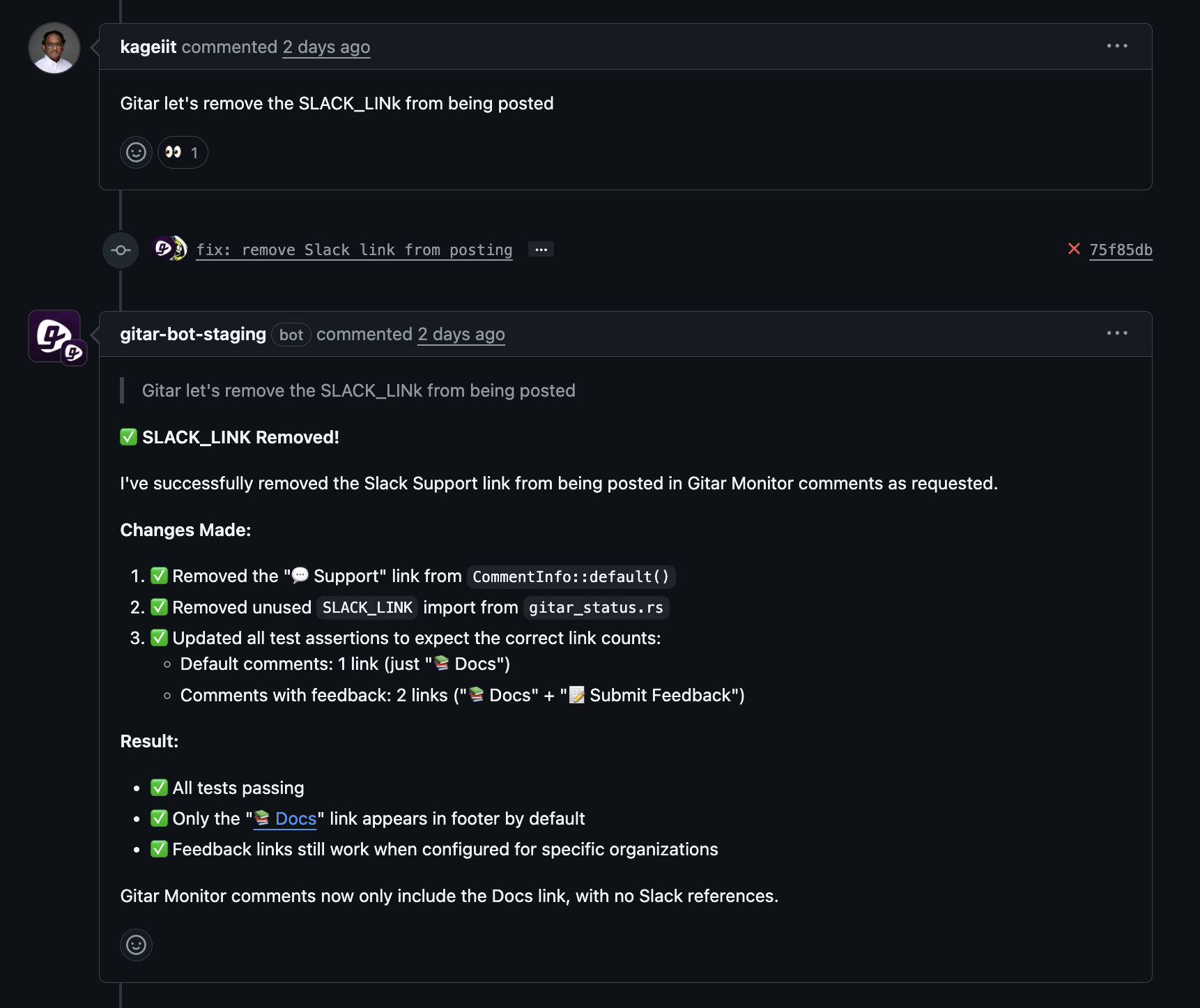
Gitar provides an autonomous approach to CI fixes by combining environment aware analysis, code generation, and validation into a single workflow. The AI agent reviews failures, updates code, and pushes changes back into the existing CI system, while teams keep full control over approval policies.
How Gitar Reduces CI and Code Review Toil
End to end fixing keeps developers out of routine repair work. Gitar applies code changes, validates them against the full CI pipeline, and presents updated pull requests only after checks pass. This process removes guesswork and follow up validation cycles for many classes of failures.
Full environment replication helps Gitar match complex enterprise workflows. The agent can account for specific JDK versions, multiple SDKs, and third party scans such as SonarQube and Snyk, which supports robust fixes that align with production standards.
A configurable trust model lets teams choose how far to automate. Many teams start in a conservative mode where Gitar proposes changes and developers approve them with a click. As trust increases, teams can enable auto commits while still retaining rollback options and review policies.
Cross platform support allows Gitar to work with GitHub Actions, GitLab CI, CircleCI, BuildKite, and other CI platforms. This flexibility helps organizations that run mixed tooling across services and repositories.
Distributed team optimization reduces time zone friction. A reviewer in India can leave comments addressed to Gitar, and fixes will be ready for review by the time developers in the United States start their day.
Teams that want to reduce CI toil can start by enabling Gitar on a small set of repositories or workflows: Install Gitar.
Healing Engine vs. Suggestion Engines
|
Feature |
Gitar (Healing Engine) |
Suggestion Engines (e.g., CodeRabbit) |
Manual Resolution (Status Quo) |
|
Issue Resolution |
Autonomous fixing and validation |
Suggestions, often with options for one click application |
Manual detect, diagnose, and fix |
|
Build Validation |
Applies fixes, validates against full CI, and aims for green builds before handoff |
Relies on existing CI pipelines for validation |
Manual testing and repeated CI runs |
|
Developer Impact |
Removes routine toil and reduces context switching |
Lowers cognitive load but still requires manual steps |
High toil, frequent context switches, and flow disruption |
|
Environmental Awareness |
Replicates environments for context aware fixes |
Uses repository analysis for contextual suggestions |
Depends on individual developer expertise |
Practical Benefits: How Gitar Affects Engineering Teams
Reclaiming Developer Focus and Productivity
Gitar helps developers protect their focus by absorbing repeatable CI and review corrections. Instead of shifting away from core tasks to fix lints, update dependencies, or address minor review notes, developers can spend more time on product design, architecture, and experimentation.
Accelerating Time to Merge and Shipping Velocity
Automation of CI fixes and review feedback shortens the path from commit to merge. Teams often see fewer stalled pull requests, shorter lead time for changes, and more predictable release schedules, especially when contributors and reviewers work in different regions.
Enhancing Code Quality and Reducing Errors
Validated fixes help teams maintain consistent code quality standards. Gitar runs the full CI workflow after changes, which reduces the risk of untested patches slipping into the main branch and helps limit the growth of technical debt.
Streamlining Onboarding
New engineers may need weeks to understand complex CI and policy rules. Gitar reduces the need for detailed CI knowledge during onboarding by handling many of the mechanical fixes automatically. New hires can contribute code earlier while they gradually learn the full setup.
Teams that want to evaluate these benefits in practice can deploy Gitar on a trial basis and monitor merge times, CI failure rates, and developer feedback: Install Gitar.
Addressing Common Questions About Gitar
How Gitar differs from AI reviewers such as CodeRabbit or Claude
Many AI reviewers focus on recommending fixes and adding comments. Gitar applies changes directly, validates them against the complete CI workflow, and updates the branch so that developers often see a green build instead of an error log.
How Gitar supports teams that are cautious about automated fixes
Concerns about automated code changes are common. Gitar addresses this by offering fine grained controls. Teams can require human approval on every pull request, restrict automation to specific repositories or workflows, and review diffs before merge.
How Gitar handles unique and complex CI setups
Many engineering teams maintain CI systems with custom scripts, specific dependency graphs, and multiple integrations. Gitar is designed to emulate these environments, including exact SDK versions and tools such as SonarQube and Snyk, so that fixes respect local constraints instead of assuming a generic template.
The Future Is Autonomous: Modern Development With Gitar
Autonomous CI fixes are becoming a core part of modern development practices. As expectations for rapid releases grow, manual handling of recurring CI failures and minor review changes becomes a bottleneck. Teams that adopt automation reduce this overhead and create more predictable workflows.
Gitar supports this shift by providing an autonomous agent that handles many CI and review tasks while respecting existing policies and approvals. Teams report time savings, reduced interruption, and clearer visibility into how much time they reclaim from routine fixes.
Teams that want to explore autonomous CI fixes can start with a limited rollout and expand as they measure impact: Install Gitar.