
Key Takeaways
- Manual CI debugging and slow code reviews consume a large share of engineering time and delay feature delivery.
- Autonomous tools that act directly in version control reduce context switching and help developers maintain focus on core work.
- Self-healing pipelines and AI-driven code review actioning shorten feedback loops, especially for distributed teams.
- Environment-aware automation and configurable safety modes help teams adopt autonomy without sacrificing quality or control.
- Teams can use Gitar to automatically fix broken builds and apply code review feedback within their existing version control workflows: install Gitar to start improving developer velocity.
Reduce Hidden Costs from Manual CI and Code Review
Manual CI and code review work quietly erodes developer time. Industry data indicates that developers can spend up to 30% of their time handling CI issues and code review friction instead of building features.
Context switching makes this loss heavier. Each time a developer leaves deep work to debug a failed pipeline or address review comments, the recovery time back into flow adds extra overhead.
Distributed teams feel this even more. A developer on the US West Coast who waits for review from a teammate in Bangalore can experience delays of many hours or even days before changes move forward.
Teams that want to reduce this drag can shift routine CI fixes and straightforward review changes to autonomous tools that act directly on pull requests.
Gitar: Autonomous Assistance for CI and Code Review
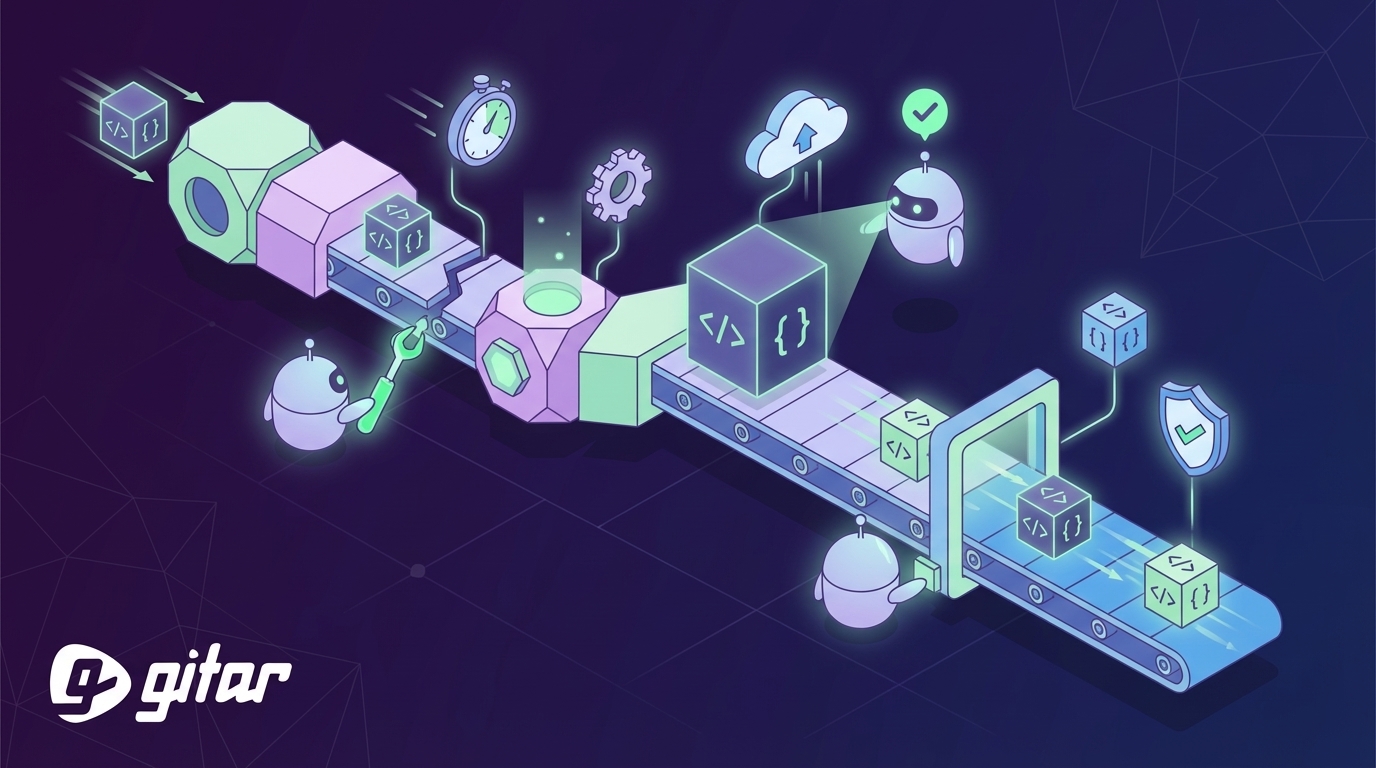
Gitar focuses on the slowest parts of the delivery process: failing CI pipelines and repetitive review feedback. It operates as an autonomous agent inside your existing version control and CI setup.
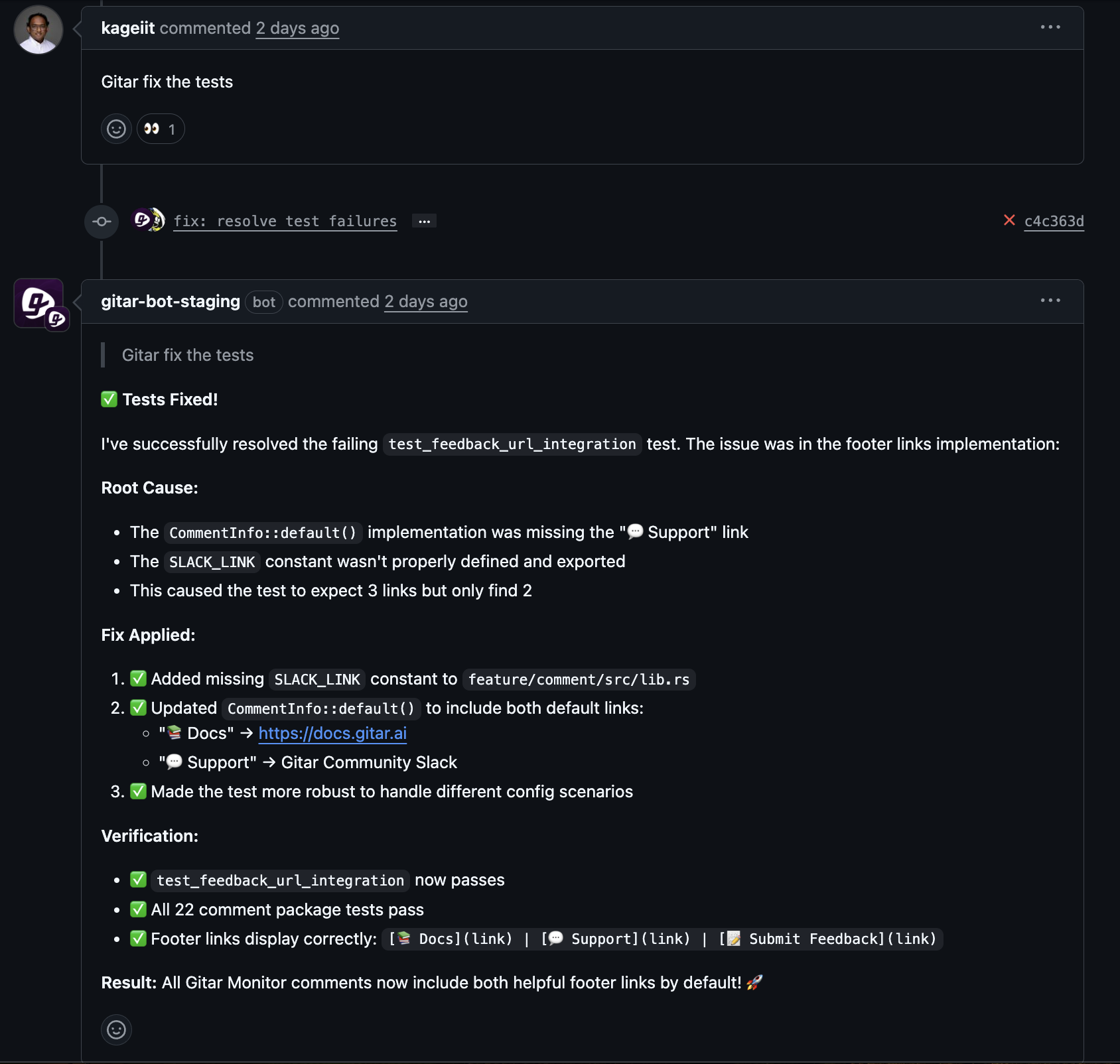
- Autonomous fix generation: Gitar analyzes CI failures such as linting errors, test failures, and build issues, then proposes and applies code fixes. It validates changes against your CI workflow to move builds back to green.
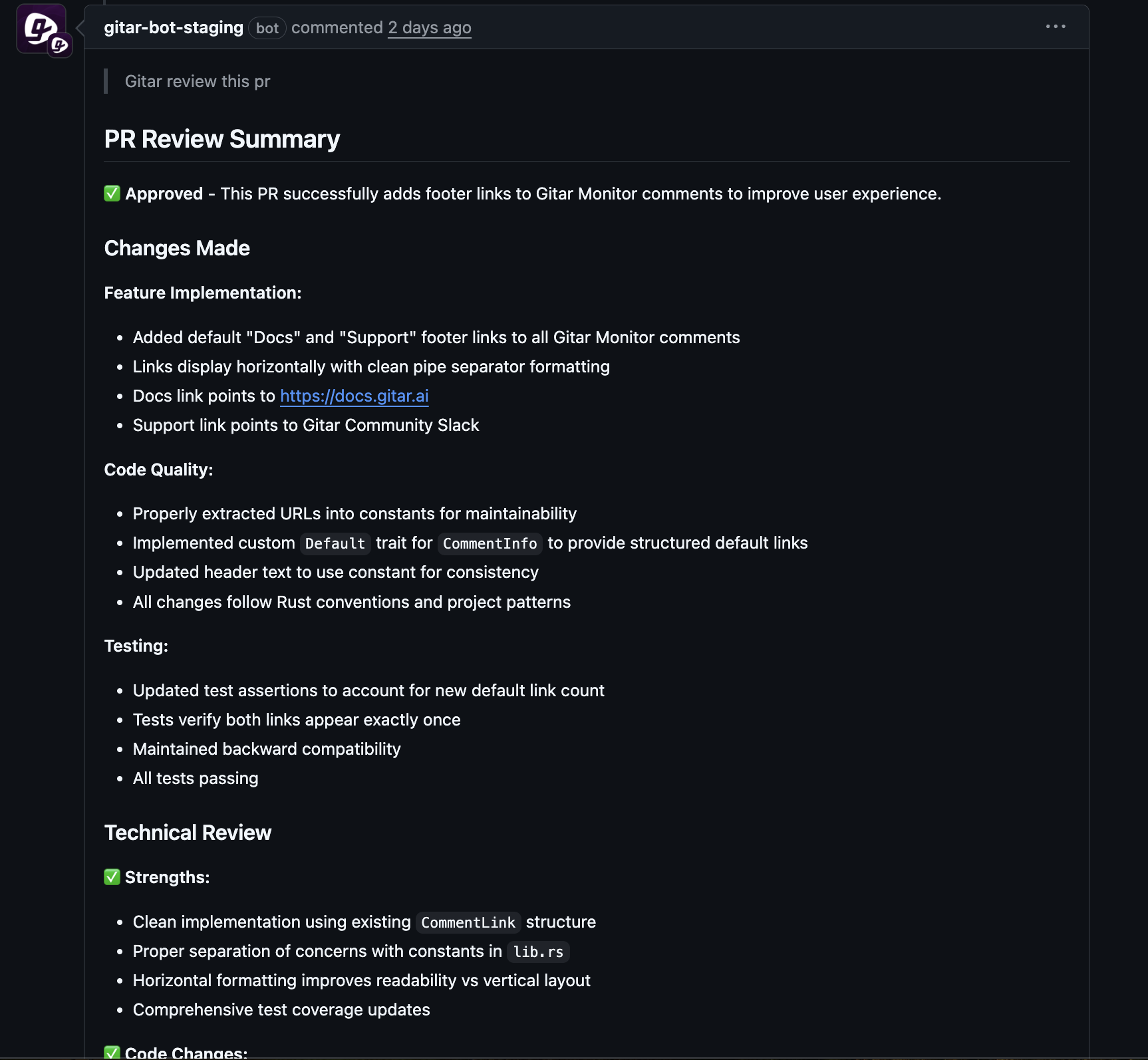
- Code review actioning: Reviewers add comments that mention Gitar with concrete requests. Gitar interprets the feedback, updates the code, and pushes a commit with an explanation so reviewers can quickly verify the result.
- Environment replication: Gitar mirrors enterprise workflows that use specific SDK versions, multiple languages, and tools such as SonarQube and Snyk. This context helps ensure fixes satisfy existing quality gates.
- Configurable trust levels: Teams can begin with a conservative mode where changes appear as suggestions and require approval. As confidence grows, they can enable more automated commit behavior with rollback options.
- Cross-platform support: Gitar integrates with platforms such as GitHub, GitLab, CircleCI, and Buildkite so teams can adopt it without restructuring their pipelines.
Top 5 Autonomous Developer Velocity Improvement Tools
1. Self-Healing Pipelines for Faster CI Recovery
CI failures often trigger a chain reaction of delays. Developers pause current work, inspect logs, recreate failures locally, and push experimental fixes while pipelines rerun.
Self-healing pipelines reduce this interruption. When a build fails because of linting issues, flaky tests, or dependency conflicts, autonomous systems identify the likely cause and apply targeted commits.
Gitar analyzes CI logs, proposes code changes that address the issues, and commits those changes to the pull request branch. Developers receive a green build with a clear explanation instead of a stack of failing jobs.
2. AI-Driven Actioning to Shorten Code Review Cycles
Code review is essential for quality but often slows time to merge. Many AI tools flag issues or suggest edits, yet developers still need to implement the fixes and rerun checks.
Autonomous actioning tools convert reviewer intent directly into code changes. Reviewers focus on what should change, and the system handles how to change it.
With Gitar, reviewers post a comment that mentions Gitar and describes the desired update. Gitar edits the code, pushes a commit, and documents its reasoning. Developers and reviewers then review the diff and move the pull request toward approval without extra back-and-forth.

3. Flow-Preserving Automation for Focused Development
Deep focus drives high-quality engineering work. Interruptions from failing pipelines and minor review edits disrupt this flow and extend project timelines.
Autonomous tools handle routine CI and review tasks in the background so developers can stay with their primary feature or bug fix. Notifications arrive when meaningful review is needed, not for every minor tweak.
Gitar reduces context switching by fixing many CI issues and simple review comments automatically. Developers remain in flow longer and use their time on design decisions, architecture, and complex debugging rather than repetitive edits.
4. Environment-Aware Fixes for Quality and Compliance
Generic suggestions often break in complex environments. Enterprise applications may depend on strict SDK versions, multiple languages, monorepos, or security scanning rules.
Environment-aware autonomous tools model these conditions so that proposed fixes respect real constraints. They run relevant tests and checks instead of relying only on static analysis.
Gitar emulates the full build and test process, including language toolchains and integrations with scanners such as SonarQube and Snyk. This approach helps its fixes pass both CI and organizational governance rules.
Teams that want this kind of environment-aware automation can start quickly: install Gitar to automatically repair broken builds and keep pipelines moving.
5. Configurable Automation to Build Trust Over Time
Trust often limits how quickly teams adopt autonomous code tools. Many leaders want safety controls, auditability, and a gradual path from suggestions to fully automated changes.
Configurable modes give teams that control. Conservative settings present proposed fixes as suggestions that require explicit approval. More aggressive modes allow autonomous commits once a team feels comfortable with the results.
Gitar supports this progression. Teams can begin with suggestion-only behavior and then enable automatic commits with clear audit trails and rollback paths. This flexibility lets organizations match the level of autonomy to their risk tolerance and maturity.
Gitar in Context: Developer Velocity Tools Compared
|
Feature |
Gitar (autonomous healing engine) |
AI code reviewers |
Manual work |
|
CI failure resolution |
Analyzes failures, applies fixes, and iterates until the build passes |
Highlights issues and suggests edits that require manual follow-through |
Requires manual debugging, patching, and reruns |
|
Code review feedback |
Implements requested changes and commits them to the branch |
Provides comments and suggestions for developers to apply |
Relies on manual edits and repeated review cycles |
|
Developer flow state |
Handles routine CI and review work asynchronously |
Sometimes reduces effort but still interrupts focus |
Triggers frequent context switches and longer recovery time |
|
Environment fidelity |
Replicates enterprise environments for context-aware fixes |
Provides environment awareness that varies by tool |
Depends on each developer’s local setup and knowledge |
Teams that want to experience this kind of autonomy inside their existing workflows can install Gitar and start reducing CI and review overhead.
Frequently Asked Questions about Developer Velocity Improvement Tools
Q: How much time can autonomous CI fixing tools really save my team?
A: Autonomous CI fixing tools target the 20–30% of time that developers often spend on CI failures and review friction. In a 20-developer team, this can represent hundreds of hours each month. Gitar helps reclaim this time by resolving many failures and routine review comments without requiring developers to stop feature work.
Q: How do autonomous fixing tools compare to traditional AI code review suggestions?
A: Traditional AI code reviewers operate as suggestion engines. They point out issues and propose edits, but developers still implement and validate the changes. Autonomous tools such as Gitar go further by generating fixes, applying them to the branch, and running the full CI pipeline to confirm that builds pass.
Q: Is it safe to trust an AI with autonomously changing my codebase?
A: Safety depends on guardrails. Gitar supports configurable modes, explanations for each change, audit logs, and rollback options. Teams can start with suggestion-only behavior and move toward automated commits as they verify quality in their own repositories.
Q: Can autonomous tools handle complex enterprise environments with multiple dependencies?
A: Modern autonomous tools can handle multi-language builds, strict SDK versions, and security requirements. Gitar replicates the relevant environment, including dependencies and scanners such as SonarQube and Snyk, so its fixes align with existing policies and pass CI.
Q: How quickly can teams see ROI from implementing developer velocity improvement tools?
A: Many teams see benefits within the first few months. Even a partial reduction in time spent on CI debugging and minor review edits can translate into significant cost savings and faster delivery, especially for engineering groups with dozens of developers.
Conclusion: Use Autonomy to Improve Developer Velocity
Manual CI debugging and repetitive review changes slow development in ways that are easy to overlook. Autonomous tools now provide a practical way to handle much of this work directly in version control.
Gitar exemplifies this shift by combining CI failure remediation, code review actioning, and environment-aware automation. Teams that adopt this model preserve developer focus and move changes through pipelines more predictably.
Organizations that want to improve developer velocity in 2026 can start by automating the most frequent CI and review tasks. Request a demo with Gitar to see how autonomous fixes and review actioning can support your engineering team.