
Key Takeaways
- Gitar leads as the top AugmentCode alternative with autonomous AI code review that fixes bugs, validates against CI, and guarantees green builds.
- Traditional tools like CodeRabbit, Qodo, and SonarQube provide suggestions only, require manual implementation, and lack CI validation.
- Evaluation criteria focus on auto-fix success rates, CI integration depth, and ROI, where Gitar excels with 30-second setup and $750K annual savings for 20-dev teams.
- Developer communities on Reddit report frustration with notification spam and manual fixes, and they favor healing engines like Gitar over suggestion tools.
- Teams migrating from AugmentCode should start a 14-day Gitar Team Plan trial for unlimited seats and proven autonomous fixing.
How We Evaluated AugmentCode Alternatives
We evaluated each AugmentCode alternative on five capabilities that separate autonomous AI code reviewers from basic suggestion tools. These include auto-fix success rates validated against CI, PR handling volume, and integration breadth across GitHub, GitLab, CircleCI, and Buildkite. We also assessed pricing transparency, ROI metrics, and setup complexity. Our analysis incorporates 2025 benchmarks from Macroscope and GitClear, hands-on testing with real CI environments, and feedback from developer communities migrating from defunct tools.
#1 Gitar: Autonomous Healing Engine With Guaranteed Green Builds
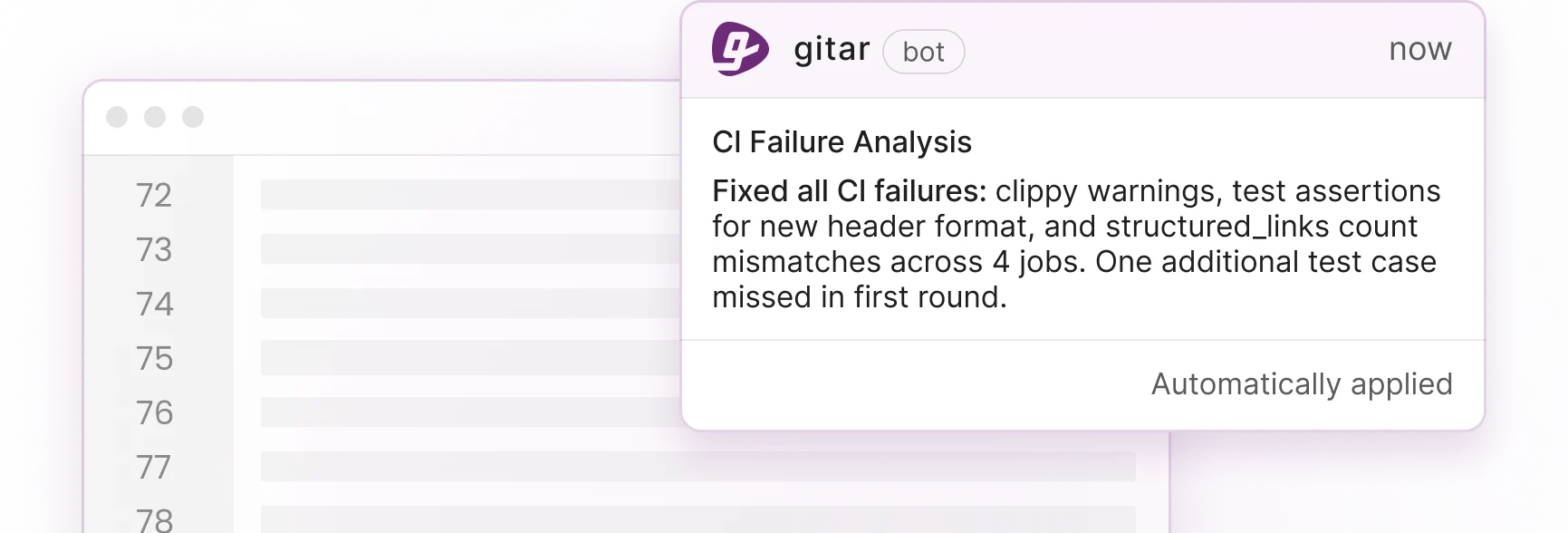
Gitar stands apart as the only autonomous AI code reviewer that identifies problems, fixes them, and validates that the fixes work. When CI fails with lint errors, test failures, or build breaks, Gitar analyzes the failure logs and generates the correct fix with full codebase context. It then validates that the fix resolves the issue and commits the change automatically. This approach replaces hope-driven development with guaranteed resolution.
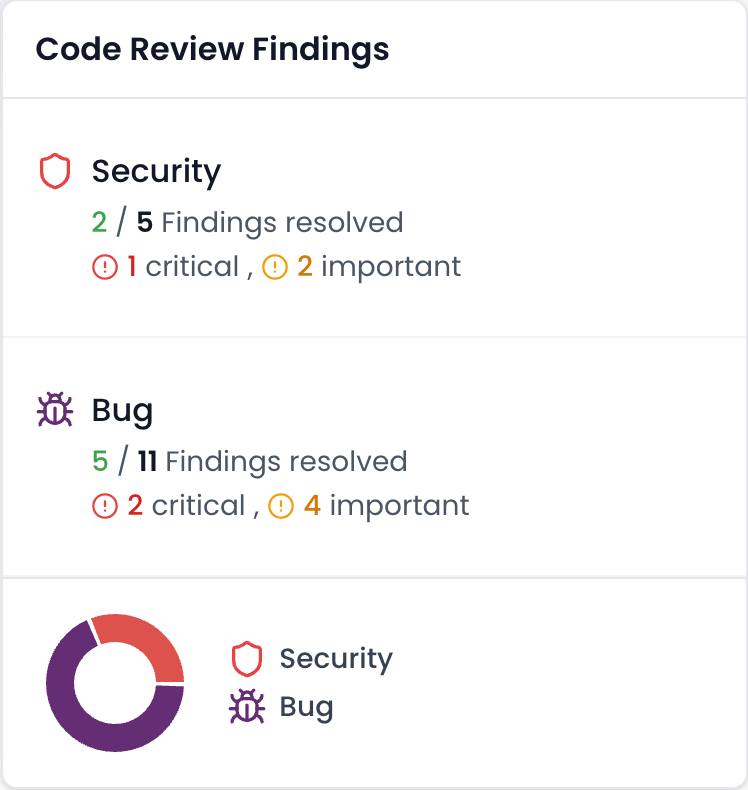
Key differentiators include a single updating dashboard comment that consolidates all findings, which reduces notification spam. Natural language repository rules in .gitar/rules/*.md files remove the need for complex YAML workflows. Gitar also provides comprehensive analytics for CI failure categorization and pattern recognition, along with native integrations with Jira, Slack, Linear, and major CI platforms. The 30-second installation process supports GitHub and GitLab with CircleCI, Buildkite, and GitHub Actions.
Gitar’s 14-day Team Plan trial offers full access to auto-fix capabilities, custom rules, and enterprise integrations with no seat limits. Teams can prove value before paying. ROI calculations show $750K annual savings for 20-developer teams through reduced context switching and automated CI resolution.

| Capability | Gitar | CodeRabbit | Greptile |
|---|---|---|---|
| Auto-fix with CI validation | Yes/Guaranteed | No | No |
| Fix success rate | Yes | N/A | N/A |
| Pricing model | 14-day free trial | $15-24/seat | $30/seat |
Gitar works best for enterprise teams that require CI healing, engineering leaders tracking velocity, and platform engineers building self-healing infrastructure. Start your free trial at https://gitar.ai/
#2 Claude Code: Terminal-First Autonomy for Complex Refactors
Claude Code leads autonomous coding agents with 80.9% success on SWE-bench Verified, which shows strong performance on real GitHub issue resolution. The multi-agent coordination system handles complex refactoring, debugging, and test generation through terminal-based autonomy. This approach suits developers who prefer command-line workflows.
Strengths include sophisticated reasoning for architectural changes, comprehensive test suite generation, and direct repository manipulation. Claude Code does not provide CI auto-fix capabilities or build validation, so developers must implement suggested changes manually. Setup involves IDE integration with terminal access, and pricing follows a subscription model for advanced features.
Claude Code works best for complex debugging scenarios and large-scale refactoring projects. Compared to Gitar, it requires manual implementation of fixes and does not offer CI validation guarantees.
#3 Qodo (formerly CodiumAI): Fast Test Generation and Review
Qodo focuses on rapid code review and test generation for teams that want quick feedback. It delivers very fast speed completing full reviews under 2 minutes and detailed severity-based issue identification. The platform emphasizes test coverage and quality assurance with clear explanations for detected problems.
Key features include intelligent test generation, coverage analysis, and fast setup. Qodo outputs suggestions only and does not perform autonomous fixing. It also lacks CI integration for build validation. Pricing follows per-user subscription models common in this category.
Qodo works best for teams that prioritize test coverage and rapid feedback cycles. Teams that still need autonomous fixes that guarantee green builds can try Gitar’s healing engine for validated CI resolution.
#4 Zencoder: Cross-Repository Intelligence for Enterprises
Zencoder focuses on deep repository analysis and cross-codebase understanding for enterprise environments. The platform excels at understanding complex codebases and delivering contextual insights across multiple repositories.
Features include comprehensive repository scanning, enterprise-grade security, and detailed architectural analysis. Zencoder does not provide autonomous CI fixing capabilities and instead focuses on analysis and suggestions. Setup requires repository scanning and configuration, with pricing tailored to enterprise buyers.
Zencoder works best for large organizations that need cross-repository insights. Compared to Gitar, it delivers analysis without the healing engine’s autonomous fix implementation.
#5 Cursor AI Extensions (Bugbot): In-IDE Debugging Support
Cursor’s Bugbot extension delivers in-IDE debugging capabilities with 42% bug detection accuracy in 2025 benchmarks. The standalone AI code editor integrates into existing workflows for developers who prefer to stay inside their editor.
Strengths include native IDE integration, real-time debugging assistance, and test generation. Limitations include manual fix implementation, notification noise, and lack of CI validation. Setup requires editor installation, and pricing follows a subscription model.
Bugbot works best for individual developers who want IDE-native tools. Compared to Gitar, it lacks CI context and autonomous validation of fixes.
#6 SonarQube AI: Rule-Based Quality Gates at Scale
SonarQube offers a mature code quality platform with rule-based detection across 30+ programming languages and thousands of GitHub stars that signal strong community adoption. The platform delivers comprehensive quality gates and enterprise-proven reliability.
Features include extensive language support, mature rule engines, and flexible deployment options. SonarQube relies on rule-based detection instead of autonomous AI fixing, so teams must resolve identified issues manually. Setup involves self-hosting or cloud deployment, with free community and paid enterprise tiers.
SonarQube works best for organizations that want mature, rule-based quality assurance. Teams that need autonomous healing beyond rules can explore Gitar’s AI engine, which outperforms traditional rule-based systems.
#7 Codium AI: Test-Centric Review Suggestions
Codium AI delivers test-focused code review with a strong emphasis on coverage analysis and quality checks. The platform generates comprehensive test suggestions and flags potential quality issues through AI analysis.
Features include intelligent test generation, coverage reporting, and quality metrics. Codium AI outputs suggestions only and does not perform autonomous fixing. It also lacks CI integration. Setup involves IDE integration with per-user pricing.
Codium AI works best for teams that prioritize test quality and coverage metrics. Compared to Gitar, it provides suggestions without autonomous implementation or CI validation.
Best AugmentCode Alternatives by Capability and Use Case
The autonomous AI code review landscape splits into suggestion engines and healing platforms. Suggestion tools highlight issues, while healing engines fix and validate them inside CI.
| Tool | Auto-Fix with CI | Fix Success Rate | Pricing |
|---|---|---|---|
| Gitar | Yes/Guaranteed | Yes | 14-day free trial |
| Claude Code | No | <70% | Subscription |
| Qodo | No | N/A | $15-30/seat |
| Others | No | <70% | $15-30/seat |
Top autonomous fixers: Gitar leads for enterprise CI healing, and Claude Code ranks second for complex refactoring workflows.
Best for CI healing: Gitar stands alone with guaranteed green builds and validated fixes.
What Reddit Developers Say About AugmentCode Replacements
Developer communities on Reddit consistently describe a gap between suggestion tools and autonomous fixers. Many threads call for tools that “actually fix CI failures instead of just commenting on them.” Reported migration pain points include notification fatigue from chatty AI tools, manual implementation overhead despite premium pricing, and limited CI context in many competitor solutions.
The consensus favors autonomous healing engines that validate fixes against real build systems instead of offering unverified suggestions. Gitar addresses these needs with benchmarked performance and clear ROI metrics that suggestion-only tools cannot match.
ROI and Migration Planning for Former AugmentCode Teams
The economics of autonomous AI code review become clear when teams measure real productivity impact. Time saved on CI, fewer interruptions, and fewer failed reruns translate directly into budget and velocity gains.
| Metric | Before Autonomous Review | After Gitar | Annual Savings |
|---|---|---|---|
| CI/Review time per developer | 1 hour/day | 15 minutes/day | $750K (20-dev team) |
| Context switching interrupts | Multiple daily | Near-zero | Velocity improvement |
| Failed CI reruns | High cost/delay | Auto-resolved | Infrastructure savings |
Key migration steps include starting with configurable auto-commits to build trust and confirming support for complex CI environments through enterprise deployment options. Teams should measure ROI through reduced developer toil and fewer interruptions, not only through tool subscription costs. Common objections about automated commits are addressed through Gitar’s configurable automation levels and validation processes. See the Gitar documentation for full setup and configuration details.
Frequently Asked Questions
Which AugmentCode alternative offers the strongest free trial for autonomous fixing?
Gitar provides the most comprehensive free trial with 14 days of full Team Plan access, including autonomous bug fixing, CI validation, custom rules, and enterprise integrations with no seat limits. Teams can measure real productivity impact before committing to paid plans, while many competitors charge $15-30 per seat for suggestion-only tools.
How easy is integration with existing CI pipelines?
Gitar supports 30-second installation through GitHub Apps or GitLab integration, with native support for GitHub Actions, CircleCI, Buildkite, and GitLab CI. The platform automatically detects your CI configuration and starts healing builds immediately. Many competitors require complex setup and still lack broad CI platform coverage.
How do teams measure ROI from autonomous AI code review?
ROI measurement focuses on developer time savings from reduced context switching and automated CI resolution. A 20-developer team typically saves $750K annually by cutting CI and review overhead from 1 hour to 15 minutes per developer per day. Additional gains come from faster sprint velocities, lower infrastructure costs from fewer CI reruns, and removal of manual fix implementation work.
What changes when switching from CodeRabbit to autonomous fixing?
CodeRabbit and similar tools provide suggestions that developers must implement, test, and validate manually. Gitar’s healing engine automatically implements fixes, validates them against your CI environment, and guarantees green builds. This shift removes the manual work that makes $15-30 per seat suggestion tools expensive relative to their actual productivity impact.
How does autonomous code review handle security and compliance?
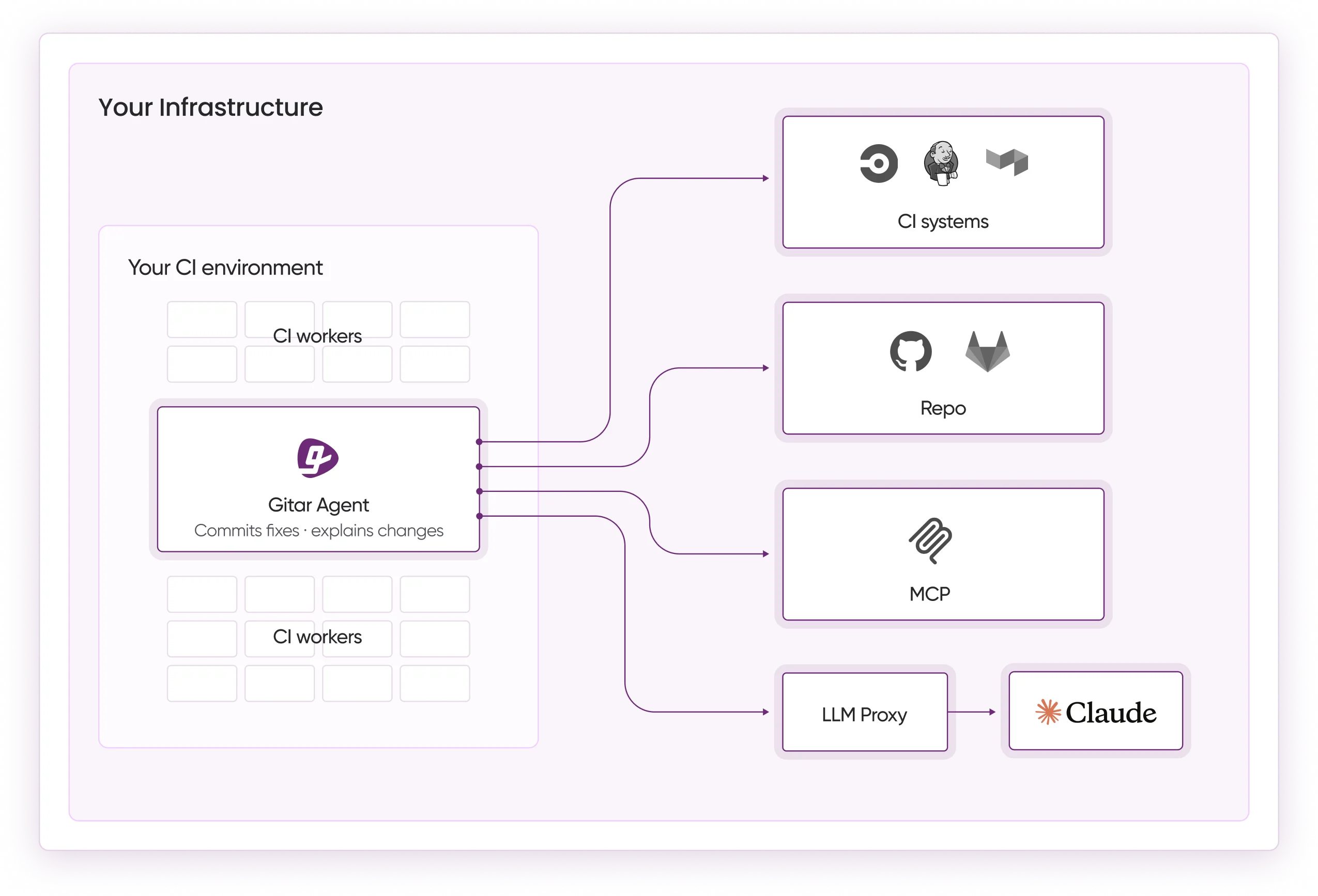
Enterprise autonomous AI code review platforms like Gitar provide SOC 2 Type II certification, repository-level access controls, and configurable automation rules that respect existing security policies. The healing engine can run inside your CI infrastructure so that code never leaves your environment while still benefiting from autonomous fixing.
Conclusion: Moving From Suggestions to Autonomous Healing
AugmentCode’s shutdown exposed the limits of suggestion-only AI code review tools in an era of AI-generated code floods. Competitors often charge premium prices for comments that still require manual work, while Gitar’s healing engine delivers actual fixes, CI validation, and guaranteed green builds.
Teams that care about post-AI-coding productivity face a clear choice. They can keep suggestion engines that preserve manual toil, or they can adopt autonomous platforms that remove it. Gitar stands alone in providing validated fixes with measurable ROI, deep CI integration, and a risk-free 14-day Team Plan trial.
Teams ready for autonomous AI code review that actually fixes bugs can start a 14-day Gitar trial and guarantee green builds while competitors still read suggestions.